After a long cleaning session — say, scrubbing the kitchen tiles or moving heavy sofas for dusting — your body often tells you it’s had enough. Muscles feel stiff, your back tenses up, and even your arms might ache after squeezing out the mop a few too many times. For many Indian families, deep cleaning isn’t just a Diwali thing anymore. With dust settling in quickly and city homes needing frequent upkeep, this kind of fatigue can become a regular guest in your week.
Why Does Deep Cleaning Make Us So Tired?
You might wonder why a few hours of housework can leave you more exhausted than a brisk evening walk. The answer’s simple: cleaning taps into muscles you don’t usually use at the same intensity. Lifting buckets, bending to scrub floors, stretching to reach fans — these movements, repeated over and over, push your body in ways your daily routine of walking or even cooking doesn’t.
There’s also the mental side. When you’re focused on getting every corner spotless, you forget to notice how your body’s feeling until you finally sit down. Suddenly, the aches announce themselves.
That said, you don’t need fancy equipment or special routines to ease this kind of strain. Some gentle stretches — done right at home, maybe even between cleaning tasks — can help your body bounce back.
When and How to Stretch During Cleaning Days
The tricky part is remembering to stretch before you’re completely worn out. Most people tend to finish everything, collapse on the sofa, and only then realize how stiff they’ve become. Honestly, it’s easy to forget. But adding a few short stretch breaks, just like you’d take a chai break, can make a difference.
Here’s a simple approach that works in many homes:
- Take 2–3 minute stretch breaks after completing a big cleaning task (like finishing the bathroom or kitchen).
- If you’re working alongside family, invite them to stretch too — it feels less awkward when everyone’s in.
- Focus on areas that feel tight: lower back, shoulders, legs, and hands.
It’s not about perfection or looking like a yoga expert. Gentle, mindful movements work best.
Easy Stretches for Your Lower Back and Hips
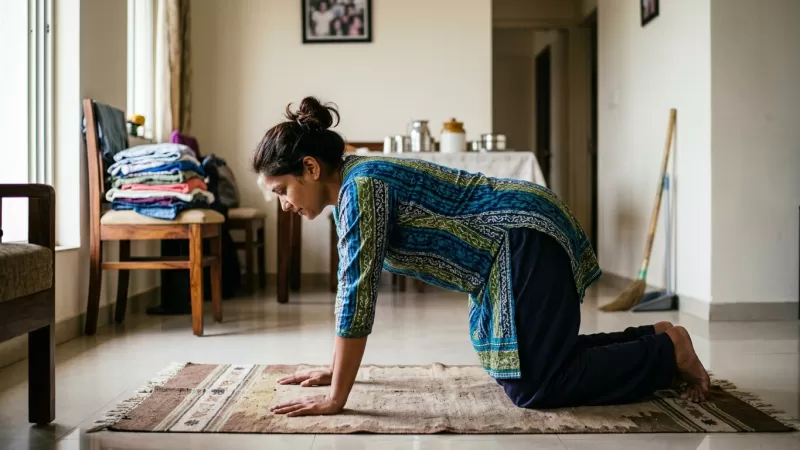
Everyone’s back seems to complain after mopping or bending for a long time. Indian homes usually have lots of low surfaces, which means you’re often stooping. Here are a few stretches that tend to help:
- Knee-to-chest hug: Lie flat on your back (a mat or carpeted area is fine). Bring one knee towards your chest, holding it with your hands for 10–15 seconds. Switch legs. Feels comforting, especially at the end of the day.
- Seated forward bend: Sit with your legs stretched out. Gently lean forward, reaching towards your toes (no need to actually touch them). You’ll feel a stretch along your back and legs. Don’t force it — just go as far as feels comfortable.
- Hip opener: While sitting cross-legged on the floor, gently press your knees towards the floor and sit tall. This one’s familiar to anyone who’s grown up sitting on the ground for meals or prayers.
Even one or two rounds of these can loosen up the tension that builds up from repeated bending.
Shoulder and Upper Back Relief Flows
After dusting fans, wiping windows, or scrubbing high shelves, your shoulders and upper back often feel tight. You’ve probably noticed that this area aches in the evening, especially if you’re not used to overhead work. These stretches don’t take much space or time:
- Shoulder rolls: Sit or stand comfortably. Roll your shoulders up, back, and down in a gentle circle. Repeat 10 times, then reverse the direction. This can even be done while waiting for your chai to boil.
- Wall stretch: Stand an arm’s length from a wall. Place your palms on the wall and lean in, letting your chest sink gently, feeling a stretch across the upper back and shoulders.
- Neck stretches: Gently tilt your head to one side (bringing your ear towards your shoulder), hold for a few seconds, and repeat on the other side. Just don’t yank or force anything.
These small movements help prevent the kind of tightness that leads to headaches or that “rounded” feeling many people get by evening.
Leg and Foot Comfort After Long Hours Standing
Standing on hard kitchen tiles or constantly moving between rooms can leave your feet and legs aching, especially after long cleaning sessions. Many families quietly deal with swollen feet or sore calves, especially older adults.
Try these simple stretches to bring comfort back to your lower half:
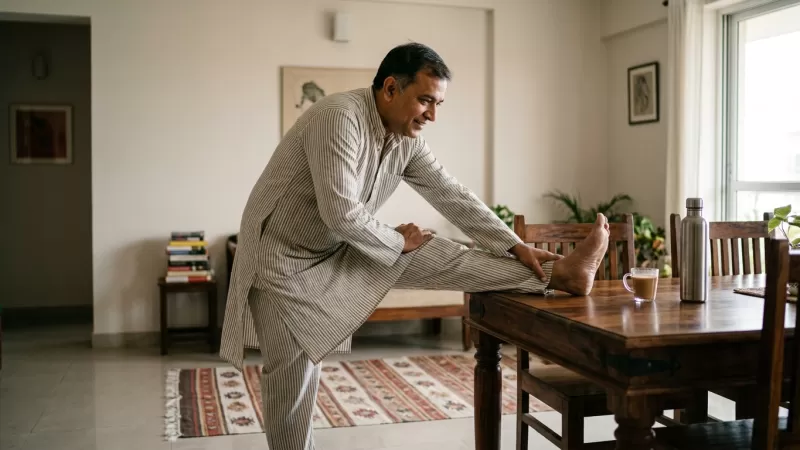
- Calf stretch: Stand facing a wall. Place your hands on the wall and step one foot back, keeping it straight. Bend your front knee and lean in, feeling a stretch in the calf of your back leg. Switch sides after 10–15 seconds.
- Toe touches: While standing, slowly reach down towards your toes (knees can be slightly bent if needed). This stretches the backs of your legs and helps loosen the lower back too.
- Foot circles: Sit down and gently rotate each foot in circles, both clockwise and anti-clockwise. It’s a small movement, but it helps with stiffness.
Just a few minutes can make it easier to get up the next morning without that heavy leg feeling.
Hand and Wrist Stretches for Cleaning Fatigue
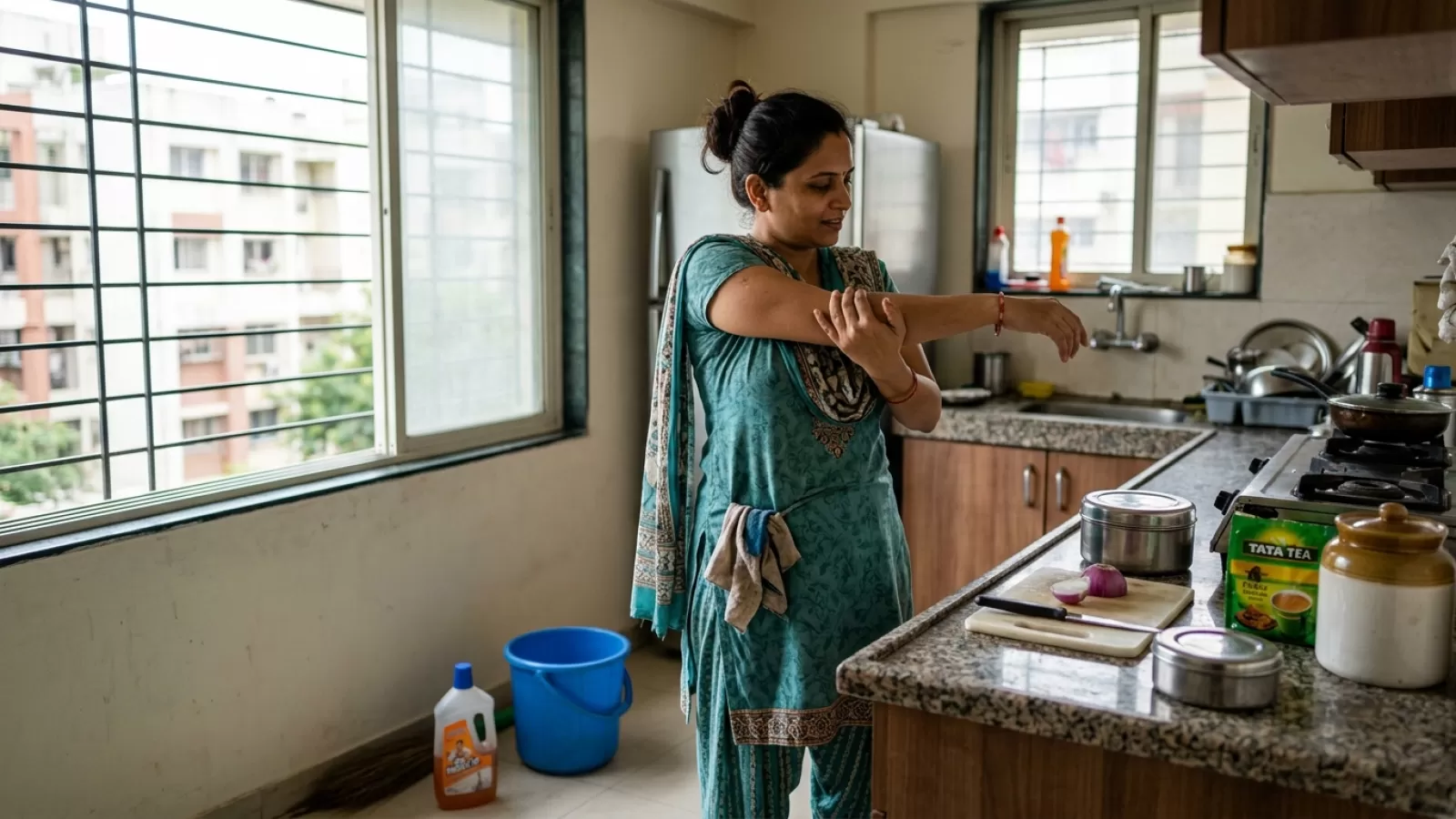
Wringing cloths, scrubbing pots, or twisting broom handles — your hands and wrists work overtime while cleaning. Many people, especially those who cook and clean daily, develop a dull ache or tightness in their hands but often ignore it.
These gentle stretches are worth trying:
- Wrist flexor stretch: Extend one arm in front of you, palm up. Use the other hand to gently pull back on the fingers until you feel a stretch on the inside of your forearm.
- Finger fan: Spread your fingers as wide as you can, hold for 5 seconds, then relax. Repeat several times. It’s surprisingly helpful after squeezing out wet cloths.
- Thumb touch: Touch the tip of your thumb to each fingertip, one by one, making a circle. This simple movement keeps your fingers nimble.
It’s normal to feel a bit silly doing these — but over time, they really do ease that nagging tightness.
Stretching as a Family or With Help
In many Indian homes, cleaning is a shared responsibility. Whether you’re working with your spouse, a parent, grown-up children, or even a house-help, stretching together can make the work feel less lonely (and a bit more fun).
Sometimes, people feel self-conscious or shy about stretching in front of others. But here’s the thing: once someone starts, others usually join in. It’s a small, positive shift in family culture, and it helps everyone feel better by the end of the day.
- Turn on some music and do a quick stretch between cleaning tasks — even kids can join in.
- Share a few laughs about how stiff everyone feels; sometimes, humour is the best medicine.
- For older adults or anyone with mobility issues, gentle seated stretches work just as well.
It’s less about doing it perfectly and more about supporting each other’s well-being.
Adapting Stretch Flows to Your Routine
Life in Indian homes is busy. Some days, you barely have time for breakfast, let alone a stretching session. The good news is, you don’t need to carve out a separate slot for these stretches. They fit right into your existing routine. For example:
- Stretch while waiting for the water to boil or the washing machine to finish.
- Do a quick shoulder roll while chatting with family or checking your phone.
- If you’re taking a short break between cleaning rooms, use that time for a few easy stretches.
Some days, you’ll manage more, some days less. That’s all right. Even a little helps over time.
Listening to Your Body and Knowing Your Limits
Finally, one gentle reminder: everyone’s body is different. What feels comfortable for one person might be too much for another, especially for seniors or anyone with ongoing health issues. If a stretch feels painful, stop — it’s not about pushing through discomfort.
Sometimes, after a very heavy cleaning day (maybe before a festival or family event), you might still feel tired even after stretching. That’s normal. A little rest, a warm bath, or just putting your feet up with a cup of tea can do wonders too.
Taking care of your body during cleaning isn’t a luxury. It’s just good sense, especially when you’re juggling so many roles at home. A few mindful stretches, done with kindness and patience, can make deep cleaning days a little less tiring — and your evenings a lot more comfortable.