In many Indian homes, the day flows around long stretches of sitting—at the dining table with chai, at a desk squeezed into a bedroom corner, or on a creaky office chair surrounded by the buzz of family life. The discomfort builds quietly. By 4pm, after hours of continuous desk work, you might notice your lower back feels stiff, your neck won’t turn all the way, and your hips ache in a way that makes standing up seem harder than it should. This is where chair exercises after sitting for hours India come in—not as a grand solution, but as a set of simple, targeted movements that fit right into the patterns of Indian daily life.
These days, with so many working from home or in makeshift office corners, relief exercises for extended sitting Indian adults are less about fancy routines and more about what you can actually do in the space between a Teams call and the pressure cooker’s whistle. The right chair-based stretches can bring quick comfort, especially when you can’t exactly roll out a yoga mat between meetings or when the living room floor is already claimed by kids’ toys or elders’ afternoon naps.
Long Sitting and Why Discomfort Feels Predictable in Indian Homes
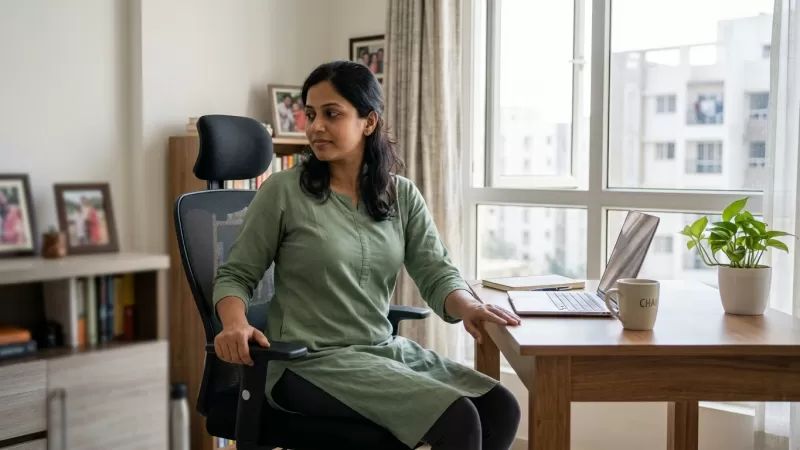
Hours of continuous sitting, whether it’s working on reports or scrolling through WhatsApp, tends to leave Indian adults with a similar set of aches. The hips feel locked, the lower back gets compressed, and the neck and shoulders tense up, especially if your desk doubles as a dining table or your chair doesn’t have enough support. In many homes, the chair isn’t even truly ergonomic—it’s often a borrowed dining chair or a basic plastic one, not designed for marathon work sessions. Seated exercises for long sitting India are often overlooked, yet they’re the first line of defense against these routine discomforts.
For working adults, the lines between office and home have blurred. You might be answering emails while waiting for the sabzi to finish or shifting from a work call to checking your child’s homework, all without leaving your chair for hours. Even seniors who spend time reading, watching TV, or managing household accounts can feel their bodies slowly stiffen from sitting too long. Relief exercises for extended sitting Indian adults are not about perfection; they’re about small, regular movements that add up.
Why Extended Sitting Causes These Specific Patterns of Discomfort
Several things work together to create the familiar aches you feel after sitting too long. Indian adults usually sit with their hips flexed, knees bent, and shoulders slouched forward. Over time, this position shortens the hip flexors, rounds the shoulders, and compresses the lower back. The tricky part is, most Indian chairs—especially dining or plastic ones—don’t offer the kind of support you’d find in an expensive office chair.
Physiotherapists who see Indian office workers often find that the main complaints after continuous desk work India are not from sports injuries but from these repeated patterns: tight hips, sore backs, and stiff necks. Add to this the reality of small living spaces, shared rooms, and the demands of family life, and it’s no wonder that seated exercises for long sitting India feel more practical than floor stretches or gym routines that need a lot of space and time.
Another sneaky factor is our tendency to push through discomfort—there’s always one more task, one more email, one more family errand. By the time you stand up, the stiffness is already set in.
Recognisable Signs That Sitting Has Caught Up With You
- Tightness in the lower back: You notice stiffness when shifting in your chair or rising to make another cup of chai. Sometimes it’s a dull ache; other times, a sharp twinge when you twist.
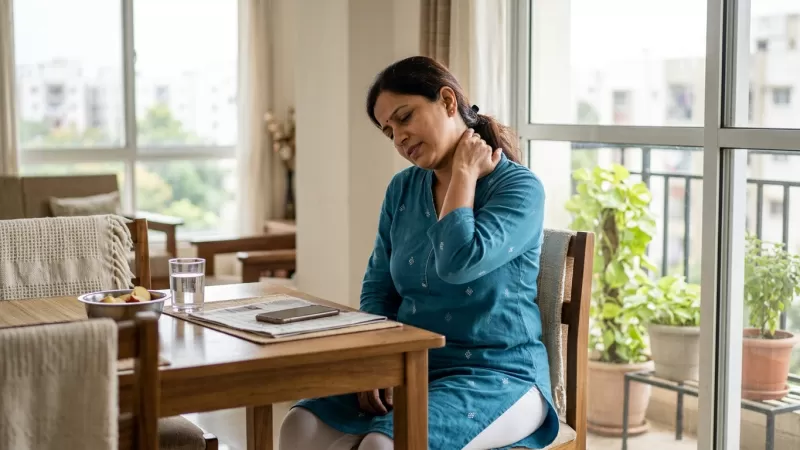
- Difficulty rotating your neck: Turning to look at someone or glancing at the wall clock feels uncomfortable. The neck may even feel stuck or make a little cracking sound.
- Hip discomfort and reduced flexibility: Getting up after a long call, the hips feel locked or sore, and you might need a moment to stretch before walking away from the chair.
- Rounded shoulders and upper back tension: After typing or using a phone for too long, your shoulders hunch forward and your upper back feels tight.
- Heavy legs or tingling: Sometimes, crossing your legs or sitting in one position for too long leads to numbness, tingling, or a sense of heaviness that takes a few steps to shake off.
Chair-Based Movements That Bring Real Relief
- Seated Cat-Cow Stretch: Sit tall, place your hands on your knees, inhale as you arch your back and look up, exhale as you round your back and tuck your chin. Repeat for 8–10 slow breaths. This is especially good for relieving lower back compression after continuous desk work India.
- Hip Flexor Stretch (Seated Lunge): Slide to the edge of your chair, hold the seat for support, and extend one leg behind you with the knee bent and toes on the floor. Feel the stretch in the front of the hip. Hold and switch.
- Neck Release: Drop your right ear toward your right shoulder, gently press down with your right hand, and feel the lengthening in the side of the neck. Switch sides, holding each for 10–15 seconds.
- Shoulder Rolls: Roll your shoulders up, back, and down in a slow, circular motion. Repeat 10–15 times. This relieves tension from hunching over screens or paperwork.
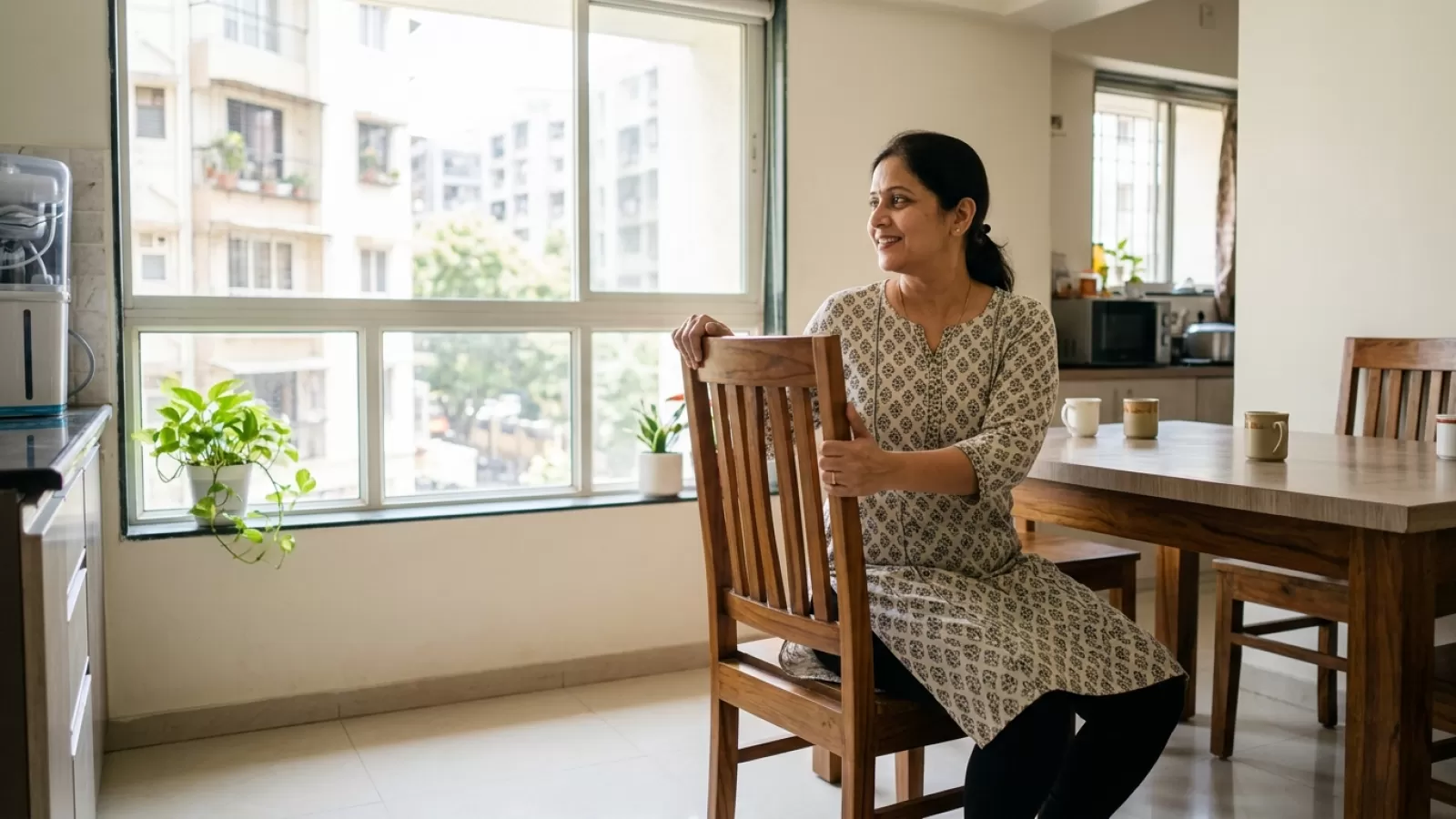
- Seated Spinal Twist: Sit sideways in your chair, place your hands on the backrest, and gently twist your upper body, keeping your hips facing forward. Hold for a few breaths, then repeat on the other side.
The beauty of these relief exercises for extended sitting Indian adults is that they don’t require fancy equipment. Most adults find they can do these in regular home clothes, even during a work call or while waiting for the dal to pressure cook.
How These Discomforts Appear During Typical Indian Days
In many Indian families, the post-lunch slump is a real thing. After a meal of rice, sambar, and dahi, adults often settle back into their chairs for another round of emails or household paperwork. This is when the stiffness quietly sets in. Someone might rub their lower back while talking on the phone, or stretch their neck waiting for the kettle to whistle. During long meetings—especially those that stretch past an hour—everyone starts shifting in their chairs, shoulders drooping and legs crossed in every possible way to find relief.
Working professionals in Bengaluru or Gurugram might find themselves wedged into small spaces, with laptops balanced on makeshift desks, only to stand up after hours and realize their hips are barely moving. Seniors who spend afternoons handling household accounts or reading the newspaper in a favourite chair also notice the same patterns. The discomfort rarely shouts—it builds quietly, becoming a part of the day until you do something about it.
Many families in Indian cities have quietly discovered that chair exercises after sitting for hours India fit naturally into these little breaks. Instead of waiting for pain to demand attention, a few stretches between tasks can bring immediate relief.
What To Do When Chair Exercises Aren't Enough
Most of the time, these simple relief exercises for extended sitting Indian adults are enough to get you moving comfortably again. That said, if you notice severe pain, numbness, or symptoms that don’t ease up after several days of regular stretching, it’s best to check in with your doctor. Sometimes, underlying conditions can make sitting discomfort worse, and a medical professional can help you figure out the next steps.
Common Questions
Let’s take a moment to talk through the questions that come up in real Indian homes—after long workdays, or when you notice that same old stiffness again. Chair exercises after sitting for hours India are most helpful when they fit into your daily rhythm. Here are some answers grounded in everyday life.
What chair exercises provide the fastest relief for the specific discomforts created by hours of continuous sitting for Indian adults?
The fastest relief often comes from three simple moves: seated cat-cow for the back, a quick seated hip flexor stretch, and gentle neck tilts. For example, a homemaker in Mumbai might pause between evening chores, sit tall, and do cat-cow stretches right on her dining chair. These target the lower back, hips, and neck—the most common trouble spots after long sitting. You don’t need a gym set-up; any sturdy chair works.
How quickly do chair-based relief exercises address the accumulated discomfort of extended sitting?
Most people feel some comfort in just 2–3 minutes. After a long desk session, a few rounds of seated stretches can release tension almost immediately. It’s common in Indian offices for someone to do shoulder rolls or a quick twist during a call and feel better right away. That said, more stubborn stiffness may need several rounds through the day. The key is to use relief exercises for extended sitting Indian adults at regular intervals, not only when things feel really tight.
Are there chair exercises specifically designed for the back, neck, and hips that are the most common complaint areas for Indian desk workers?
Yes, there are. For the back, seated cat-cow and spinal twists work well. For the neck, slow tilts and gentle turns release tension. For hips, the seated lunge stretch is practical—even if you’re in a small room. Many working adults find these movements fit easily between tasks, whether you’re at home or in a shared office space. Seated exercises for long sitting India are practical because you never need to clear floor space.
How do you maintain the benefits of chair-based relief exercises across a full Indian working day rather than just treating the acute discomfort at the end?
The trick is to sprinkle these stretches throughout your day. After every hour or so, take a short movement break—do a quick hip stretch or some shoulder rolls. Many Indian families set reminders before chai breaks or after meal times to move a bit. Over time, this pattern prevents the stiffness from building up, so you don’t reach the point where only a long stretch session can help.
What is the most effective single chair exercise for immediately reducing lower back discomfort after several consecutive hours of sitting?
The seated cat-cow stretch is the top pick for most adults. You can do it quietly in your chair, even during a meeting. In a typical Indian home, someone might sneak in a series of cat-cow movements while waiting for the cooker’s whistle. It mobilizes the spine and relieves compression, making it the go-to relief exercise for extended sitting Indian adults who have been at their desks for hours.