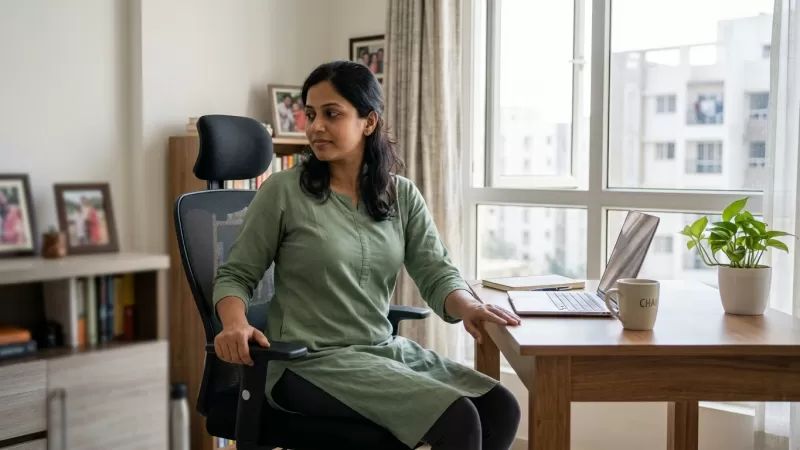
Many Indian homes now have a new kind of silence during working hours. There’s no sound of footsteps shuffling to the gate, no hurried rush to the bus stop, and not even the casual walk to fetch chai from a pantry. For many adults working from home, chair exercises are sometimes the only movement the body gets in an entire day, especially when the home desk sits just a few feet from the bed.
The shift to remote work has brought comfort and convenience, but also a worryingly still routine. With the chair as your daily companion, the idea of 'chair exercises work from home India' is no longer a minor suggestion. It is quietly becoming a survival trick for physical health.
Why Remote Work Keeps You Sitting Longer Than Office Life
In Indian households, routines have always included little bursts of activity—walking the kids to the school bus, climbing stairs in older buildings, or simply crossing crowded office hallways. These days, for many working professionals, the longest walk might be from the kitchen to the desk. The ease of WFH desk exercises India is that they fit into small spaces, but the reality is, most people skip them entirely.
Working from home often means there is no need to dress up, no rush to catch a cab, and no reason to step outside. Family members tiptoe around to avoid interrupting video calls. Meals are brought to the desk by a spouse or parent. The daily rhythm that once included countless small movements now revolves around sitting in one place for hours. This is especially true in cities where home sizes are small, and you may be sharing a workspace with others in the same room.
The Reasons Behind All-Day Sitting in Indian WFH Setups
The tricky part is that the Indian work-from-home setup rarely encourages movement. There’s often a pressure to appear 'always available' online, whether you’re actually working or just waiting for the next call. Stepping away from the desk feels risky, especially in teams where everyone’s activity status is visible.
Parents working from home may also feel guilty about leaving their spot, as this is usually the only quiet corner in a noisy joint family environment. The lines between home and office are blurry. You might skip moving around to avoid bumping into someone on a call or because there just isn't space to walk.
Fitness coaches who train working adults often find that most movement in Indian homes comes from daily tasks, not planned exercise. With WFH, even those small tasks vanish. Compared to office buildings with long corridors or stairs, a 2BHK flat or a single rented room barely offers space for stretching, let alone walking breaks.
All this means that intentional movement, like home office exercises Indian adults can do during the day, becomes both more important and harder to remember.
How to Know If Too Much Sitting Is Taking a Toll
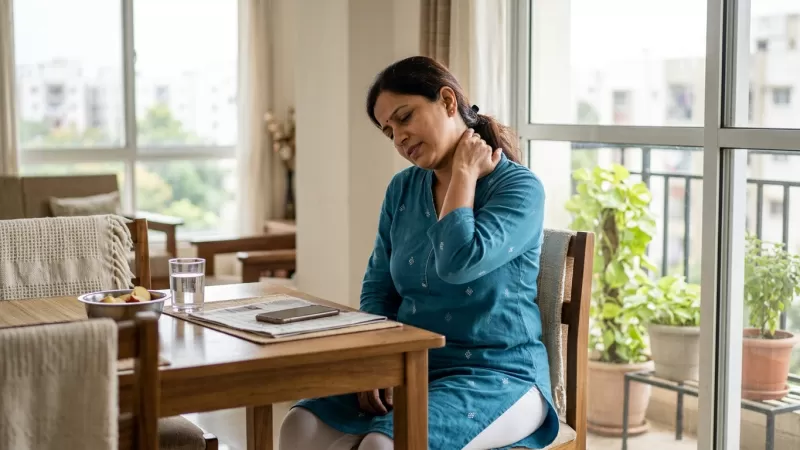
- Stiffness in the neck, lower back, or hips: Many WFH adults find themselves massaging their own shoulders or shifting in their chair after hours at the desk.
- Swollen feet or tingling legs: Especially during summer, sitting for long periods can cause your legs to feel heavy or numb.
- Persistent headaches or eye strain: Staring at a screen for too long without movement can bring on headaches, sometimes made worse by the heat and humidity.
- Fatigue even after a full night’s sleep: When your body doesn’t move much, it’s common to feel tired all day—even if you’ve slept well.
- Difficulty concentrating after lunch: Many notice that post-lunch sluggishness is worse during WFH, probably because there’s no walk back to the desk to help digestion.
Chair Exercises and Small Movements You Can Actually Do at Home
- Seated leg lifts: While on a long call, lift one leg at a time and hold for a few seconds. This simple move helps blood flow and works your thigh muscles.
- Shoulder rolls and neck stretches: Rotate your shoulders forward and backward, or gently tilt your head from side to side. Many Indians find this relieves the tension that builds up after hours of typing or talking.
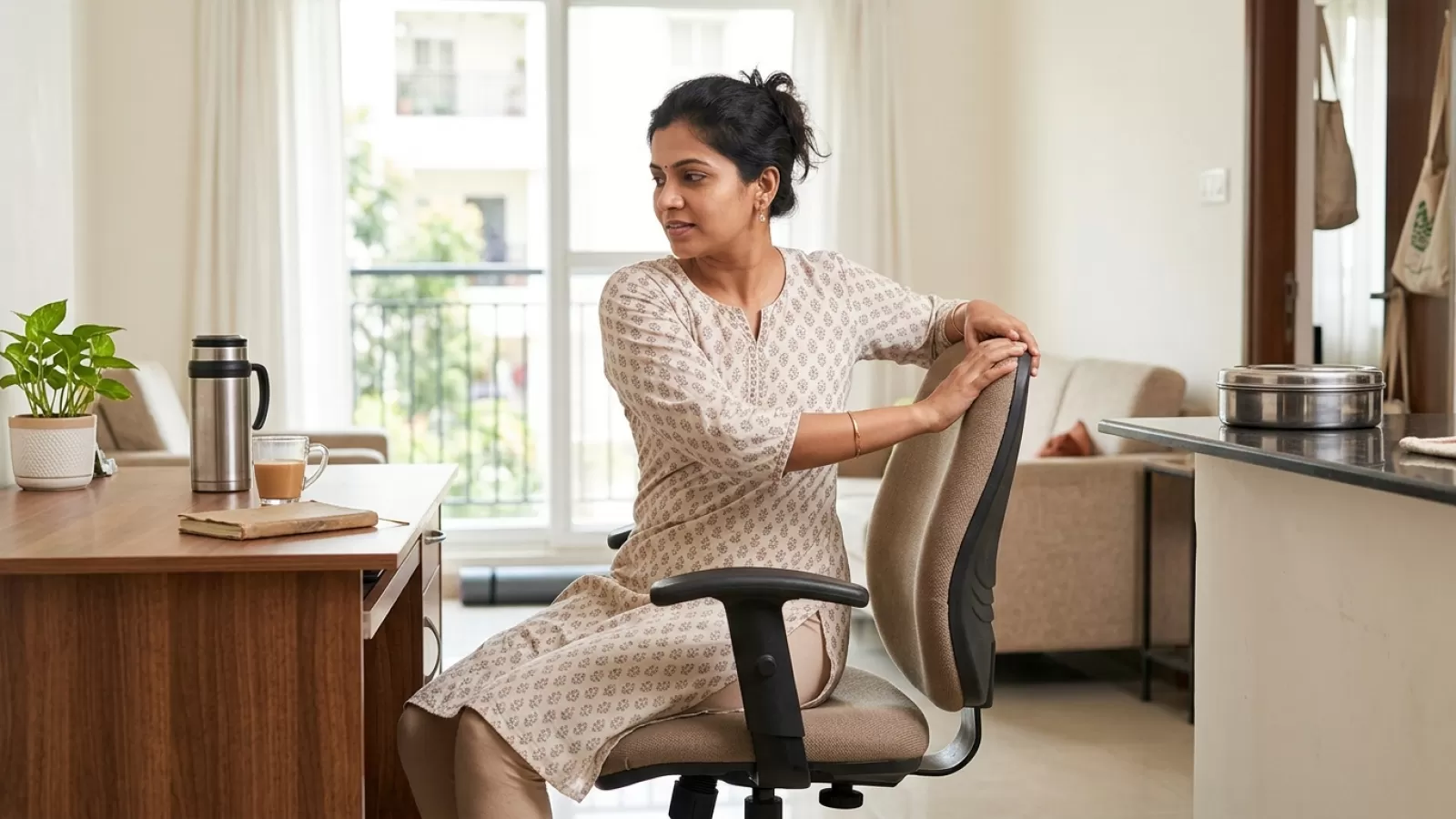
- Seated spinal twists: Turn your upper body to one side, holding the chair’s backrest, then switch sides. This is a classic WFH desk exercise India has quietly adopted in small homes with little space.
- Ankle circles: Rotate your ankles while seated, especially if your feet swell in the heat. This keeps joints flexible and can be done during video calls.
- Marching in place (while seated): Alternately lift your knees as if marching, right from your chair. It feels silly at first, but it wakes up sleepy legs.
On days when you’re too drained for formal exercise, these home office exercises Indian adults can do at their desks help more than you’d think. The key is to weave them in between meetings or while waiting for files to download, not to wait for a perfect time.
Recognising the WFH Pattern in Everyday Indian Life
Many families in Indian cities have quietly discovered this: desk jobs at home are sneakily harder on the body than office work. In the office, you might fetch chai with a colleague, walk stairs during a power cut, or at least move between rooms. These days, a working professional commuting in Bengaluru used to get 5,000 steps just on the way to and from the bus stop. Now, that same person may realise at 5pm that the only steps they’ve taken are to the kitchen sink and back.
On mornings when everything runs late, breakfast happens at the desk. Lunch comes in a tiffin, set beside the laptop, and even chai breaks are squeezed into calls. There’s no transition between home and work, so the hours blend together, and your body stays folded into one shape for far too long.
Most Indian adults working from home have not set up a dedicated office space. Sometimes, the dining table is the desk, or the bed is the backrest. This means that the physical effects of all-day home desk work often show up faster than in an office setting. The need for chair exercises work from home India is something people are starting to accept, sometimes only after the aches set in.
When It’s Time to Reach Out for Help
If you notice persistent pain, swelling, or numbness that doesn't go away after trying simple chair exercises, it’s a good idea to check with a doctor. Difficulty moving your neck, back, or legs beyond normal stiffness is another signal. For many, a quick consultation can offer peace of mind and prevent small problems from growing.
Common Questions
Many readers wonder how to fit movement into a packed work-from-home day, especially in Indian homes where space and privacy are limited. You’re not the only one feeling the pinch of all-day sitting and wondering if home office exercises for Indian adults can really make a difference. Let’s walk through some of the most common questions, with real-life moments in mind.
What are the most important chair exercises for Indian work-from-home adults to address the specific movement deficits of all-day home desk work?
For Indian adults working from home, the basics matter most. Seated leg lifts, shoulder rolls, neck stretches, spinal twists, and ankle circles directly target the stiffness and sluggishness that come with long hours at a desk. In many Indian homes, these WFH desk exercises can be done even in small rooms or shared spaces. The goal isn’t to break a sweat, but to keep the body from locking up. Doing just a few of these every couple of hours often helps prevent the aches that build up by evening.
How does the physical impact of working from home compare to office work for Indian adults in terms of daily movement?
In offices, even the smallest tasks—walking to the canteen, climbing stairs during a power cut, or crossing to a different department—add up to much more movement than most people realise. At home, those built-in reasons to move disappear. Many WFH Indian adults find that their daily step count drops to almost nothing. This sudden drop can quickly cause stiffness, weight gain, and tiredness that weren’t as noticeable when commuting to an office.
What chair exercise routine is most realistic for building into a WFH day without disrupting the work itself?
Most Indian WFH adults can fit in a few minutes of chair exercises every hour without drawing attention or breaking concentration. For example, doing shoulder rolls and neck stretches after each meeting, or ankle circles during calls, blends seamlessly into the day. On afternoons after a heavy lunch or during long video conferences, leg lifts or seated marches can wake up tired legs. The best routine is the one you don’t have to plan—just slip in a move whenever you remember.
How do Indian WFH adults build physical activity into a day that has genuinely zero built-in movement requirements?
Many households have started setting small reminders—like putting a glass of water across the room or standing up to stretch every time the phone rings. Some families make it a habit to do a quick set of home office exercises Indian adults can do together before chai time. The main thing is not to wait for the perfect moment. Even a short walk during a power cut or a stretch before switching on the fan helps break the sitting spell.
What physical signs tell a WFH Indian adult that their sedentary routine has become significant enough to address urgently?
When you wake up with a stiff back, feel constant tingling in your feet, or notice swelling in your legs by evening, these are warning signs. In some Indian homes, people realise they can’t sit cross-legged or get up from the floor as easily as before. If you find yourself fidgeting or needing to adjust your chair every hour, it’s your body’s way of asking for movement. If these signs persist, it’s wise to talk to a doctor.