In many Indian homes, the end of the workday means pushing back a creaky chair, stretching a stiff neck, and rubbing a sore lower back. It’s hardly surprising. These days, back exercises for Indian desk professionals are not just a fitness trend—they’re a quiet necessity. The aches and pains that follow hours at a laptop in a small home office, a shared dining table, or even a bedroom corner have become all too familiar.
The tricky part is that these back issues often follow a predictable pattern: tight hips from sitting cross-legged on a chair, a chest that feels pulled forward, glutes that barely get used, and an upper back that seems to forget its purpose. Home exercises for desk worker back pain in India are slowly becoming part of evening routines, right after chai and before dinner prep, as more professionals realise that these patterns need specific attention—not just a general walk around the colony or a few random stretches.
How Desk Work Shapes Back Problems in Indian Homes
For many Indian professionals, the workday doesn’t end when the clock strikes six. Work-from-home setups often mean sitting for 9–10 hours, sometimes interrupted by power cuts or urgent chores, but with little real movement. Indian professional back health exercises are often overlooked in the rush of deadlines, family calls, and kitchen duties. Desks are sometimes makeshift—an old study table, the dining table, or even a corner of the bed—which means posture is rarely ideal.
The classic pattern emerges: hips stay in a bent position for hours, the glutes barely fire, and the upper back rounds forward over a laptop or phone. Over time, this creates tight hip flexors, weak glute muscles, a stiff chest, and a feeble upper back. Many IT professionals, bankers, and teachers who shifted to remote work during lockdowns found this out the hard way. The pain isn’t just in the lower back—it often creeps up between the shoulders or even radiates down the legs. These are not random aches. They are the body’s way of saying, “You’re using the same muscles all day and forgetting the rest.”
Back pain desk job India home workout routines are sometimes attempted in a burst of motivation, but without targeting the real imbalances, the pain lingers. Families often notice that one person who starts a specific routine (maybe after a physiotherapist visit or a tip from a colleague) quietly becomes the evangelist, urging others to try a few stretches between meetings or during chai breaks.
The Real Reasons Behind Desk-Related Back Trouble
This pattern of pain isn’t just about sitting too long. It’s about how we sit and what we don’t do while we sit. In Indian homes, many professionals end up working at whatever table is available—sometimes with kitchen stools, plastic chairs, or even the floor—and rarely with proper back support. Over time, the same muscle groups shorten and tighten (like the hips and chest), while others weaken (like the glutes and upper back). The body adapts, but not in a good way.
Physiotherapists often find that these issues are almost universal among Indian desk workers: the hip flexors are tight from constant sitting, glutes are underused because they’re not engaged, the chest muscles become short and stiff from hunching, and the upper back muscles weaken from lack of use. It’s not about laziness—it’s about repetitive daily routines that ignore certain muscles completely. The result is a chain of discomfort that starts in the lower back but often spreads.
Another factor is cultural. In many homes, taking time for exercise during work hours is still seen as indulgent, especially for women juggling housework and office work. So, the cycle continues until something breaks—usually in the form of chronic pain or a sudden injury while lifting groceries or chasing after a child. The catch is, targeted back exercises (not just general stretching or walking) are the missing piece that directly tackle these imbalances and help the body recover—sometimes even after years of pain.
Clues Your Back Is Telling You Something’s Off
- Persistent Lower Back Ache: A dull, nagging pain that shows up after sitting for long periods, often worse after meetings or late-night work sessions.
- Stiffness When Getting Up: Feeling like your lower back or hips need extra time to ‘wake up’ after sitting for a while—sometimes accompanied by a limp or awkward walk to the kitchen.
- Shoulder or Upper Back Tightness: A band of tension between the shoulder blades, especially after hunching over a laptop or phone for hours.
- Numbness or Tingling: Occasionally, a tingling sensation down the legs or arms, which can be the body’s way of signalling nerve involvement—definitely a sign to take things seriously.
- Quick Fatigue with Chores: Noticing that sweeping, mopping, or even lifting a bucket feels harder than it used to, and the back tires out quickly.
Many families quietly adapt—adjusting chairs, piling cushions, or asking others to help with heavier chores. But these are usually temporary fixes.
Specific Home Steps That Work for Indian Desk Workers
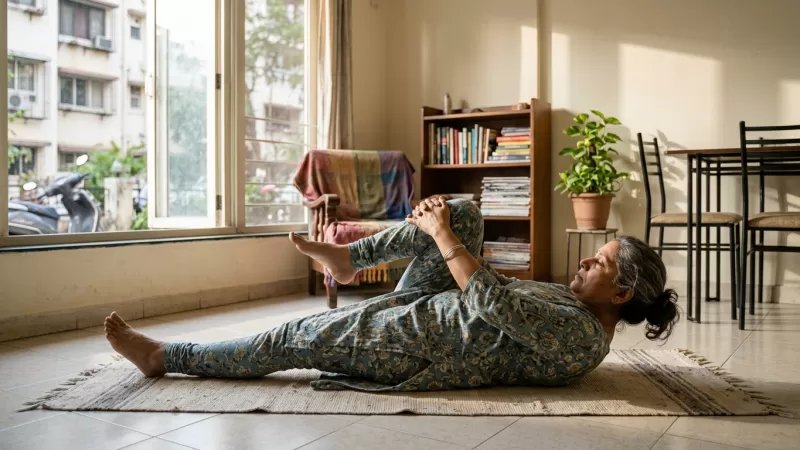
- Hip Flexor Stretches: After long desk hours, kneeling stretches (like a gentle lunge with the back knee on the floor) help open up tight hips. Ten minutes before dinner prep, or while waiting for the cooker’s whistle, can be enough.
- Glute Activation Exercises: Simple moves like glute bridges (lying on your back, feet flat, and lifting hips up) or standing leg lifts can wake up sleeping glutes. These exercises are quiet enough to do in a bedroom or living room without much space.
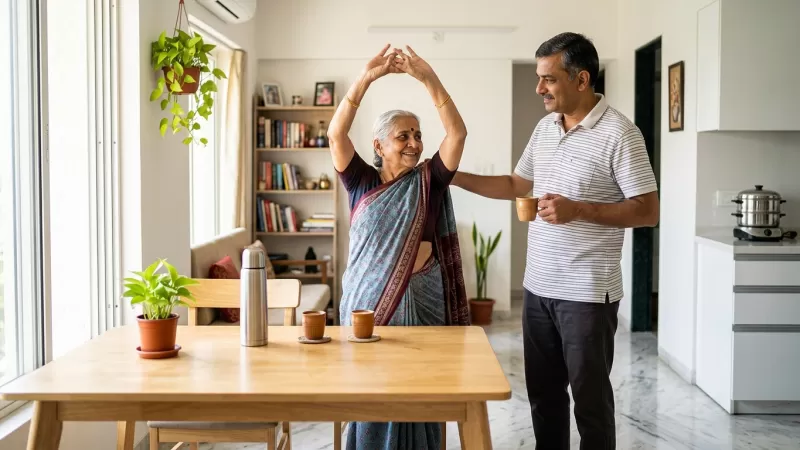
- Chest Openers: Using a towel or dupatta, hold both ends behind your back and gently lift your arms to stretch the chest. This counters the hunching that comes from laptop work and phone scrolling.
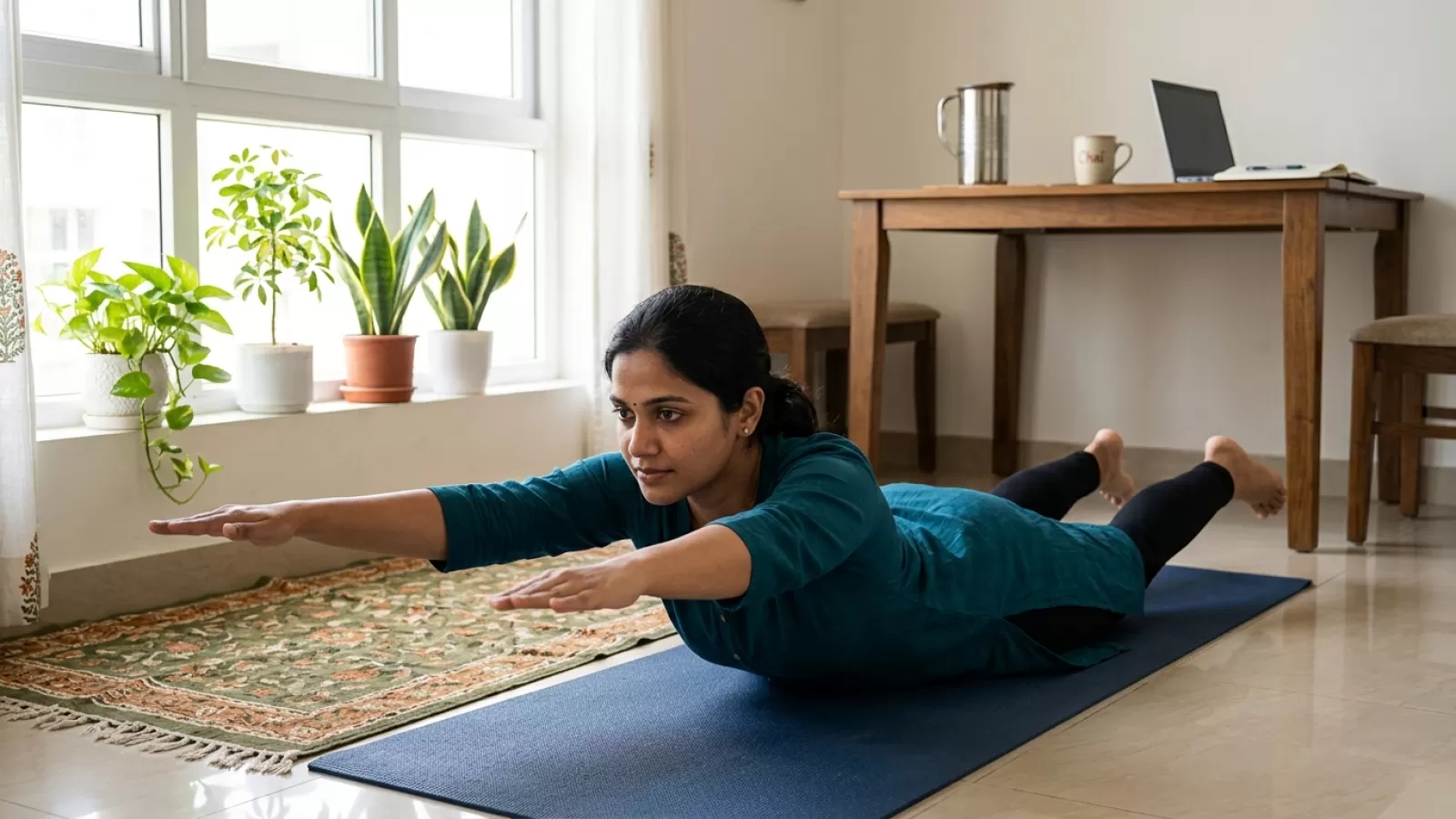
- Upper Back Strengthening: Wall slides or ‘Y’ raises (lying face down and lifting arms overhead in a Y shape) can gradually strengthen shoulder and back muscles. No fancy equipment needed, just a bit of floor or wall space.
- Daily Consistency Over Intensity: Short, focused routines (10–15 minutes) are often more sustainable than long workouts. Many professionals fit these in after evening chai, during TV time, or even between household chores. The key is regularity, not perfection.
It can feel awkward at first—especially in a busy home where space and privacy are limited. But over time, these targeted moves tend to bring more relief than unstructured stretching or general walks.
Back Pain and Exercise Patterns in Indian Work-From-Home Life
In a Bengaluru apartment during monsoon, three flatmates—all software professionals—started noticing the same lower back complaint. Each had their own chair and laptop, but the work setup was less than ideal. One began a routine of specific back exercises for Indian desk professionals after a physiotherapist friend’s advice. Within weeks, he was sharing stretches during tea breaks, and soon all three were spending a few minutes every night working on hip stretches and glute bridges while catching up on web series.
Across Indian cities, similar patterns emerge. Many families have quietly discovered that when one member makes targeted home exercises a habit, others gradually join in—sometimes turning it into a group activity before dinner or after morning poha. The important thing is that these routines are woven into the existing rhythms of family life, not treated as a chore or an interruption.
Even in homes with elders, children, and multiple generations, these exercises can be adapted. A senior doing gentle wall slides in the hallway, a teenager working on glute bridges in the bedroom—everyone finds a version that fits their needs. Some use breaks between meetings, others wait for the evening power cut, turning an inconvenience into a chance to move.
Knowing When to Speak to a Professional
If you find that pain is worsening, spreading, or causing numbness or weakness in the legs or arms, it’s wise to check with a doctor or physiotherapist. Home exercises for desk worker back pain in India are helpful for mild to moderate discomfort, but ongoing or severe symptoms should be properly evaluated. Also, if you notice that daily life is getting harder—like struggling to lift a bucket or feeling off-balance—it’s better to get a professional opinion. Prevention is best, but some situations need expert eyes.
Common Questions
Back exercises for Indian desk professionals often spark a lot of questions, especially when you’re juggling work, family, and a busy household. Many routines sound promising, but it can be hard to know what truly works in the chaos of real Indian homes. Let’s clear up some common doubts, with moments you might recognise from your own routine.
What specific back exercises address the muscle imbalances most commonly created by Indian desk work?
Exercises that target the hips, glutes, chest, and upper back are key. Hip flexor stretches (like kneeling lunges), glute bridges, chest openers with a towel, and wall slides for the upper back fit easily into small spaces. In many Indian homes, these can be done right after evening chai or while waiting for dal to cook, making them practical. Targeting these areas helps undo the tightness and weakness caused by hours of sitting at work-from-home setups.
How often do Indian desk workers need to do back exercises to maintain spine health during a career of desk work?
Most people find that 10–15 minutes daily or every other day works well. For Indian desk workers, it’s often easiest to tie these routines to an existing habit—after morning chai, before dinner, or even during TV time. Regular, small amounts of movement are better than rare, intense sessions. The important thing is to keep it sustainable, even on busy days or during family events.
Can targeted back exercises genuinely reverse the effects of years of desk work or only prevent further deterioration?
Many Indian professionals are surprised to find that targeted back exercises can genuinely improve old aches, not just stop new ones. While severe problems may need specialist care, most chronic stiffness and mild pain respond well to routines that address the actual muscle imbalances. Some households see a member’s 5-year back pain fade in a few months with the right moves—especially when consistency is maintained.
Which exercises are most important for Indian desk workers with upper back pain versus lower back pain?
For lower back pain, focus on hip flexor stretches and glute bridges. For upper back pain, add chest openers and wall slides. In many homes, people combine both, but if one area is worse, spend a little extra time on those moves. Even during a busy day, 3–5 sets of each exercise can help. Sometimes, a family member with upper back pain does their routine during a TV serial, while another with lower back pain stretches during kitchen breaks.
How do you fit a targeted back exercise routine into an Indian working day that is already full?
Try linking exercises to daily rituals. A kitchen in Nagpur at 6am is often busy, but some professionals use the early quiet to do glute bridges or lunges on a yoga mat before the rest of the house wakes up. Others squeeze in stretches after evening chores, or while waiting for the cooker. The trick is to make it part of your normal flow, not an extra task. Over time, it becomes as routine as making chai.