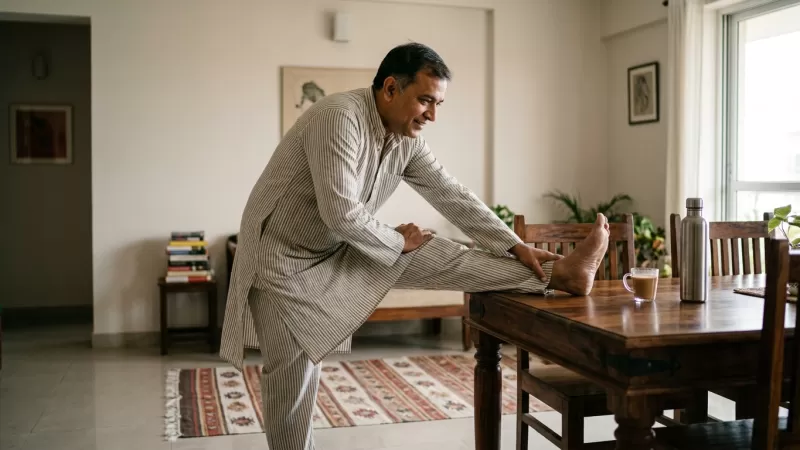
Most of us know the feeling: you wake up, try to stretch a bit, and realise your body feels like a tightly wound spring. Or maybe it hits after hours of sitting at the dining table, working on your laptop, or just standing in the kitchen during a long cooking session. Stiffness can creep in quietly, especially as we juggle busy routines, family needs, and the changing Indian weather. The good news? You don’t need fancy equipment or a strict workout plan to bring some ease back into your body. Sometimes, just a few gentle, comforting moves at home can help you feel more relaxed and comfortable—without any performance pressure.
Why Our Bodies Get Stiff (And Why That’s Normal)
It’s easy to wonder if there’s something wrong when you notice tightness in your back, neck, or legs. But honestly, stiffness is a pretty normal part of modern life, especially in Indian homes where long hours of sitting—whether it’s on the floor, at a desk, or in front of the TV—are common. Even daily chores, like sweeping or chopping vegetables, can leave certain muscles feeling overworked and others ignored.
In many families, you’ll notice that parents and grandparents tend to move less as the years go by, and the stiffness seems even more pronounced in winter or after festivals when routines get disrupted. It’s not always about age—sometimes it’s just about lack of movement or holding one position for too long. That said, staying sedentary for days together can make the body feel older than it actually is.
The tricky part is, many people think you need to do big, energetic workouts to feel better. But that’s not really true. In fact, gentle movements—done slowly and mindfully—often help more than anything else, especially if you’re feeling tired or hesitant about exercise in general.
Getting Ready: Creating a Comfortable Space at Home
You don’t need much to start. In most Indian homes, you’ll find a mat, a small towel, and maybe a quiet corner in the living room or bedroom. That’s all you need. Some people prefer to do these moves in their pajamas early in the morning, while others find it easier to fit them in during the evening before dinner. There’s no perfect time.
Here are a few simple tips to help you get started:
- Choose a spot where you won’t be disturbed for 10–15 minutes.
- Wear loose, comfortable clothes—your regular home wear is fine.
- If your floor is hard, spread out a soft mat or even a folded bedsheet.
- Keep your phone away or on silent if possible.
Above all, remember—you don’t need to do everything perfectly. It’s about comfort, not competition.
Gentle Neck and Shoulder Release
Neck and shoulder stiffness is common, especially for those using computers or phones for long stretches, or even after a night of less-than-ideal sleep. You’ve probably noticed how we tend to hunch our shoulders without realising it, especially during stressful days.
Try these soft moves, either sitting on a chair or cross-legged on the floor:
- Sit tall, let your arms rest by your sides. Gently roll your shoulders up, back, and down in a slow circle. Repeat five times, then reverse the direction.
- Drop your right ear towards your right shoulder, feeling a mild stretch on the left side of your neck. Hold for a few breaths, then switch sides.
- Clasp your hands behind your head, gently press your head into your hands, and let your elbows relax out to the sides. You should feel a soft stretch across your upper back and shoulders.
Never force any stretch. If you feel pain or dizziness, pause and rest.
Easy Back Comfort Movements
Back stiffness—especially in the lower back—is something many families quietly deal with, whether from lifting heavy buckets, working at a desk, or even sweeping with a jhadu. It doesn’t take much to ease some of that tightness.
Here are a couple of gentle moves:
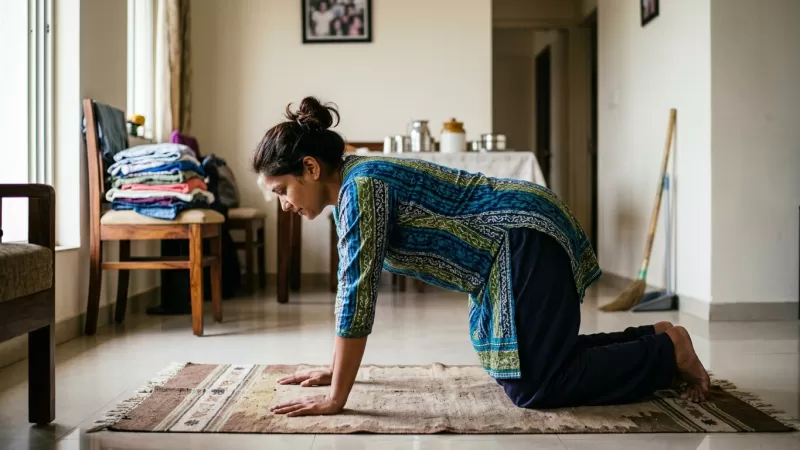
- Cat-Cow Stretch: Kneel on all fours (hands and knees on the mat). As you inhale, gently arch your back, lifting your head and tailbone. As you exhale, round your back, tucking your chin and pelvis. Move slowly, matching your breath. Repeat 5–8 times.
- Knee-to-Chest Hug: Lie on your back, bring one knee up to your chest, and hug it gently. Hold for a few breaths, then switch legs. If you like, hug both knees at once.
These moves shouldn’t feel strenuous. They’re just to bring a little movement and warmth to your spine, not to test your flexibility.
Simple Leg and Hip Releases for Everyday Comfort
Many people in Indian homes have tight hips and legs, especially if they sit cross-legged on the floor or on low stools. This kind of tightness can make it harder to get up from the floor or walk comfortably, especially as you get older.
Here are two gentle moves to try:
- Seated Forward Bend: Sit on the floor with your legs straight. Inhale, then slowly lean forward, reaching towards your feet (it’s fine if you only reach your knees or shins). Rest your hands wherever they reach, and let your head and neck relax. Hold for a few breaths.
- Butterfly Stretch: Sit with your feet together and knees dropped out to the sides. Hold your feet and gently move your knees up and down, like the wings of a butterfly. This helps release tension in the hips and inner thighs.
Don’t worry about how far you can bend or stretch. The feeling of a mild release is enough. If you’re stiff, even a little movement goes a long way over time.
Gentle Moves for Hands, Wrists, and Ankles
It’s easy to forget about the smaller joints, but in reality, so many Indian daily tasks—cooking, cleaning, folding laundry—involve repetitive hand and wrist movements. Over time, these areas can get surprisingly stiff, especially if you’re not paying attention to them.
Try these quick moves:
- Wrist Rolls: Hold your hands out in front of you and gently roll your wrists in circles, both clockwise and anti-clockwise, for 10–15 seconds each.
- Finger Stretch: Spread your fingers wide, then make a gentle fist. Repeat 5–10 times.
- Ankle Circles: Sit comfortably and lift one foot. Rotate your ankle in a circle, both directions, then switch feet.
These can be done while sitting and even as little breaks during chores. They’re small, but they do help.
Breathing and Relaxation: The Overlooked Comfort Tool
This part is often ignored, but a few slow, deep breaths can make a surprising difference to how your whole body feels. Many people in India grew up hearing about the benefits of slow breathing from elders or even during school yoga sessions, but it’s easy to forget when life gets busy.
Try this simple habit:
- Sit or lie comfortably. Place one hand on your chest, the other on your belly.
- Breathe in slowly through your nose, feeling your belly rise (not just your chest).
- Exhale fully, letting your body relax. Repeat for 5–10 breaths, or as long as you like.
On tough or anxious days, just two minutes of slow breathing can help ease a tense body and mind.
Making These Moves a Gentle Habit
The hardest part is often starting. Life gets busy, mornings can be rushed, and evenings are filled with family or work calls. But even fitting in 5–10 minutes, a few times a week, tends to make a real difference over time.
Here’s what works for many:
- Pair a couple of moves with something you already do—like stretching your neck after your morning chai, or rolling your ankles while watching the news.
- Don’t worry if you miss a day or two. Consistency is helpful, but it’s not all-or-nothing.
- Encourage family members to join in. Children and seniors can do these moves together, often turning it into a light, bonding activity.
You don’t need to be flexible or fit to begin. The goal is simple comfort, not perfection or progress charts.
Listening to Your Body, and When to Take It Easy
One gentle reminder: if any movement feels sharp, painful, or causes breathlessness, it’s best to pause and rest. Stiffness tends to respond to slow, patient effort—forcing your body never helps. And if you’re living with any health conditions or recovering from injury, it’s wise to check with your doctor before trying new movements, just to be safe.
Most of the time, our bodies appreciate simple kindness—soft stretches, slow breathing, and a little patience. In Indian homes, where comfort is sometimes sacrificed for busyness or the needs of others, these small acts of self-care can quietly add up.
So, the next time you notice your body feeling a bit stiff, remember: you don’t need to do much. Just a few gentle comfort moves at home can bring a little more ease into your day, whenever you need it.