In many Indian homes, families only start to notice a parent’s unsteady walk or the way a grandparent quietly holds onto furniture after something happens—a missed step on the verandah, a slip in the bathroom, or a sudden stumble while reaching for chai. Balance exercises for Indian seniors at home often become part of the routine only after a fall, when railings and anti-skid mats appear almost overnight. Yet, these small, daily movements—standing on one leg while brushing teeth, or rising from a chair without using hands—can make a difference long before there’s any visible struggle.
That said, the tricky part is that balance deterioration creeps in silently. Most families notice it only after a scare. The good news is, a few minutes of fall prevention exercises for the elderly in India, done each day, often help seniors maintain confidence and move about the house with less worry. It’s not about gym equipment or fancy shoes—it’s about making use of the spaces and routines already present in most households.
Why Balance Deterioration Hides in Plain Sight for Indian Seniors
In most Indian families, ageing parents or grandparents continue with daily chores—watering tulsi, folding laundry, stirring dal—long before anyone suspects their sense of balance has changed. There’s a cultural expectation that older adults will keep moving, whether it’s walking to the corner shop or sitting cross-legged on the floor for pooja. Because of this, the early signs of balance loss are often missed or brushed aside as ‘normal’ age changes.
Families usually focus on safety modifications—grab bars, extra lighting—after a fall, rather than starting with home balance training for Indian elderly beforehand. The catch is, by then, some confidence is already lost. Many homes, especially in joint families, assume someone will always be nearby to help, which sometimes delays starting senior stability exercises in India. But prevention often begins with making daily balance practice as routine as morning chai or evening walks.
What Causes Balance to Decline Quietly in Indian Homes
Several things work together. Ageing itself makes nerves and muscles slower to react, but most Indian seniors aren’t doing anything specifically to maintain balance—unlike walking, balance isn’t built into most daily movements after a certain age. Also, many elders cut back on outings or group activities, especially during humid summers or after a health scare, which means less practice using balance in a variety of settings.
Fitness coaches who train working adults often find that most movement in Indian homes comes from daily tasks, not planned exercise. This means balance can quietly slip if those tasks don’t challenge stability—like always sitting to chop vegetables instead of standing, or avoiding stairs. Power cuts, cluttered hallways, and wet bathroom floors add to the risk, but the root often lies in the body’s growing hesitation to trust itself.
Small Signals: How Indian Families Notice Balance Issues
- Reaching for Support More Often: A parent starts holding onto the wall or a chair while moving between rooms, even if they never mention feeling unsteady.
- Hesitating on Stairs: Climbing up to the terrace or stepping down from a low stool becomes slower, sometimes with one hand always searching for a railing.
- Sudden Stumbles While Turning: Quick changes in direction—like turning to answer a call from the kitchen—lead to a brief wobble or a need to steady themselves.
- Difficulty Rising from Floor Seating: Getting up from the floor after a family pooja or lunch on a mat becomes a careful, multi-step process, sometimes needing help.
- Unspoken Fear of Slippery Surfaces: Seniors quietly avoid washing the bathroom or going out during the first rain, often citing other reasons.
Daily Actions: Balance Exercises Indian Seniors Can Do at Home
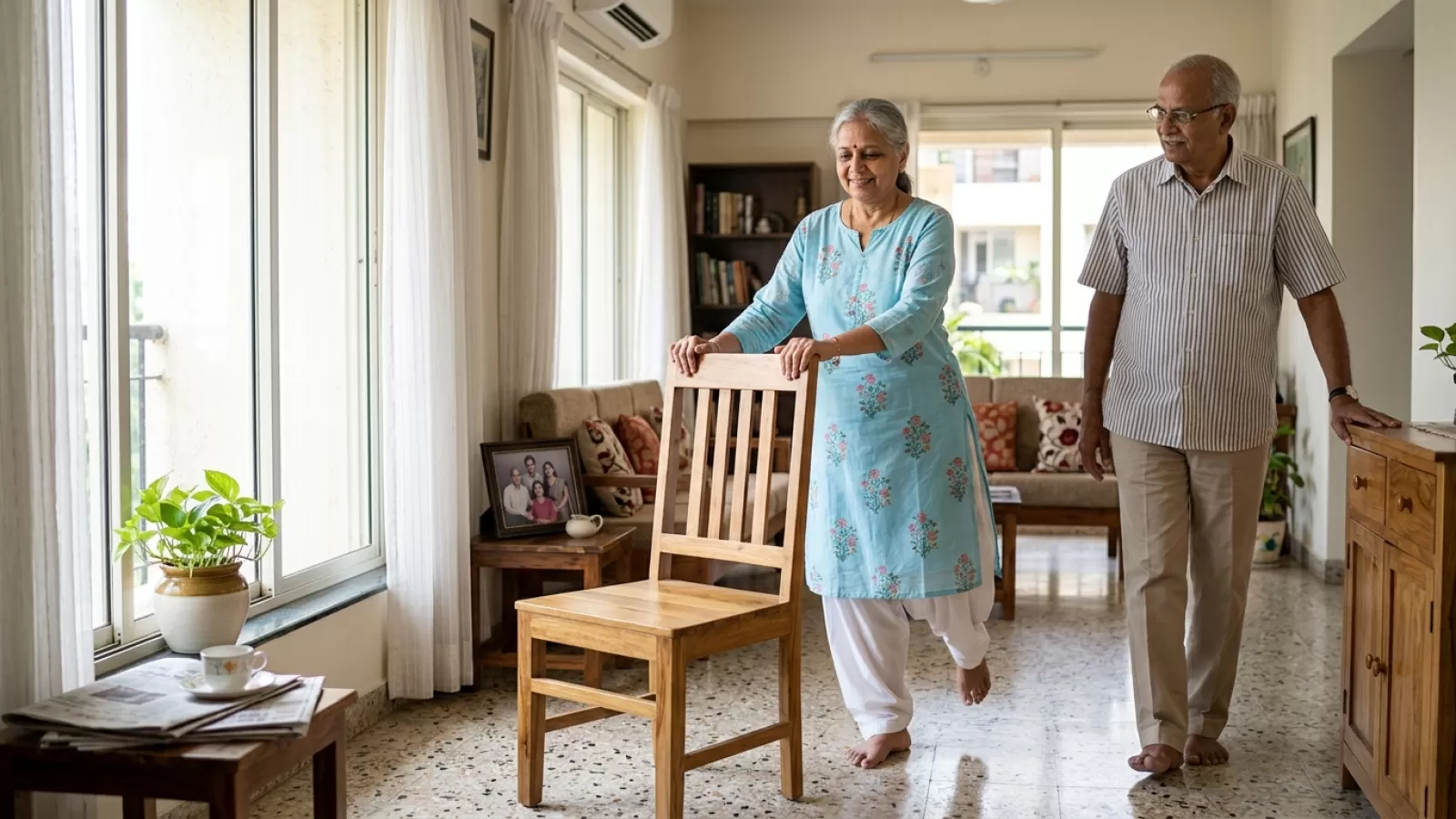
- Standing on One Foot During Routine Tasks: Try standing on one leg for 10–15 seconds while brushing teeth or waiting for the pressure cooker’s first whistle. Switch legs. Start near a wall or countertop for support.
- Heel-to-Toe Walking: Walk slowly across the hallway, placing the heel of one foot directly in front of the toes of the other. This simple move helps train focus and stability.
- Chair Squats: Sit and rise from a sturdy chair without using hands. If that feels difficult, start with hands on knees for light support, and build up to no hands over time. This can be done during TV breaks or after evening chai.
- Side Stepping Along a Wall: Step sideways down a hallway or verandah, using the wall for safety. This strengthens hip and leg muscles, often neglected in daily movements.
- Turning Practice: Gently practice turning in place, such as rotating in a small circle in the living room, to reduce dizziness when changing direction. Move slowly and stop if there’s any discomfort.
Most of these senior stability exercises for India require no equipment and can be done in slippers or bare feet, which is how most elders are comfortable at home. The key is regular, gentle practice—never pushing through pain, and always starting near a support surface. If a senior has joint pain or old injuries, it’s wise to check with a doctor before starting or adapting these movements.
A Kitchen in Nagpur at 6am: Where Balance Training Blends With Routine
The ceiling fan hums softly as the first light sneaks through the kitchen window. The tile floor feels cool underfoot. In one corner, a senior leans lightly against the counter, standing on one foot while rinsing methi leaves. No one is watching, but this has quietly become part of the morning. Later, while waiting for the pressure cooker, they shuffle heel-to-toe across the small kitchen space, sneaking in a few steps before breakfast. There’s no gym mat or music—just the aroma of boiling dal and the gentle rhythm of daily life. Over a few weeks, the small, involuntary steps to catch balance become less frequent. These moments don’t get discussed during family breakfast, but they matter.
When Balance Exercises Aren’t Enough—Knowing When To Ask For Help
Sometimes, daily home balance training for Indian elderly isn’t enough. If a senior keeps falling or feels dizzy even when sitting, or if pain in the knees or hips makes movement unsafe, it’s time for a doctor’s opinion. In some homes, a physiotherapist may visit to suggest safe adaptations. It’s never a failure to ask for guidance—sometimes an outside perspective is what nudges a family into safer routines. And if a new, unexplained loss of balance happens suddenly, don’t wait—medical advice is best.
Common Questions
Trying to include balance exercises Indian seniors at home can bring up a lot of doubts—especially with daily routines already full and elders who may not feel unsteady yet. Let’s answer some of the questions families often discuss quietly over chai or after a concerning moment.
What balance exercises are safest and most effective for Indian seniors at home?
Simple movements that fit into daily routines tend to work best. Standing on one foot while brushing teeth, slow heel-to-toe walking in a hallway, and gentle chair squats are all effective. In many homes, elders do these near a support, like a kitchen counter or sturdy chair, for added confidence. Exercises that don’t require special equipment and can be done in slippers or bare feet are usually safer for Indian households. If there’s any pain or dizziness, it’s wise to pause and check with a doctor.
How frequently do Indian seniors need to practice balance exercises to see meaningful improvement in stability?
Most families who make these exercises a daily habit notice changes within a few weeks. Just 5–10 minutes a day is enough for many Indian seniors to improve stability. On busy days, even a few moments—like balancing while waiting for chai to brew—can be helpful. Consistency matters more than intensity, so gentle, regular practice is usually better than rare, long sessions.
Can daily balance exercises genuinely reduce the risk of falls in Indian seniors or is the risk primarily about environmental factors?
Both matter, but daily balance exercises make a surprisingly big difference. Many families install grab bars and anti-skid mats after a fall, but those who start balance practice early often see fewer close calls. Environmental hazards like wet floors or cluttered walkways do increase risk, yet a senior who feels steadier and reacts faster is less likely to fall even when something unexpected happens. Both prevention strategies work best together.
Which balance exercises are appropriate for Indian seniors with knee or hip problems that limit what they can do?
Gentle standing exercises, like holding onto a counter and shifting weight from one foot to the other, can be safe for those with joint issues. Sitting-to-standing from a sturdy chair with support is useful if full squats aren’t possible. Avoid exercises that cause pain. Many families find that even small movements—like lifting heels while holding a chair—help without stressing joints. If in doubt, it’s always best to check with a doctor or physiotherapist for guidance tailored to existing health conditions.
How do Indian families encourage elderly parents to do daily balance exercises when the parent does not perceive a balance problem yet?
Often, framing these exercises as a way to stay independent or keep up with grandkids works better than talking about ‘fall risk’. Some families make it a group activity—everyone balances on one foot together during morning chai or evening TV time. Others gently remind parents that these movements help with daily tasks like getting up from the floor or managing stairs. Celebrating small improvements, like fewer wobbles or more confident steps, can also encourage regular practice without making it feel like a chore.