Many Indian homes still hold on to the habit of sitting on the floor—whether it’s for family meals, pooja, playing with children, or just relaxing in front of the TV. Even as more chairs and sofas have found their place in living rooms, the floor remains a comfortable (and sometimes necessary) spot for daily life. But here’s the catch: sitting on the floor for long periods, especially cross-legged or in folded positions, often leads to a stiff back, achy hips, or that dull soreness you feel when you stand up suddenly. You may have noticed it after a long pooja or during those winter evenings when everyone gathers around the heater.
Let’s talk about some gentle, practical movements that can help ease that stiffness—without making you feel like you need to become a yoga expert or change your family’s habits entirely. After all, floor sitting is a part of our routines, and with a few small tweaks, it doesn't have to mean a sore back every time.
Why Does Floor Sitting Make the Back Stiff?
It’s a familiar story: you sit down to chop vegetables or shell peas, get up after an hour, and suddenly your lower back feels tight. Floor sitting, especially in positions like cross-legged (sukhasana) or kneeling (vajrasana), tends to round the lower back and limit natural movement. Over time, this can cause stiffness in the back, hips, and even knees.
Many people think only older adults face this, but even younger folks notice it if they’re sitting for too long, especially during festivals or family gatherings. The body isn’t made to stay completely folded or still for hours. But in the flow of daily life, it’s easy to forget until you try to get up.
What makes it tricky is that floor sitting feels restful, but it quietly puts the back muscles under gentle, constant pressure. You’re not alone if you find yourself stretching and twisting when you finally stand—most families deal with these little aches now and then.
Understanding Your Own Limits
The way each person’s body reacts to floor sitting can be quite different. Some people can sit cross-legged for an hour with no trouble, while others start shifting after ten minutes. There’s no one-size-fits-all answer, but it helps to notice your own limits.
Try to pay attention to when you start feeling restless, numb, or stiff. Sometimes, you might be so engrossed in a conversation or a TV serial that you ignore the early signs. But those little warning signals—fidgeting, shifting, or feeling an urge to stretch—are your body’s way of asking for a change.
In many homes, there’s a tendency to "adjust" and wait until the discomfort gets too much. It’s not always practical to get up every few minutes, especially if you’re doing something important. Still, even a small shift of position or a quick movement can make a difference over time.
Simple ‘Ease Movements’ You Can Try on the Floor
Here’s some good news: you don’t need to get up and do a full workout to ease back stiffness. A few small, almost unnoticed movements can help restore flexibility and comfort, right where you sit.
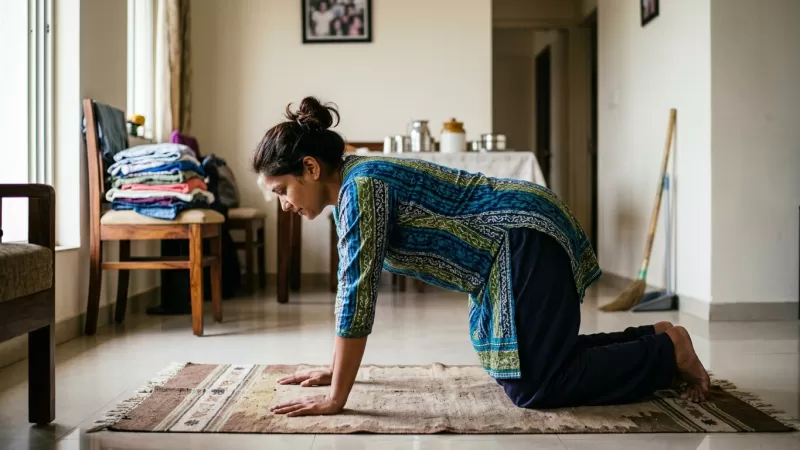
- Gentle Pelvic Tilts: While sitting cross-legged, try tilting your pelvis forward and backward just a little, as if you’re rocking your lower back. This helps wake up the back muscles.
- Shoulder Rolls: Sitting tall, roll your shoulders up, back, and down in a slow circular motion. This relieves tension in the upper back and neck, especially after long sitting.
- Seated Side Stretch: Reach one arm above your head and gently lean to the opposite side. You’ll feel a stretch along your side and lower back. Switch sides after a few seconds.
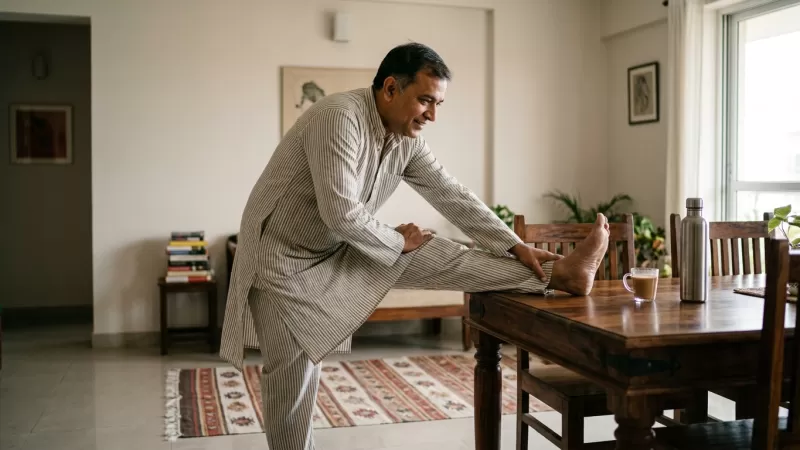
- Knee Lifts: Straighten one leg at a time and gently flex your ankle. This not only eases back stiffness but also gets blood moving in your legs.
You can do these without attracting much attention or interrupting what you’re doing. The idea is to add tiny movements every 15–20 minutes, especially if you’re sitting for a long time.
How Often Should You Move?
This is where life gets in the way. On busy mornings, or during those late-night family chats, you may not even notice the time passing. But most bodies appreciate a quick stretch or movement every 20–30 minutes. This doesn’t mean you need to stand up each time—just shifting your position, rolling your shoulders, or doing a quick twist can break the monotony.
During festivals or long poojas, it’s not always possible to get up and walk around. In those cases, these tiny, almost invisible movements make a difference. Over time, they tend to become a quiet habit—much like how you might automatically stretch your arms when you wake up.
Some families even find it helpful to encourage children and elders to move a little, especially during long TV sessions or meal gatherings. It isn’t about strict rules—just a gentle reminder to listen to your body’s signals.
After You Get Up: Resetting Your Back
That first step after a long floor session can feel awkward. Sometimes your back feels stiff, or you notice a twinge in your hip or thigh. The good news is, a few simple standing movements can help "reset" your spine and bring back comfort faster.
- Standing Reach: Stand tall and reach both arms overhead, stretching towards the ceiling. Hold for a few seconds, then slowly lower your arms.
- Gentle Backbend: Place your hands on your lower back and gently arch backward, looking up. Don’t force it—just a small movement is enough.
- Hip Circles: Standing with feet hip-width apart, gently rotate your hips in a slow circle, both ways. This relaxes the lower back and hips.
You might look a bit funny for a moment, but these movements usually bring quick relief—especially if you’re about to start another household task or get back to work.
Many people quietly do these stretches near the kitchen, on the balcony, or even in a bedroom, especially after a long session of floor sitting or chores.
Making Floor Sitting More Comfortable
Sometimes, it’s not just about movement but about making the floor itself a little kinder to your body. Here are a few practical adjustments that don’t require a lot of effort or expense:
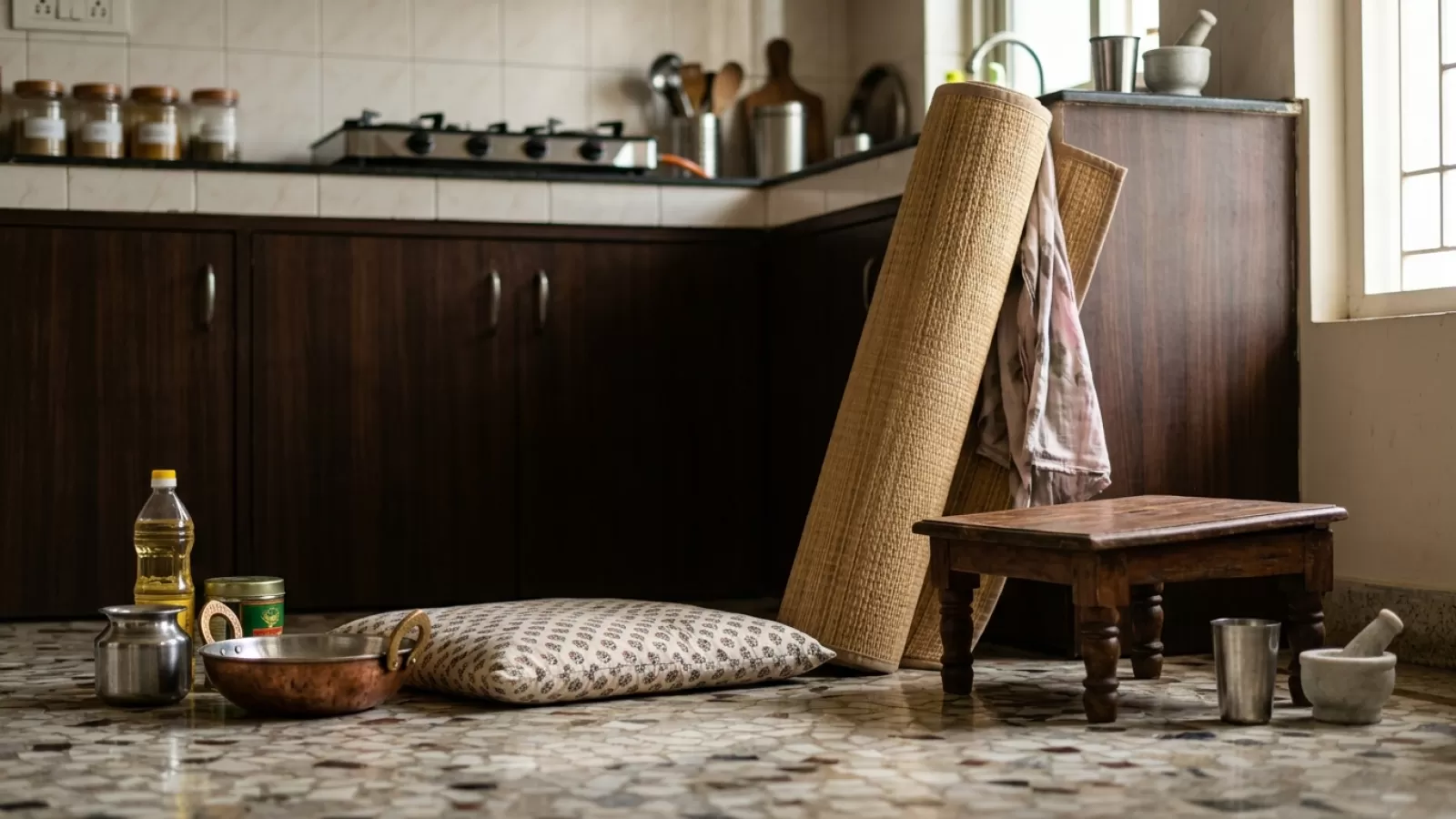
- Cushions and Mats: Sitting on a folded blanket, small cushion, or a thicker mat can reduce pressure on your hips and lower back. In winter, even a shawl folded up can help.
- Back Support: If possible, lean against a wall or a sturdy piece of furniture. This helps your back stay upright and reduces slouching.
- Change Your Position: Shift between cross-legged, kneeling, and stretching your legs out in front from time to time. No need to stick to one position for the whole time.
These changes are subtle, but over weeks and months, they often mean less back strain and more comfort, especially for elders or anyone with a history of back stiffness.
When to Take It Easy and Listen to Your Body
Some days, even small movements aren’t enough, and the back just feels sore. It’s okay. Most families have someone who prefers the sofa over the floor, and there’s no shame in choosing comfort. If you notice persistent pain, tingling, or numbness, it’s a good idea to take a break from floor sitting for a while or try more supportive seating.
Here’s the tricky part: listening to your body is a skill that takes time to develop, especially in busy homes where everyone is used to "managing" discomfort quietly. But over time, a little extra care pays off—especially as we age or if we’re already dealing with stiffness from work-from-home routines.
And yes, it’s perfectly normal to feel tired or unmotivated about these movements some days. That’s just life. The goal isn’t perfection—just a bit more ease.
Gentle Habits for Families and Shared Spaces
In joint families or busy households, it can help to bring these small movements into daily routines. For example, encouraging a quick stretch before mealtimes, or during TV ad breaks, sets a helpful tone for everyone—children, adults, and elders alike.
- Turn small stretches into a mini family ritual before or after meals on the floor.
- Remind each other (gently!) to move during long family events or gatherings.
- Place a few cushions or mats within reach, so anyone can use them as needed.
These habits don’t have to be strict or formal. They just add a bit of comfort to familiar routines—much like how you might offer water or tea to a guest before they settle down.
Over time, these little changes tend to become part of the household rhythm, easing back stiffness for everyone without needing to change cherished traditions.
Wrapping Up: Small Changes, More Ease
Living in India, floor sitting is woven into many parts of our daily life, from morning prayers to evening snacks. The good news is that with a few small, thoughtful movements and a bit of extra comfort, you can enjoy these routines without so much back stiffness. You don’t need to give up the floor—just listen to your body, move a little more often, and make adjustments that feel right for you and your family.
Sometimes, it’s these little things—a stretch, a cushion, a gentle reminder—that quietly make all the difference.