You might notice it during a regular Monday morning in most Indian homes. The kitchen is already buzzing by 6am, chai on the boil, someone rinsing dal for the pressure cooker, and the first round of sweeping underway. In this rhythm, movement during household chores in India happens almost without thinking — a bend here to pick up a stray slipper, a stretch to grab the duster, a walk across rooms to fetch the morning newspaper. It’s easy to overlook how much genuine movement stacks up before breakfast.
Many adults in Indian families — whether homemakers, office-goers, or seniors — find that daily routines demand more physical activity than they realise. The trick is, these small bursts of exercise while doing chores help you stay active during Indian household tasks. The body bends, reaches, balances, and lifts dozens of times a day. With a little intention, this movement becomes even more beneficial, without needing to carve out extra time just for fitness.
Why Movement Is Built Into Indian Household Routines
Active household chores in India often blend so seamlessly into daily life that they barely register as exercise. Many kitchens are compact, requiring a lot of bending and reaching — think of pulling heavy atta containers from under the counter or reaching up for the pickle jar. Sweeping and mopping, done with a jhadu, mean getting low to the ground, sometimes squatting, sometimes standing on toes to reach under the sofa.
Homes with stairs see adults carrying baskets of laundry up and down, or bringing in heavy grocery bags from the main gate. Even making the bed, shaking out the sheets and fluffing pillows, involves stretching and a bit of core work. The reality is, most Indian adults do not have the luxury of skipping these chores, so the movement builds up naturally throughout the day.
In joint families or homes with older adults, coordinating chores means more walking between rooms, passing things hand to hand, or helping others move around. These shared spaces mean you’re often on your feet — whether it’s fetching water during a power cut or shifting furniture before Diwali cleaning.
Why Intentional Movement During Chores Often Gets Overlooked
It’s common to think of exercise as something separate from daily work — a half-hour of yoga, a brisk walk in the park, or a gym session. But, the truth is, movement during household chores India brings is often just as useful. The catch is, many adults don’t see these moments as "real" exercise because they’re woven into routines and don’t require special gear or clothing.
Fitness coaches who train working adults often find that most movement in Indian homes comes from daily tasks, not planned exercise. This means the majority of physical activity is already happening, but without the awareness that it counts towards staying active.
Another reason is habit. Most of us have been taught to get chores done as quickly as possible, often with shortcuts that reduce movement — using long-handled brooms, sitting for chopping vegetables, or piling everything into one trip. But, when you approach these tasks with a bit more intention, you can turn active household chores in India into a genuine way to move more.
And let’s be honest, after a long day of work or managing kids, it’s tempting to view chores as one more box to tick, rather than a chance to squeeze in exercise while doing chores Indian adults need. That said, a few small tweaks can make a big difference, without extending chore time.
Clues You’re Already Moving More Than You Think
- Tired legs by evening: Many feel a pleasant fatigue in the legs after days spent sweeping, mopping, or walking between rooms. This is a sign of real movement during household chores in India, even if you don’t notice it at the time.
- Shortness of breath after certain chores: Carrying laundry to the terrace or lifting full pressure cookers can leave you a bit winded. That’s your heart reminding you you’ve done something active.
- Clothes feel looser over time: Some adults notice their salwars or trousers fitting better after weeks of festival cleaning or heavy kitchen work — a subtle sign that these active household chores in India do make a difference.
- Better sleep on busier days: Many find they sleep more soundly on days when chores required more standing, bending, or lifting.
- Soreness in rarely-used muscles: Deep spring cleaning or rearranging furniture for functions can reveal muscles you didn’t know you had — and often, it’s a good sore, not an injury.
How to Add Simple, Effective Movement to Daily Chores
- Exaggerate sweeping and mopping: Try squatting deeper or making wider arcs with the jhadu. This adds a gentle leg workout and stretches your back more than the usual quick sweep. Over a week, it adds up.
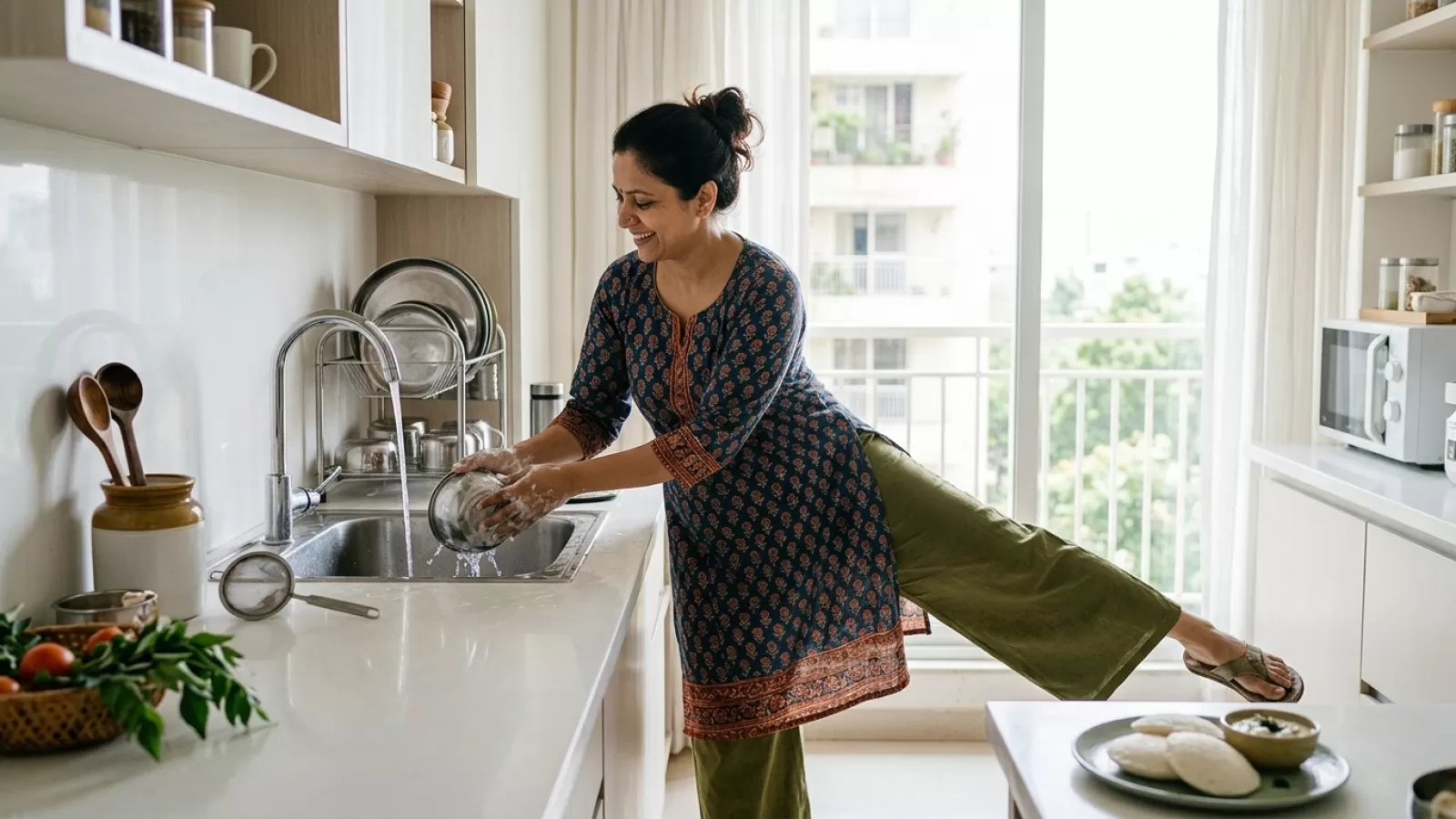
- Stand on one foot while waiting: When waiting for the cooker to whistle or water to boil, stand on one foot for a few seconds, then switch. This challenges your balance and strengthens your legs — an easy way to stay active during Indian household tasks without extra time.
- Make two trips instead of one: Instead of loading your arms with everything at once, try carrying laundry, groceries, or water in two lighter trips. This increases your steps and lets your muscles work longer.
- Take the stairs, not the lift: Even in apartment buildings, choosing stairs for short trips — like bringing up milk packets or returning from the local shop — helps you fit in exercise while doing chores Indian adults need.
- Use kitchen counters for push-ups: A few gentle push-ups against the counter after washing dishes or while waiting for the tea to boil can strengthen arms and shoulders.
The goal isn’t to turn chores into a workout, but to notice opportunities for more movement during household chores India offers — and make the most of them.
Everyday Indian Routines Where Movement Matters
During humid May afternoons, when the power goes and fans stop, many families in Indian cities find themselves opening windows, carrying buckets of water from the tank, and moving between rooms to adjust curtains for airflow. All this, while tiring, is a kind of unplanned exercise that’s just part of life here.
On mornings when everything runs late, a working professional in Bengaluru might rush between the kitchen and bedroom, packing lunch, ironing clothes, and grabbing umbrellas before heading out. Without realising, she’s walked several hundred steps before leaving home. In joint families, elders sometimes walk the corridors to check if the morning newspaper has come, or help arrange breakfast plates — small, meaningful bursts of movement.
Many families have quietly discovered that festival cleaning — dusting fans, wiping windows, moving beds to sweep underneath — leaves everyone feeling both tired and satisfied. That physical tiredness is proof of active household chores in India making a difference, often more than any gym session could in a short time.
When to Consider Professional Advice
If you find yourself unusually breathless, in pain, or unable to recover after regular chores, it might be time to check with a doctor. Those with joint pain, heart issues, or chronic health conditions should ask their physician about safe ways to stay active during Indian household tasks. Most healthy adults can safely make movement during household chores in India more intentional — but any sudden, sharp pain or dizziness deserves professional attention.
Common Questions
Every Indian home has its own rhythm, but the questions about movement during household chores India brings are always relatable. The answers often come from what you see around you — the way a neighbour carries groceries or how elders manage to stay active without ever mentioning “exercise.” Here’s what many adults wonder about making chores more physically active.
How do Indian adults make household chores more physically active without significantly extending the time they take?
In many homes, it’s about tweaking what you already do. For example, a homemaker in Chennai might squat a bit lower while sweeping or stand on her toes to reach high shelves instead of using a stool. A working adult in Delhi might choose to walk briskly between rooms while collecting laundry or make two trips up the stairs instead of one. These small changes add genuine movement during household chores in India, with no extra minutes spent.
Which Indian household tasks provide the most physical benefit when done with more intentional movement?
Tasks that use large muscle groups are best. Sweeping and mopping involve squats and arm movement. Lifting and refilling water buckets, shifting furniture for cleaning, or carrying groceries upstairs are also excellent. Even making rotis, which means standing and using your arms, can be more active if you rotate your body to reach for ingredients or utensils. These tasks help Indian adults exercise while doing chores and keep the body moving.
Is the physical activity from active housework sufficient for Indian adults who do nothing else in the way of movement?
For many adults, especially homemakers and seniors, active household chores in India can add up to significant daily movement. If your chores involve lots of walking, lifting, and reaching, you’re probably meeting basic activity needs. That said, if you’re able to add a short walk or some stretching, it’s even better. If you have health concerns, check with a doctor to be sure your activity is enough for your age and condition.
How do you track or appreciate physical activity from household tasks when it does not feel like exercise?
Some use simple step counters or smartphone apps to see how much they move. But in many homes, it’s about how you feel — are you pleasantly tired by evening, or do you notice you’re less stiff? Some families make it fun: counting how many times they go up and down stairs, or turning chores into a race with kids. Noticing these small efforts helps you value the movement during household chores India gives you.
What are the specific movement additions to common Indian household chores that provide the most physical benefit?
Try adding a few squats while picking up things from the floor, or holding a lunge while sweeping under the cot. Standing on one leg while waiting for the cooker, doing calf raises while stirring dal, or making slow, wide circles with your arms while dusting overhead — all these help. The key is to exaggerate normal movements, so you exercise while doing chores Indian adults already do every day.