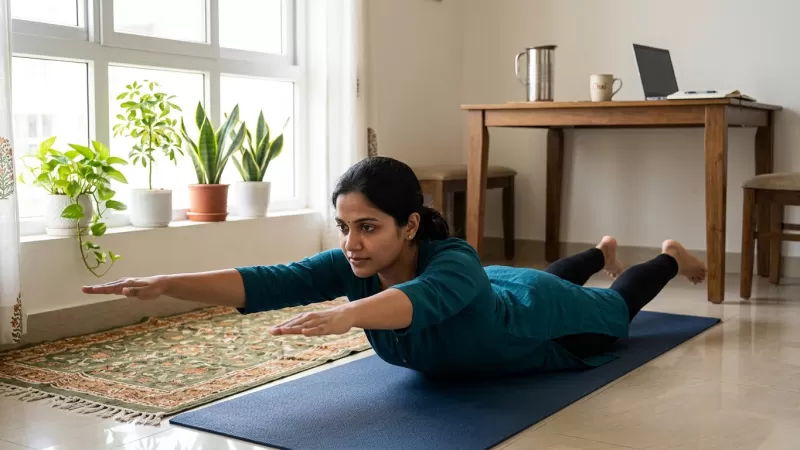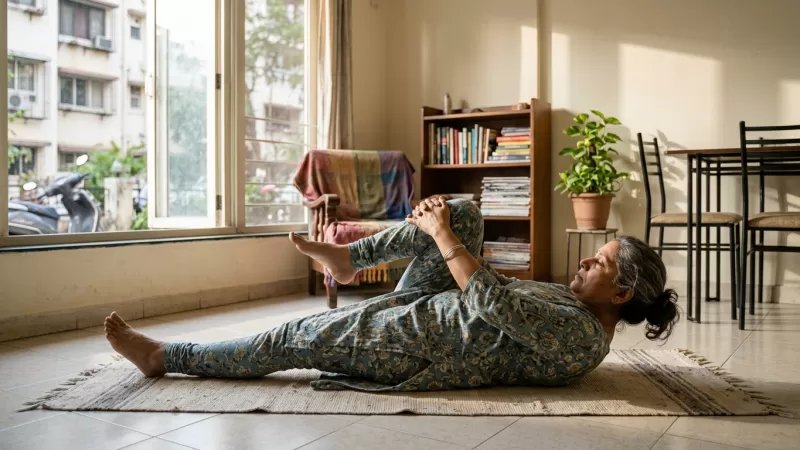
Some mornings in Indian homes, the air feels extra heavy—whether it’s the leftover stickiness from a humid night, a restless sleep interrupted by the whir of the ceiling fan, or simply the weight of another long day waiting to begin. On those days, thinking about exercise feels impossible. The idea of a 15 minute workout for sluggish Indian adults isn’t about squeezing in a quick fix—it’s about showing up for yourself even when your body wants to hit snooze again and again.
In many homes, these short, gentle workouts aren’t a compromise. They are often the most important workouts of the week. Because what really separates consistent movers from occasional exercisers in Indian adult life isn’t energy or motivation—it’s the habit of moving, even when conditions are far from perfect. That’s what a sluggish day workout India style is quietly teaching you, one slow stretch at a time.
Why Sluggishness Feels So Familiar in Indian Households
Waking up feeling heavy or slow is common in Indian homes. Sometimes it’s the late-night chai or a heavy dinner of dal-chawal and sabzi. Sometimes it’s the stress of juggling work calls, homework, and dinner prep until late. In many families, there are just too many moving parts—elderly parents to check on, tiffins to pack, and school buses to chase. When the alarm rings, your body simply refuses to spring up like those morning-routine videos online.
What often makes it harder is the expectation to keep moving, no matter what. Rarely do Indian adults have the luxury of a slow start. There’s always something (or someone) waiting. That is why a 15 min workout low motivation India style can be so valuable—not as a grand performance, but as a gentle nudge back into your own body, even on days you’d rather skip it all.
What Makes Sluggish Days So Common For Indian Adults
There are many reasons why sluggishness creeps in. Late dinners are a big one—most Indian families eat well after sunset, sometimes close to 10 pm, which can make mornings foggy. The weather plays its part too. During summer, the heat and humidity sap your energy. In winter, the chill makes getting out of bed feel like a battle.
Long commutes, especially in cities like Mumbai or Bengaluru, leave adults drained before the day even begins. Even when working from home, the constant pressure to multitask—cooking, cleaning, childcare, work calls—leaves little room for rest. Nutrition habits matter: skipping breakfast or relying on chai-biscuits for energy can lead to mid-morning crashes. Fitness coaches who train working adults often find that most movement in Indian homes comes from daily chores, not planned exercise, which means structured workouts are easily skipped when sluggishness hits.
And then there’s the mental load—worrying about children, parents, bills, or simply your never-ending to-do list. All of it adds up, making sluggishness almost a default setting in many Indian households.
Clues That Sluggishness Is Affecting Your Motivation to Move
- It feels like your body weighs double. Getting out of bed or off the sofa is a task in itself, never mind starting a workout.
- Even gentle stretches feel like a chore. Usual warm-ups like neck rolls or shoulder shrugs feel harder than they should.
- Your mind keeps bargaining. You tell yourself, “Maybe just five minutes,” or “I’ll start after chai,” but it rarely happens.
- Movement feels disconnected. Exercises that usually come naturally (like a few rounds of surya namaskar) seem clumsy and forced.
- You feel irritable or frustrated. The guilt of skipping exercise collides with your low energy, making you feel worse.
On these sluggish days, the first two minutes of movement are usually the hardest. Once you start, the body often finds a little more energy than you thought you had.
Small Shifts That Make a 15-Minute Sluggish Day Workout Actually Happen
- Don’t overthink the plan—just start with two minutes. Tell yourself you’ll move for two minutes only. Often, that’s enough to shift your energy so you keep going.
- Choose movements that feel kind, not punishing. Gentle joint rotations, cat-cow stretches, slow squats, or even walking around your living room. No need for fancy workouts on a sluggish day workout India style.
- Set the scene, not the bar. Put on a favourite playlist, open a window for fresh air, or move to a space where the morning sun peeks in. Sometimes, a change in environment is more energising than a cup of chai.
- Use familiar household rhythms as cues. Start right after brushing your teeth, while chai simmers, or just before your morning shower. The routine helps the habit stick, even when energy is low.
- Let go of expectations for intensity or performance. The goal is to move, not to break records. Even if you move slowly, you’re keeping the habit alive. A 15 minute workout for sluggish Indian adults is about consistency, not perfection.
On sluggish days, it’s the act of starting that matters most. The rest tends to follow.
How Sluggish-Day Workouts Fit Into Indian Family Life
In many Indian homes, mid-week is when sluggishness strikes hardest. Wednesday mornings, after two days of hustling through work, school runs, and late dinners, adults wake up feeling like they’ve already lived the whole week. This is the exact day when a 15 min workout low motivation India style is most needed—not to burn calories, but to remind yourself you can move, even when you don’t feel like it.
Sometimes, you’ll see a working professional in Bengaluru doing knee lifts or slow marches in the living room while the pressure cooker whistles in the kitchen. Or a homemaker in Kolkata stretching her back on the bed before she starts folding laundry. These small moments of movement, quietly tucked into the daily chaos, make the difference between a habit that sticks and one that keeps slipping away.
Many families in Indian cities have quietly discovered that these gentle, 15 minute workout for sluggish Indian adults sessions keep spirits up—especially during monsoon or after a string of late nights. The tricky part is starting, but once the first minute passes, movement feels a little less hard.
When Low Energy Needs More Than Movement
Most sluggish days just need a nudge to get moving. But if you find your tiredness doesn’t go away after a few days, or if basic activities like climbing stairs or walking to the market feel unusually hard, it’s time to check in with a doctor. Sometimes, ongoing fatigue can be a sign of something more serious. Listen to your body—sluggishness that lingers or worsens deserves proper attention, not just another attempt at exercise when low energy India style.
Common Questions
Everyone has days when starting any movement feels impossible. The good news is, in Indian households, even the smallest shift—rolling your shoulders while waiting for chai, or stretching while the geyser heats—counts. Let’s get into the details, with real-life situations and gentle, practical steps that often make all the difference.
How do you start a 15-minute home workout on a day when the body feels too sluggish to begin?
On those mornings when even sitting up feels hard, try telling yourself you’ll move for just two minutes. Start with something easy—gentle shoulder rolls, neck circles, or just walking around your room. Sometimes, playing your favourite song or opening a window for fresh air helps. In many Indian homes, adults begin moving while waiting for the milk to boil or after sending the kids to the bus stop. Often, once you start, the body responds better than expected. The first two minutes are the hardest—the rest is just continuing.
What exercises work best for Indian adults on sluggish, low-energy days?
Gentle, low-impact movements are usually best. Think cat-cow stretches, standing marches, wall push-ups, side bends, slow squats, or even walking in place. Many find basic yoga stretches or simple surya namaskar helpful, especially when done slowly. On sluggish days, avoid anything that feels too intense or complicated. The goal is to wake up the body, not exhaust it. Even light movement like folding laundry while standing or stretching your arms above your head can help bring some energy back.
Is there a way to structure a 15-minute workout that accounts for the body being slow and unresponsive rather than forcing full intensity?
Yes—start with 2-3 minutes of gentle joint rotations and deep breathing. Move on to slow, controlled movements (like leg swings or gentle lunges) for 5-6 minutes. Then, add 3-4 minutes of light activity, such as walking in place or easy marches. Finish with 2-3 minutes of stretching and relaxation. On sluggish days, the sequence matters less than the mood. Keep the pace slow, focus on how your body feels, and stop if anything feels wrong. This structure lets you move without pushing too hard.
What is the difference between sluggishness that means rest is more appropriate than movement and sluggishness that movement will actually resolve?
Usual sluggishness—like the heaviness after a late night or a long work week—often lifts a little once you start moving gently. If you feel better after two or three minutes of slow exercise, that’s a good sign to continue. But if you have ongoing tiredness, dizziness, aches, or find even basic movement difficult, it may be a sign that your body needs real rest or medical attention. In Indian families, it’s common to push through, but sometimes, pausing and checking with a doctor is the wisest choice.
How do Indian adults build the habit of moving on sluggish days without judging the quality or intensity of what happens?
Many adults in India quietly treat movement as a non-negotiable—like brushing teeth or making chai. They focus on showing up, not on performance. Some use family routines (like moving after the kids leave for school or before prepping lunch) as reminders. Even if the workout is slow or short, it counts. Over time, this gentle approach builds a habit that sticks, because it isn’t tied to guilt or perfect results—just to the act of moving, no matter how you feel that day.