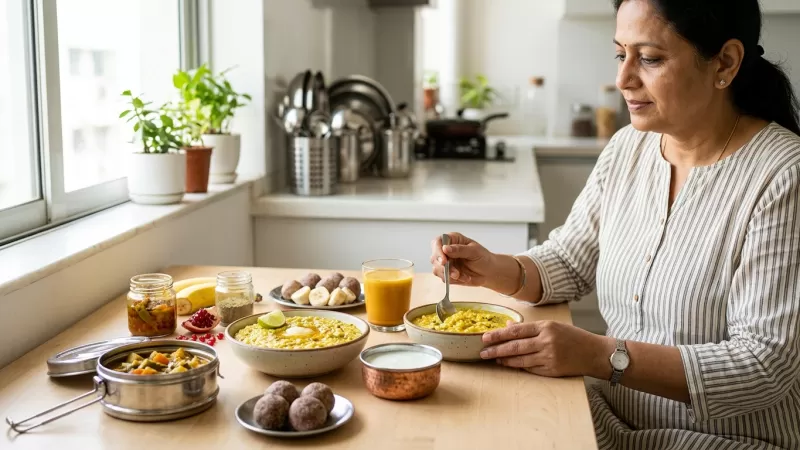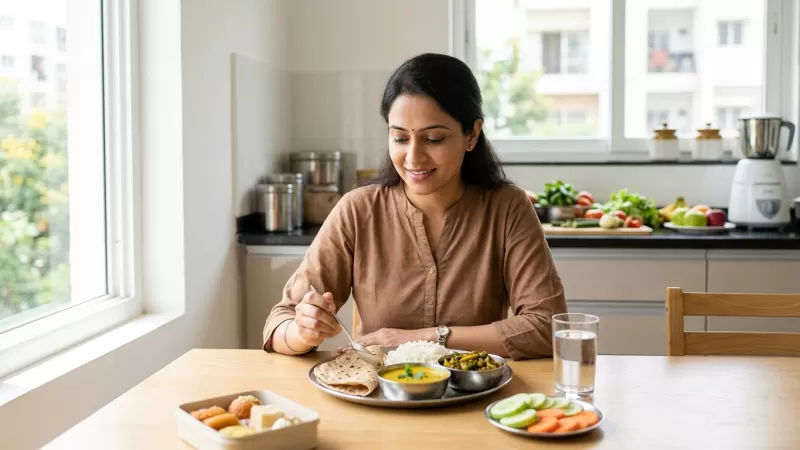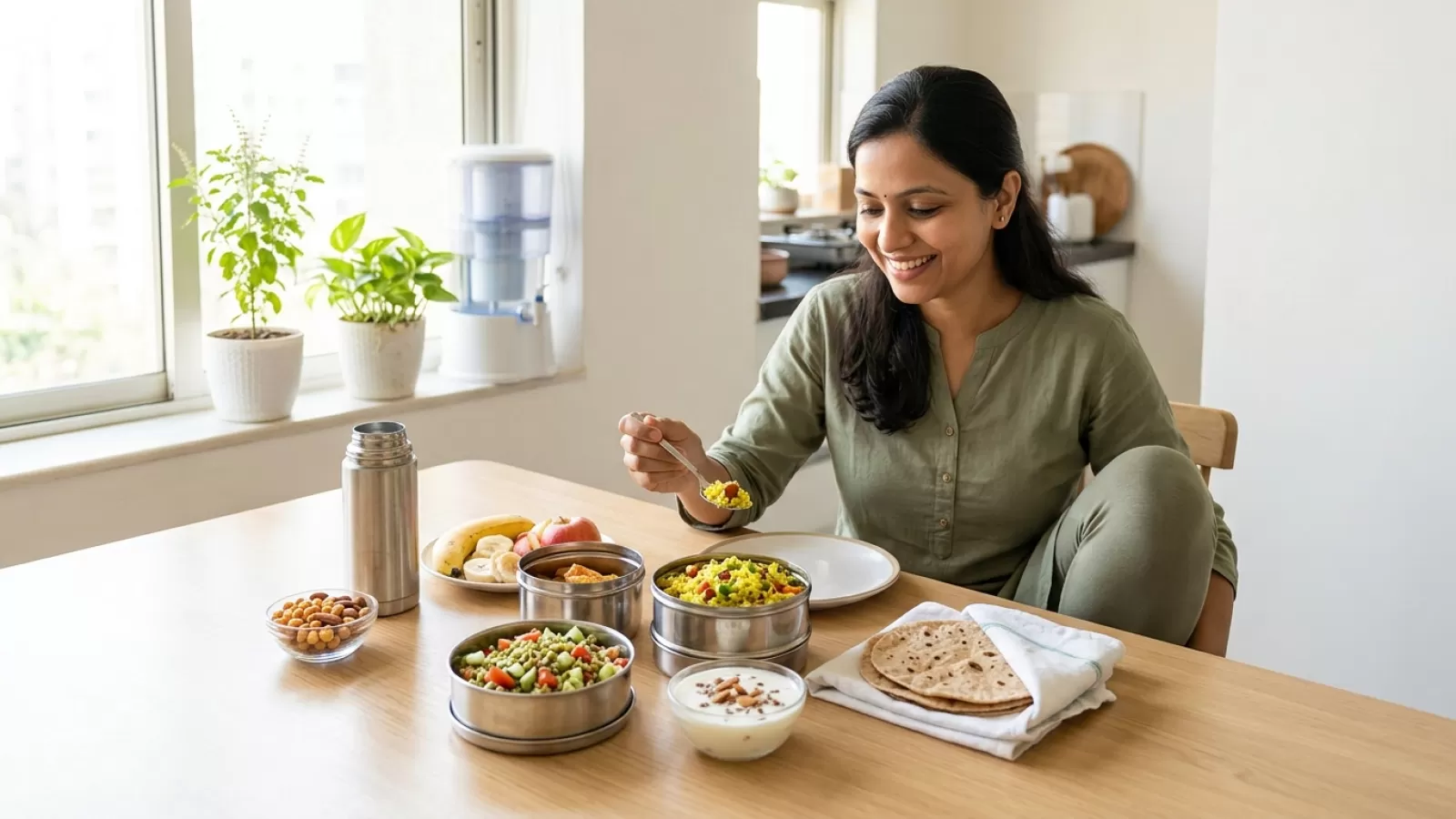
In many Indian homes, someone is always eating—yet the person who cooked may not have taken a proper bite for themselves. The kitchen is filled with the smell of sabzi and tadka, plates are served to family members, but the cook often ends up grabbing a cold roti or leftover dal hours later, if at all. Indian nutrition when missing meals is less about willpower and more about juggling demands, shifting priorities, and that familiar sense that your own meal can always wait a bit longer.
These days, with longer work hours, unpredictable schedules, and the expectation to manage the household without fuss, skipping or delaying meals has become almost routine. Indian nutrition when missing meals is a quiet, everyday reality—especially for adults who try to keep everything running. Most people don’t choose to skip meals, but it happens more often than anyone admits out loud.
Common Patterns Behind Missed Meals in Indian Homes
Missing meals is not just about being too busy; it’s woven into the rhythm of many Indian families. The homemaker who serves lunch to her children and in-laws, then realises at 3pm that she hasn’t eaten herself. The working parent in a Mumbai flat who plans a proper lunch but gets pulled into calls, pushing their first real meal to late evening. In joint families, the person responsible for managing meals often puts their own hunger last, quietly reheating leftovers much later.
For Indian adults, meal skipping often means eating whatever is easiest—sometimes chai and a few glucose biscuits, sometimes just a banana on the go. In many homes, regular meal times are a luxury, not a habit. When you do finally sit down, it’s easy to overeat or reach for heavier, fried snacks because energy is low and patience is even lower.
Indian food habits for irregular eaters tend to revolve around what is quick to grab, what is left over, or what won’t cause questions from the family. Few pause to ask, “What to eat when skipping meals in India?”—it’s more about survival than nutrition.
Why Meals Get Skipped or Delayed So Frequently
The tricky part is, skipping meals isn’t always a matter of poor planning. Long commutes, late-night calls with global offices, and unexpected power cuts during cooking time can all push meal times further. In joint families, the younger adults may wait for elders to finish, or vice versa, so someone’s meal always gets delayed.
Fitness coaches who train working adults often find that meal skipping in Indian adults is rarely intentional. For many, the habit starts with “just today” and becomes routine. Social expectations play a role too. In many Indian homes, feeding guests or making sure children eat first is an unspoken rule. The main cook, usually a woman, is the last to eat, if at all.
Modern work-from-home life adds its own challenges. Meetings spill over lunch breaks, and the kitchen is only a few steps away, but the time to actually sit and eat just disappears. Even senior citizens, who might have more flexible schedules, sometimes skip meals because the household rhythm simply doesn’t allow for a quiet, undisturbed plate of food. The expectation to keep things moving smoothly often outweighs the small voice of personal hunger.
Everyday Clues That You’re Missing or Skipping Meals
- Afternoon fatigue that doesn’t lift with chai: Many adults find themselves yawning or unable to focus, especially after skipping lunch or delaying it until late afternoon.
- Snacking on fried or sugary foods late evening: A handful of namkeen, biscuits, or leftover mithai becomes dinner when the last proper meal was hours ago.
- Headaches or irritability by evening: Skipping meals often leads to a short temper or that heavy-headed feeling, especially during hot and humid months.
- Digestive discomfort: Bloating, acidity, or just a sense of heaviness is common when meal gaps get too long and the first real food is eaten quickly or in a hurry.
- Forgetting to eat but never forgetting to serve: In many homes, the main cook realises late that everyone else has eaten but their own plate is still empty.
Practical Ways to Support Your Body When Meals Are Missed
- Choose easily digestible foods when you finally get a chance to eat: Fresh curd rice, poha, or a warm bowl of khichdi tend to be gentle on the stomach if you’ve gone many hours without food. These are familiar, quick, and don’t need much effort.
- Keep small, nutritious snacks visible in the kitchen: Roasted chana, makhana, or a small bowl of fruit can help tide you over when a full meal isn’t possible. The key is to choose items that don’t require reheating or extra work.
- Don’t ignore hunger cues completely: If you realise you’re hungry but can’t sit for a meal, even a glass of lassi or a slice of toast with chutney is better than nothing. Many Indian food habits for irregular eaters involve small bites rather than big plates.
- Rehydrate first: When you finally pause, start with water, nimbu paani, or chaas. It’s common to mistake thirst for hunger, especially after a busy day without meals.
- Try to avoid heavy, oily foods after long gaps: It’s tempting to eat samosas or deep-fried snacks when energy is low, but your body will handle something lighter—like dal and rice—more easily after a missed meal.
How Skipped Meals Appear in Indian Routines
For many families in Indian cities, missing meals is a quiet pattern, not a dramatic event. In Pune, an office-goer grabs tea and a couple of Marie biscuits at 7:30am, meaning to have breakfast later. Work calls stretch on, and by 1pm, lunch is pushed to 3pm or skipped entirely. The evening brings headaches, irritability, and a craving for fried snacks—so dinner ends up being heavier and later than planned.
In a joint family in Lucknow, the main cook eats last as usual. The children’s school tiffin comes first, then the elders’ lunch. By the time she sits, everyone else is done, and she’s already thinking about prepping for evening chai. Her own meal is hurried, and sometimes it’s just a few bites standing at the kitchen counter.
These are not rare stories. Indian food habits for irregular eaters have quietly evolved to fit into busy, unpredictable schedules, often at the cost of the person running the show.
Knowing When You Might Need Extra Help
If you find yourself skipping meals for weeks and feeling constantly fatigued, dizzy, or unable to recover energy even after eating, it’s worth talking to a doctor. For most people, occasional missed meals are manageable, but persistent meal skipping in Indian adults can sometimes signal health issues like anaemia, blood sugar problems, or digestive trouble. Anyone with a long-term condition (like diabetes or high blood pressure) should be extra careful and check with their doctor if meal gaps are becoming the norm.
Common Questions
Meal skipping is something most Indian adults experience at some point, whether by accident or due to a packed day. Here are some questions that often come up, especially in Indian households juggling multiple demands and unpredictable routines.
What happens to the body when Indian adults regularly skip or delay meals for weeks?
For many Indian adults, skipping or delaying meals for weeks can lead to low energy, headaches, irritability, and digestive trouble. The body gets used to running on lower fuel, which might result in tiredness even after resting. In some cases, immunity drops and minor infections become more frequent. In homes where chai or snacks replace full meals, you might also notice more acidity or bloating. If someone already has a health condition, meal skipping may make symptoms worse, so it’s important to notice these patterns early.
How do you recover nutritionally after a day where only one proper meal was eaten?
After a day with just one proper meal, many Indian adults feel weak or foggy. The best approach is to start your next meal with something light and nourishing, like moong dal khichdi or curd rice. Add a small portion of salad or fruit if possible. Even if you feel very hungry, eating slowly and drinking water or chaas first gives your body a chance to catch up. Try not to overeat fried or rich foods, as your digestion might be sensitive. Return to regular meal times as soon as possible, even if it means small, simple meals at first.
Which Indian foods give the best nutrition in the smallest amount of eating time?
Many families in Indian cities have quietly discovered that foods like boiled eggs, roasted chana, dahi with fruit, upma, or poha offer good nutrition with minimal eating time. Khichdi with a bit of ghee, or a small bowl of dal and rice, is also quick and quite balanced. Even a glass of milk with a handful of nuts or a banana is better than skipping entirely. These options work well when you need something filling but can’t sit for a full meal.
Is it better to eat a tiny snack than nothing when a proper meal is impossible?
It’s usually better to eat a tiny snack than nothing—especially in Indian summers or after a busy morning. Even a handful of makhana, some fruit, or a small cup of dahi can help keep your energy up and prevent headaches. Many working adults keep roasted peanuts or murmura handy for this reason. While it won’t fully replace a meal, it does help you avoid the worst crash and keeps you going until you can eat properly.
How do working Indian adults build a realistic habit of eating regularly when schedules are genuinely unpredictable?
For working adults in India, rigid meal routines rarely work. The most realistic habit is to keep quick and nutritious foods within reach—like a box of dry fruits, a small tiffin of poha, or fruit in your bag. Some find it easier to have two smaller meals instead of three big ones. On days with back-to-back meetings, even a glass of chaas or buttermilk at your desk is a good start. The key is to notice hunger cues and fit small, nourishing bites into the day, even if the timing changes.
A kitchen in Nagpur at 6am: The fan is on to fight the early summer heat, pressure cooker whistles, and the main cook quietly lines up dabbas for school and office. She pours herself chai, takes a sip, and glances at the clock—knowing her own breakfast may have to wait until everyone else is out the door. The aroma of fresh poha fills the air, but her plate stays empty for now. This is how Indian nutrition when missing meals quietly shapes countless mornings across the country.