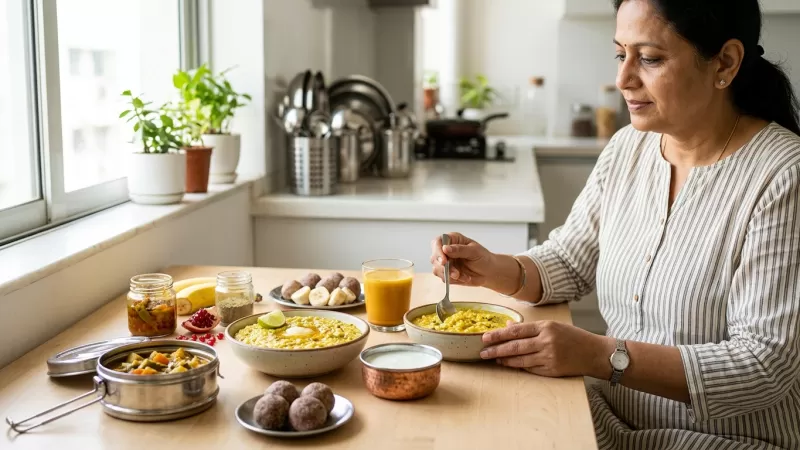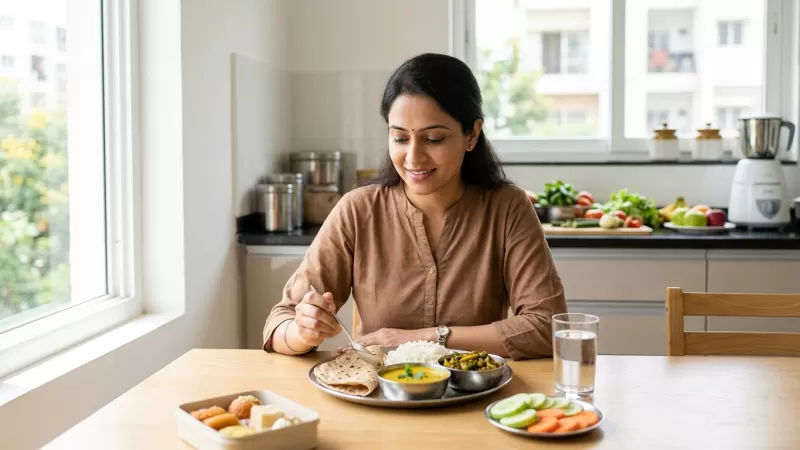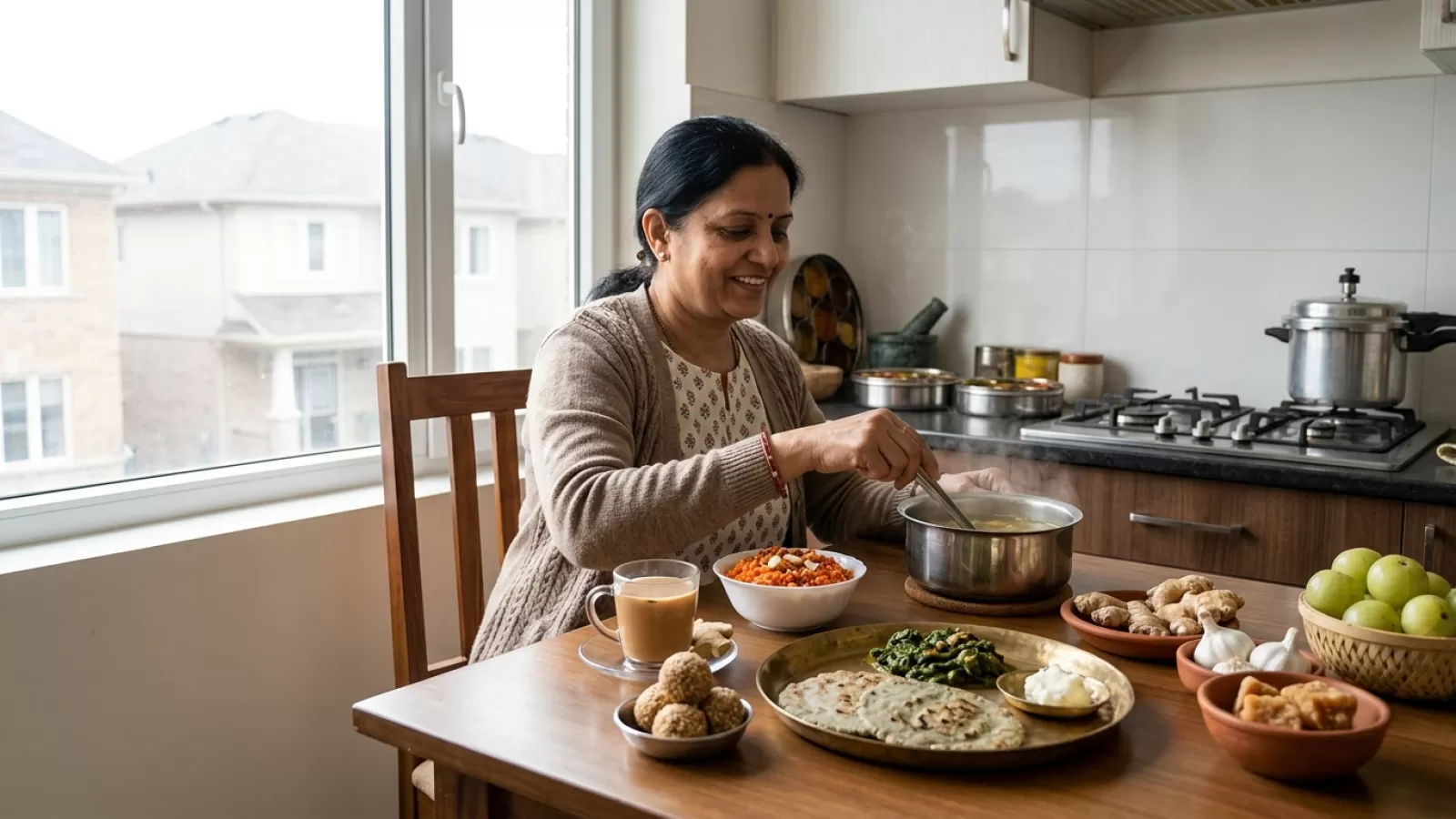
In a North Indian home, there’s a certain stillness to winter mornings. The air feels sharper, the marble floors colder underfoot, and steaming chai arrives with a little more urgency. Indian winter eating habits seem to arise almost on their own — a thicker dal, an extra spoon of ghee, or the instinct to reach for roasted peanuts or til chikki after lunch. These are not random cravings. Over generations, families have developed patterns of warm Indian food for cold months that actually help the body meet the demands of winter: more cooked food, more warming spices, more slow-cooked comfort.
During these cold months, you’ll notice kitchens across India quietly shifting. In a December kitchen in Pune, sesame and jaggery appear in ladoos and rotis; in Punjab, it’s sarson da saag and makki di roti with a pat of white butter. These shifts in the Indian diet in winter aren’t just about tradition or taste. They reflect what the body needs — food that supports energy, generates warmth, and keeps the spirit lifted through the chill.
How Indian Kitchens Naturally Shift Their Cooking in Winter
The experience of eating changes in Indian homes as soon as winter sets in. Mornings often begin with something hot — a bowl of poha, upma, or moong dal chilla straight from the tawa. Lunches become slower affairs, sometimes featuring heavier dals, richer sabzis, and extra ghee. Evenings bring roasted peanuts, jaggery, or til-based snacks. These aren’t just about comfort but about how Indian winter eating habits help families feel energised and cozy despite shorter days and colder nights.
In many homes, you’ll find that salads and cold curd dishes quietly retreat during these months. Instead, warm khichdi, saag, and stuffed parathas take centre stage. Spices like ginger, black pepper, cinnamon, and ajwain appear more often, not just for taste, but to help the body feel warmer from within. Even the pace of cooking seems to slow down, with longer simmers and more time spent around the kitchen, where the warmth of the stove is itself a small comfort.
Why Indian Kitchens Turn to Warming Foods in Cold Months
There’s a reason your mother or grandmother insists on til ladoo, ghee, or saag in winter. The cold months tend to sap energy, and the body works harder to stay warm. Foods that are rich in healthy fats, slow-cooked, and spiced with heat-generating masalas offer more than just comfort. They actually help the body maintain warmth, keep digestion steady, and support immunity.
Nutritionists who observe Indian families often find that winter nutrition for Indian adults is shaped by centuries-old wisdom — not just calorie needs but a careful balance of ingredients that help the body adapt to weather changes. For example, ghee is added to chapatis not just for taste but because it supports joint comfort and keeps the skin from drying out. Jaggery replaces sugar in many homes, helping warm the body and soothe the throat. The use of sesame, peanuts, and winter greens is not random but deeply tied to what the body craves and needs in cold weather.
Everyday Signs Your Winter Eating Habits Are Helping (or Not)
- Feeling warm and comfortable after meals: In many homes, a lunch of dal, rice, and sabzi with a drizzle of ghee often brings a cozy, relaxed feeling, not the shivers.
- Steady energy through the day: If you’re not ‘crashing’ or craving endless cups of chai to get through the afternoon, your winter eating habits are probably supporting you well.
- Less dryness in skin and lips: When the kitchen embraces more healthy fats — ghee, sesame, peanuts — many notice that dry skin and chapped lips become less bothersome.
- Digestive comfort despite heavier food: Well-spiced, well-cooked meals tend to feel satisfying, not heavy or bloating, even when they’re rich.
- Reduced tendency for sniffles and sore throats: Many families notice that regular warm food and the use of spices like ginger and black pepper seem to help keep minor winter illnesses at bay.
Simple Adjustments That Make a Big Difference in Winter Eating
- Use more warming spices: Add fresh ginger, black pepper, cinnamon, and ajwain to your dals, sabzis, and chai. These spices help your body feel warmer and support digestion.
- Incorporate healthy fats: Don’t shy away from ghee, white butter (makhan), or til oil. Even a small spoonful on roti or khichdi can add needed warmth and energy.
- Focus on cooked, not raw: Swap salads and cold dahi for lightly sautéed vegetables, warm dahi (tempered with cumin and ginger), or soups. Warm Indian food for cold months is easier on digestion and helps the body retain heat.
- Bring in seasonal ingredients: Use winter greens like bathua, sarson, methi, and spinach. Add root vegetables such as sweet potato and carrots. These are naturally suited to the Indian diet in winter and are widely available in local markets during the season.
- Enjoy traditional winter sweets and snacks in moderation: Til ladoos, gajak, chikki, and gur roti appear in homes for a reason — they combine healthy fats and warming ingredients. A small piece with chai or as a dessert can lift mood and energy.
The tricky part is, you don’t need to overhaul your kitchen. Many families simply tweak their usual recipes — more ghee here, an extra spice there, a shift from salad to sautéed veggies — and the winter rhythm settles in naturally.
Winter Eating Patterns in Indian Homes: Everyday Moments
A kitchen in Nagpur at 6am in January smells of toasted poha, peanuts, and the first round of strong chai. Someone stands near the gas flame, hands outstretched for warmth. The sabzi on the stove simmers a little longer, packed with ginger and green chillies. Lunch will be a slow-cooked dal with rice and a dollop of homemade ghee. In the afternoon, a small bowl of roasted makhana or til gajak appears with tea.
In Delhi, winter evenings bring families together around shared plates of stuffed parathas and bowls of hot dahi. In Mumbai, even if the chill is milder, kitchens still lean into warming foods — bhaji made with extra ginger, or piping hot sambar. Across cities and small towns, these patterns echo each other.
It’s rarely about strict rules. It’s about the kitchen’s quiet ability to sense what the body needs: warmth, comfort, and steady energy, all woven into the winter routine.
When It’s Time To Check In With a Doctor
Most winter eating adjustments are gentle and safe for the whole family. But if you or an older family member experiences ongoing fatigue, digestive discomfort, or sudden changes in appetite that don’t settle with these simple shifts, it’s wise to consult a doctor. Especially for those with chronic health conditions like diabetes, heart issues, or kidney problems, making big changes to the Indian diet in winter should always be done with medical guidance.
Common Questions
Winter brings its own small rituals to almost every Indian kitchen. If you’re thinking about how to adjust your meals, you’re not alone — these are questions many families ask as the temperature drops. Let’s look at what actually happens in real homes during the cold months.
What are the most important Indian eating adjustments to make when the cold season arrives?
In many Indian homes, the first change is simply serving more hot, cooked food — think freshly made dal, steaming rotis, or warm dahi tempered with spices. Families often add extra ghee or til oil and use more warming spices like ginger and black pepper. Raw salads and cold dahi are replaced with sautéed or roasted vegetables. Even snacks become more seasonally tuned, with roasted peanuts, chikki, or til ladoos making regular appearances.
Why do certain warming Indian foods that are appropriate in winter become less suitable in summer?
Foods like rich dals, ghee-heavy rotis, and til-based sweets support warmth and energy in cold months but can feel too heavy or heat-inducing once the weather turns hot. For example, in a Chennai kitchen during May, a meal of saag and makki di roti with ghee can leave you feeling sluggish. That’s why summer habits shift to lighter, cooler foods — more buttermilk, raw salads, and less use of warming spices.
What traditional Indian winter foods have genuine physiological support for their warming and energising properties?
Many classic winter foods — sarson da saag, til ladoos, gajak, sweet potatoes, and ghee — are naturally rich in healthy fats, minerals, and heat-generating spices. These support steady energy and help the body feel warmer. For example, til (sesame) is known to be rich in calcium and healthy fats, while jaggery aids in warmth and digestion. These aren’t just old wives’ tales — they have real value for winter nutrition in Indian adults and children alike.
How do Indian families make the shift to more warming winter food without making the kitchen feel like an entirely different operation?
The shift usually comes through small, gentle tweaks. Instead of cold salads, families sauté greens or add them to dals. A little more ghee is drizzled on khichdi or roti. Spices like ginger and black pepper are added to everyday dishes. In many homes, these changes are woven into existing routines, so the kitchen feels familiar, just a bit cozier and more comforting for the season.
What is the most important nutritional consideration for Indian adults during the coldest months?
Keeping up steady energy and warmth is the main thing. For most adults, this means including healthy fats (ghee, peanuts, til), seasonal vegetables (like winter greens), and using warming spices. Balanced, cooked meals are usually preferred over cold or raw foods. If you have a health condition, do check with your doctor before making major changes to your Indian winter eating habits.