In many Indian homes, the busiest work weeks are marked by half-drunk cups of chai on desks, unopened dabbas, and the silent hope that a handful of roasted chana or a leftover paratha will keep energy up until the next meal. Indian snacking habits during busy work weeks aren’t just about taste—they often become the main nutritional plan, because full meals tend to get missed when deadlines and calls take over.
Some professionals have found ways to keep smart snacking Indian professionals can rely on during demanding days: a small jar of makhana in the car, roasted peanuts in the drawer, or a mixed nuts pouch in the laptop bag. These little habits often make the difference between feeling sharp through a late evening meeting or suffering a 4pm slump.
How Peak Professional Demand Disrupts Indian Eating Patterns
When a big project lands or quarterly targets are due, most Indian professionals notice that their routine meals are the first thing to slip. In joint families, someone might gently coax you to eat, but with remote work or solo living, it’s easy to let proper nutrition during demanding Indian work weeks slide. Office canteens often close early, and even at home, kitchen time shrinks under the weight of back-to-back video calls.
What happens is familiar: breakfast turns into just chai and a Marie biscuit, lunch is replaced by a few bites of whatever’s at arm’s reach, and dinner is either skipped or ordered late. During these times, Indian snacking habits busy work weeks can’t be an afterthought—they’re the main way you get any nutrition at all.
There is another layer too. Indian snacks, when chosen smartly, can quietly support you through the relentless pace. Dahi with fruit, roasted chana, homemade poha, or a quick bowl of murmura can be the small, sustaining moments that hold you up during your busiest periods.
Why Snacking Becomes a Lifeline During High-Pressure Weeks
There is a reason why smart snacking Indian professionals trust becomes crucial: the rhythm of the work week just doesn’t leave much room for sit-down meals. Meetings run over, lunch breaks shrink, and the energy to cook vanishes. For many, the only way to keep going is to reach for what’s quick and nearby.
Nutritionists who work with Indian professionals often find that most people don’t skip meals by choice—it’s the pressure and unpredictability of peak work periods that crowd out mealtimes. In a Bengaluru apartment with three adults working from home, the kitchen is busy but no one actually eats lunch together; instead, everyone grabs something small between calls.
There’s also the mental side. Hunger is easy to ignore when you’re focused, but the crash usually comes later—when you’re suddenly irritable, unable to concentrate, or foggy-headed. That’s why the right Indian snacking habits during busy work weeks aren’t about indulgence; they’re about survival.
Another point: traditional Indian snacks, like roasted seeds, chikki, or a bowl of dahi, were made for these moments. They’re easy to keep in reach, quick to eat, and often more nourishing than a pack of chips or cookies. The tricky part is remembering to actually stock them before the week gets busy.
Recognising When Snacking Has Become Your Main Nutrition
- Persistent hunger pangs between meetings: You find yourself reaching for anything available—biscuits, namkeen, even leftover sabzi—because real meals just aren’t happening.
- Feeling tired despite caffeine: That extra cup of chai or coffee doesn’t help much, and you start feeling drained far earlier in the day than usual.
- Low mood or irritability: After hours of quick bites, you notice you’re snapping at small things or feeling unreasonably stressed.
- Late-night overeating: You eat very little all day, then eat a heavy dinner late at night, sometimes ordering in because you don’t have the energy to cook.
- Weekend recovery feels inadequate: Instead of bouncing back, you feel sluggish and less rested, as if the week’s food deficit is following you into your time off.
These patterns are common in Indian homes during high-pressure weeks. Recognising them early can help you make smarter snack choices before exhaustion takes over.
Simple Actions for Smarter Snacking in Demanding Weeks
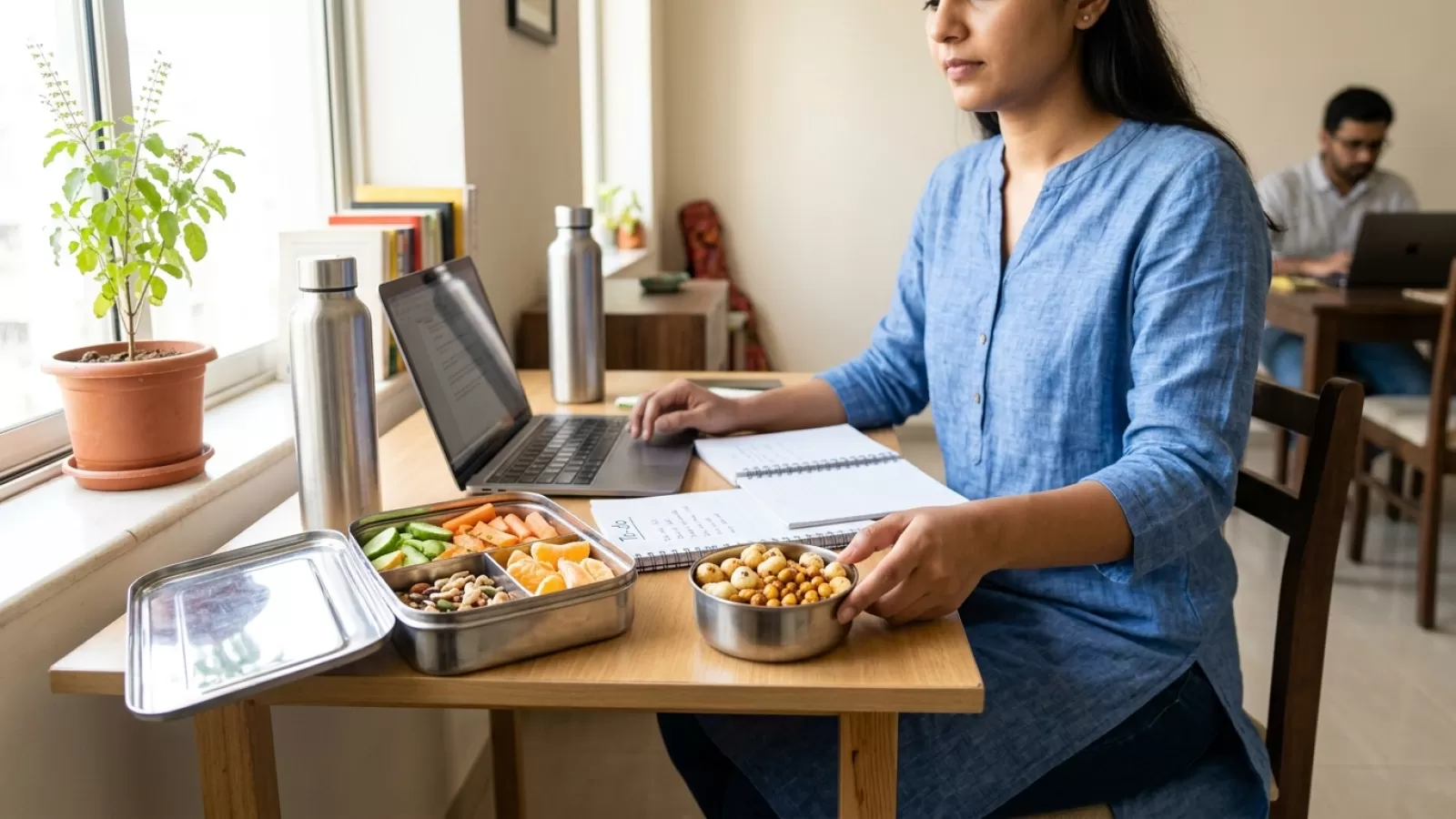
- Pre-pack easy snacks: Keep small containers of roasted chana, peanuts, makhana, or mixed nuts in your work bag, car, or next to your laptop. These professional Indian snacks for peak work periods can be grabbed with zero effort when mealtimes disappear.
- Batch-cook simple snacks: During the weekend or on a lighter day, roast a batch of makhana, or prep a big bowl of curd with fruit. These can be stored and portioned out through the week when you barely have time to cook.
- Choose protein and fiber-rich options: Dahi, sprouts, moong dal chilla, or boiled eggs (if you eat them) support better energy and brain function than just biscuits or namkeen. They also help prevent the blood sugar spikes that lead to crashes later.
- Set a reminder to eat: It sounds basic, but in many homes, a simple phone alarm or a sticky note can help prompt you to actually reach for those snacks before you get too hungry or irritable.
- Keep hydration visible: During high-stress weeks, water is often forgotten. Place a water bottle on your desk or kitchen table—sometimes, tiredness is just mild dehydration disguised as hunger.
It’s not about never missing a meal—it’s about having backup options that you don’t have to think about when the week gets overwhelming.
How Snacking Habits Shape the Workweek in Indian Homes
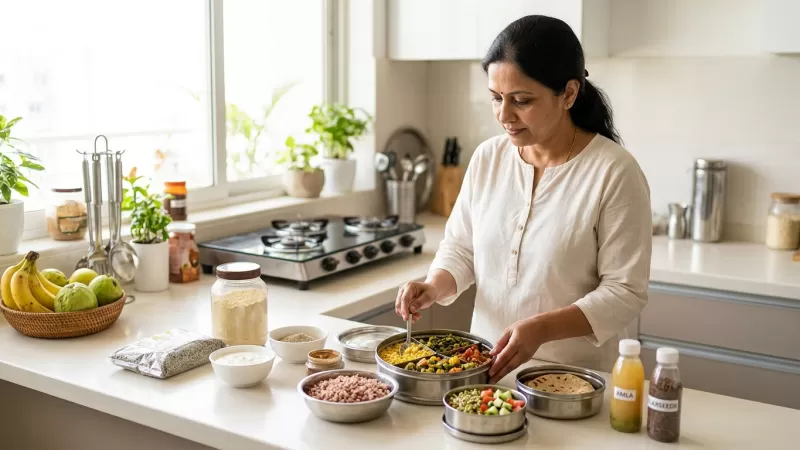
Every family has its own rhythms. In many Indian homes, the kitchen counter becomes a mini snack station during audit seasons or exam weeks—there’s a bowl of fruit, some roasted peanuts, and maybe a packet of khakhra within reach. Sometimes, it’s just a pressure cooker of chana sitting on the stove, to be eaten by the spoonful between emails.
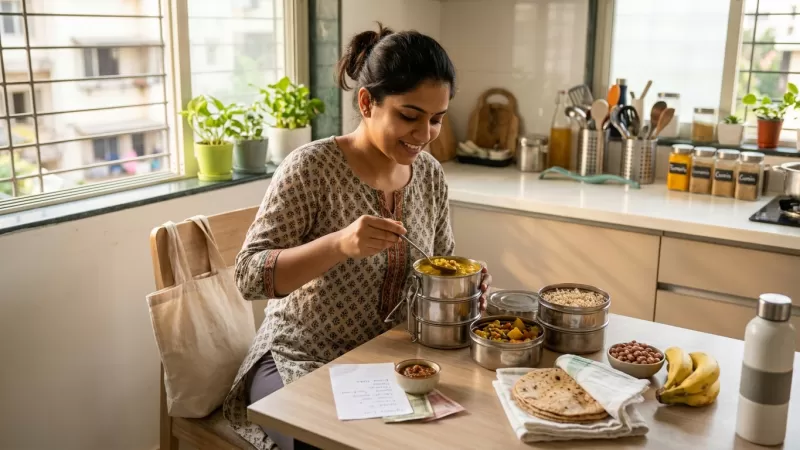
A working professional commuting in Pune might keep packets of poha and roasted makhana in a desk drawer at work, knowing lunch might get delayed. In homes with kids, parents often pack extra nuts or home-roasted snacks for themselves along with the children’s tiffin, just in case their own meals go missing.
During humid Mumbai summers, dahi becomes the go-to—cool, filling, and quick to eat. In smaller towns, parents quietly push a plate of cut fruit or a glass of buttermilk towards the professionals in the family when they see them skipping meals. These routines aren’t fancy but keep everyone going when time is short and demands are high.
When Snacking Isn’t Enough: Recognising When Help Is Needed
Most people can get through a week or two of busy work periods with smart Indian snacking habits, but if every week starts to look like this—meals skipped, energy low, mood off—it may be time to pause. If you notice weight dropping sharply, feeling dizzy often, or struggling to recover over weekends, it’s wise to check in with a doctor or nutritionist. Sometimes, what seems like just a busy season can hide a bigger issue.
Common Questions
Every Indian home juggles busy weeks in its own way, and snacking habits often tell the story of how you get through the worst of it. If you’re wondering which habits truly help, or how to avoid letting these patterns become permanent, you’re not alone. Here are some warm, realistic answers anchored in everyday Indian routines.
What are the best Indian snacks to have reliably available during peak professional demand weeks?
In most Indian homes, the snacks that work best during peak work periods are those that don’t spoil quickly and can be eaten without fuss. Roasted chana, peanuts, makhana, khakhra, chikki, poha, and dry fruits are popular because they’re filling and travel well. Many families also keep dahi, boiled chana, or sprouts in the fridge, ready to be scooped up quickly. These snacks don’t need special preparation, making them perfect for truly busy days when even making chai feels like a stretch.
How do Indian professionals ensure minimal nutritional standards are maintained during weeks when there is genuinely no time to eat properly?
Professionals often rely on packing small containers of nuts, seeds, or roasted pulses in their bags and desks at the start of the week. In joint families, someone might keep a bowl of cut fruit or dahi ready in the fridge. Some set reminders to eat every few hours, even if it’s just a handful of nuts. During peak periods, it’s less about perfect nutrition and more about not running on empty—so having easy, protein-rich snacks at arm’s length is the quiet strategy most working Indians use.
Which Indian snacks provide the best brain function support for sustained intellectual work during demanding periods?
For staying sharp, snacks with a mix of protein, healthy fats, and slow-release carbs work best. Roasted peanuts and chana, trail mix with almonds and walnuts, homemade poha, and dahi with fruit are common choices. These help avoid the energy crashes that come from sugary or processed snacks. Many professionals find that having a bowl of curd or a few pieces of chikki mid-afternoon gives better focus during late meetings than another cup of tea or coffee.
How do you prevent the nutritional habits of a very busy week from becoming the default pattern even when the busyness has passed?
After a stretch of high-pressure work, it’s tempting to keep reaching for quick snacks out of habit. In many homes, families reset by bringing back proper meals on the weekend—making dal, sabzi, and roti together, or sharing a slow breakfast. Some professionals pack away the snack jars for a few days, or set a rule to eat one proper meal at the table daily. These small rituals help signal to the body and mind that the peak period is over, and that it’s safe to return to regular eating patterns.
What is the one Indian snacking habit that most reliably maintains energy and cognitive function during the heaviest Indian professional work periods?
Keeping a small container of mixed roasted chana, peanuts, and dry fruits handy—whether in your bag, drawer, or even on the dashboard—tends to be the one habit that supports both energy and concentration. Many professionals find that this simple mix, eaten in small amounts throughout the day, helps avoid both hunger pangs and energy crashes. It’s not fancy, but it’s practical, and it fits into the unpredictable rhythm of the busiest Indian work weeks.