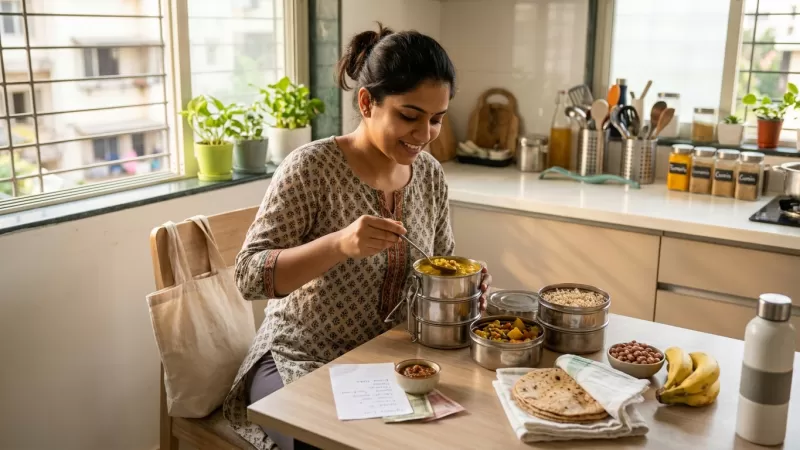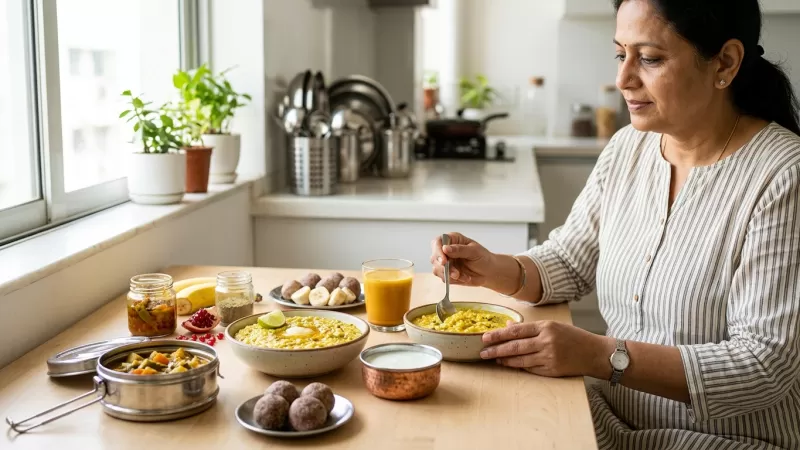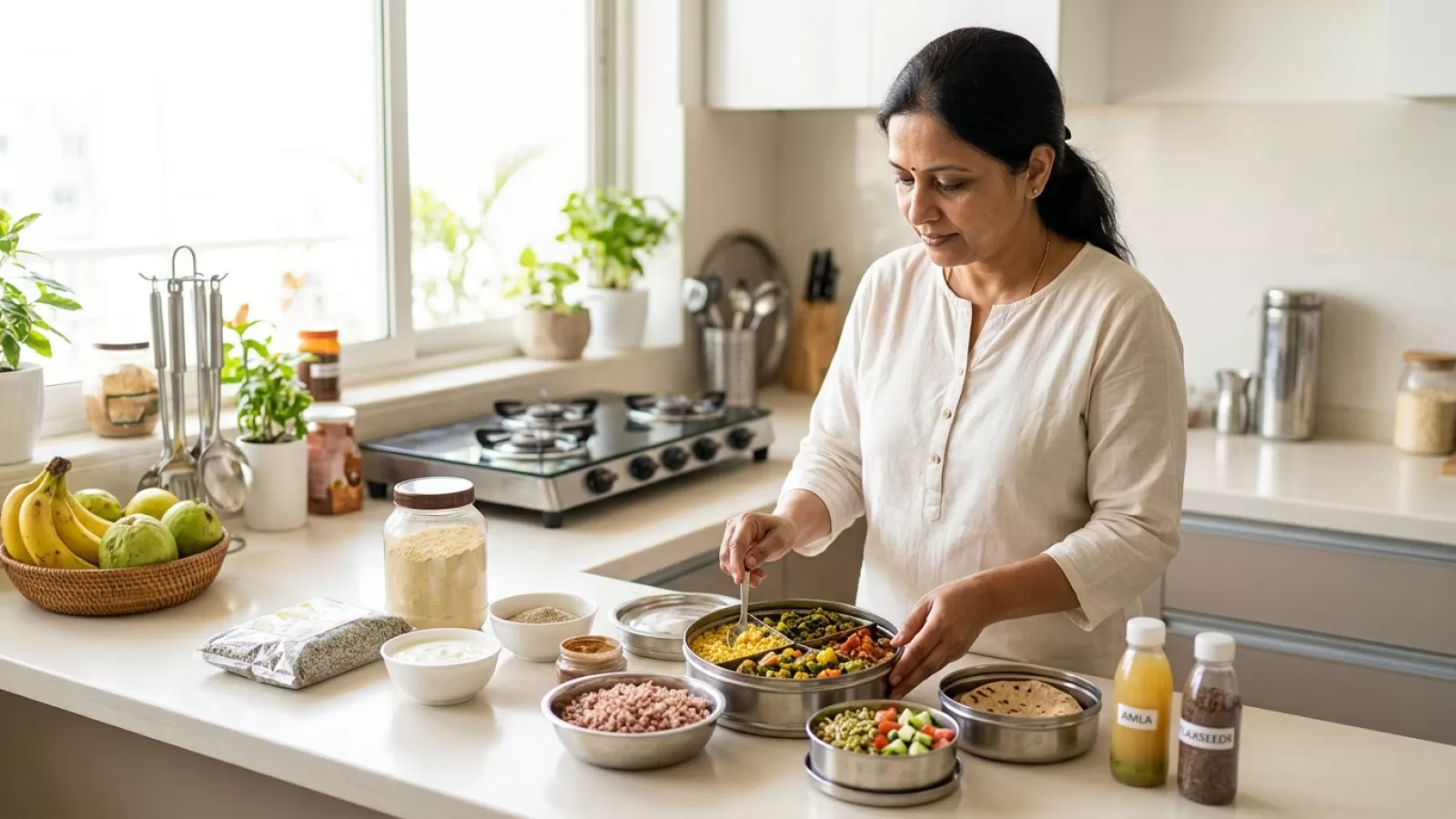
Evenings in many Indian homes often bring a shared sigh of relief — the kitchen is quiet, the pressure cooker has finished its last whistle, and someone asks, “How much rice should I make today?” Some days, appetites seem endless: the whole family eats double helpings of dal-chawal, maybe with a second helping of sabzi. Other days, plates come back half-finished, and the same pot of food lingers until lunch the next day. With affordable Indian nutrition variable appetite is almost a daily puzzle, especially when you’re working within a fixed grocery budget.
It’s a familiar dance: you stick to your budget Indian food list, but hunger fluctuates wildly — summer heat, late meetings, or a family member feeling under the weather. Still, most families can’t afford to double their grocery spend on high-protein bars or fancy “superfoods.” The question is, how do you keep meals nutritious, whether you’re eating a small bowl of khichdi or a full thali, without breaking the bank? The answer is simpler (and tastier) than you might think.
Why Appetite Fluctuates So Much in Indian Households
In Indian homes, appetite is rarely consistent. Some weeks, everyone seems to be hungry at every meal; other weeks, food goes untouched. There are plenty of reasons for this. Weather plays a big role — during peak summer, many people eat less, preferring lighter meals or even skipping dinner for just dahi-chawal. After festivals or a weekend of heavy food, the following days are often marked by lower appetite and a return to simple, cheap Indian meals for different appetite days.
Working professionals sometimes come home late and tired, and might just nibble on poha or fruit. Seniors in the family might have smaller appetites, but children can suddenly demand second servings after an active day. Even the same person’s hunger can swing wildly depending on stress, sleep, and physical activity. In joint families, these patterns are even more noticeable, since collective moods and schedules affect everyone’s eating.
All this means that with affordable Indian nutrition variable appetite is not just common — it’s practically the norm. Most families stick to familiar dal, rice, roti, and sabzi because these foods can flex to meet both small and large appetites, without wasting food or money.
What Drives These Ups and Downs: The Real Reasons Appetite Swings
Budget Indian food fluctuating hunger is shaped by many everyday realities. The main drivers are:
- Weather and Season: Hot, humid summers in Chennai or Nagpur mean lighter meals, while winters in North India bring bigger portions and richer foods.
- Work and Activity: A working professional commuting in Bengaluru might skip breakfast but eat a heavy dinner. School holidays or festivals mean more at-home meals and snacks, often shifting family hunger patterns.
- Health and Mood: If someone is unwell, the whole family often switches to softer, simpler foods like khichdi or daliya. Stress or sleepless nights can suppress or spike hunger.
- Financial Rhythms: Many Indian families set a weekly or monthly grocery budget. Even if appetites change, shopping lists stay mostly the same, relying on foods that stretch easily — rice, dal, potatoes, seasonal vegetables.
Nutritionists working with Indian families often find that households rely on a core set of foods — dal, rice, roti, and basic vegetables — because they are adaptable, affordable, and can be eaten in any proportion as hunger demands.
Clues That Variable Appetite Is Affecting Your Nutrition and Budget
- Leftover Overload: Some days, you open the fridge and find bowls of yesterday’s sabzi, cooked rice, and even roti that nobody touched.
- Unexpected Shortages: Other days, the food runs out before everyone is full, and you scramble to fry papad or serve extra dahi.
- Feeling Unsatisfied or Overfull: On low appetite days, you may still eat a "regular" portion out of habit, feeling too full. On hungry days, you finish your plate but still crave more.
- Budget Creep: Small top-ups — packets of bread, extra milk, ready-to-eat snacks — sneak into your weekly expenses when the main meals fall short.
- Family Feedback: Someone always comments, “Aaj bhookh kam hai,” or “Bas, thoda aur hai kya?” — a quiet signal that meals are not matching appetite.
These patterns are more common than we admit, especially with cheap Indian meals for different appetite days forming the backbone of most kitchens.
Practical Ways to Keep Nutrition Consistent on Any Appetite Day
- Build Meals Around Flexible Staples: Dal, rice, chapati, and seasonal vegetables can be eaten in any proportion. On days when hunger is low, a small bowl of dal-chawal still gives protein and energy. On hungrier days, you simply eat more of the same — no fancy food swaps needed.
- Choose Nutritious Staples: Moong dal, chana dal, rajma, and whole wheat atta are affordable yet rich in protein and iron. For vegetables, bhindi, lauki, and carrots stretch far and add vitamins even in small servings. Eggs, when budget allows, are a strong protein option and can be cooked quickly in whatever quantity you need.
- Plan for Leftovers: In many homes, leftover dal becomes the next day’s tadka dal, or rice turns into lemon rice or curd rice. This routine helps handle both high and low appetite days, making Indian nutrition on budget unpredictable eating less stressful.
- Keep Quick Add-Ons Ready: Roasted makhana, peanuts, or homemade chutney can add a boost to a small meal. Even a spoon of dahi gives calcium and protein, stretches a meal, and soothes the stomach during hot days.
- Prep Small Batches: Instead of large meal prep, make slightly less than you think you’ll need. It’s easier to cook a little more if hunger is high than to deal with too many leftovers if appetite is low.
- Rotate Flavours, Not Ingredients: Using the same base ingredients, change the tadka or add a new masala. A simple masoor dal can taste different with garlic one day and tomatoes the next, keeping meals interesting even with a tight budget.
These small adjustments help keep affordable Indian nutrition variable appetite manageable and practical, every day.
Patterns You’ll Notice in Indian Homes Handling Variable Hunger
In many Indian kitchens, you’ll see a quiet rhythm: the same core foods appear week after week, but the way they’re served shifts. On summer days, lunch might just be dahi rice with pickle and a side of bhindi. After a busy Sunday with guests, Monday’s breakfast is often leftover sabzi rolled into parathas. Kids sometimes eat only half their portion, while a teenager suddenly demands seconds.
Many families in Indian cities have quietly discovered that sticking to cheap Indian meals for different appetite days — dal, rice, roti, and a seasonal sabzi — helps manage both nutrition and unpredictable eating, without food waste or stress. Flexible planning, not rigid meal prep, is the real secret.
When It’s Time To Ask For Extra Help
Usually, small swings in appetite are just part of daily life. But if someone in your family is eating much less for several days, losing weight, or feeling weak, it’s best to speak with a doctor. The same goes for anyone with a long-term health condition, pregnancy, or recovering from illness. Most of the time, though, affordable Indian nutrition variable appetite can be managed at home with mindful meal planning and open family conversations.
Common Questions
These are questions that come up in so many Indian homes. Let’s look at each one through the lens of daily life — not theory, but the patterns and fixes real families use when appetite and budget don’t cooperate.
How do Indian adults on tight budgets maintain nutrition when appetite varies significantly from day to day?
In many families, the key is sticking to versatile foods — dal, rice, roti, and seasonal vegetables. These can be eaten in any quantity, so whether you’re hungry or not, you still get protein, fibre, and micronutrients. When appetite is low, a small helping of dal-rice and a spoonful of sabzi is still nourishing. On hungrier days, you just eat more of the same. This approach avoids extra spending on expensive snacks and keeps nutrition steady, no matter how much you eat.
Which Indian foods on a limited budget are nutritious in both small and large portions, making them appropriate for variable appetite days?
Dal (moong, masoor, chana), rice, whole wheat rotis, and seasonal sabzi like lauki, bhindi, or beans are top choices. Curd or dahi adds protein and calcium even in small amounts. Eggs, if budget allows, are a great flexible protein. These foods can be portioned up or down, so even a small plate covers your nutrition basics. Many homes also keep roasted chana or peanuts for a quick, cheap boost if a meal feels too light.
What strategies help budget-conscious Indian adults avoid food waste when appetite is lower than the amount prepared?
Leftovers are rarely wasted in Indian homes. Extra rice becomes lemon rice, or is added to curd for a cooling meal. Leftover dal can be thickened into a soup or used as filling in parathas. Sabzi is often mixed into upma or poha the next day. Many families prepare slightly less than they think they need, then quickly make an omelette or fry papad if more is needed. This habit keeps both waste and spending low, and keeps meals interesting.
How do you ensure nutritional adequacy on a low-budget day when appetite is also particularly low?
Even on days with little appetite, choosing foods that give more nutrition per bite helps. A bowl of dal-chawal with a spoon of ghee and some dahi packs protein, iron, and healthy fats. Adding a small serving of sabzi boosts vitamins. If you don’t feel like a full meal, even a bowl of curd rice or khichdi is nourishing. Drinking chaas or lassi adds probiotics. This way, your body gets what it needs even when your stomach isn’t asking for much.
What are the most affordable Indian foods that still provide adequate protein and iron for adults eating smaller portions on low-appetite days?
Moong dal, masoor dal, and chana dal are protein-rich and cheap. Adding a spoon of ghee or a few peanuts helps with energy. Spinach (palak), methi, and amaranth are iron-rich greens that can be mixed into dal or made into a quick sabzi. Eggs are also an affordable protein source. Even a small portion of these, paired with roti or rice, can provide needed nutrients when you’re eating less.