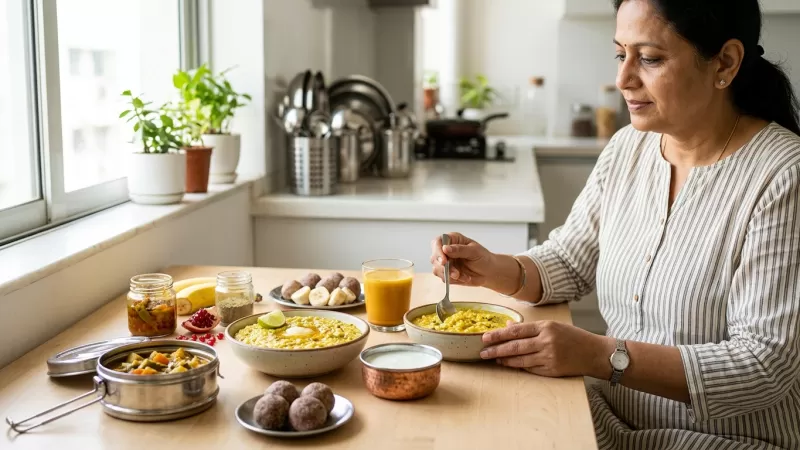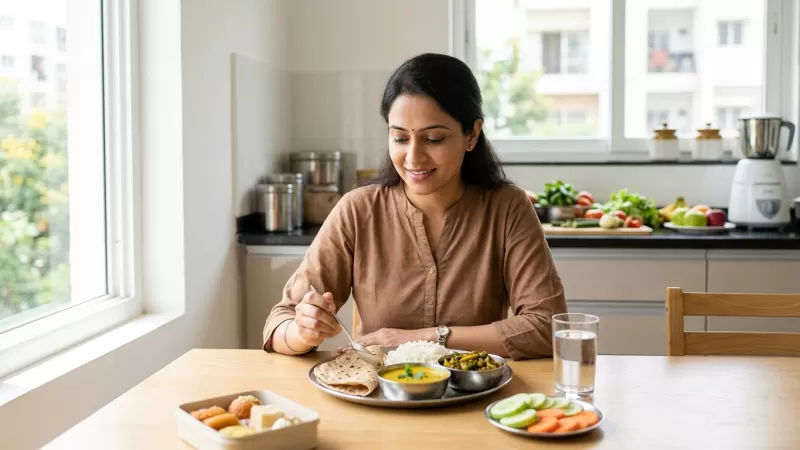
At the end of a long workday, many Indian adults find themselves eating a late dinner, sometimes cold, often rushed. The rhythm of busy homes, tight budgets, and irregular meal times means that Indian nutrition with irregular meals on a tight budget is not a rare problem—it's a near-daily reality, especially in the last week before salary day.
In these moments, it isn’t fancy health foods that keep you going. It’s the affordable, sturdy Indian foods that survive a day in a tiffin, need little effort, and don’t cost a fortune. A leftover bowl of dal-rice, a roti with chutney, or curd with poha often provide more steady nourishment than anything you can buy in a hurry.
Why Indian Adults Often Eat at Odd Hours and Tight Budgets
Busy mornings, late-night office calls, traffic jams, and sudden power cuts—these are just a few reasons why meal timings go haywire in Indian homes. In joint families, meals sometimes depend on when everyone is free. For working professionals, especially those commuting in big cities or working from home, food often fits into gaps between meetings or after household chores are done. The unpredictability of daily routines makes fixed meal times a luxury.
On top of that, monthly expenses can pinch harder as the month winds down. The week before payday, many families quietly stretch their groceries, looking for ways to keep everyone fed and healthy without splurging. In these times, affordable Indian food for an unpredictable schedule is less about choice and more about survival. Tiffin carriers with simple khichdi or curd-rice become a lifeline for those whose lunch break never comes at the same hour.
Why Irregular Eating Patterns Are So Widespread in Indian Households
In many Indian homes, life rarely slows down enough for planned meal times. Joint families have to wait for everyone to finish their turn in the bathroom before breakfast is served. Working professionals often leave before sunrise, grabbing whatever is available or skipping meals altogether. School timings, office shifts, and even the timing of daily power cuts can throw off the best-laid plans.
Many adults in Indian cities juggle demanding jobs and crowded commutes, making it hard to predict when (or where) they’ll next eat. For daily wage workers, there’s rarely a guaranteed lunch break or a steady income, so both the time and the budget for food are uncertain. Nutritionists who work in community settings often find that for many Indians, the main challenge is not ignorance, but the unpredictable nature of daily routines and limited finances.
There’s also the expectation—especially for homemakers—to manage everything so seamlessly that nobody else notices the chaos in the kitchen. This pressure leads to skipped meals or eating whatever is left over, often at odd hours.
Clues Your Nutrition Is Suffering from Irregular and Tight-Means Eating
- You’re often hungry at odd times: If you find yourself reaching for snacks at midnight or needing chai and biscuits to keep you going through the afternoon, it’s a sign your main meals aren’t filling or timed well.
- Low energy in the evenings: Many adults notice that by 7pm, their energy crashes, making it hard to finish chores or help children with homework.
- Frequent headaches or dizziness: In many homes, skipping meals or eating only carbs (like plain poha or white bread) leads to foggy thinking and headaches.
- Digestive troubles: Irregular eating, especially skipping breakfast and eating a heavy dinner, often causes acidity, bloating, or constipation.
- Getting irritable easily: Many families notice more arguments or snapping at each other when hunger stretches too long or meals are missed altogether.
Affordable Nutrition Strategies When Meals Are Irregular and Money Is Tight
- Use versatile staples: Dal, rice, and roti remain the backbone of budget Indian nutrition with irregular timing. They are filling, can be cooked in larger batches, and taste fine even after a few hours in a tiffin box.
- Rely on curd and dahi: Curd is cheap, filling, and provides protein as well as probiotics. A small bowl with rice or poha makes a complete, cooling meal, especially during hot summers.
- Keep roasted chana or makhana handy: These affordable Indian foods for unpredictable schedules are portable, protein-rich, and don’t spoil quickly, making them perfect for snack times between irregular meals.
- Make use of leftovers wisely: Many households turn leftover sabzi into a wrap with roti, or mix dal with rice to create khichdi for a quick, nutritious meal the next day. Nothing gets wasted, and you get more from what you already have.
- Soak and sprout lentils: When time and money are both tight, sprouted green moong or chana gives a protein boost and can be eaten raw, with lemon and salt, at any time of day. It’s one of the cheapest ways to increase nutrition on a tight budget with irregular eating in India.
What This Looks Like in Real Indian Homes
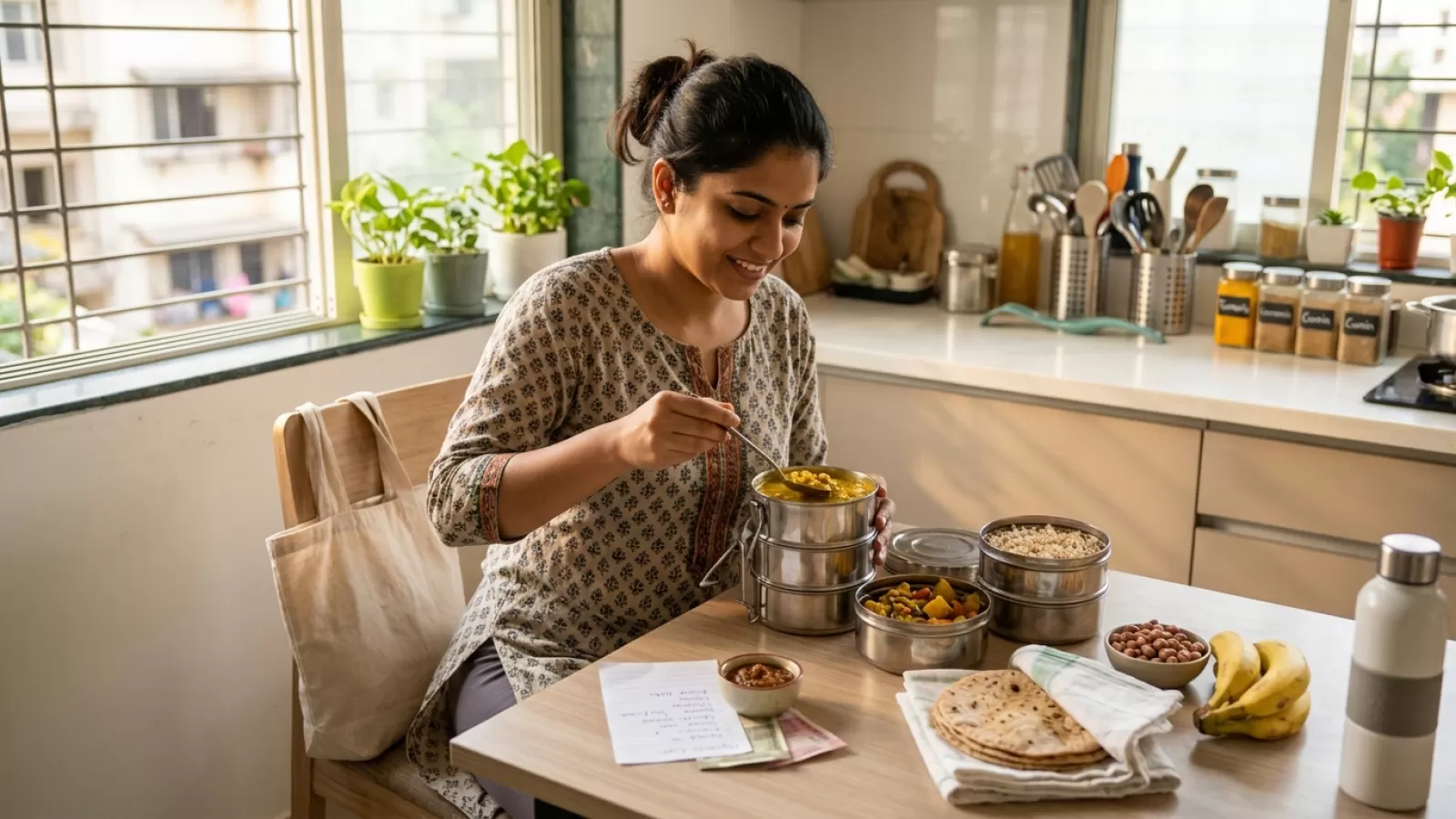
A kitchen in Nagpur at 6am. The pressure cooker whistles while someone quickly kneads dough for rotis. There’s a small bowl of leftover dal from last night, a bit of dahi from yesterday’s batch, and a handful of roasted chana in a steel dabba. The day ahead is uncertain—school timings, office calls, possible power cuts. Lunch may be at noon or at 3pm, depending on meetings. So, one roti is smeared with dal and rolled up for later. The curd is packed in a small container. The roasted chana goes into a pocket. This way, even when the day’s schedule gets thrown off, there’s always something filling and nutritious to eat, made from what’s already on hand.
In many Indian families, especially during the last week before payday, these small habits—packing leftovers, carrying dahi, relying on simple roasted snacks—make the difference between running on empty and staying nourished.
How to Know When It’s Time for Extra Help
Most adults navigate budget Indian nutrition with irregular timing by adjusting routines, stretching leftovers, and making do. But if you or anyone in your home is losing weight unexpectedly, feeling faint often, or struggling with persistent digestive issues, it’s wise to talk to a doctor. Sometimes, the body needs more than home fixes, especially if you have underlying health conditions or if these patterns continue for months.
Common Questions
Many Indian adults balancing work, family, and a tight budget quietly wonder what actually works when both money and meal times are unpredictable. The good news is, Indian kitchens already have some answers tucked away in their routines. Let’s look at what works for most real homes.
What Indian foods provide the best nutrition at the lowest cost for adults who also have irregular daily schedules?
Dal, rice, roti, and dahi are the mainstays. These staples are cheap, filling, and hold their nutritional value even if eaten later in the day. Roasted chana, boiled eggs (if not vegetarian), and seasonal vegetables (like lauki, pumpkin, or spinach) bought in small quantities also provide good nutrition without straining the budget. Many adults take a small dabba of curd-rice or dal-roti to work, knowing it will keep them full even if lunch is delayed.
How do you maintain basic daily nutrition on a very limited budget when meal timing is genuinely unpredictable?
Batch-cooking basics like dal or khichdi, keeping roasted chana or peanuts for snacks, and using leftovers in creative ways help a lot. Preparing a small amount of curd at home is both cheap and nourishing. In many homes, making a habit of carrying a small snack (like poha or paratha) means you always have something to eat, no matter when hunger strikes. This approach balances cost, convenience, and nutrition.
Which Indian staple ingredients can be prepared in advance and eaten at variable times without losing nutritional value?
Dal, cooked rice, sabzi, boiled potatoes, and homemade dahi stay fresh for hours and don’t lose their basic nutrients. Sprouted moong or chana can be soaked and kept ready for a snack or quick meal. Parathas or theplas (especially with methi or lauki) can be made ahead and eaten cold or reheated. These foods are popular in Indian homes because they travel well in a tiffin and taste fine even when eaten later.
How do budget Indian adults ensure adequate protein and iron intake without the more expensive ingredients often recommended for nutrition?
Dal, chana, and moong are affordable protein sources. For iron, many homes use spinach, amaranth (chaulai), and even bathua when in season—these are often much cheaper than store-bought supplements or imported foods. Cooking in iron kadai can also help a little. Squeezing lemon over cooked greens or dal helps the body absorb more iron. Many families add roasted peanuts or sesame seeds for an extra protein and iron boost.
What is the most cost-effective single Indian food category to prioritise on the tightest nutrition budget?
On the tightest budget, dal (lentils and pulses) is the go-to. It’s filling, versatile, and provides both protein and iron. Even a simple meal of dal-rice or dal-roti covers basic nutrition needs for most adults. That said, combining dal with a bit of seasonal vegetable or dahi improves both taste and nutrition, and these small additions are often affordable in most Indian markets.