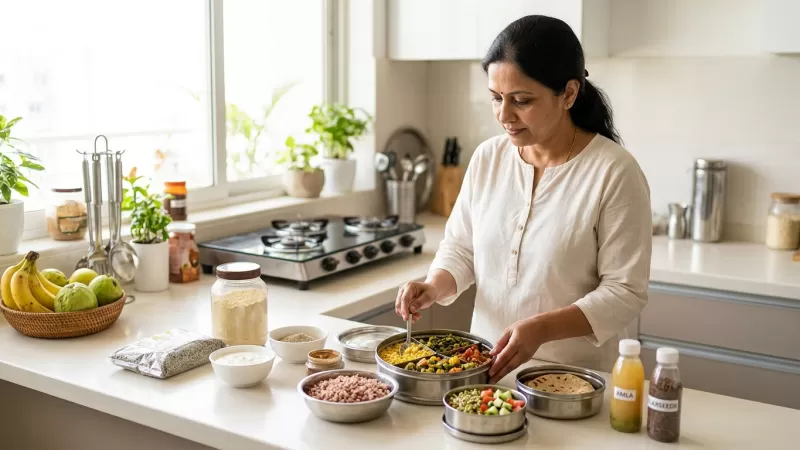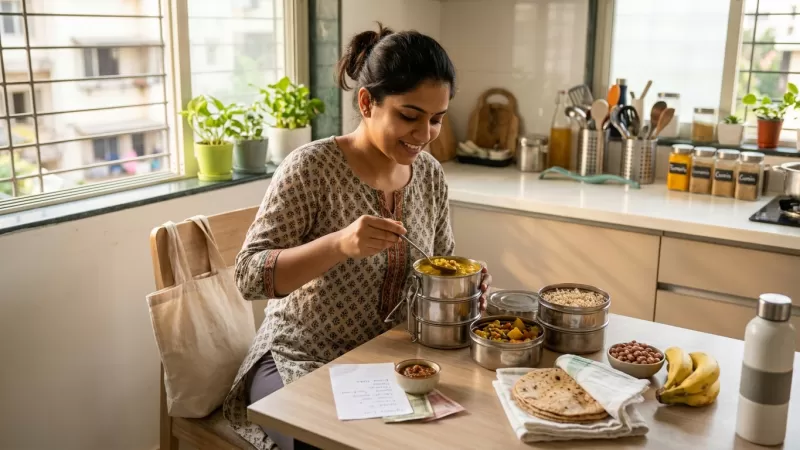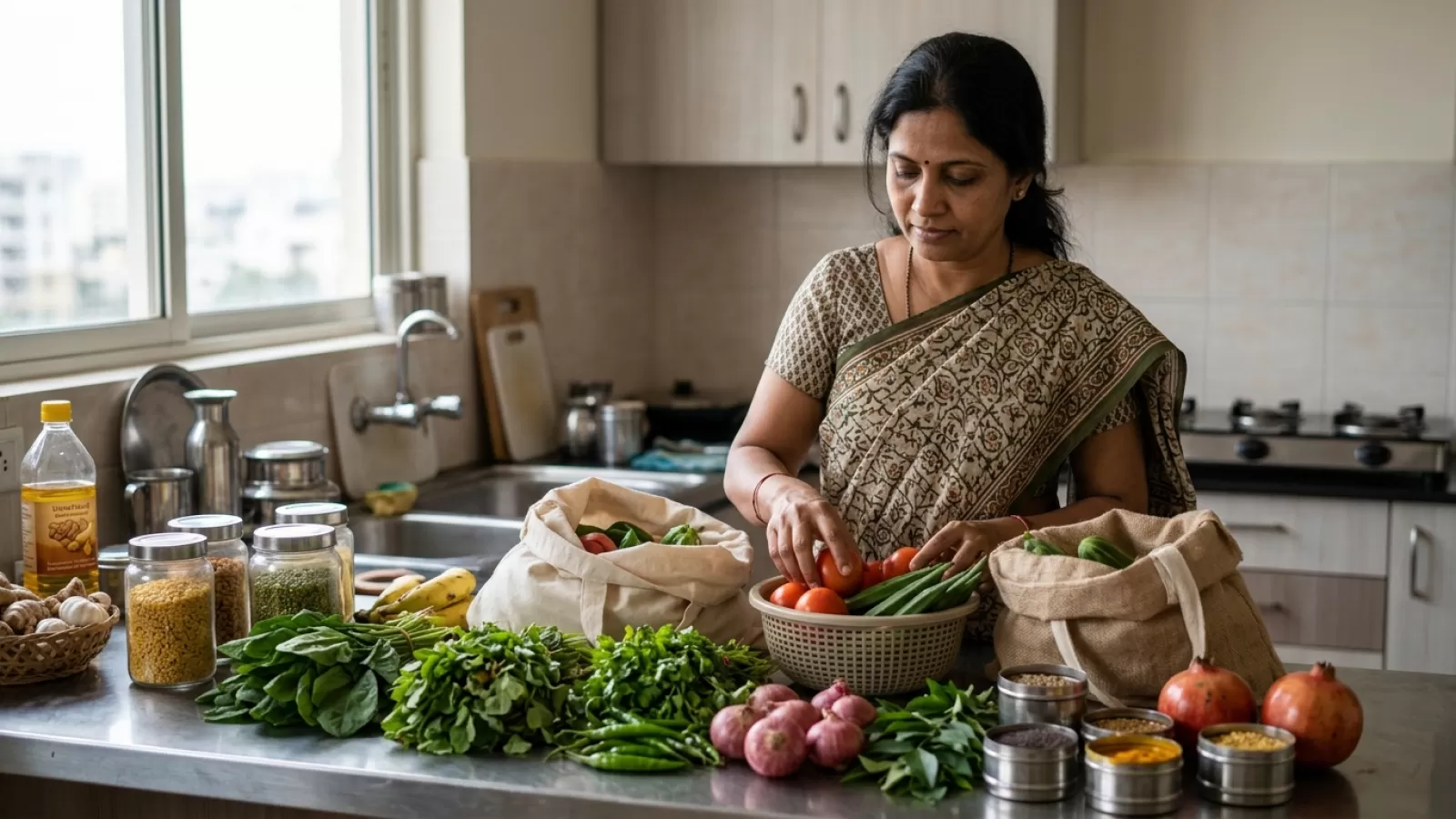
Most Indian kitchens run on a quiet rhythm set not in the kitchen, but at the sabzi mandi or local grocery shop. On a Saturday evening, bags fill with potatoes, onions, and the same handful of familiar vegetables, almost without thought. These Indian grocery shopping habits for nutrition shape the week’s meals far more than any recipe or cookbook.
That’s the pattern in many homes — what gets bought is what gets cooked. And even a small change in what you bring home, like swapping one pack of namkeen for a handful of seasonal greens, shifts the whole family’s nutrition without much fuss. The smart Indian grocery list doesn’t need to be fancy or strict; it just needs a little thought before the next round at the market.
Why Grocery Shopping Habits Quietly Decide Nutrition in Indian Homes
In most Indian homes, nutrition isn’t decided at the dining table, but at the shop counter or local market. Once the week’s vegetables and groceries are in the kitchen, the menu for the next seven days is almost set. The familiar rhythm is comforting: alu, tamatar, pyaaz, a packet of bread, some dahi, a few bananas, and maybe a treat for the kids. But when the same few items land in the bag week after week, meals tend to repeat themselves too.
It’s no surprise. Most families juggle busy jobs, school runs, elderly parents, and managing the home — shopping often happens in a hurry. Convenience matters. That’s why healthy Indian grocery shopping, when done with a little intention, can make all the difference. One new vegetable or a different pulse can quietly nudge the whole week’s meals in a better direction.
In many Indian cities, families have discovered that when they pick up lauki or bhindi instead of another packet of chips, the sabzi for dinner improves without effort. The tricky part is, these changes happen quietly — but over time, they build up to better family nutrition.
Why Familiar Grocery Patterns Repeat Week After Week
Why do the same vegetables and snacks land in the basket every week? Part of it is habit. After a long workday or a hot afternoon standing in a crowded mandi, most people just want to get the basics and head home. It’s easy to grab what you know everyone will eat — potatoes, onions, tomatoes, a couple of greens, and maybe a treat from the bakery.
There’s also the matter of taste and comfort. In joint families, you might find yourself buying what elders prefer, or what kids will reliably eat with roti. Budget plays a role too — familiar items are often more affordable, and you know exactly how much to buy to last the week.
Nutritionists who work with Indian families often find that most shopping decisions are made out of routine, not lack of knowledge. People know that eating more varieties is good, but when time is short and the shop is crowded, old patterns win.
Weather is another factor. During monsoon, people reach for root vegetables and avoid leafy greens that spoil fast. In summer, dahi and lighter vegetables like tinda or cucumber are more appealing. These small seasonal shifts can actually help with healthy Indian grocery shopping if you pay attention to what’s freshest.
Clues Your Shopping Habits Aren’t Helping Nutrition
- The same four or five vegetables come home every week. When baingan, bhindi, alu, and gobhi are always on the list, meals become repetitive and miss out on the variety needed for balanced nutrition.
- Packed snacks crowd the shopping bag. If there’s always a packet of chips or biscuits, but rarely a new fruit or vegetable, it’s a sign shopping habits are steering towards convenience over nutrition.
- Dal and pulses rarely change. Many homes buy only toor dal or chana dal, missing out on the benefits of moong, masoor, or urad.
- Old vegetables spoil in the fridge. When you find forgotten palak or methi turning yellow before you get to use it, it usually means you’re buying more out of habit than a plan for the week’s meals.
- The fruit basket is empty halfway through the week. If the only fruit left by Thursday is a blackening banana, it’s a sign the shopping list needs a refresh.
Small Shifts That Make a Big Difference in Your Grocery List
- Add one new vegetable or fruit each week. Instead of only alu and gobhi, pick up something unfamiliar like kundru or parwal. Over time, this habit brings more nutrients and variety to meals.
- Swap one snack for a seasonal fresh item. If you usually buy sev or chips, try roasted makhana or a box of jamun. It’s a small swap, but it adds up to better snacking habits.
- Rotate your dal and grain choices. One week buy masoor dal, another week try urad or moong. For grains, alternate between rice, wheat, and millets like bajra or jowar. This keeps meals interesting and more nutritious.
- Shop with a rough weekly meal plan in mind. You don’t need a chart — just think about what you’ll cook for breakfast, lunch, and dinner for a few days. This way, you buy only what you’ll actually use, reducing waste and improving nutrition.
- Look for freshness and local produce at the market. Seasonal vegetables often taste better, cost less, and carry the nutrients suited to the weather. During summer, try tinda, lauki, or karela; in winter, go for carrots, sarson, or bathua.
The catch is, you don’t have to overhaul your whole routine. One or two small changes in your smart Indian grocery list each week can gently shift your family’s nutrition in the right direction.
How Good Shopping Habits Shape Daily Meals in Indian Homes
In many homes, what’s in the fridge shapes the menu. If there’s a box of fresh spinach, palak dal shows up for lunch. If the only vegetables are potatoes and onions, alu ki sabzi becomes the default dinner. When a new fruit like guava or papaya lands in the shopping bag, it often becomes a school tiffin treat or a quick mid-morning snack.
Joint family kitchens, especially, see this pattern. The eldest member or whoever shops might choose vegetables based on what was bought last week, not what’s in season or new. But when someone brings home a bunch of methi or a box of mushrooms, suddenly the week’s meals change — maybe methi thepla for breakfast or mushroom pulao for Sunday lunch.
On busy mornings, a pre-cut papaya or a bowl of sprouts from yesterday’s shopping becomes breakfast for a working parent or a senior. Healthy Indian grocery shopping doesn’t have to be about strict rules — it’s often about what you make easy to grab and cook.
Many working professionals in cities have found that switching to local vegetable vendors or weekly farmers’ markets makes it easier to spot fresh, seasonal produce — and that gentle nudge helps everyone eat a bit better without much effort.
When Simple Shopping Habits Need a Little Extra Support
If you find yourself buying the same things every week, or if vegetables and fruits often spoil before they’re cooked, it might help to talk things over with your family. Sometimes, a quick chat about what everyone actually wants to eat (or is willing to try) can break the pattern.
On the other hand, if you have dietary restrictions, health conditions, or are caring for someone with special nutrition needs, it’s a good idea to check with a doctor or a nutritionist before making big changes to your Indian market shopping for better health.
Common Questions
Shopping for groceries in India has its own rhythm. Everyone has a different routine, but most homes face the same challenges — busy markets, tight budgets, and the pull of old habits. Let’s talk through some real questions that come up for Indian families trying to shop a bit smarter for better nutrition.
Which Indian grocery shopping habits make the biggest difference to home nutrition?
The habits that matter most tend to be simple: adding one or two new vegetables or fruits to your weekly shop, rotating dals instead of always buying the same, and replacing one packed snack with a healthier fresh option. For example, a family in a Delhi flat who started picking up one seasonal green each week found their meals naturally became more varied. Over time, these small tweaks to the smart Indian grocery list quietly improved everyone’s nutrition without extra work in the kitchen.
Should Indian families buy seasonal vegetables even when imported options look more appealing?
Buying seasonal local vegetables is usually better for both nutrition and taste. Seasonal produce is fresher, often more affordable, and suited to the weather — like lauki and cucumber in summer or carrots and methi in winter. Many families in Indian cities notice that when they buy local vegetables, meals feel lighter, and there’s less spoilage. Imported options can be tempting, but local, seasonal choices usually support healthier eating for everyone at home.
How do you shop healthily for Indian groceries when the budget is limited?
When you’re watching every rupee, focus on versatile staples: dal, rice, whole wheat, local vegetables, and seasonal fruits. These days, many families stretch their budget by buying in bulk (like a sack of rice or a larger pack of dal), and choosing local produce over imported or packaged snacks. Planning a rough menu before you shop helps avoid buying things that won’t get used. Even small swaps, like choosing roasted chana over packaged chips, can make a difference to both nutrition and cost.
Which Indian kitchen staples should always be stocked to support good daily nutrition?
Most Indian homes rely on a core set of staples: a couple of dals (like moong and masoor), whole wheat atta, rice, seasonal vegetables, and dahi. Spices like haldi, jeera, and hing not only add flavor but can also support digestion. Keeping small portions of nuts, roasted makhana, or roasted chana handy offers healthier snack options. These basics make it easy to put together nourishing meals — think dal-rice, roti-sabzi, or poha with peanuts — even on busy days.
How do you make sure healthy Indian ingredients actually get used before they spoil rather than sitting unused?
In many homes, ingredients go unused when shopping is done out of habit, not with a plan. One way around this is to store new items at the front of the fridge, so you see them first. After shopping, many families in Mumbai or Chennai quickly chop greens or prep vegetables, making it easier to use them during the week. Batch-cooking or using leftovers in dishes like paratha or pulao helps too. The goal is to make healthy ingredients easy to spot and cook — not tucked away and forgotten.
A Kitchen in Nagpur at 6am — The Quiet Power of a Thoughtful Grocery Bag
It’s 6am in a Nagpur kitchen. The fan hums, pushing away the early summer heat. On the counter, a bag of fresh methi from last evening’s market sits next to a bowl of soaked masoor dal. There’s the earthy smell of chopped ginger and the sharp scent of green chillies waiting for the cooker’s whistle. Today’s breakfast will be methi paratha and dahi — a quiet shift from the usual bread and jam. The methi wasn’t on the shopping list, but it caught someone’s eye at the vendor’s cart. That one small choice, made in a hurry between other errands, has filled the kitchen with new smells and colors. Everyone will eat a little better — and no one will even notice the change.