On a regular weeknight in an Indian city, you might find someone standing at the kitchen entrance at 7pm, still wearing office clothes, staring blankly at a basket of onions and potatoes. The familiar question hangs in the air, sometimes spoken aloud, sometimes just felt: “What should we make for dinner?” Indian dinner meal planning ideas usually come to mind only after the evening rush has begun, leading to a scramble through the fridge, a quick check if the dal has been soaked, and a chorus of hungry voices asking how long it will take.
The tricky part is, in most Indian homes, the difference between a calm dinner and a stressful evening isn’t about cooking everything on Sunday or having a colour-coded meal plan stuck to the fridge. It’s really about three small choices made before 5pm—like soaking dal before leaving for work, deciding the sabzi by afternoon, or making sure the roti dough is ready. These quiet steps, often invisible to everyone else, turn the 7pm kitchen panic into a manageable 20-minute finish rather than a one-hour marathon.
Why Last-Minute Dinner Panic Is So Common in Indian Homes
Many Indian family dinner planning routines tend to leave dinner decisions for the last minute. It’s partly habit, partly the flow of the day. In joint families, the kitchen often has a steady rhythm of chai, snacks, and tiffin prep, leaving dinner as the final, sometimes forgotten, hurdle. In nuclear families, both partners may work, and evenings are squeezed between commutes, homework, and household chores. By 7pm, everyone is hungry, but nothing is prepped. The kitchen feels warm, the fridge is full of ingredients, but nothing is actually ready to cook.
There’s also the unspoken expectation that dinner will be fresh, hot, and preferably varied—not just reheated leftovers. Many homes expect fresh rotis nightly. The idea of batch cooking or prepping meals for the whole week often feels foreign, even unappealing. Instead, what happens is a daily scramble, with someone rushing to soak dal, chop onions, or defrost paneer in a hurry. All of this adds to evening kitchen stress India families know too well.
Why Dinner Decisions Get Left to the Last Minute
One reason dinner planning Indian working families struggle is that mornings are already packed—getting kids ready, packing tiffins, grabbing quick breakfasts, and rushing out the door. There’s hardly a spare minute to think about dinner before leaving home. Even for those working from home, the day blurs into meetings, chores, and unexpected visitors. Deciding dinner in advance can feel like just another task among many.
Another reason is the unpredictability of the Indian day. Power cuts, extra work hours, last-minute guests, or a sudden craving for something special can throw off even the best-laid plans. Many families also have multiple dietary needs—one person wants less oil, someone else avoids rice, and kids are always asking for something different. This makes it hard to stick to a rigid weekly meal plan or cook everything in advance.
Nutritionists who work with Indian households often find that most families want to eat home-cooked food but struggle because dinner decisions are left until everyone is already tired and hungry. This leads to hurried cooking, more takeout orders, or skipping meals altogether.
Clues That Dinner Planning Isn’t Working for You
- The 7pm Fridge Stare: You open the fridge and pantry, searching for inspiration, but nothing is ready—no dal soaked, no dough kneaded, and vegetables still in their market bags.
- Late Dinners: Dinner rarely happens before 9pm because prep only starts after everyone is home, leading to rushed meals and late bedtimes.
- Frequent Takeout: There are more Swiggy/Zomato orders than you’d like, especially on busy nights, just to avoid starting from scratch.
- Family Restlessness: Family members ask repeatedly when dinner will be ready, and tempers run high when the wait drags on.
- Unplanned Leftovers: Food gets wasted because meals aren’t planned based on what’s already in the fridge or what’s about to spoil.
Three Small Steps That Make a Big Difference
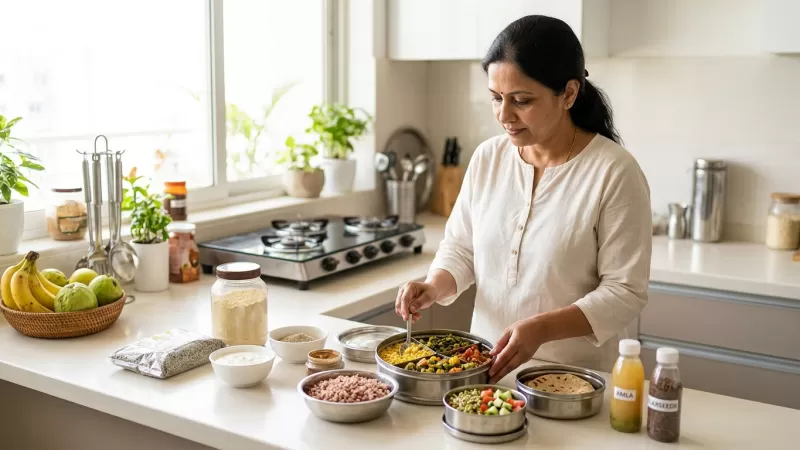
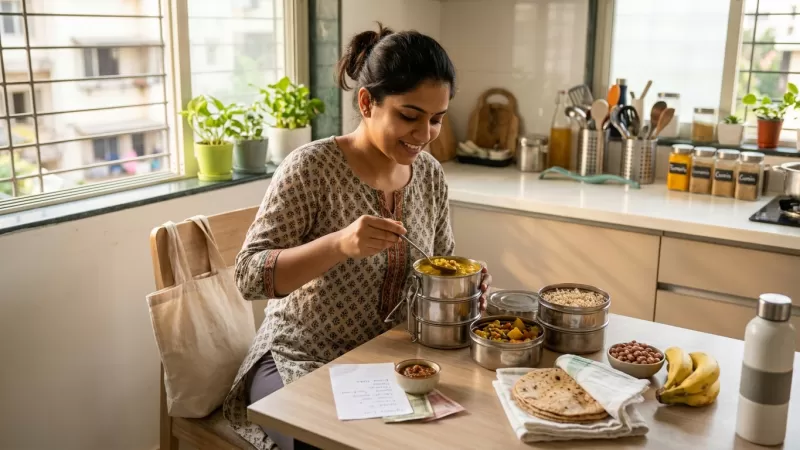
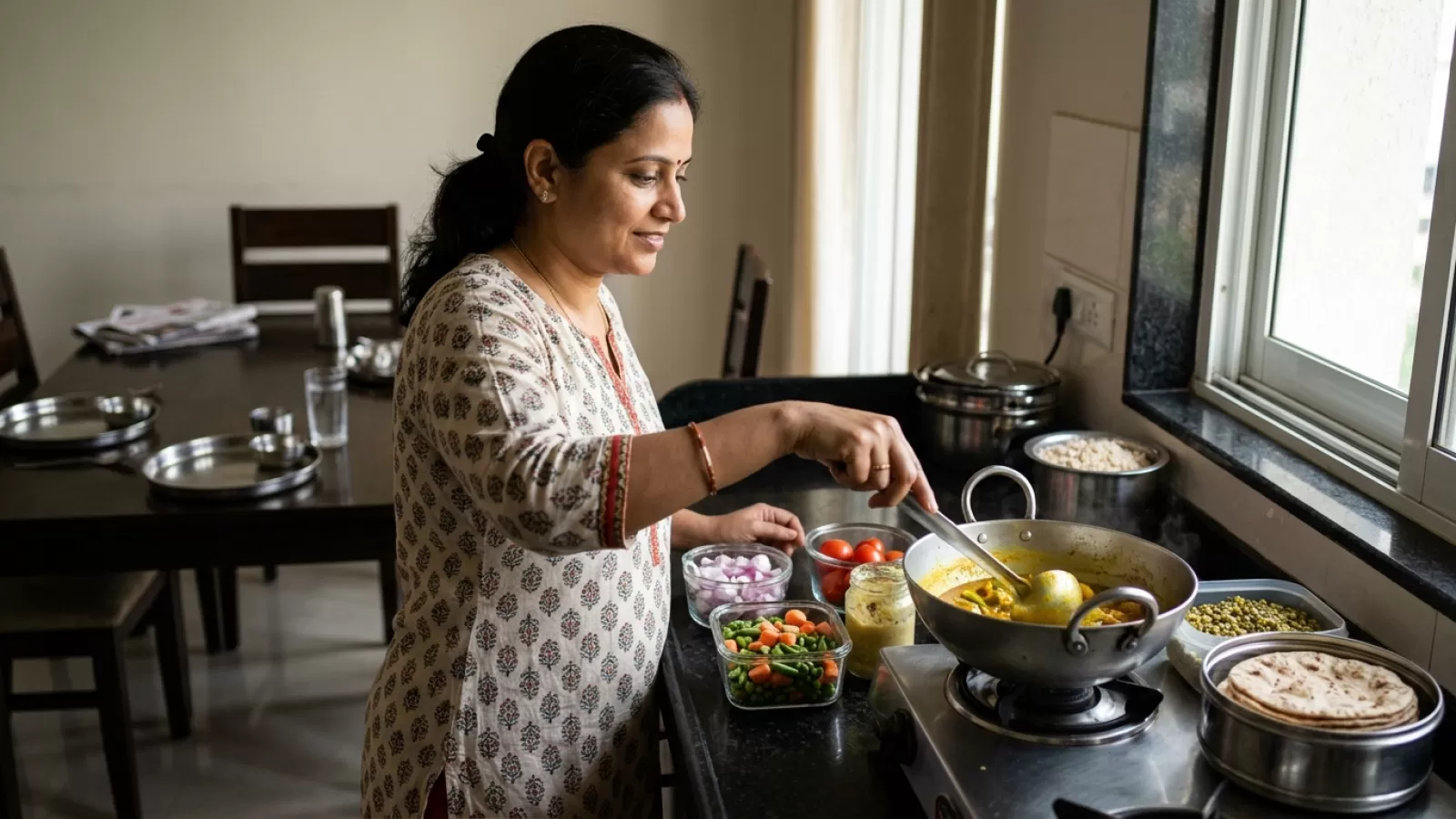
- Soak or Prep One Key Ingredient by 11am: Soaking dal or chana, marinating paneer, or even washing and chopping a batch of vegetables early in the day means you’re never starting from zero at 7pm. This step takes five minutes but saves half an hour in the evening. In many homes, just remembering to soak toor dal before leaving for work makes pressure-cooking dal and making tadka feel almost effortless later.
- Decide the Main Sabzi or Curry Before Lunch: Messaging your spouse, asking a parent, or just deciding yourself by midday takes the indecision out of dinner. Even if plans change, having one dish settled provides an anchor. Some families keep a short list on the fridge—‘Monday: Bhindi, Tuesday: Tinda’—but most just decide based on what’s available and what everyone feels like eating.
- Knead Roti Dough or Prep Rice by 4pm: If someone is home in the afternoon, prepping dough or rinsing rice before the evening rush means all that’s left is rolling rotis or putting rice on the stove. During humid summers, keeping dough in the fridge helps avoid stickiness and delays.
- Keep Quick-Fix Staples Ready: Having roasted makhana, poha, or a packet of frozen peas and corn can rescue a dinner when nothing else is ready. A bowl of curd or simple salad can round out the meal.
- Share the Decision: Many working couples coordinate dinner planning via WhatsApp or a quick call during the afternoon lull. Even a two-minute check-in—“Shall we do moong dal and aloo gobi tonight?”—reduces last-minute stress.
How Dinner Planning Actually Shows Up in Indian Homes
In many Indian households, the real shift happens quietly. Someone soaks dal before leaving for the office, and another person texts in the family group: “Dal chawal or khichdi for dinner?” A working professional commuting in Bengaluru might decide the evening’s sabzi while stuck in traffic, calling home so the helper can start chopping bhindi. In homes where grandparents help, dough is often kneaded by mid-afternoon, waiting in the fridge for the evening chapatis.
On days when everyone forgets, the kitchen fills with tension—hungry kids, impatient elders, and the cook rushing to finish. But when even one step is done ahead, the evening feels lighter. Dinner is on the table by 8pm, there’s time to sit together, and the kitchen doesn’t feel like a battleground. Many families in Indian cities have quietly discovered that Indian dinner meal planning ideas don’t need to be complicated—just small actions taken before the evening rush make all the difference.
When It’s Time to Ask for Help
If dinner stress starts affecting your mood, health, or family time, it may be worth talking to others at home about sharing the load. In some homes, a cook or helper can prep in the afternoon if given clear instructions. Sometimes, it helps to let go of the idea that dinner must be elaborate every night. If you find yourself skipping meals or feeling overwhelmed, a chat with a family member, friend, or even a doctor (for persistent stress) can help you find a better routine.
Common Questions
Every home finds its own rhythm with dinner planning, but a few small changes can make evenings much easier. If you’re feeling the pressure of the evening kitchen rush, you’re not alone. Here are some answers based on what tends to work for many Indian families, especially during busy workweeks and everyday chaos.
What is the minimum planning needed to make Indian weeknight dinners consistently less stressful?
Usually, just soaking one dal, deciding one sabzi, and prepping dough or rice in advance is enough. For example, if you soak chana dal at 10am, decide on bhindi sabzi by lunch, and knead roti dough before 5pm, you’ll have most of the work done. This makes dinner feel like assembling rather than starting from scratch. Many families find that even these tiny steps remove the biggest hurdles and give everyone a more peaceful evening.
Which Indian dinner ingredients save the most time when prepared even a few hours in advance?
Soaked dals, kneaded roti dough, chopped onions and tomatoes, and washed greens like spinach or methi make a big difference. Having dahi set or chilled, and keeping boiled potatoes in the fridge, also helps. In many homes, prepping these basics during the afternoon or while making lunch means dinner can often be ready in 20–30 minutes, even after a long workday.
Is it realistic for Indian working families to plan an entire week of dinners in a single sitting?
For most Indian working families, planning an entire week’s dinners at once is rarely practical. There are too many variables—changing schedules, family moods, and unexpected guests. Some families try a rough weekly outline, but most prefer loose daily planning. Deciding each morning or by midday keeps things flexible and reduces wasted effort when plans change.
How do working Indian parents coordinate dinner planning when both come home late?
Many couples or families use afternoon messages or quick phone calls to decide dinner before everyone gets home. Some leave key ingredients (like soaked dal or chopped veggies) ready in the fridge so the first person home can start. Others rotate responsibility—one person decides, another cooks. Sharing the mental load, even just for deciding the menu, can make evenings much smoother for dinner planning Indian working families.
What is a simple Indian dinner that requires almost no advance planning on the most chaotic evenings?
On chaotic days, dishes like poha, upma, curd rice, or a quick khichdi can be lifesavers. Most of these use pantry staples and need little prep—just rinse rice and dal or roast some poha, add whatever veggies are handy, and you’re done in 20–30 minutes. A bowl of dahi or some papad on the side makes it a complete meal. Many families rely on these simple fixes when nothing else is planned or prepped.