In many Indian homes, evening meals often stretch longer than planned, with family members reaching for a second roti or just “a little more sabzi” even after feeling mostly full. Indian portion control tips have quietly existed in our kitchens for generations, woven into the way meals are served and eaten. These days, with busier routines and distractions like phones at the table, the natural signals that once helped us eat the right amount can easily get lost.
That said, the traditional Indian meal—dal, sabzi, roti, and a little dahi—tends to leave you more satisfied than a quick, rushed meal of just rice or bread. The trick is not in counting calories or weighing every bite, but in noticing how much you actually need, and how you feel as you eat. Let’s explore what portion control really looks like in Indian homes, and how you can gently return to it.
Why Indian Meals Naturally Support Portion Control—But Distractions Change Everything
In typical Indian families, meals are often built around variety and balance. A plate might hold a roti or two, a scoop of dal, a vegetable sabzi, a small portion of rice, and a spoonful of dahi or salad. This mix of textures and tastes isn’t just for pleasure—it helps slow you down and tune into when you’re truly full.
But here is the catch: these days, many families eat with the TV on or scroll through their phones at the table. When this happens, portion control Indian food traditions can lose their impact. Eating distracted tends to lead to eating more, often because you miss the gentle signs that you’ve had enough.
In many homes, the old practice of serving thali-style—where each item is portioned out at the start—has faded. Now, food is often served in large bowls and passed around, making it easy to lose track of how much you’ve actually eaten. Busy schedules, late dinners, and eating alone also play a role. It’s easy to serve yourself more rice or another paratha when you’re tired, hungry, or eating in front of a screen.
The good news is, Indian meal portions without dieting are possible once you bring some old habits back into focus. You don’t need to give up dal, roti, or your favorite sabzi. Instead, you can pay attention to natural portion sizes and satiety cues—just as our elders often did.
Why Satiety Signals Get Missed in Modern Indian Eating
On a Sunday afternoon in many Indian households, lunch is a slow, shared affair, and people tend to eat just enough. But on rushed weekdays, you might find yourself eating quickly between meetings, or snacking on chaats or biscuits while working from home. This can make it far easier to eat past comfortable fullness.
Nutritionists who observe Indian households often find that people eat more when distracted, regardless of what’s actually on their plate. The problem isn’t with the food itself—dal, roti, and sabzi are nourishing and satisfying. The real issue is not noticing when you’re full, or eating too quickly to register it. In some homes, pressure to finish what’s on your plate (especially when someone else serves you) can also override natural signals.
Another pattern: Indian adults often eat less at lunch and more at dinner. This may be because lunch is rushed or skipped, leading to extra hunger later. Late-night dinners, common in cities like Mumbai or Bengaluru, can also lead to overeating—especially when meals are eaten while watching TV or chatting absent-mindedly.
Finally, many Indian families are used to sharing food, which can blur individual portion awareness. You might keep eating because the serving bowl is still on the table, or because everyone else is having one more helping. The trickiest part? It all feels normal—until you notice that you feel uncomfortably full, or your energy dips after eating.
Everyday Clues You Might Be Eating More Than You Need
- Feeling heavy or sluggish after meals: This is a common sign, especially after big dinners with rice or parathas. Many people notice a dip in energy or a desire to nap.
- Frequent burping or acid reflux: In Indian homes, this often happens after late or hurried meals, indicating that the stomach is struggling with extra food.
- Reaching for a snack soon after eating: If you still feel like munching makhana or biscuits half an hour after a meal, it may mean you weren’t mindful during the main meal or ate too quickly to notice fullness.
- Unbuttoning after dinner: It’s common in family gatherings to loosen your waistband after an especially big meal. This is a clear cue that you’ve overeaten.
- Finishing everything on the table, even when not very hungry: Many families in India are raised on the value of not wasting food. This often leads to eating more than needed just to avoid leftovers.
Small Changes That Make Portion Control Feel Natural
- Serve your plate at the start, not from shared bowls: When you portion out dal, sabzi, rice, and roti at the beginning, you see how much you’re eating. It helps you pause before taking seconds.
- Eat without screens: Try to sit at the table without your phone or TV. You’ll notice flavors and fullness more easily. Many Indian families find that even 10 minutes of undistracted eating makes a difference.
- Include variety, but keep portions small: Instead of a big heap of rice or four rotis, try smaller servings of everything—dal, sabzi, rice, roti, dahi, salad. This helps you enjoy the meal and feel satisfied sooner.
- Pause halfway through your meal: Set your spoon down, sip some water, and check in with how you feel. This habit can help you decide if you really want seconds or just need a break.
- Keep heavier items (like fried sabzi or sweets) as small extras, not the main part of the meal: A small piece of gulab jamun or a spoonful of aloo bhujia can satisfy the craving without leading to overeating.
A Kitchen in Nagpur at 6am: Where Portion Habits Begin
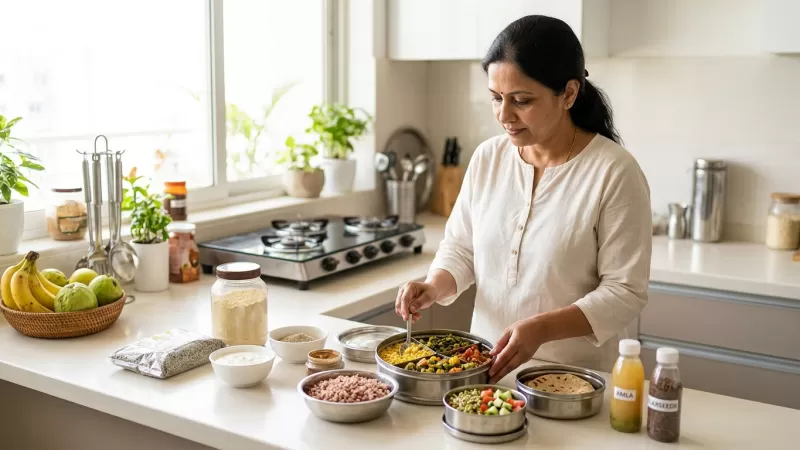
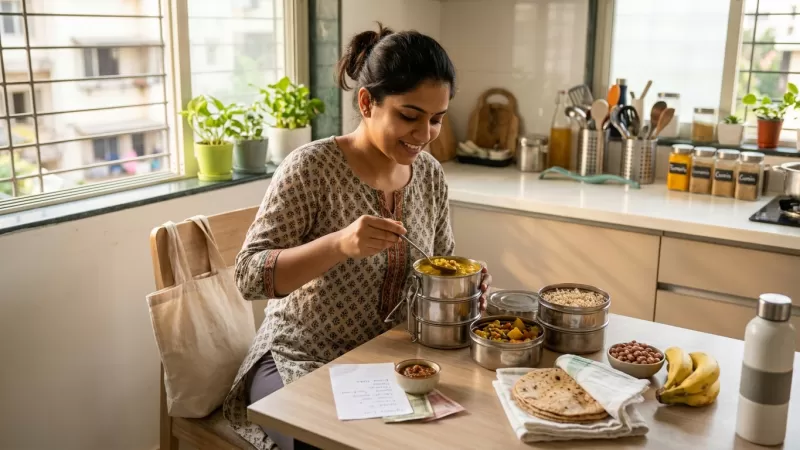
The sun is just rising, and the kitchen is already buzzing. Steel dabbas open and close as someone prepares poha, dahi, and a small bowl of fruit. In this home, everyone serves themselves from a common dish, but each person takes a small portion and comes back for more only if they’re still hungry. There’s no rush, and the meal is eaten together, sitting on the floor or around a small table. The aroma of chai fills the air. Even before the day’s chaos begins—school runs, office calls, household chores—these quiet moments build the habit of eating just enough. No one is counting calories, but everyone seems to know when to stop.
When Extra Support Makes Sense for Portion Awareness
If you notice that you often eat far past fullness, or feel uncomfortable after most meals, it can help to talk to someone—a family member, or if you prefer, a nutritionist. Sometimes, family routines, stress, or emotional eating patterns play a role, and getting an outside perspective can be helpful. For any concerns about digestion, persistent discomfort, or changes in appetite, it’s wise to ask a doctor for advice.
Common Questions
It’s so normal to have doubts about how to eat the right amount in India, especially with all the family traditions and expectations around food. Let’s look at some of the most common questions that come up in Indian kitchens and dining rooms. These answers are based on what really happens in homes—no calorie charts or strict rules, just gentle, practical guidance.
What does a healthy Indian portion actually look like without any measuring tools?
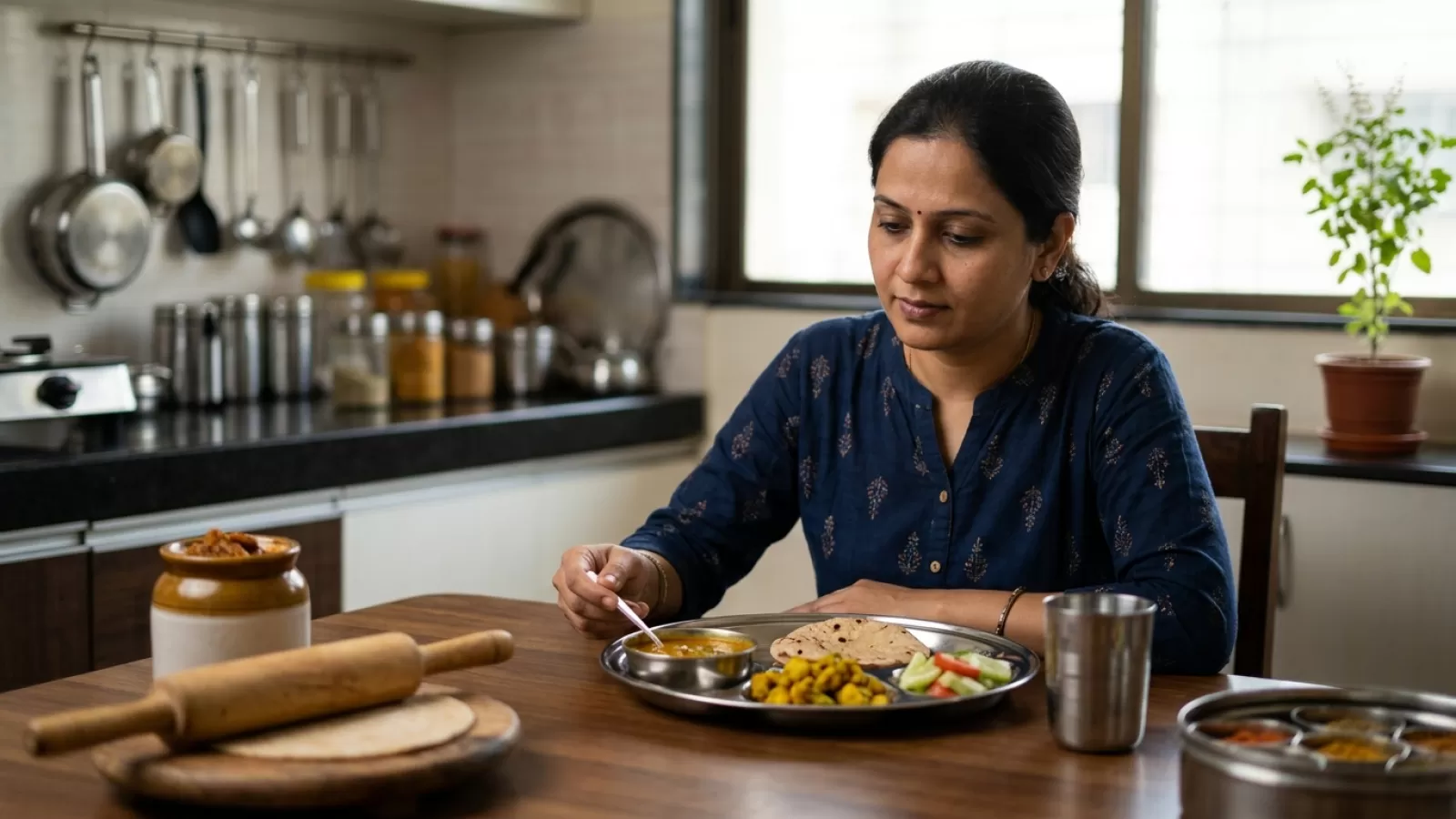
In most Indian homes, a healthy portion can be judged by how much fits in your own two hands cupped together. For example, one medium roti, a small katori of dal, a scoop of sabzi, a few tablespoons of rice, and a spoonful of dahi fill a regular thali nicely. If you’re hungry after finishing, it’s fine to add a little more sabzi or salad. This pattern supports Indian meal portions without dieting and helps you feel satisfied without overeating.
Why do Indian adults tend to overeat at dinner compared to lunch?
Many working adults in India eat lunch in a hurry—sometimes just a quick tiffin or skipped entirely. By dinner, hunger builds up, especially after long commutes or work-from-home days. In joint families, dinner is often the main time everyone eats together, so there’s more focus on food and conversation, leading to seconds or thirds. Power cuts, late-night TV, or catching up with family can also stretch dinner out, making it easy to eat more than needed.
Is eating a second roti really a significant problem in a balanced Indian meal?
It depends on the rest of your plate and your hunger. In many homes, a second roti is perfectly normal—especially if you’ve had a light lunch or are active. The key is balance: if you’re filling up mostly on rotis and skipping vegetables or dal, then it might be too much. But with a varied thali—dal, sabzi, dahi, salad—a second roti often fits well into portion control Indian food habits.
How can Indian families serve meals in a way that naturally leads to better portion awareness?
Serving meals thali-style, with all items portioned out on each plate, helps everyone see what they’re eating. Keeping serving bowls off the table (or covered) can reduce mindless seconds. In many families, sharing stories or pausing to chat during meals also slows down eating, which helps people tune in to fullness. Letting children serve themselves, with gentle guidance, can help them learn how to eat the right amount in India from a young age.
What signals tell you when you have had the right amount in Indian eating rather than too much or too little?
Most people feel comfortably satisfied, but not stuffed, at the end of a balanced Indian meal. Signs include a sense of gentle fullness, steady energy, and no desire to snack soon after eating. If you feel heavy, sleepy, or need to loosen your clothes, it’s often a sign you’ve had too much. If you feel hungry again within an hour, you might not have eaten enough dal, sabzi, or roti. Listening to these signals helps you naturally practice Indian portion control tips.