Falling sick with a fever—especially after a viral infection—can leave you feeling weaker than you expect. Even after the fever breaks, your body takes its own sweet time to come back to full strength. Many people rush to resume their normal eating habits, thinking it’ll speed up recovery. But jumping straight back to your regular plate of dal, roti, sabzi, and maybe a little pickle often ends up making you feel heavy, bloated, or just plain uncomfortable. You’re not alone if you’ve noticed this. Indian homes, whether in cities, towns, or villages, quietly deal with this tricky transition after every household bout of fever.
Why Your Stomach Feels Sensitive After Fever
When you’ve had a fever—especially something that lingers for a few days—your digestive system slows down. The body uses most of its energy to fight the illness, so your gut takes a backseat. This means the foods you used to enjoy (think greasy parathas or spicy sabzis) can suddenly feel too much. It’s not uncommon to feel bloated, gassy, or even a bit nauseous after eating your usual meals during recovery.
Even if you’re craving your favourite foods, your stomach may not have bounced back yet. That’s normal. It’s a small but important detail many families overlook in the rush to get things “back to normal.”
Here’s the catch: pushing yourself to eat as you did before can actually slow down your recovery, or at least make you more uncomfortable. So, a gentler approach is needed—one that gives your stomach time to adjust.
The First Few Days: What Actually Works
Those first two or three days after the fever subsides are usually the trickiest. Your appetite is still shaky, and you may notice you get full very quickly. This is when it helps to focus on small, frequent meals instead of large, heavy plates. There’s no need to force yourself to eat a full thali.
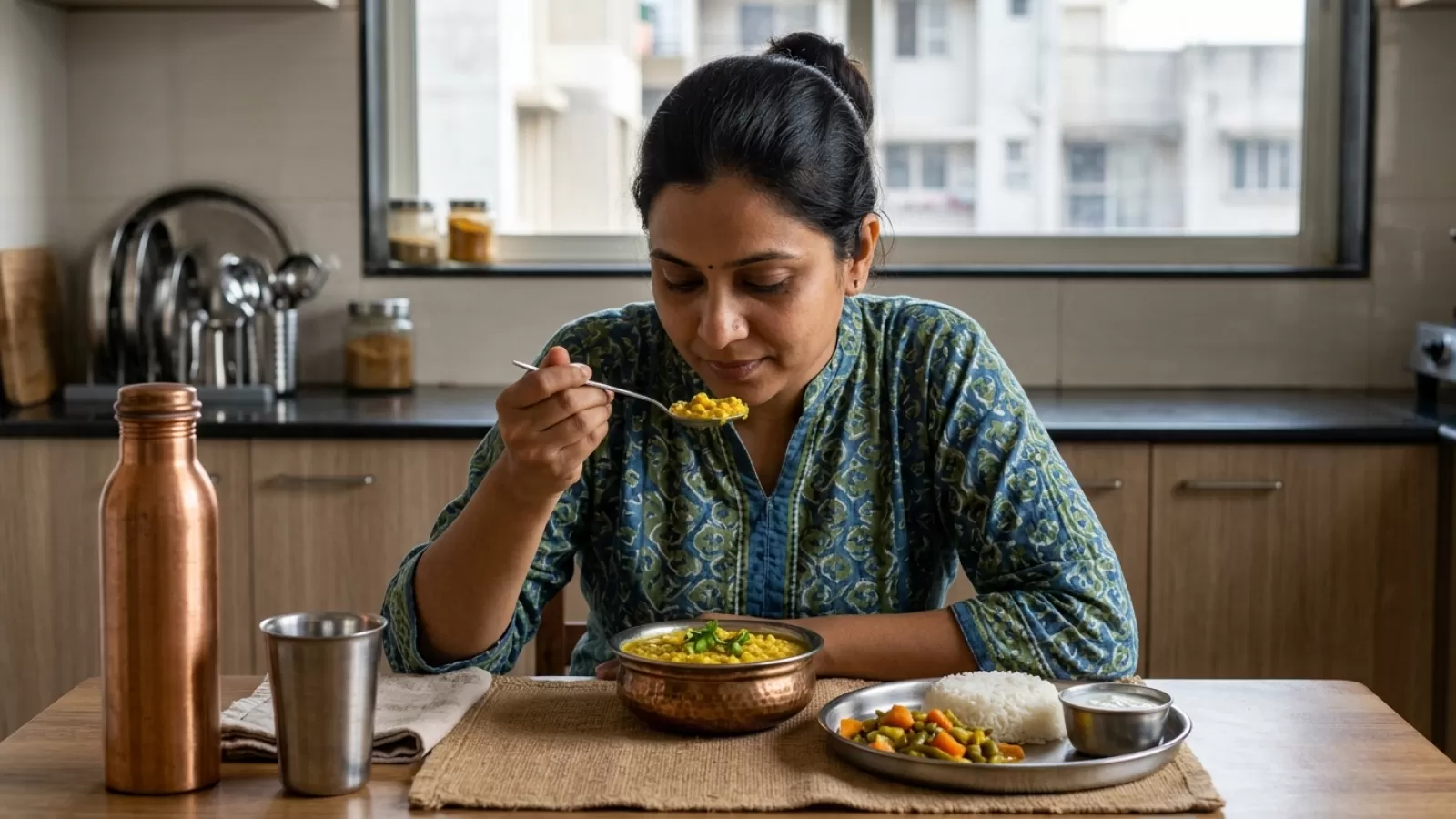
- Simple khichdi: Made with moong dal and rice, a little salt, and maybe a spoonful of ghee. No heavy tadkas or too much masala.
- Curd rice: If your stomach can handle dairy, a bit of plain curd mixed with soft rice can be soothing.
- Steamed or boiled vegetables: Carrots, bottle gourd (lauki), pumpkin, or ash gourd tend to be gentle on the stomach.
- Light soups: Clear vegetable or dal soups with a pinch of jeera or black pepper for flavour, but not too spicy.
And yes, drinking enough water through the day (but not too much at once) is important—especially if you’ve had a high fever or diarrhoea. Many people in Indian homes forget this, thinking chai or nimbu paani is enough for hydration. It helps, but plain water is best.
Comforting Food Patterns That Ease Digestion
Most people find it easier to stick to a pattern for a few days—something simple, repetitive, and not too taxing on the stomach. It’s not boring; it’s practical. During this time, you could try eating every 3–4 hours, but in smaller amounts.
For instance, a day might look something like this:
- Breakfast: Soft upma or poha, not too oily or spiced, with a cup of weak tea if you’re used to it.
- Mid-morning: A small banana or a few slices of papaya.
- Lunch: Khichdi with a spoon of ghee, a little boiled vegetable, and a small bowl of curd (if tolerated).
- Evening: Light vegetable soup or a slice of toast.
- Dinner: Dalia (broken wheat porridge) with a little milk or water, or soft rice with moong dal.
This pattern isn’t set in stone. You can swap items based on what’s available and what you feel up to eating. The key is to avoid fried, spicy, or extremely fibrous foods for a few days.
How to Gently Reintroduce Your Regular Household Foods
Once you feel your appetite picking up and your stomach holds up fine with soft, simple foods, you can begin to reintroduce more variety. It’s tempting to jump straight back to your favourite sabzi or paratha, but it pays to go slow.
Start by adding just one new item at a time to your plate. Maybe a little bit of regular dal with your khichdi, or a small roti alongside your rice. See how you feel over the next few hours. If there’s no discomfort, you can continue adding regular foods—one dish at a time.
- Begin with plain dals (no heavy tadka or cream), soft rotis with ghee, and well-cooked vegetables.
- Avoid raw salads, pickles, and fried snacks for a week or so.
- Keep masalas mild—jeera, hing, a little turmeric, and black pepper are usually fine.
It’s a bit like testing the waters before you dive in. Many people find this approach helps prevent bloating or that heavy, sluggish feeling after meals.
Traditional Indian Foods That Help Rebuild Strength
There’s a reason certain foods are considered “restorative” in many Indian households. Think of simple moong dal, light vegetable stews, and curd. These aren’t just easy to digest—they also provide the protein, vitamins, and minerals your body needs to get its strength back.
Some time-tested options you’ll find in homes across the country include:
- Moong dal khichdi: Gentle and protein-rich.
- Rice porridge (kanji or pej): Often made with a bit of salt and a dash of ghee.
- Stewed apples or pears: Soft, mildly sweet, and easy on the stomach.
- Sabudana khichdi: Light, filling, and commonly given during recovery.
- Buttermilk (chaas): Soothes the stomach, especially as the weather heats up.
These dishes might feel plain at first, but they quietly do their work. In many families, the older generation still trusts these foods for a reason—they’re gentle yet nourishing.
Foods and Habits Best Avoided (For Now)
It’s easy to get impatient and want to return to your regular cup of strong chai or that spicy evening snack. But some habits are best put on hold for at least a week after a fever.
- Heavy, fried foods: Pakoras, samosas, or oily parathas can overwhelm a sensitive stomach.
- Spicy or very tangy dishes: Too much chilli or sourness (think heavy chutneys) can cause acidity or discomfort.
- Raw salads and uncooked sprouts: These can be difficult to digest and sometimes carry bacteria, which isn’t ideal after an illness.
- Cold drinks and packaged juices: Stick to room temperature water or homemade nimbu paani (without too much sugar).
- Overeating: Even if you feel hungrier, eating big meals too soon can set you back.
One more thing: try not to lie down immediately after eating. A short walk around the house, or just sitting up for a while, helps digestion.
Dealing with Common Recovery Struggles at Home
Let’s face it—recovery isn’t always smooth. You might have days where you feel energetic in the morning, only to feel weak again by evening. It’s frustrating, and sometimes you start doubting if you’re eating right or recovering properly.
In many Indian households, there’s quiet pressure to “bounce back” quickly, especially if you’re the one managing the kitchen or office work. But your body has its own pace. Even if you can’t eat much, try not to skip meals entirely. Small, regular bites are better than forcing yourself into a full meal.
Sometimes, a little extra support from family makes a difference—maybe someone else can handle the cooking for a day or two, or you can prep simple meals in advance. If you feel low on energy, don’t hesitate to rest. No need to prove anything to anyone.
When to Start Returning to Normal
There’s no fixed rule for when to resume your normal diet. For most people, it’s a gradual shift over 5–7 days, depending on how quickly your appetite and digestion recover. If you find that you’re tolerating soft rotis and dal, and your stomach isn’t complaining, you can start bringing back your regular sabzis, rice, and even a little salad (well-washed and chopped finely).
That said, if you still feel bloated, have loose motions, or your appetite hasn’t returned after a week, it’s okay to stay with simple foods a bit longer. Every person’s recovery looks a little different, and that’s perfectly alright.
Festivals, family gatherings, or special occasions can make it trickier—sometimes you’re tempted by a special dish or a sweet. A small taste is fine if you feel up to it, but there’s no need to go all-in just because everyone else is.
Gentle Reminders for a Calm Recovery
Recovering from a fever can test your patience—physically and mentally. It’s easy to compare yourself to others in the family or to feel guilty for not “bouncing back.” But your body is quietly working in the background, rebuilding its strength. Trust the process, stay comfortable with mild, familiar foods, and give yourself permission to rest.
And if you ever feel unsure or the discomfort lingers, it’s alright to reach out for help or check in with a doctor. There’s no harm in being cautious.
Remember, good health comes back in small, steady steps. You’ll find your strength again, one gentle meal at a time.