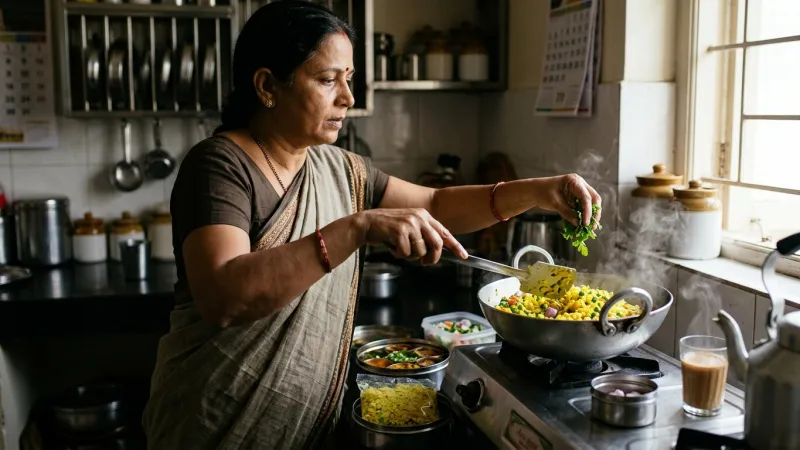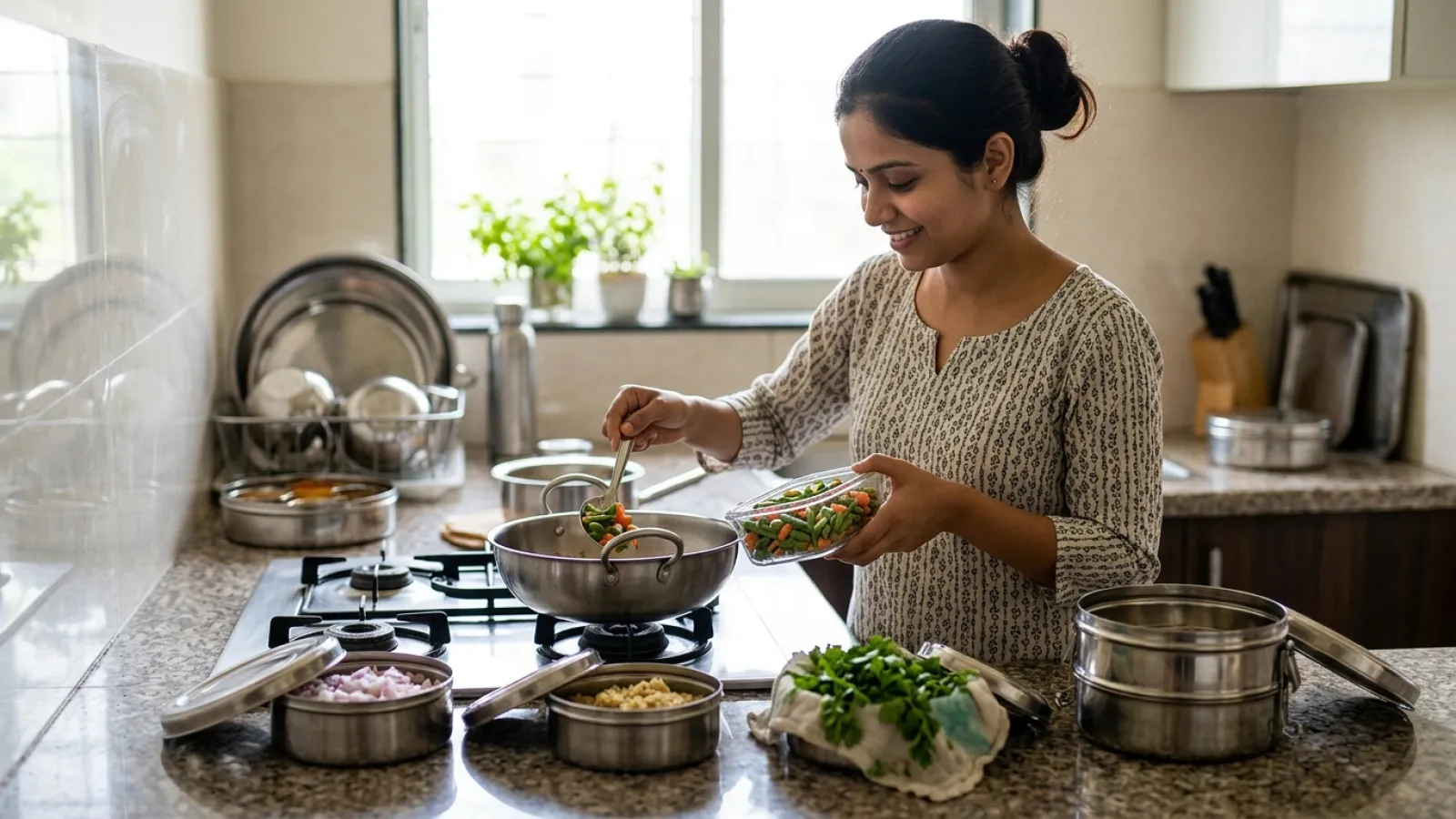
Most evenings in Indian homes, the kitchen becomes a quiet hub of activity around 6:30 pm. You can hear the pressure cooker whistling, someone rinsing rice in a steel bowl, the soft scrape of a knife against a chopping board. These small rituals shape the rhythm of weekday Indian cooking. Indian meal prep ideas often grow out of these ordinary moments — not big, elaborate plans, but the quick soaking of dal before bedtime, or chopping a handful of onions while waiting for the milk to boil.
Life these days rarely gives you a long, uninterrupted afternoon to batch-cook and freeze meals for the week. Instead, you probably find yourself juggling work calls, school runs, and endless WhatsApp groups, all while trying to get dinner on the table at a decent hour. This article isn't about transforming your weekends into a cooking marathon. It's about finding the quiet, realistic Indian meal planning steps that make those weekday dinners less rushed, more manageable, and still full of the comfort you're used to.
Why Weekday Indian Cooking Feels So Pressured
For many, the hardest part of weekday Indian cooking is not the recipes or the effort itself, but simply running out of time and energy when you need it most. In most Indian homes, evening is a busy, sometimes chaotic time — homework, last-minute office work, water supply schedules, and hungry family members all converge. In these moments, even the thought of peeling a dozen garlic cloves can feel overwhelming. Many families quietly deal with this, wondering if there's a better way.
Picture a typical Saturday evening: you're already in the kitchen, waiting for the pressure cooker to finish its job. Instead of scrolling through your phone, you could take those ten minutes to chop a few extra onions, grate some ginger and garlic, or wash and store curry leaves. This isn't about massive planning — it's just a string of tiny, almost invisible decisions that make next week's meals feel a bit easier. The catch is that most people don't count these as "meal prep," but over the week, they add up.
It's easy to forget that Indian meal prep ideas aren't about changing what you eat, but smoothing out how and when you cook. In many homes, especially in cities, the person cooking is also handling several other responsibilities at the same time. That means any step that saves ten minutes — like soaking chana overnight, or keeping a dabba of roasted makhana ready for an after-work snack — can make a real difference. Many people feel quietly guilty for not "meal prepping" like the videos suggest, but in truth, the Indian way has always been about these small, sensible adjustments.
Why This Happens in Indian Homes
Nutrition researchers who study Indian diets often find that weekday dinner delays aren't just about poor planning — they're linked to the unpredictability of household routines. In most urban and semi-urban families, dinner timing is shaped by traffic, power cuts, office hours, and everyone's mood after a long day. It's common for dinner to get pushed later and later, making even a simple meal feel like a huge task.
Another big factor is that Indian meals usually involve multiple elements: roti, sabzi, dal, maybe a little salad or dahi. Unlike a one-pot pasta, you can't just toss everything in together. That means more chopping, more vessels, and more mental juggling — especially if you have to adjust for different tastes or dietary needs in the family. This is particularly true in joint families or for those managing small children and elders together.
Finally, there's a hidden emotional layer. Many people feel pressure to keep up with the expectations of "good" home-cooked food, especially during wedding season or festivals. There's a sense that everything must be fresh, hot, and made from scratch — even if you're exhausted. That unspoken standard makes it hard to accept shortcuts, even practical ones. You're not alone if you find yourself prepping for dinner at 8:45 pm, quietly wishing there was a way to make things easier without feeling like you're cutting corners.
Signs That Weekday Cooking Could Use a Little Prep
- You find yourself chopping onions, tomatoes, and coriander from scratch every single night, even when you're already tired and hungry.
- There's often a scramble to soak dal or chana at the last minute, leading to a rushed or incomplete meal.
- Family members (or you) reach for snacks like biscuits or chips before dinner because the meal isn't ready in time.
- The kitchen feels especially chaotic on days when you get home late, with multiple pots and pans going at once and nothing quite finished.
- You avoid making your favourite sabzi or dal simply because the prep feels like "too much" after a long day.
If you see yourself in any of these, you're in good company. Most Indian kitchens run this way, especially during school terms or busy work phases. There's nothing odd or wrong about it — it's just the reality of how packed our lives have become.
Take Renu aunty from the second floor, for example. She loves making bhindi sabzi, but noticed she was skipping it on weekdays because slicing all that bhindi after work felt daunting. One evening, while the cooker was on for dal, she started slicing bhindi for the next night's dinner. The next day, all she had to do was temper and toss — and suddenly, bhindi was back on the table without stress. Sometimes, it's these tiny shifts, almost too small to notice, that make the biggest difference.
Simple Indian Meal Prep Ideas for Busy Weeknights
- Chop and Store Aromatics: While the pressure cooker is running, chop extra onions, tomatoes, ginger, and garlic. Store them in small dabbas in the fridge — most will stay fresh for 2–3 days and save you time every night.
- Soak Lentils and Beans the Night Before: Before heading to bed, soak chana, rajma, or dal for the next day. This one step can cut down cooking time and means you don't have to rethink your dinner plan at 7 pm.
- Batch-Roast or Boil Basics: Roast peanuts, makhana, or boil potatoes in advance. These become instant snacks, or can be tossed into poha, sabzi, or salads during the week.
- Pre-Make Masala Bases: Make a simple onion-tomato base with ginger and garlic over the weekend or whenever you have a spare half hour. Freeze or refrigerate in small batches — these can be used for quick curries or gravies.
- Prep and Store Washed Greens: Wash, dry, and chop spinach, methi, or coriander and keep them ready in a container. These wilt fast, but prepping enough for 2–3 days means you can add greens to dal or sabzi without thinking twice.
If you do just one thing from this list, soaking lentils or beans the night before is probably the biggest time-saver. It's the step most people forget, but it makes a huge difference on busy days. The most common mistake? Soaking too much at once and forgetting to use it up, or soaking and then changing dinner plans. Start small — just soak what you'll actually cook the next day.
I remember watching my neighbour, Priya, juggle work-from-home calls while making dinner for her four-person family. She didn't have time for elaborate meal prep, but every night before bed, she'd quickly rinse and soak the next day's dal. That small effort meant she could start cooking straight away after work, instead of waiting an extra 30 minutes. She told me it was like "sending a little gift to my tomorrow self." That tiny routine changed the whole flow of her evenings.
Here's something else you might recognise: some weeks, you prep too much and it sits unused; other times, you prep nothing and wish you had. That's normal. Meal planning in Indian homes is all about working with what feels manageable that week, adjusting as life changes. There's no perfect system — just a handful of small, kind decisions that add up over time.
One Quiet Evening: Soaking Dal on a Saturday Night
It's 10 pm on a sticky summer Saturday. The windows are open, letting in the faint sound of rickshaws outside. In the kitchen, Meena stands by the sink, her hands moving automatically as she rinses a cup of toor dal under the tap. The pressure cooker is still warm from dinner. She sets the soaked dal aside, wipes the counter, and turns off the lights.
Inside, she's tired — not just physically, but from the mental load of keeping everything running: her son's school project, her husband's late meetings, the endless cycle of meals. But in that small act of soaking dal, she feels a quiet relief. Tomorrow's dinner won't be a last-minute scramble. She can make sambar or simple dal tadka without waiting for the grains to soften. Sometimes, this is what peace looks like — not a grand solution, but a little less friction at the end of a long day.
This moment shows something easy to forget: Indian meal prep ideas aren't about overhauling your routines. They're about slipping in tiny bits of preparation where you can, making tomorrow a little lighter. The benefits aren't just in saved time, but in the comfort of knowing you've done one kind thing for yourself and your family.
When to Ask for Extra Support
If you find that even the simplest Indian meal planning steps feel impossible — or if dinner stress is starting to affect your mood, sleep, or energy — it's worth reaching out for help. Sometimes the problem isn't just time management or cooking skills, but something deeper, like burnout or changes in health.
There's nothing wrong with asking a registered dietitian, a doctor, or even a trusted friend for advice about food routines, especially if you feel stuck. Everyone's situation is a bit different, and sometimes an outside perspective helps you find solutions you can't see alone. You don't have to manage everything by yourself.
Common Questions
Meal prep in Indian homes is never one-size-fits-all. You might have your own routines or worries, and that's perfectly normal. Let's look at some of the questions people often ask when they're trying to make weekday Indian cooking a little bit easier.
How much prep time is actually needed each week to make a real difference?
Usually, even 20–30 minutes spread over a couple of days can help. For many, it’s not about setting aside a big block of time. You might chop extra onions while the pressure cooker is on, or soak dal before bedtime. Many working parents find that just prepping two things — say, washing greens and soaking lentils — makes weeknight cooking feel less overwhelming. Over time, you learn which steps really help your own family. No need to do everything at once.
Can meal prep work when every family member wants something different?
This is common in Indian households — one person wants aloo, another insists on lauki, and the kids just want paneer. What often works is prepping basics that can be used in several ways: chopped onions or tomatoes, boiled potatoes, or a batch of cooked dal. You can quickly adapt these for different dishes. In my own family, sometimes we make a plain dal base, and everyone adds their own tadka or vegetables. It’s not perfect, but it keeps things moving.
Which should be prepped first — grains, lentils, or vegetables?
If you’re just starting, soaking lentils or beans the night before is usually the most helpful. They take the longest to cook, so having them ready saves time. Next, chopping onions, tomatoes, or greens in advance makes dinner prep much quicker. Rice and wheat flour are almost always ready to go in Indian kitchens, so they don’t need much advance work. Start with what slows you down most in the evenings, and build from there.
Does refrigerated Indian food lose nutrition or taste over two days?
Freshly cooked food always tastes best, but most Indian dishes — especially dals, sabzis, and curries — keep well for up to two days in the fridge. The taste might change a little, sometimes even improving as spices settle. Nutritionally, there’s only a slight loss if food is stored properly. In my experience, reheated dal or chana is still satisfying for a weekday lunch or dinner. If food smells or looks off, it’s safest to skip it. Always trust your senses.
How do I start if I have never prepped anything in advance before?
Start very small. Next time you’re in the kitchen, just chop an extra onion or soak a small bowl of dal. Don’t try to change everything at once. Notice what feels easiest for you: maybe it’s grating ginger while you wait for chai, or boiling potatoes in the morning for later use. Over a few weeks, these tiny habits start to stick. There’s no right or wrong way — only what helps you feel less rushed and more at ease during the week.