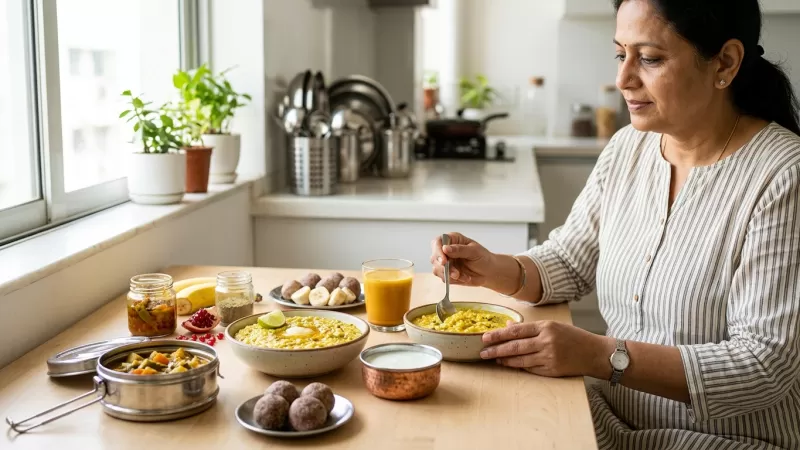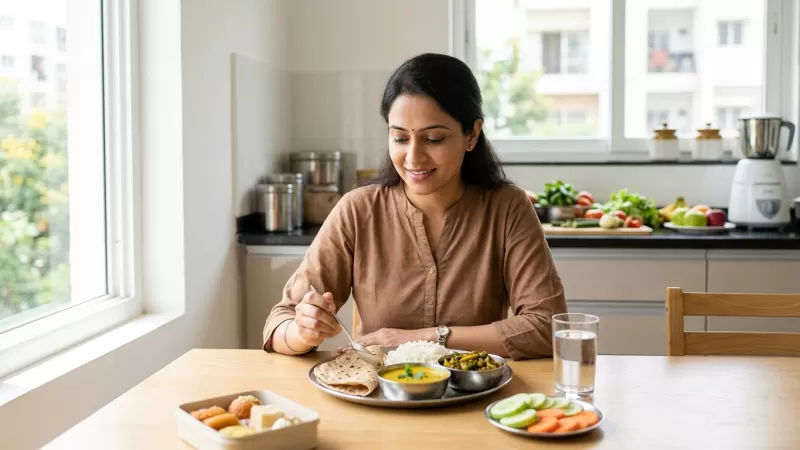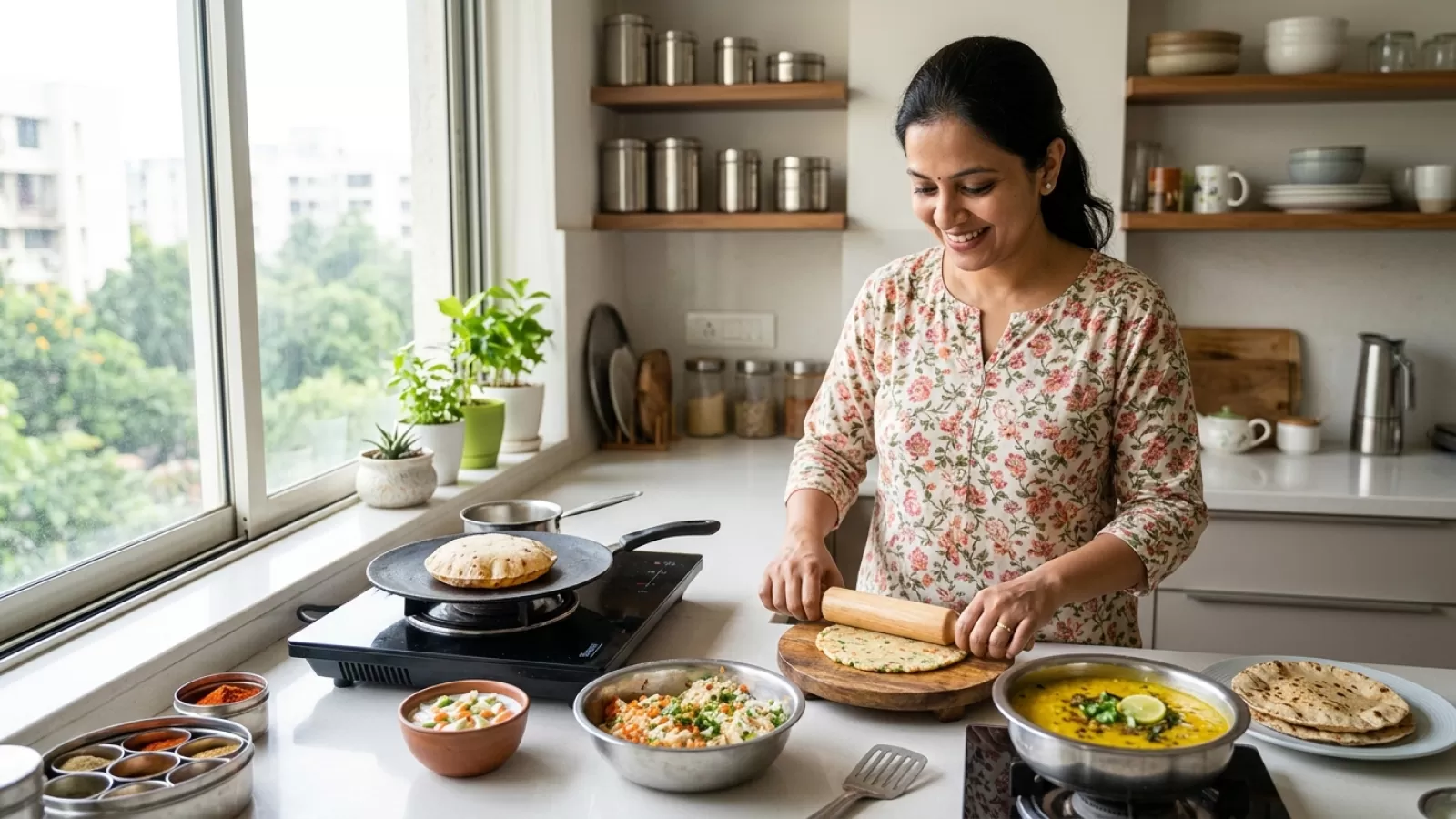
It’s a Tuesday night. The clock on the wall blinks 8:40pm. In many Indian homes, three hungry faces stare at each other while the fridge light shines on yesterday’s leftovers and some chopped lauki. The plan for a special sabzi, chapati, and salad quietly slips away. When energy is low, nutritious Indian dinner ideas with no time left to cook become more than just a nice-to-have — they’re the difference between a real meal and a half-open packet of namkeen with chai.
The tricky part is, most families want to eat well, but schedules, commutes, and sheer tiredness often win. If you’ve ever reached for biscuits or bread late at night because even a quick Indian dinner in 20 minutes felt impossible, you’re not alone. The most nutritious meal isn’t always the one that takes hours — it’s the one you actually make, quickly, with what you have, and eat together.
Evening Crunch Time: Why Quick Dinners Are Part of Indian Life
In many Indian family homes, evening routines are a balancing act. Children finishing homework at the dining table, parents wrapping up work calls from a corner, the television humming in the background — all while someone is expected to produce dinner. Late return from the office, unexpected power cuts, or simply feeling too tired to cook from scratch, these are everyday hurdles. That’s why fast nutritious Indian dinner ideas have become a quiet lifeline for urban and semi-urban families.
Even in joint families, where more hands might help, the evening meal is often about speed and practicality. The old idea that only elaborate thalis are nutritious is giving way, especially on weeknights, to dal poured into a pressure cooker, or a quick khichdi with whatever vegetables are lying around. The goal is simple: get something warm, filling, and nourishing on the table before everyone’s patience (and energy) runs out.
Why Dinner Plans Change — And What Gets in the Way
Work from home has blurred the lines between office and kitchen for many, but it hasn’t reduced the pressure. In fact, it often means you’re still replying to emails at 7:30pm while the cooker whistles in the background. Long commutes, unpredictable traffic, and demands from children or elders mean that detailed dinner plans often get sidelined.
Nutritionists who work with Indian families often find that even with the best intentions, most people don’t stick to planned meals during the week — they adjust based on time, tiredness, and what’s available. The catch is, when time is short, the risk is reaching for packaged snacks or skipping a meal entirely. That’s why Indian family dinner with no time left calls for a blend of speed, simplicity, and what’s already in the pantry.
Another reason? The expectation that the evening meal should be fresh and varied every day. Many feel guilty serving the same dal-rice or poha two nights in a row, but in reality, these are often the meals that keep nutrition and sanity in balance during chaotic weeks.
Clues Dinner Nutrition Is Slipping on Busy Evenings
- More packets than plates: If you notice more biscuit wrappers, instant noodles, or readymade snacks in the bin, that’s a clue dinner nutrition is getting missed.
- Skipping meals becomes common: When adults or teens say, “I’ll just have chai and toast,” or “I’m not hungry,” it’s usually tiredness talking.
- Repeating the same packaged meal: Ordering the same takeaway meal two or three nights a week is often a sign of ‘no-energy’ dinners.
- Grumpiness or tiredness in the evening: Mood swings or headaches can sometimes be linked to meals that are skipped or replaced by low-nutrition snacks.
- Leftovers untouched: When even leftover dal or sabzi sits ignored, it’s often because it feels like too much effort to reheat or pair with something else.
Simple Ways to Rescue Dinner Nutrition When Time Is Short
- Lean on quick-cooking staples: Moong dal, masoor dal, or split green gram can be cooked in under 20 minutes with basic spices. Add a handful of spinach or tomatoes for extra nutrition.
- One-pot meals are your friend: Khichdi, vegetable pulao, or poha with peanuts and veggies can be made in a single cooker or pan. These fast nutritious Indian dinner ideas save washing up too.
- Dahi (curd) as a quick protein: Pair plain dahi with rice, paratha, or poha. Sprinkle with roasted jeera powder or chopped cucumber for a refreshing side.
- Keep roasted makhana or boiled chana ready: These can be tossed with salt and chilli and eaten alongside dal-chawal or roti for a protein boost.
- Use frozen or pre-chopped vegetables: Many families in Indian cities have quietly discovered that frozen peas, corn, or pre-cut mixed veggies can go straight from freezer to pan, making sabzi or pulao much faster.
The real trick is giving yourself permission to keep it basic. Sometimes, a simple dal and rice, with a bowl of dahi and quick salad, is both nutritious and comforting — especially on nights when energy is low.
How Fast Dinners Fit into Everyday Indian Routines
During exam season, parents often put a cooker of khichdi or dal-chawal on the gas while helping with revision sheets. In homes where both parents work, it’s common to see someone stirring a pot of poha or tossing leftover sabzi into rice at 8:30pm while making lunchboxes for the next day. Elders sometimes step in with their own quick recipes — like besan cheela or upma — so the family eats something nourishing and warm, even if it isn’t fancy.
The reality is, many fast nutritious Indian dinner ideas have always existed. It’s just that these days, they’re the quiet heroes of weeknight survival. Whether it’s a bowl of dahi with jeera powder, or a plate of khichdi with a bit of ghee, these quick recipes keep families going through long, busy weeks — without guilt or fuss.
A Kitchen in Nagpur at 6am: Real Life, Real Nutrition
A pressure cooker hisses on a small stove in a Nagpur kitchen at 6am. The smell of moong dal, turmeric, and hing mixes with the cool morning air. Someone quickly chops a carrot and handful of spinach, throws them into the pot, and sets the rice to wash. There is no time for elaborate cooking — the family needs breakfast and packed tiffins before 7:30. The dal is ready in 20 minutes, rice is fluffed, and a bowl of curd is pulled from the fridge. This meal — simple, quick, and put together almost without thinking — is full of protein, fiber, and warmth. In so many homes, it’s these speedy, practical meals that quietly deliver the nutrition everyone needs.
Knowing When to Reach Out for Help
If dinner is often skipped, or if someone in the family seems tired, moody, or has trouble focusing, it’s worth checking in. Sometimes changes in appetite or low energy can be signs of more than just tiredness. If you’re worried about nutrition, or if someone’s health seems to be suffering, a gentle conversation with a doctor or nutritionist can help. They can suggest simple tweaks that fit your family’s routine.
Common Questions
Every family finds their own dinner rhythm, especially on tiring days. If you’re wondering about nutrition, speed, or shortcuts, you’re not alone. Here are some warm, real answers to what many Indian households ask when time is tight and everyone’s hungry.
What are the fastest genuinely nutritious Indian dinners that can be made in under 20 minutes?
Many families turn to moong dal tadka, masoor dal with a quick tempering, vegetable poha, besan cheela, or a basic khichdi with a handful of frozen peas. These dishes use pantry staples, cook fast, and offer a good balance of carbs, protein, and fiber. A bowl of plain dahi or a handful of roasted makhana can round out the meal. On evenings when time is truly short, these fast nutritious Indian dinner ideas help everyone eat well without stress.
Is khichdi a complete and nutritious dinner for Indian adults and children?
Yes, khichdi combines rice and dal, making a complete protein and providing easy-to-digest nutrition for all ages. When you add some vegetables and a little ghee, it’s filling, gentle on the stomach, and nourishing. Many Indian families rely on khichdi after long workdays or when someone feels under the weather. It’s simple, but it provides what most bodies need after a busy day.
What Indian dinner shortcuts actually preserve nutrition and which ones compromise it?
Shortcuts like using pressure cookers, frozen or pre-chopped vegetables, and simple tadkas (tempering) help preserve nutrition by speeding up cooking without adding extra fat, salt, or preservatives. Relying on packaged or instant foods often compromises nutrition, as these tend to be high in sodium and low in fresh ingredients. Choosing dal, poha, or upma over instant noodles is usually the better option in Indian family dinner with no time left to cook.
How do Indian working families maintain dinner nutrition during the busiest weeks?
Usually, families keep quick-cooking dals, rice, and basic vegetables on hand. Some soak dal or rice in the morning to save evening minutes. Many rotate a few staple recipes — like dal-chawal, pulao, poha, or dahi with paratha — that everyone enjoys and that can be made in 20 minutes. Sharing dinner tasks, accepting leftovers, and not feeling guilty about repetition are all strategies that help keep nutrition on track during hectic weeks.
Can a simple dal and rice dinner be nutritious enough for the whole family without any additional dish?
Yes, dal and rice together provide protein, energy, and some micronutrients, especially if you add a bit of ghee and maybe a quick salad or dahi. On very busy nights, many Indian homes rely on just this. While variety is nice, what matters most is that the meal is wholesome, warm, and satisfying. If you have time, tossing in a handful of spinach or carrots makes it even better, but the basic version is plenty nourishing for most families.