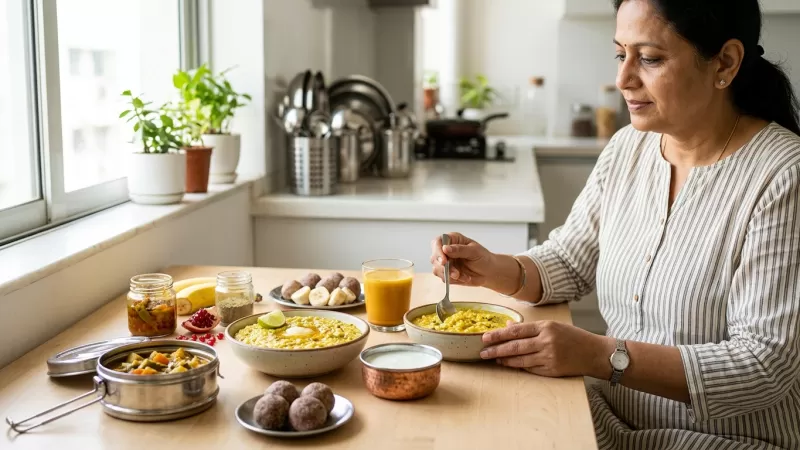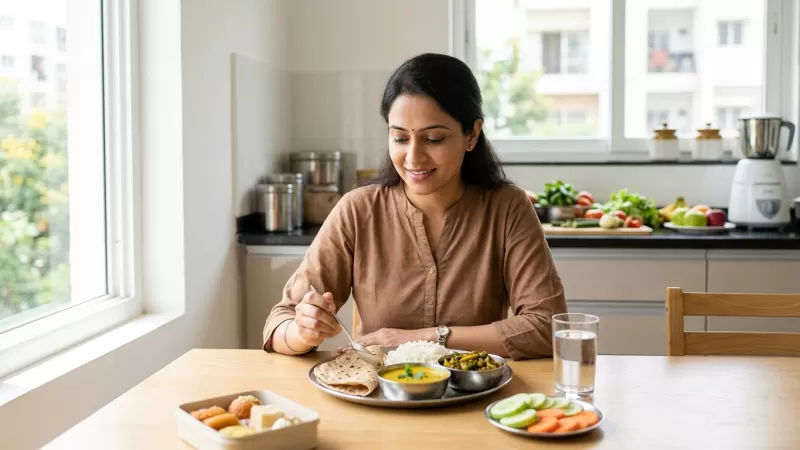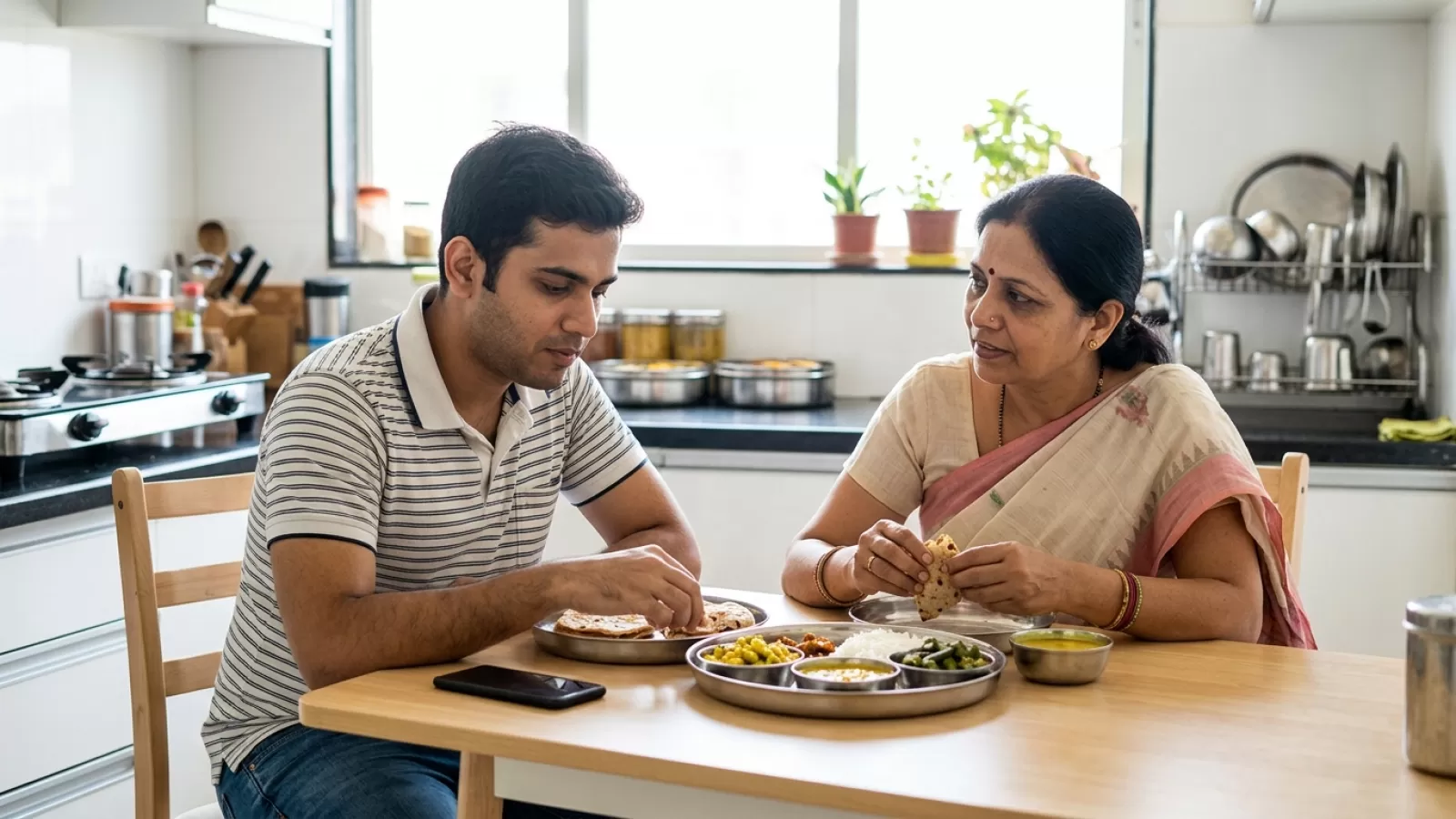
In many Indian homes, meals arrive between quick meetings and phone calls, with plates balanced on laps or desks. Mindful eating habits in India often feel impossible on a regular weekday — dal and rice are eaten in front of a laptop, and chapatis get cold while you scroll through WhatsApp messages from the family group. For a lot of adults, this is just how food fits into the day.
Here is the catch, though: even if you can't slow down for every meal, you can shift something small. Mindful eating habits India often come down to just pausing for a moment — putting the phone aside, noticing the taste of your sabzi, or sitting down with your plate instead of eating while standing at the kitchen counter. You don’t need a meditation session. Just a few minutes of awareness, even during the busiest lunch break, can change how satisfied you feel with the same old dal-chawal or poha.
Why Indian Adults Often Eat Without Noticing
Rushing through meals is almost a routine in Indian cities. Morning breakfasts happen standing up in the kitchen, lunch is packed in a steel dabba and eaten while replying to emails, and dinners stretch late because of office calls or after-school tuitions. In joint families, there’s often an effort to gather at the table, but even then, someone is on a video call or distracted by TV. Indian eating without distraction is rare, especially on weekdays.
Weekend meals can be a different story — the pace slows, and sometimes everyone sits together for a longer lunch. But in most homes, especially where both adults work or where kids have classes, mindful Indian meal habits daily are not the norm. The focus is on finishing quickly, not on enjoying each bite.
It’s not just about being busy. It’s also about habit. Many grew up watching parents multitask — eating while helping with homework, or prepping the next meal while finishing their own. Over time, this becomes an automatic pattern. The result? Many adults finish a full plate but barely remember what they ate, and still feel unsatisfied.
Why Rushed Eating Has Become So Common
Several things come together to make slow, mindful eating feel out of reach for Indian adults. Work-from-home setups mean the dining table is now an office desk, and lunch happens between video meetings. Office-goers in Bengaluru or Mumbai often have just 20-30 minutes to eat, and this time is usually spent multitasking. Parents of young kids tend to eat last, often quickly and alone, once everyone else is settled.
Dieticians who work with busy urban families often find that most Indians eat faster when distracted by screens or when eating alone. Meals become something to finish, not something to notice. Add to this the Indian habit of serving everything at once — dal, sabzi, rice, roti, pickle, dahi — and it’s easy to eat quickly just to clear the plate.
Even in homes where food is lovingly prepared, the act of eating itself is often rushed. Power cuts, noisy neighbours, or just the pressure of daily chores can make sitting down quietly feel like a luxury. And on days when everyone is tired, watching TV over dinner feels like the easiest way to relax together — but it pulls attention away from the food, and often leads to overeating or not really tasting what’s on the plate.
Clues You Are Eating Without Real Mindfulness
- You finish your meal and barely remember what you ate — just that the plate is empty.
- Lunch breaks disappear into a blur of emails, messages, and office calls, with food as an afterthought.
- Dinner happens in front of the TV, and you keep reaching for second helpings without realising how much you’ve eaten.
- There’s a sense of always being unsatisfied, even after a full meal of dal, roti, sabzi, and dahi.
- You often eat standing up in the kitchen, or while packing school tiffins for the next day.
These patterns are common in many Indian homes, especially when everyone is managing busy routines. The tricky part is, these habits tend to reinforce themselves — the more you eat without noticing, the less satisfied you feel, and the more likely you are to snack later or overeat at the next meal.
Practical Shifts for Mindful Eating in Indian Homes
- Start with one mindful bite. On busy days, focus on the first two bites of your meal. Notice the temperature, texture, and flavour — is the dal tangy, the sabzi crisp, the rice soft? This tiny pause can help your brain register the meal, even if the rest is eaten quickly.
- Put the phone face-down, just for meals. Many working professionals keep their phones on the table during lunch. Try setting a rule: phone on silent and face-down for the first five minutes. This small barrier can make a surprising difference in mindful Indian meal habits daily.
- Sit down, even if it’s just for 10-15 minutes. Eating while standing or walking around makes it easy to rush. Taking a seat — whether at the dining table, on the floor, or even at your work desk — signals to your mind that this is a meal, not just another chore.
- Notice when you feel full — not just when the plate is empty. In Indian homes, finishing everything served is a sign of respect. That said, it’s okay to pause when you feel satisfied, even if there’s still food left. Pack leftovers or keep them aside for later.
- Share the meal, if possible. Eating with family — even once or twice a week — can bring back attention to the food. If everyone is busy, try a shared breakfast on Sundays or a chai break with makhana or poha in the evening.
Small steps like these fit into Indian routines without needing a full lifestyle overhaul. You don’t have to eat in silence or avoid all distractions. The goal is to bring a little more awareness, whenever you can.
What Mindful Eating Looks Like in Everyday Indian Routines
In many Indian cities, a typical workday lunch means answering emails with one hand and eating with the other. The tiffin box opens, and before you know it, the poha or sabzi is gone. On weekends, families might gather for a longer lunch, but even then, the TV is often on in the background, or someone is scrolling through messages.
During power cuts in summer, dinner sometimes happens by candlelight. Without screens, people chat or eat quietly, and many adults notice that the food tastes better — the dal seems richer, the roti softer. It’s not about the silence, but about being present. In homes that eat together, there’s often a moment when someone comments on how good the meal is or asks what’s in the sabzi. These small, shared moments of noticing are at the heart of mindful eating habits in India.
On mornings when everything runs late, breakfast often becomes a grab-and-go affair. But even stopping to taste a spoonful of dahi or a bite of upma before dashing out the door can set a different tone for the day. Many families have quietly discovered that mindful Indian meal habits daily are less about rules and more about moments of attention — a pause, a taste, a shared smile over chai.
When You Might Need Extra Support
If you find that rushed eating is leading to regular digestive discomfort, stress, or ongoing dissatisfaction with food, it might help to talk to a doctor or a nutritionist. This is especially true if you’re noticing changes in weight, persistent tiredness, or if you find yourself overeating or skipping meals often. Sometimes, underlying health issues or stress can make mindful eating more difficult, and a professional can help you figure out what’s going on.
Common Questions
Everyone’s days look a little different, and mindful eating can mean different things in different homes. These questions often come up, especially when routines are packed and slowing down feels impossible. Here are some thoughts on how mindful eating habits India can fit into your regular day, without major changes or special sessions.
What does mindful eating actually mean for a busy Indian adult who cannot slow down significantly?
For most adults juggling work, home, and family, mindful eating simply means bringing a moment of attention to your meal — even if it’s just for a few bites. This could be tasting the dal before you dig into the rice, or pausing to notice the smell of fresh rotis. You don’t have to sit in silence or stop the world. Just small pauses, whenever possible, help you feel more satisfied and connected to your food.
How do you stop eating at your desk when office culture makes lunch a working hour?
This is a real challenge in Indian offices, where lunch breaks are often short and everyone expects quick responses. One small shift is to block 10-15 minutes on your calendar for lunch, even if you stay at your desk. Put away the email tab, set your phone aside, and focus on your food for those minutes. Over time, colleagues may also respect this mini-break, and you’ll likely feel less rushed and more refreshed after eating.
Does eating while watching television really affect how much you eat or how satisfied you feel?
Yes, it usually does. When you eat with the TV on (or while scrolling on your phone), your brain is distracted and doesn’t register the meal fully. Many Indian families find they reach for extra helpings or snacks during TV time, not because they’re hungry, but out of habit. Eating even part of the meal without screens — like the first few bites — can help you notice when you’re full and actually enjoy the food more.
What small changes help Indian adults feel more satisfied with the same meal they already eat?
Try focusing on the first few bites, putting down your phone, and sitting down to eat. Even serving your meal on a plate instead of eating from the pot or dabba can make a difference. In many homes, using smaller bowls for dahi or sabzi, or adding a small salad or pickle, can also slow down the meal and make it more satisfying. These tweaks fit easily into daily Indian routines.
Is it possible to develop mindful eating habits without any formal mindfulness practice?
Absolutely. Most mindful eating habits India are built from simple, everyday actions — like pausing before eating, noticing flavours, or sharing a comment about the food. You don’t need meditation or special training. Just bringing some attention to the meal, whenever you remember, is enough to make a difference over time.