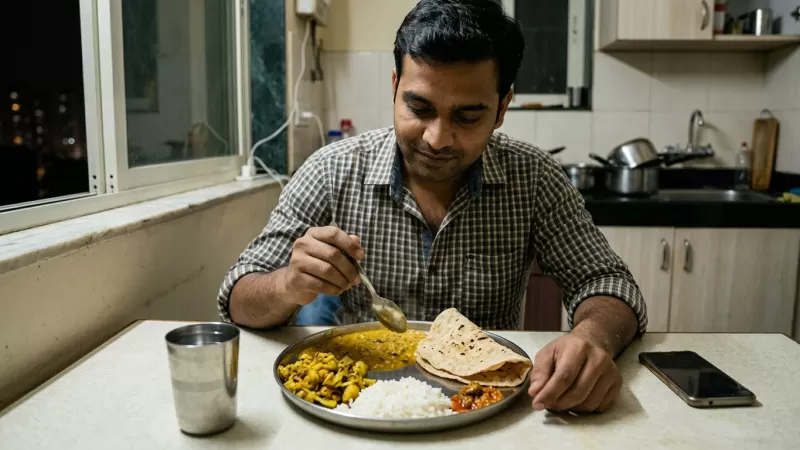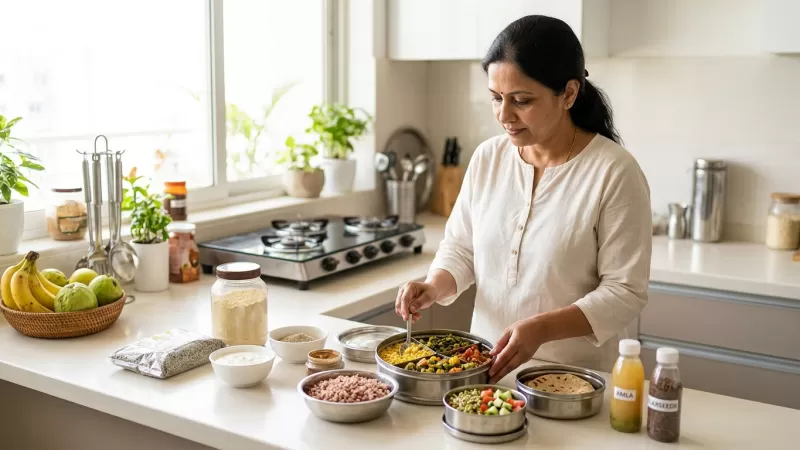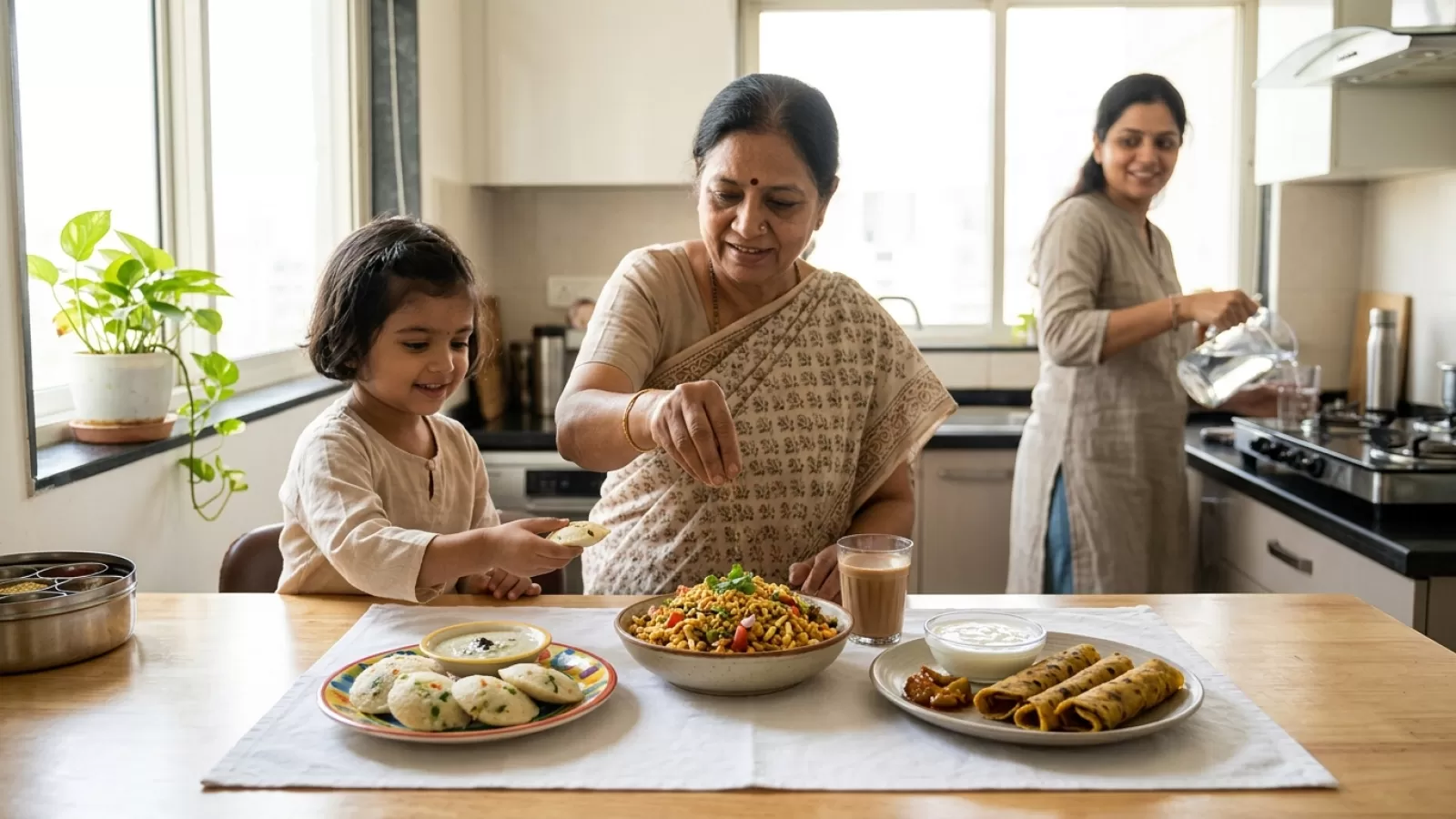
It’s 4pm in a Mumbai flat — the air is a little heavy, a child has just returned from school hungry for something fun, a working adult is still on back-to-back calls, and a grandparent is sitting quietly by the window, hoping for something warm and easy on the stomach. In many Indian homes, these everyday moments are shaped by the unspoken challenge of finding Indian snacks for multi-generational household needs: something that thrills a child, energises a busy adult, and comforts an elderly parent, all at once.
The search for snacks for all ages Indian family is rarely about nutrition labels or fancy ingredients. It’s about what sits on the counter — the bowl of roasted makhana, the pot of soft poha, or the simple plate of dahi with murmura — and whether everyone, from the youngest to the oldest, will actually eat it happily. That’s what makes a real difference during those long, in-between hours when everyone wants something, but no one wants the extra work.
Why Multi-Generational Snacking Feels Complicated in Indian Homes
On most days, snacking in Indian homes is not just about hunger. It’s about rhythms, expectations, and the quiet habits built over years. A schoolchild expects something new after school — not just leftover roti. The working adult, who may be on a video call at 4pm, needs a snack that won’t make them sluggish or require a trip to the kitchen every hour. The elderly grandparent, especially after lunch, is looking for something soft, warm, and gentle on the stomach — not spicy or oily, and definitely not fried sev.
Many families, especially in joint setups, find themselves juggling these needs daily. There is often pressure to make everyone happy, without turning the kitchen into a full-time snack counter. Snacks for children elderly adults Indian home must balance taste, texture, and digestion — and all of this with ingredients that are already at hand. The tricky part is, most Indian snack ideas three generations grew up with are not always the same. What’s exciting for a child might be too heavy for a grandparent, and what’s healthy for an adult might feel bland to a child.
Why Finding the Right Indian Snack Is Tricky Across Generations
The challenge starts with habit. In Indian families, food is emotional — memories of what Dadi made at 4pm, the smell of tadka, the comfort of a bowl of dahi-chawal when someone is unwell. But these days, with everyone’s schedules so different, the same old snacks don’t always fit. The child who loves fried aloo tikki might struggle with the slow energy crash, while the adult, squeezed between meetings, just wants something to keep them going till dinner. The elderly member, especially those with dental or digestion troubles, often avoid crunchy, spicy, or deep-fried foods altogether.
Nutritionists who visit Indian households often find that families put a lot of thought into meals, but snacks mostly come down to convenience or habit. That said, the right Indian snacks for multi-generational household needs are rarely about one-size-fits-all. The real challenge is quietly finding overlaps — snacks that meet everyone’s restrictions without making anyone feel left out or unsatisfied.
There’s also the influence of advertising, peer pressure (especially among children), and the expectation that snacks should be “exciting”. Many working adults these days reach for biscuits or chips because they’re quick, but these rarely suit grandparents and don’t always satisfy hungry children either.
Clues You're Struggling With Multi-Generational Snacking
- Snacking turns into a negotiation: The child wants something spicy, the grandparent wants something mild, and the adult just wants something fast. If every snack time feels like a debate, that’s a sign.
- Leftovers pile up: You make three separate snacks, but none are truly finished — a little leftover poha here, a half-eaten sandwich there. This usually signals that the snacks aren’t really working for everyone.
- The kitchen feels like a snack factory: If you’re spending more time making snacks than meals, the system probably isn’t sustainable.
- Elderly family members quietly skip snacks: Grandparents often avoid snacks that are too hard, too spicy, or too oily, and may simply go without if nothing suits their needs.
- Adults default to tea and biscuits: When making a real snack feels like too much work, adults may just have chai with packaged biscuits, even though it doesn’t feel satisfying or healthy.
Everyday Actions That Make Multi-Generational Snacking Work
- Find your household’s “overlap snacks”: In many homes, roasted makhana is always out because it’s soft, light, and everyone eats it. Poha with a little dahi or a fruit chaat with chaat masala tends to disappear quickly too. Look for snacks for all ages Indian family that everyone already likes, even if it feels simple.
- Keep textures adjustable: For example, soft idlis can be eaten plain by a grandparent, with chutney by an adult, and with a little podi for a child. The same goes for dhokla, upma, or steamed besan cheela — they can be made soft and kept mild, with optional add-ons on the side.
- Prep in advance for the week: Many families make a large batch of roasted chana, murmura, or makhana and store it in airtight containers. This saves time and reduces the urge to grab packaged snacks.
- Rotate familiar snacks: Instead of searching for new recipes every time, rotate a few familiar, family-approved snacks — poha, dahi+fruit, upma, besan chilla, or simple vegetable cutlets (baked or shallow-fried for softness).
- Encourage flexible toppings: Serve the basic snack (like dahi with fruit, or khichdi) and let each person add what they like — honey for a child, a pinch of chaat masala for an adult, nothing extra for a grandparent.
One small habit that saves energy: choosing snacks that can sit out for a few hours without spoiling, like roasted makhana or murmura with peanuts, so anyone can grab them when hungry.
A 4pm Scene: The Snack That Pleases Everyone
A kitchen in Nagpur at 6am, the air still cool, someone in the family is already roasting makhana on a low flame. The faint smell of ghee and makhana fills the house. By late afternoon, the bowl sits on the dining table. The schoolchild grabs a handful between homework, the working adult takes a bowl during a meeting, and the elderly grandparent enjoys it with a cup of warm milk. No one complains about spice or crunch. No one asks for something else. There’s a quiet sense that this, finally, is a snack that works for all ages.
Many families in Indian cities have quietly discovered that snacks for children elderly adults Indian home don’t always have to be special or fancy. Sometimes, the most reliable snack is the one that everyone can eat without fuss — and that’s what truly makes a difference in a multi-generational household.
When Snacking Needs More Than Kitchen Solutions
If elderly family members are regularly skipping snacks because of pain, severe indigestion, or difficulty swallowing, it’s usually time to check with a doctor. The same goes for children who seem unusually tired or adults who start skipping meals and snacks entirely. Sometimes, the issue isn’t about snack choices, but about an underlying health concern that needs attention.
For most families, though, a little observation and a willingness to adjust can sort out most snacking problems without much stress.
Common Questions
Every Indian family has its own rhythm, but some snack habits are surprisingly universal. Whether you’re juggling school tiffins, work-from-home hunger pangs, or the gentle needs of elderly family members, these answers reflect what many Indian households have found actually works on busy, ordinary days.
What are the Indian snacks that work acceptably for all age groups from children to elderly within the same household?
Roasted makhana, soft poha, idli, dahi with fruit, khichdi, and besan chilla are snacks that often please everyone. In many homes, these are made mild and soft, so children, adults, and elderly can all enjoy them. Roasted chana is another easy option, though some elderly may prefer it softened in dahi. These snacks are gentle on digestion, adjustable in flavor, and don’t require much fuss, making them practical for snacks for all ages Indian family.
How do you manage the very different snacking preferences and needs within an Indian multi-generational household without it becoming a logistical burden?
Many families focus on a shortlist of snacks everyone accepts — like poha, dahi with murmura, or fruit chaat. The base snack stays the same, but each person can adjust toppings or sides. Making one or two such snacks in bulk saves time, reduces kitchen work, and keeps everyone happy. Over time, most families settle into a routine of rotating these reliable options rather than creating separate snacks for each generation.
Which Indian snacks are appropriate for elderly family members who need easy digestion without sacrificing nutrition?
Soft, steamed, or boiled snacks work best for elderly family members. Idli, upma, dahi with soft fruits, poha, and moong dal chilla are gentle on digestion and can be enriched with vegetables or soft paneer for nutrition. Avoiding spicy, oily, and very fibrous foods usually makes these snacks easier for seniors, while still providing protein, fiber, and energy to keep them nourished through the day.
How do you make healthy snacking the default in an Indian household where different generations have different definitions of what is satisfying?
Keep healthy snacks visible and ready — a bowl of roasted makhana on the table, fruit chaat in the fridge, or dahi set in small bowls. If these are easily accessible, everyone tends to reach for them. Letting each person add their preferred spice, sweetener, or topping also helps. Over time, these habits become the norm, making healthy snacking feel natural, even for those who might resist at first.
What Indian snack preparation is most time-efficient for a homemaker managing the snacking needs of an entire multi-generational household?
Roasted makhana is probably the most time-efficient — a large batch can be made in under 10 minutes and stored for days. Poha or upma takes about 15–20 minutes and works for breakfast or evening snacks. Dahi with fruit or murmura requires almost no prep. These snacks for all ages Indian family are practical because they can be made ahead, served at room temperature, and adjusted for taste as needed. This keeps the homemaker’s workload manageable, even in households with three generations.