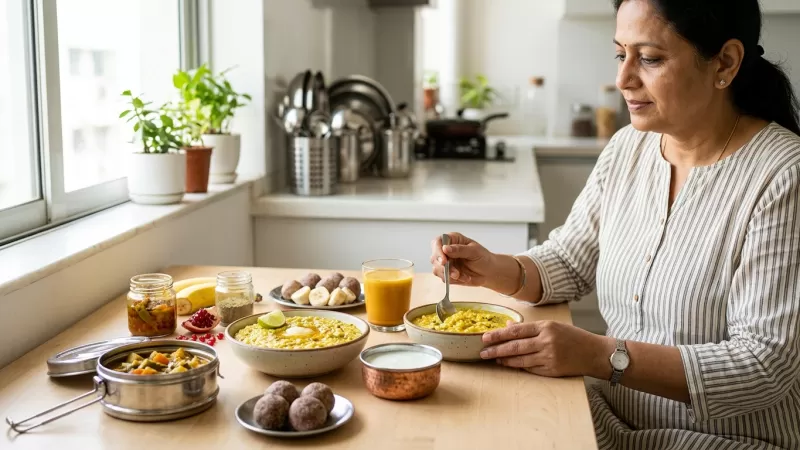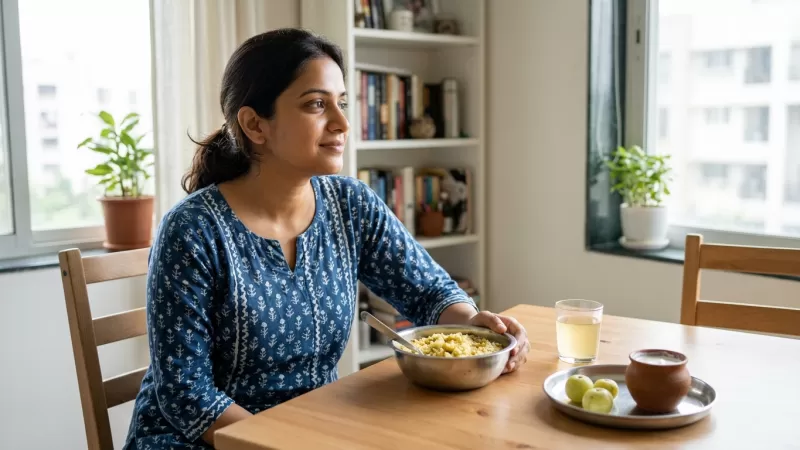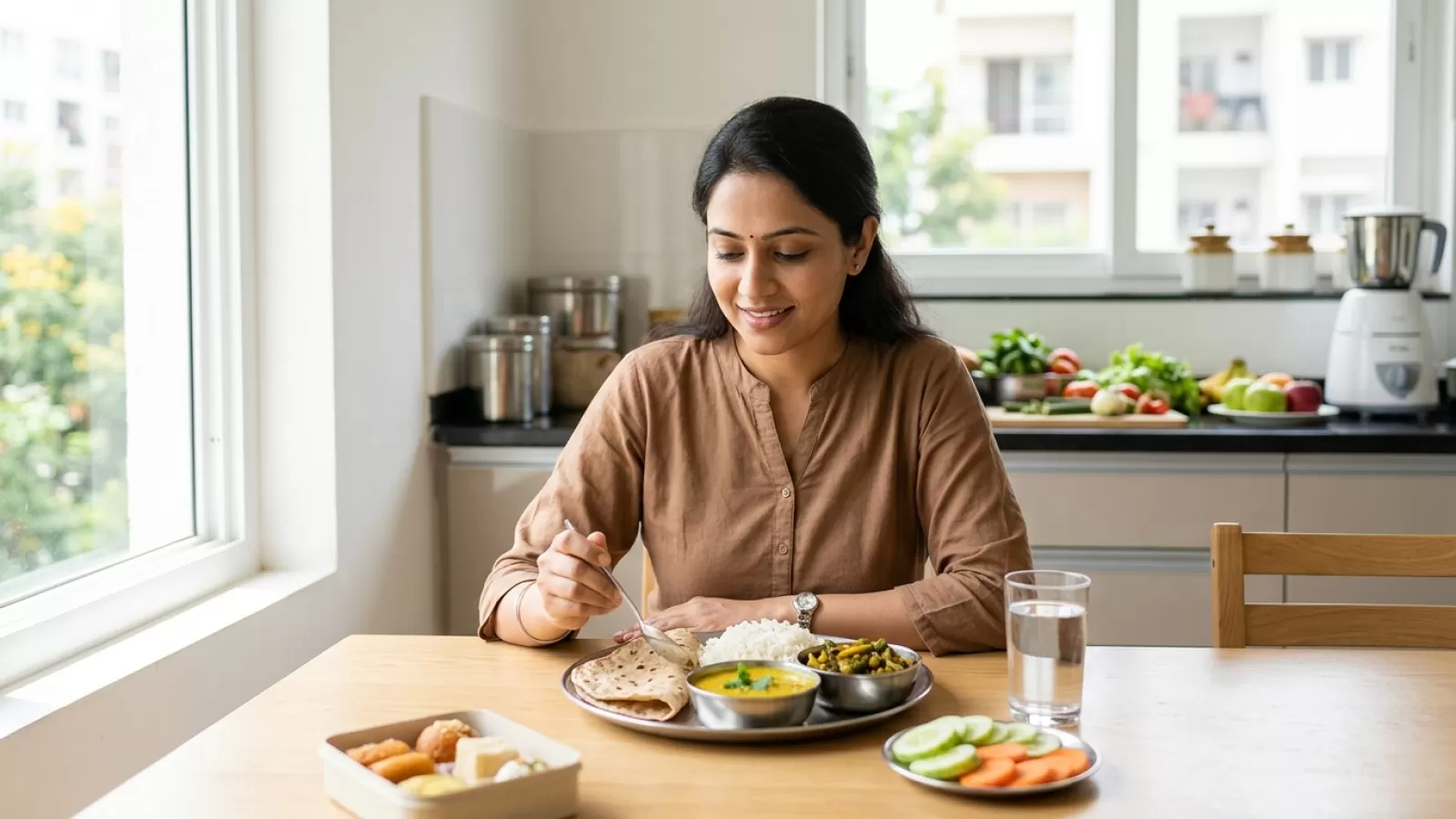
The Sunday after a long festival week in many Indian homes feels different. The decorations haven’t come down yet, but the appetite for sweets and rich foods quietly fades. By Monday, someone is already soaking dal, and there’s a quiet craving for simple rice, dahi, maybe a sabzi. In these moments, families start to return normal eating after Indian festival celebrations without big declarations or complicated plans.
It doesn’t take a special post festival diet reset India has never needed. Most people find that after festival eating habits India-wide, the body itself nudges you back toward everyday meals. The tricky part is not to force a crash diet or continue the festival feasting—just to notice what your body is asking for and respond with your usual home-cooked food.
Why Indian Families Drift From Routine Eating During Festivals
Festivals in India are about togetherness, generosity, and celebration—all of which show up at the dining table. Plates are loaded with laddoos, gujiya, fried snacks, and much more. In many homes, festival food is not just about taste; it's about sharing, tradition, and making memories. The kitchen sees more action, and so do the local mithaiwalas and delivery apps. Even the most health-conscious families often relax their usual routines during this time.
After a week or more of rich meals and late-night sweets, the question of how to return normal eating after Indian festival is nearly universal. People don’t always talk about it, but there is relief in coming back to dal, roti, and sabzi after days of indulgence. This is not guilt—it’s the body’s natural way of recovering from festival overeating India sees every year.
The catch is, some families feel pressured to "undo" the extra eating with strict detoxes or crash diets. Others, especially if sweets and snacks keep coming in from neighbors or relatives, find themselves stuck in festival-mode eating long after the celebrations end. Both patterns are common, but neither is necessary for most people.
Why the Post-Festival Body Craves Simplicity
There’s a reason your stomach asks for khichdi or curd rice after days of mithai and fried snacks. Rich foods tend to slow digestion, especially when eaten late at night or in large portions. The body, used to more balanced home meals, has to work harder during festivals. Tiredness, bloating, and a certain heaviness are common.
Nutritionists who work with Indian families often find that most people’s bodies naturally guide them back to regular eating once the festival ends—no special post festival diet reset India requires. A simple dal-chawal meal often feels like a relief after constant feasting. That said, family routines can get disrupted, especially when festival eating spills over because of leftover food or ongoing social visits.
In joint families, or when relatives are visiting, the kitchen may stay in festival mode longer than anyone really wants. It’s easy to keep eating like it’s a celebration, especially when sweets and snacks are everywhere. But listening to your body—hunger cues, cravings for lighter food, and even a desire for more water—usually brings things back to normal within a few days.
Clues You’re Ready to Return to Normal Eating
- Your cravings change: You feel like having dal, dahi, or plain phulkas instead of sweets and snacks. This shift often happens the day after the last big celebration.
- Heaviness lingers: You notice bloating, sluggishness, or tiredness after festival meals, and lighter food sounds appealing.
- Family routines resume: Mornings look more normal: chai, poha, or upma instead of leftover samosas. The gas stove runs at its usual time again.
- Less excitement for mithai: Even when someone offers a box of sweets, you’re happy to save it for guests or share it with neighbors instead of eating it yourself.
- Hunger shows up at regular times: Your appetite returns to its usual cycle—breakfast, lunch, and dinner—after days of snacking and late-night eating.
Practical Ways to Ease Back Into Regular Meals
- Cook familiar meals: Bring back your usual dal, sabzi, roti, and rice. Most families find that simply returning to their everyday menu helps reset after festival eating habits India-wide.
- Don’t rush the process: If the house is still full of sweets, set them aside for guests or share them with friends. There’s no need to force yourself to finish or throw away food—just shift the focus to your usual meals.
- Drink more water: After festival overeating India often experiences, the body can feel dehydrated. Keep a bottle nearby, especially during humid seasons or after salty, heavy foods.
- Listen to your appetite: Eat when you’re hungry, and stop when you feel comfortable. There’s no need to skip meals or fast unless you genuinely feel like it. The body adjusts naturally in a few days.
- Plan lighter dinners: Many families find that khichdi, dahi rice, or simple moong dal with vegetables helps everyone feel settled, especially after late or heavy festival nights.
That said, if someone in the family continues to feel unwell—persistent stomach pain, severe indigestion, or anything out of the ordinary—it may be worth speaking to a doctor, especially for seniors or those with health conditions.
How Returning to Normal Eating Looks in Real Indian Homes
A kitchen in Nagpur at 6am, two days after Diwali. The air still smells faintly of yesterday’s incense and fireworks, but the gas is on, and a pressure cooker whistles. Someone is rinsing rice and slicing lauki for sabzi. There’s leftover kaju katli on the counter, but no one touches it. Instead, tea is poured, and breakfast is simple poha with a little dahi. By evening, the family sits down to plain dal chawal, some salad, and a bowl of warm water for washing hands. The house feels quieter, and so does the stomach. Within three or four days, even the children start asking for their favorite weekday meals instead of festival treats.
Many families in Indian cities have quietly discovered that the best way to return normal eating after Indian festival celebrations is simply to pick up where they left off before the festivities began. No drama. No crash diets. Just the comfort of regular meals and a body that knows how to find its own balance again.
When Getting Back to Normal Needs Extra Support
Most people find their appetite and digestion settle within a week after the festival ends. But if someone in the family has ongoing discomfort, trouble eating, or any symptoms that don’t seem related to just heavy festival food, it’s a good idea to check in with a doctor. This is especially true for seniors, children, or anyone with health conditions. Trust your instincts—if something feels off, it’s better to ask for help than wait.
Common Questions
Festivals bring joy—and sometimes a little chaos—to Indian kitchens. It’s normal to have questions about how to return normal eating after Indian festival time, especially when the house is still full of treats and life is just getting back to routine. Here are some answers to the most common doubts, grounded in what really happens in Indian homes.
How long does it naturally take an Indian adult's appetite and digestion to return to normal after a festival season?
For most Indian adults, appetite and digestion tend to return to normal within three to five days after the end of a festival season. In homes where meals shift back to simple dal, sabzi, and roti, the body often feels lighter and less bloated by midweek. Of course, if festival eating stretches over several weeks, it might take a bit longer—especially if sweets and snacks are still around. It’s rare for it to take more than a week unless there’s another health issue.
Is there any benefit to a specific post-festival eating reset or does normal cooking simply restore balance on its own?
In most Indian homes, normal cooking is usually enough to bring balance after festival eating. Going back to your regular meals—dal chawal, poha, khichdi—lets the body recover naturally. Special resets, like juice cleanses or strict fasts, are not needed and can sometimes make things harder. The gentle return to everyday food, as families have done for generations, tends to work best for most people.
What are the most common post-festival eating mistakes Indian adults make that slow the return to normal?
One common mistake is continuing to eat festival snacks and mithai just because they’re available, even when no one really feels like it anymore. Another is trying to "fix" the extra eating by skipping meals or starting crash diets, which can leave you tired and irritable. Some people also forget to drink enough water after salty or fried foods. Listening to your body and slowly returning to regular meals works better than sudden restrictions or overeating out of habit.
How do you return to normal eating after a festival when your household is still receiving and sharing mithai and fried food?
This is very common—especially in joint families or where relatives keep visiting after festivals. The practical way is to set aside the sweets for guests or share them with neighbors and friends. Keep the focus on your usual homemade meals, and don’t feel pressured to finish every box. Sometimes, storing mithai in the fridge or giving it away early helps the family shift back to normal eating without guilt.
When does post-festival digestive difficulty indicate something more significant than simply eating too richly?
If you or someone in the family has severe stomach pain, vomiting, ongoing diarrhea, or symptoms that last more than a week, it may be more than just festival overeating. For seniors, young children, or anyone with health conditions, it’s safest to check with a doctor if there’s any doubt. Most festival-related discomfort settles quickly, but persistent or severe symptoms should always get medical attention.