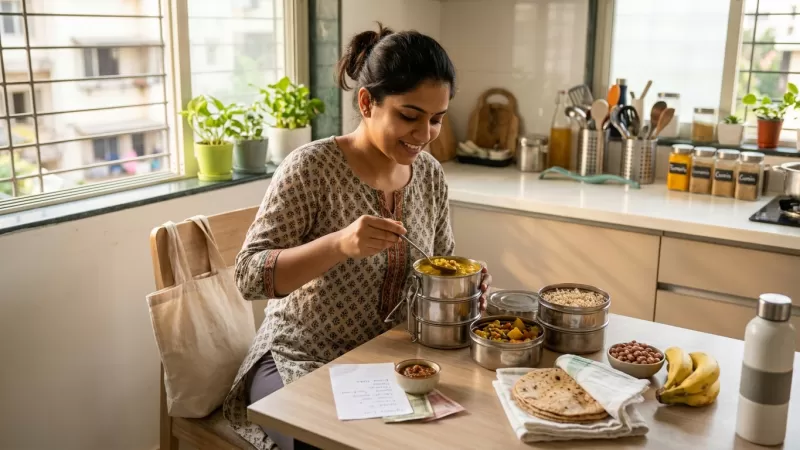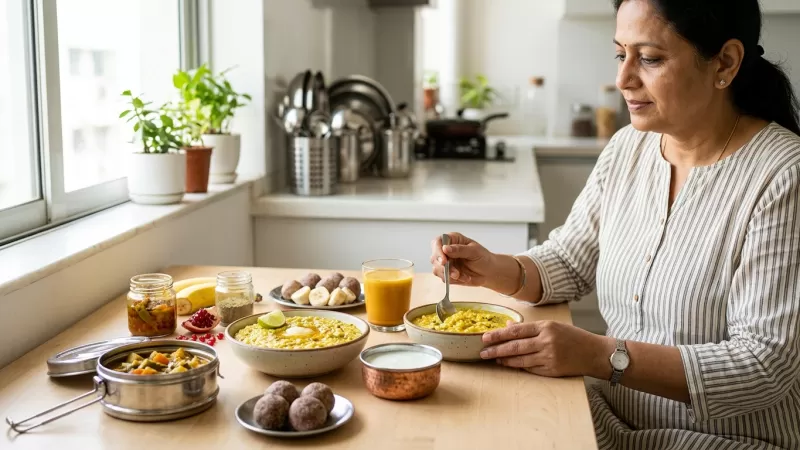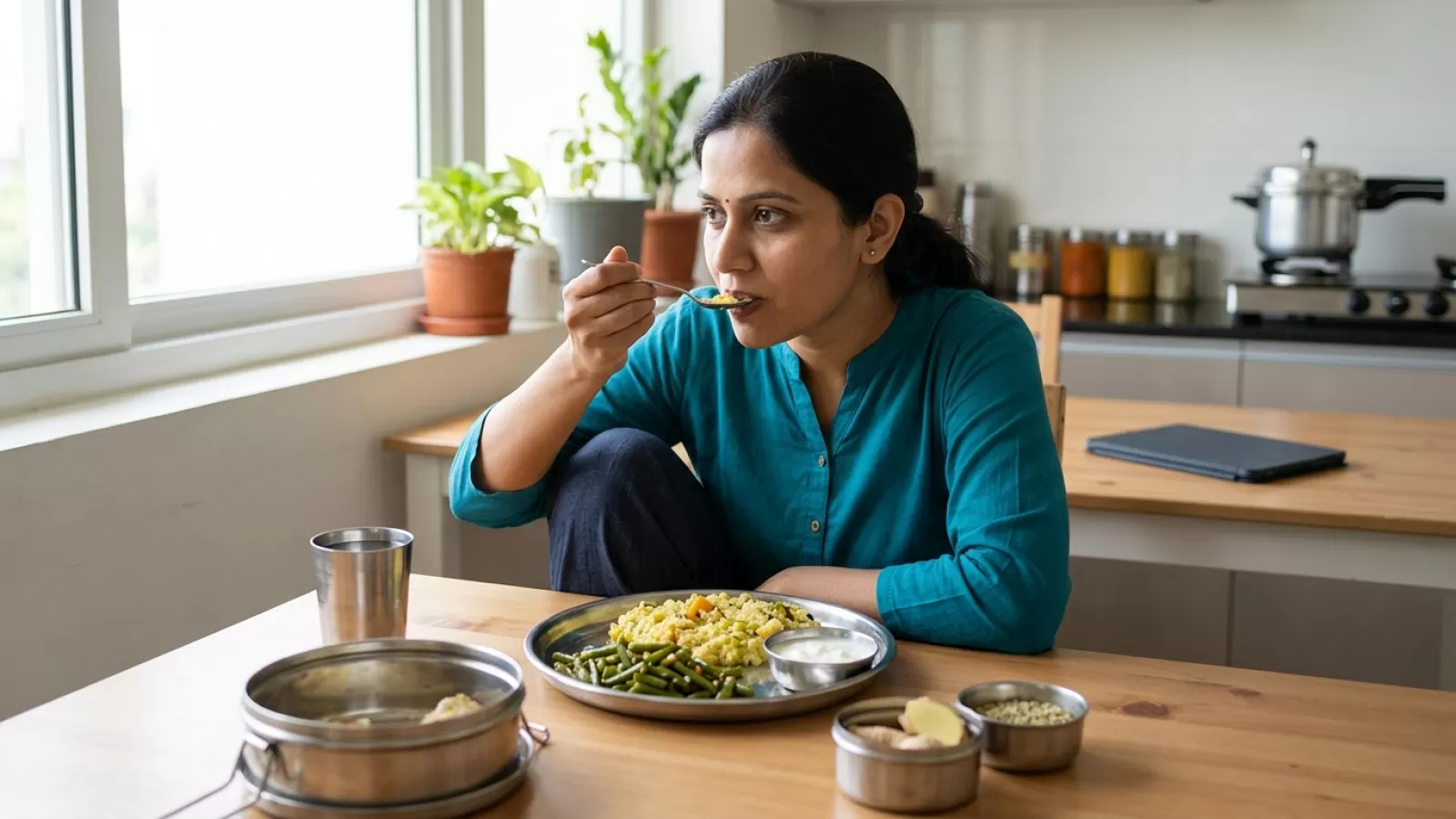
Some mornings in Indian homes begin with the clatter of pressure cookers before sunrise, while other days, breakfast is put together much later — maybe after the morning rush, once children are sent off and the last tiffin box is packed. Indian eating habits uneven meal timings are not always a choice. Instead, they often reflect a household’s shifting needs, whether it’s a school bus arriving late, a surprise work call, or a grandmother’s afternoon nap running over into chai time. Meals happen when life allows, not always at textbook times.
That said, you’ll notice that many families, despite this irregularity, still manage to support digestion and energy. It isn’t about rigid schedules — it’s more about what ends up on the plate and how you eat it. Dal with rice or roti, a bowl of dahi, or a handful of makhana at odd hours often does more for your system than forcing a meal just to stick to the clock.
Why Variable Meal Times Are So Widespread in Indian Homes
Inconsistent meal schedule India digestion concerns are not new, but very few Indian homes manage to serve every meal at the same time each day. Joint families juggle multiple routines — children’s schools, elders’ medicines, work-from-home meetings — and meal times shift to suit whoever needs feeding first. Even in nuclear families, a parent’s late-night office call or a child’s weekend cricket match changes breakfast and lunch timings.
Food is almost always ready, but when you sit to eat is rarely fixed. Many Indian eating habits with uneven meal timings develop from this reality. Some days, breakfast is a rushed poha at 7am. Other days, it’s skipped and replaced with a cup of chai and a banana at 10am, after the morning chaos. Lunch might happen at 1pm, or not until 3pm if chores pile up or guests arrive unannounced. Dinner can swing wildly — from an early 7:30pm thali to a quick khichdi at 10pm after everyone gets home.
What’s common is that the food itself remains familiar: dal, roti, sabzi, dahi, rice, and seasonal fruits, eaten whenever there’s a lull in the day. The trick is, most homes focus less on clock time and more on making every meal nourishing, even if it comes at an odd hour.
Everyday Reasons Meal Times Shift in Indian Families
The reality is, an inconsistent meal schedule in India is almost a family tradition. School timings change. Offices call for urgent meetings. In the summer, power cuts can delay cooking or force you to adjust when you eat. In many homes, the cook’s availability or the rhythm of household help determines when lunch or dinner is ready. Sometimes, parents eat only after children are fed and homework is supervised.
On weekends, meal times float even more. Brunch becomes the norm; lunch merges with evening snacks. Festivals, fasting days, or a relative’s visit can shift the entire routine. Fitness coaches who train working adults often find that most movement in Indian homes comes from daily tasks, not planned exercise. In the same way, many Indian eating habits with uneven meal timings come not from laziness but from adapting to real-world demands.
Even single adults living alone or with roommates face this. Unexpected overtime or a late commute in Bengaluru can push dinner to 11pm. Some people simply aren’t hungry at the same time every day, especially when stress or weather changes appetite.
Clues Your Changing Meal Times Are Affecting You
- Unpredictable hunger pangs: You’re very hungry some days at 11am, barely hungry at all on others. This is common when the body isn’t sure what to expect.
- Energy dips or brain fog: After variable meal times, Indian adults often find themselves yawning in afternoon meetings or feeling irritable before dinner.
- Tummy trouble: Occasional bloating, heaviness, or mild constipation can follow inconsistent meal schedule India digestion patterns, especially if you eat heavy foods late at night.
- Reaching for snacks mindlessly: Many reach for namkeen, biscuits, or leftover sweets when meals are delayed, leading to less balanced nutrition.
- Difficulty sleeping: Late, heavy dinners after a long gap sometimes disturb sleep, especially in humid summers when the body is already uncomfortable.
Not everyone feels all of these, but if you spot these signs regularly, it’s a message from your body to tweak what you eat and how you space your meals — even if the timings themselves remain irregular.
Practical Ways to Support Digestion When Meals Aren’t on a Clock
- Keep easy, nourishing options ready: Many families in Indian cities have quietly discovered that cooked dal, dahi, and chopped vegetables in the fridge make it much easier to eat well, whether lunch is at 1pm or 3:30pm.
- Favour familiar, balanced foods: Dal-rice, roti-sabzi, poha, upma, or curd rice are gentle on digestion and can be eaten at almost any hour without upsetting the stomach. Indian food irregular timing is less hard on your system when you stick to tried-and-tested combinations.
- Don’t skip hydration: A glass of water, nimbu pani, or buttermilk between uneven meals helps keep energy and digestion steady, especially during hot weather or long workdays.
- Snack smart, not just for the sake of it: Roasted chana, makhana, or a banana is usually better than fried snacks or sweets if you’re hungry between variable meal times Indian adults experience.
- Eat slowly and mindfully, even if meals are late: Taking a few minutes to sit, chew, and notice what you’re eating helps your body process food better, regardless of the hour.
Here is the catch: You don’t have to force yourself to eat when you’re not hungry, nor must you wait until you’re starving. Listening to your body’s actual cues, instead of the clock, is a habit that can be developed with a little practice.
Daily Rhythms: A Real Example of How Meal Timing Shifts
A kitchen in Nagpur at 6am smells of ginger chai, with the first roti on the tawa while the radio plays. By 8am, the house is full of voices — children searching for socks, elders reading the newspaper, someone finishing a last-minute school project. Breakfast is served for some at 7am, others at 9am, depending on who is ready first. The homemaker eats last, often after the rush, with a bowl of dahi and leftover sabzi.
Lunch happens in parts — a tiffin packed for the office, a plate made for the grandparent at noon, and a quick meal for the homemaker squeezed between phone calls and chores at 2:30pm. Dinner is rarely at the same hour. Some nights, it’s early, after a dusty summer walk; others, it’s late, after a power cut delays everything. Despite the shifting hours, the food itself stays familiar and comforting. It’s this quiet flexibility, found in kitchens across India, that helps families support digestion and nutrition even without fixed meal times.
When Flexible Meal Times Need Extra Attention
If you notice ongoing tummy trouble, unexplained tiredness, or mood swings that don’t ease up after adjusting what you eat, it’s a good idea to check with your doctor. Sometimes, underlying health conditions can make it harder to cope with Indian eating habits and uneven meal timings. Most of the time, though, small changes and a little preparation go a long way.
Common Questions
Shifting meal times is common in Indian homes, and you’re not alone if your schedule changes every day. These questions come up often, especially on busy weeks or in families with different routines. Let’s look at them with real Indian daily life in mind.
How does eating at genuinely different times every day affect an Indian adult's energy, mood, and digestion?
When meal times jump around, it can throw off your hunger signals and sometimes leave you feeling tired or cranky, especially during mid-morning or late afternoon. Many Indian adults notice energy dips if there’s a long gap between meals, and digestion may feel sluggish if late dinners become a habit. However, eating familiar foods like dal, roti, and dahi — even at odd hours — can help keep your system stable. Over time, your body often adapts, especially if you keep your meals nourishing and avoid too many fried or processed snacks.
Which Indian foods provide the most stable energy regardless of when they are eaten?
Simple combinations like dal and rice, roti with sabzi, poha, upma, khichdi, and dahi with fruits tend to support steady energy. These foods suit variable meal times Indian adults face because they’re gentle on the stomach and provide a mix of protein, fiber, and carbs. Makhana, roasted chana, or a banana work well as quick snacks. Foods that are lightly spiced and not too oily usually “sit” better, whether eaten early in the day or late at night.
Is there a way to eat nutritiously in India when every day has a completely different schedule?
Absolutely. Many families keep cooked dal, steamed rice, or cut veggies ready in the fridge for quick, balanced meals. If you know you’ll have unpredictable meal times, prepping a few basics — like soaked poha or boiled potatoes — makes it easier to throw together something wholesome. Indian food irregular timing doesn’t have to mean poor nutrition. Even if you can’t plan meal times, you can plan meal options, so you’re less tempted by packaged snacks or takeout.
How do you prevent erratic meal timing from leading to erratic food choices in Indian daily life?
One practical way is to keep healthy, familiar snacks handy — roasted chana, fruits, or dahi. Many people in Indian cities find that when they’re hungry and tired, they’ll eat whatever is easiest to reach. If the fridge has leftovers or pre-cut fruit, you’re more likely to stick to nourishing options. It also helps to set gentle routines, like always having a glass of water or buttermilk before reaching for a snack, which gives you a moment to pause and choose mindfully.
What is the one most important nutritional anchor point for Indian adults with unpredictable daily schedules?
For most, it’s having at least one balanced, home-cooked meal a day — usually lunch or dinner — that includes dal, sabzi, rice or roti, and dahi. Even if breakfast or snacks are grabbed on the go, this meal becomes a steady point for your body and digestion. Many find that no matter how inconsistent their meal schedule India digestion patterns are, this one habit keeps them feeling nourished and grounded.