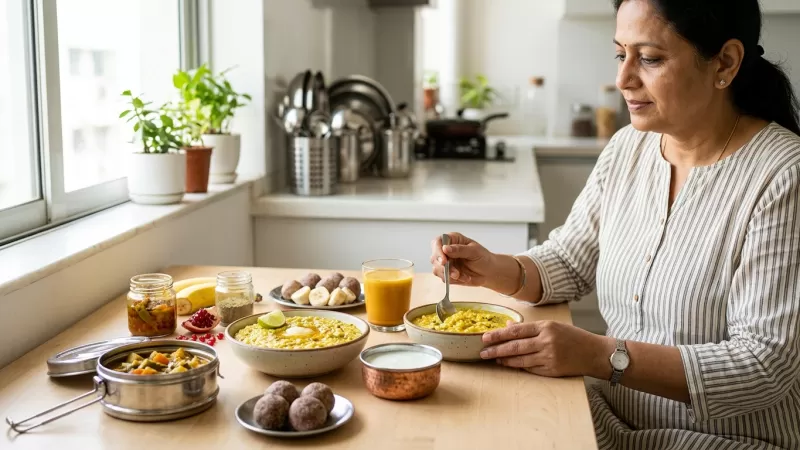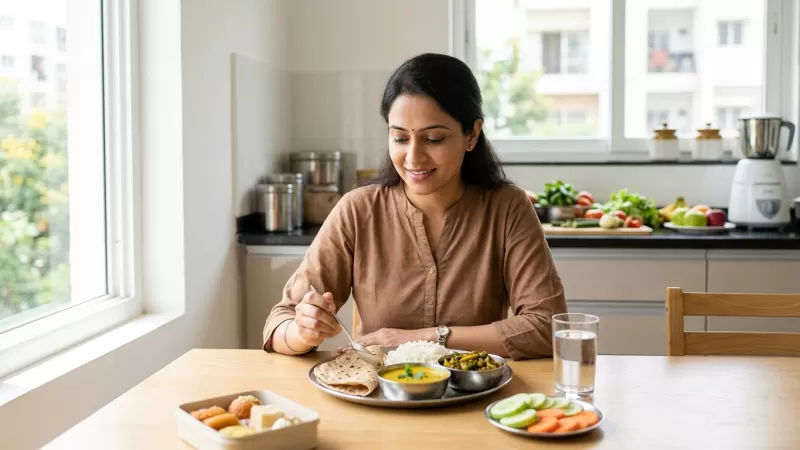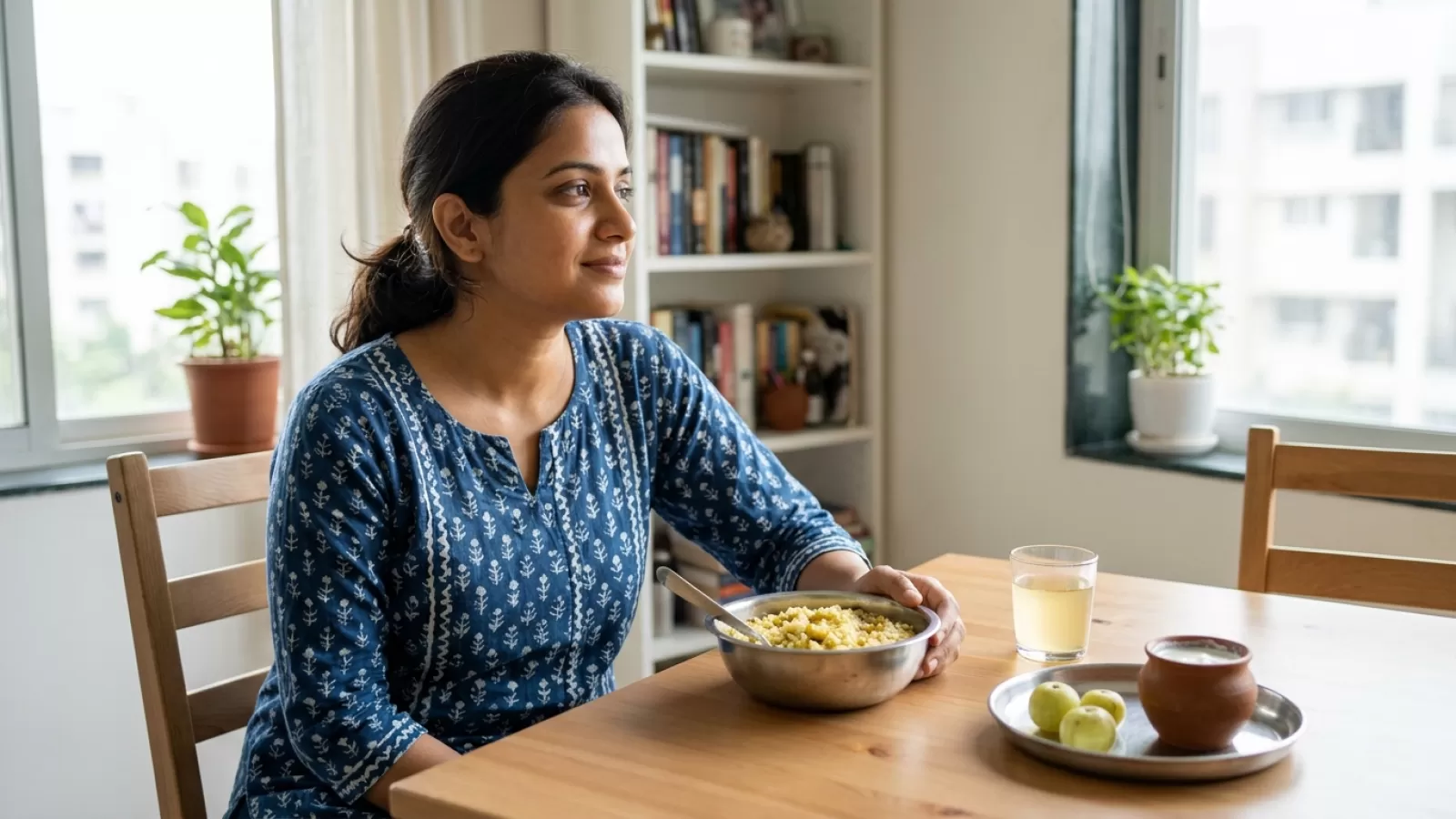
Some weeks in Indian homes, the body just feels—off. The weather has started to change, but the season hasn’t quite settled. Windows drip with humidity before the monsoon, or the October air flickers between warm afternoons and chilly evenings. Meal times stay the same, but appetites and digestion don’t always follow the usual rhythm. During these in-between phases, Indian eating habits for transitional seasons show up in the kitchen almost instinctively, even when no one says it aloud.
In many families, transitional weeks bring a quiet sense of uncertainty. Dahi feels a bit too cool, but hot chai is suddenly comforting. Dal seems lighter than usual, and some people start craving roasted makhana or spiced khichdi instead of elaborate curries. These patterns aren’t random—they’re small clues that the body is looking for a different kind of support as it moves between seasons. Most Indian kitchens have their own way of making these adjustments, and they matter more than you might think.
Why Transitional Weeks Leave Many Indians Feeling “Not Quite Right”
Seasonal transitions in India tend to sneak up on you. The change may be subtle—a faint stickiness in the air before the rains, or the way the sun suddenly feels stronger in March. In these weeks, bodies often feel a little out of balance. It's not illness, but there's a sense that regular routines aren't quite fitting. This is when Indian eating habits for transitional seasons become especially important.
In many households, adults complain of feeling a little bloated, children lose interest in their favourite sabzi, and elders may mention that their morning chai doesn’t taste the same. The body’s internal clock, so well-aligned with steady summer or winter weather, seems to stutter when the season is in flux. Even the comfort foods that usually work—like parathas in winter or dahi in summer—feel slightly wrong for a week or two.
That said, this is a recurring pattern in Indian homes. The tricky part is, it’s not always obvious what to change. While some people just push through, others quietly adjust—the way a cook might add ajwain to poha or serve warm haldi doodh at night. These habits have a logic built from generations of observing what helps when the season can’t make up its mind.
How Changing Weather Affects Appetite and Digestion
At the root, these awkward weeks are about the body’s struggle to keep up with unpredictable weather. Humidity spikes before a monsoon can slow digestion, making heavy meals uncomfortable. Sudden drops in temperature after the rains might make the usual summer fare feel too cool. Eating patterns that worked perfectly during a settled season—like cold chaas in May or fresh salads in January—suddenly feel mismatched.
Many families in Indian cities have quietly discovered that their cravings shift during these times. Fried snacks might tempt more before the rains, while roasted, lightly spiced foods come out when winter approaches. Grandparents often suggest slightly warmer, easier-to-digest meals for everyone, even if no one is ill. Fitness coaches who train working adults often find that most movement in Indian homes comes from daily tasks, not planned exercise. This means when the season is unsettled and energy dips, even these small daily chores can feel harder, nudging people to seek comfort from food.
Here is the catch: the transition isn’t just about temperature. It’s about how the body’s inner rhythms—hunger, thirst, sleep—get thrown off by the shifting environment. The old advice to “listen to your body” becomes much harder when the signals are fuzzy. This is why Indian eating habits for transitional seasons have always included small, practical tweaks, rather than dramatic changes.
Clues That Your Eating Isn’t Matching the Season’s Mood
- Appetite is unpredictable: During season changes, many people report not feeling hungry at the usual meal times, or wanting only light bites instead of regular meals.
- Digestion slows down: Bloating, mild discomfort, or a sense of heaviness after everyday foods like dal chawal or roti sabzi are common signs.
- Energy feels uneven: Some days start with a burst of energy but end with unexplained tiredness, or vice versa. Even making chai can feel like a task.
- Food cravings change: You might suddenly want roasted peanuts, warm soups, or spicy churan, even if these weren’t part of your regular diet a week ago.
- Comfort foods lose their charm: Old favourites like dahi, salad, or cold fruit may seem unappealing, while simple, warm foods start sounding better.
Everyday Kitchen Tweaks That Help During Seasonal Shifts
- Warm up the menu slightly: Try switching to lightly cooked sabzi, warm khichdi, or moong dal soup instead of raw salads and cold dahi during humid or chilly transition weeks. Simple changes like tempering dal with jeera and hing can make it gentler on the stomach.
- Add gentle spices: Ajwain, ginger, and black pepper are often used in between seasons Indian diet to aid digestion. A bit of ginger in your chai or ajwain in paratha dough can make a difference without overpowering the dish.
- Shift meal timings if needed: If breakfast feels too heavy or late dinners are tough to digest, try moving meals slightly earlier or lighter. A bowl of poha or upma in the evening may work better than a full meal when the body feels sluggish.
- Embrace one-pot meals: On days when cooking feels like a chore, many households turn to one-pot dishes like khichdi, pulao, or daliya. These are easy on the stomach and can be adjusted with seasonal vegetables or mild spices.
- Don’t force cold foods: If dahi or salad feels wrong, pause it for a few days. Warm milk, lightly spiced soups, or roasted makhana make good substitutes until the body settles into the new season.
Small steps are enough. Most Indian homes find that adjusting just one or two things—like switching to a warmer breakfast or adding a pinch of hing to dal—gives real relief during these in-between weeks.
The Subtle Ways Transitional Eating Appears in Indian Homes
In a kitchen in Nagpur at 6am, the air is thick and still before the first monsoon shower. A pressure cooker whistles as someone makes moong dal khichdi, seasoned with ginger and a little black pepper. There’s no dahi on the table, but a flask of hot water sits alongside the usual chai. The ceiling fan is on, but the window is open just enough to let in a hint of breeze. Breakfast is quieter than usual—no one complains, but everyone eats a little less, and the meal feels gentle, almost soothing.
This subtle shift isn’t unique to Nagpur. In many Indian homes, these weeks of uncertainty bring softer, milder foods to the table. Spices are used differently—less for heat, more for comfort. Even in busy urban apartments, a working professional commuting in Bengaluru might choose poha over idli for breakfast, or carry roasted peanuts for the office snack, because their appetite feels oddly in-between. These are the quiet signals of Indian eating habits for transitional seasons at work.
These small adjustments don’t get talked about much. They happen quietly, in the background of daily life, but they matter a lot when the body feels unsettled by the season.
Knowing When to Ask for Extra Help
Most people manage well with a few kitchen tweaks during season changes. That said, if you or someone in your home feels persistently unwell—ongoing stomach trouble, extreme fatigue, or symptoms that aren’t settling—it’s wise to check in with a doctor. Especially for elders, young children, or anyone managing a health condition, don’t hesitate to seek proper guidance if the body isn’t getting back on track after a week or two. Trust your instincts—if something feels off beyond the usual, outside help is always a good idea.
Common Questions
Transitional seasons can be confusing, especially when the body’s usual signals don’t make sense. If you’re wondering how these periods affect Indian eating habits, these answers—drawn from real household routines—might help you find your own rhythm.
Which Indian seasonal transitions are most challenging for the body and what eating habits help during those specific periods?
The period just before the monsoon (when humidity rises but rain hasn’t started) and the post-monsoon weeks leading to winter (when nights cool but days stay warm) are especially tricky. During these times, many homes shift from cold chaas and salads to warm, spiced foods like moong dal soup, khichdi, and lightly fried snacks. Meals become simpler and warmer, with a focus on gentle spices that aid digestion—think ginger, ajwain, or a pinch of hing in everyday dishes.
What are the signs that the body is struggling with a seasonal transition rather than simply adjusting normally?
When the body is struggling rather than just adjusting, you might notice prolonged loss of appetite, frequent mild stomach troubles (like bloating or loose motions), unusual fatigue, and a sense that regular comfort foods no longer appeal. In many Indian homes, if these symptoms last more than a week, or spread across several family members, it’s a clue that the transition is affecting more than just mood—it’s time to tweak the kitchen routine or seek advice.
How do traditional Indian kitchen practices specifically address transitional season nutrition?
Traditional kitchens often rely on gentle, time-tested tweaks: using more ajwain, ginger, or hing in everyday cooking; temporarily reducing cold foods like dahi or salads; and preparing easy-to-digest meals such as khichdi, dalia, or light sabzi. Many families also shift to earlier dinners and offer warm drinks like haldi doodh or spiced chai in the evenings. These practices aren’t formal rules—they’re habits passed down by observing what feels best during those ambiguous weeks between seasons.
What Indian foods are most appropriate during the ambiguous period between two major seasons?
Warm, soft foods tend to work best: khichdi made with moong dal, lightly tempered dals, upma with ginger, poha with ajwain, and roasted makhana or peanuts for snacks. Soups made with seasonal vegetables and simple tadkas are popular. Many families pause cold or raw foods and lean into warm, mildly spiced dishes that settle the stomach and provide gentle comfort.
Is there a consistent Indian eating pattern that helps the body navigate seasonal transitions with minimal disruption to energy and immunity?
Yes—across regions and generations, the most consistent pattern is to eat simply, warmly, and in moderation during transitional weeks. This means preferring cooked over raw foods, adding gentle spices, and listening to the body’s call for lighter meals. Sticking to regular meal times, even with smaller portions, and staying hydrated with warm water or herbal teas also helps. It’s these small, flexible habits that support both energy and immunity until the new season settles in.