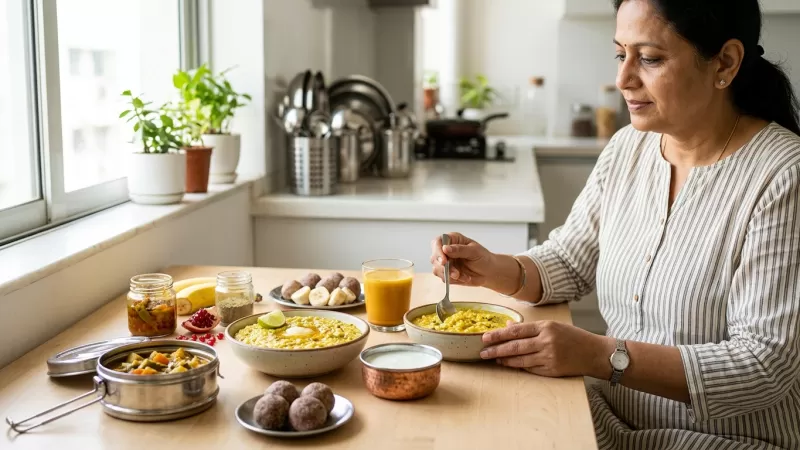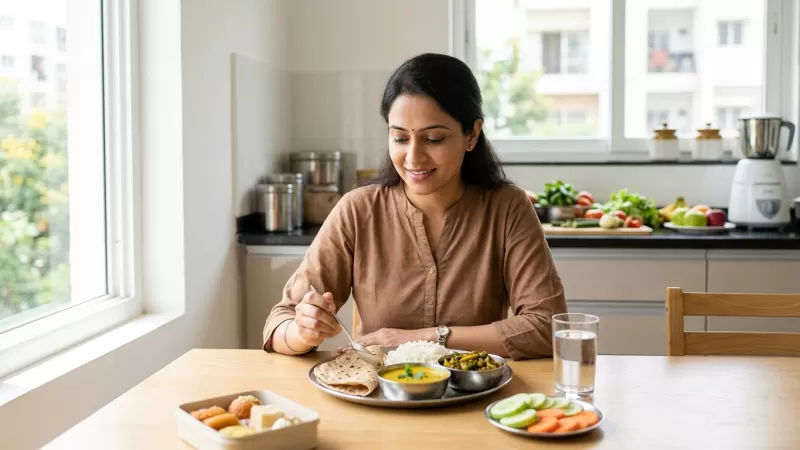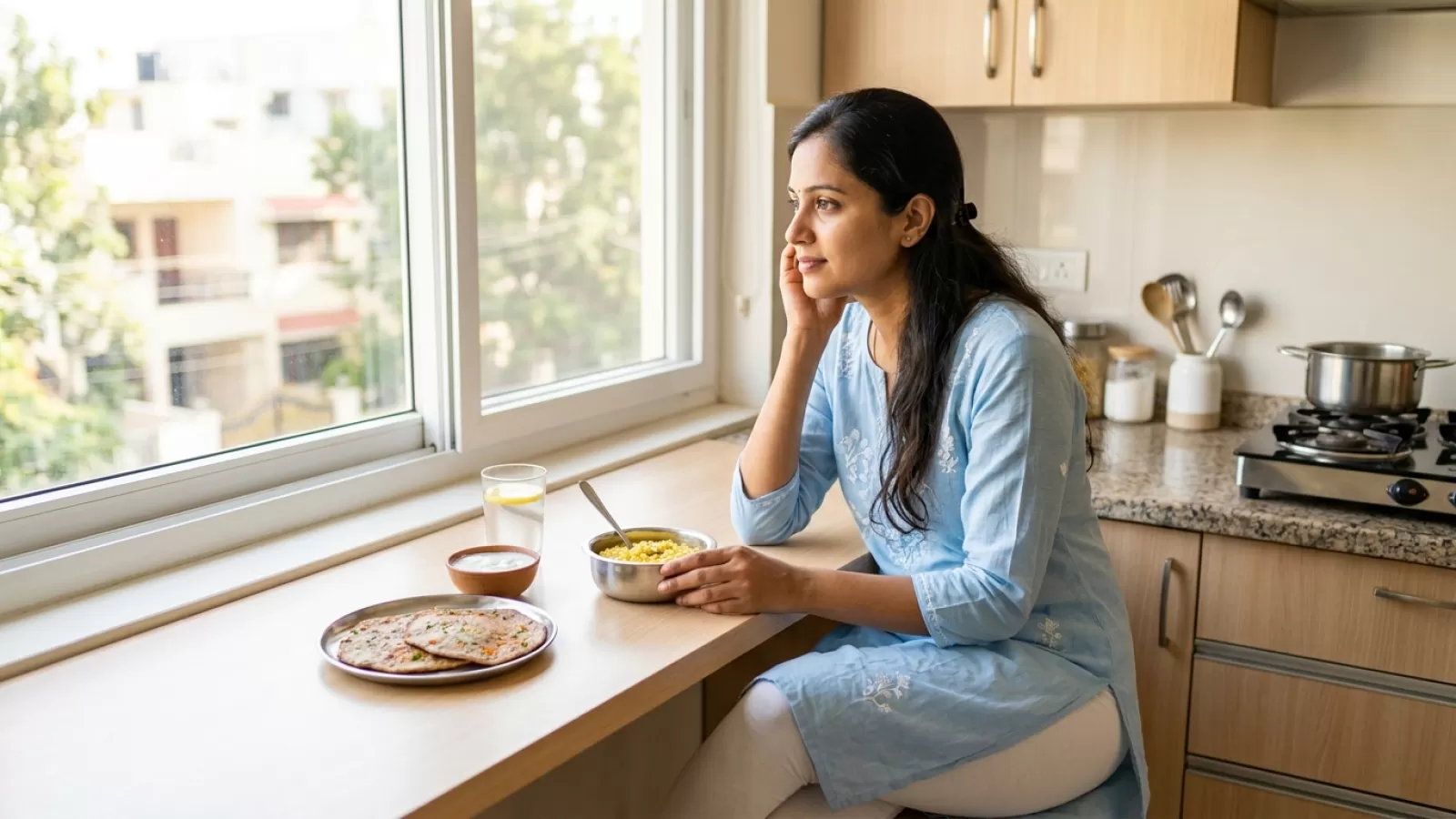
There are evenings in many Indian homes when the idea of a full dinner—dal, sabzi, roti, maybe a little rice—feels like too much. These moments usually arrive after a long, humid day or a tough week, when stress and tiredness make you not hungry at dinner. Still, skipping dinner entirely rarely feels right; what you need is a gentle Indian evening meal for low appetite, something that quietly nourishes without demanding much from your body or your kitchen.
Indian eating low appetite evenings are more common than most families admit. Some nights, it’s khichdi not because everyone craves it, but because it’s the easiest way to offer a little comfort and nutrition. Other times, it’s just a bowl of curd rice or poha—light, familiar foods that don’t overwhelm. These nights aren’t failures in the kitchen. They’re a quiet way of listening to what your body is saying.
Why Low Appetite Evenings Are Familiar in Indian Homes
Low appetite evenings usually slip in quietly, without much drama. In many Indian households, dinner is the meal where everyone gathers, but sometimes, nobody really feels like eating. During the thick of summer, when the ceiling fan barely makes a difference and the air feels heavy, even the thought of regular meals can feel exhausting. Or after a week packed with deadlines, traffic, and emotional load, adults return home craving rest more than food.
Most families have their own way of responding. Some keep boiled potatoes ready, others reach for dahi with a pinch of jeera. The gentle Indian evening meal for low appetite isn’t about skipping meals or ignoring hunger, but about offering the body something simple and kind. This is especially true when illness lingers at home or during the monsoon, when humidity saps everyone’s energy.
Common Triggers for Low Appetite at Dinner in India
Several reasons can nudge your appetite down as evening approaches. High temperatures, especially during May and August, tend to make many people not hungry at dinner in India. Stress from work or family responsibilities can have the same effect, leaving you feeling full even if you haven’t eaten much all day.
Sometimes, recovery after illness is the cause. When the body is healing, it often prefers light dinner India low hunger patterns—think plain khichdi, thinned dal, or soft sabudana. Emotional heaviness after difficult conversations or bad news can also lead to low appetite evenings. Nutritionists who work with Indian families often find that the rhythm of Indian homes—late lunches, evening chai, and heavy snacks—sometimes leaves adults with little space for a big dinner.
Of course, there are also practical reasons: late office hours, unpredictable commutes, or even just a kitchen that feels too hot and crowded to cook in by 8pm. None of these are failures. They’re signals to adjust, not ignore.
Signs That Your Evening Meal Is Too Much for Your Appetite
- Food stays untouched: You find yourself pushing food around your plate, or leftovers keep piling up in the fridge.
- Discomfort after eating: Even a small meal leaves you feeling bloated, heavy, or uneasy—especially when the dinner is oily or rich.
- Strong cravings for very plain foods: You reach for dahi, plain roti, or fruit instead of regular sabzi and dal, favouring gentle Indian evening meal low appetite choices.
- Feeling tired instead of satisfied: After dinner, you feel more drained than before, wishing you had eaten less or nothing at all.
- Emotional resistance to the dinner table: The idea of sitting down for a full meal feels overwhelming, and you’d rather have a light snack alone in the kitchen.
These signs don’t mean you’re doing something wrong. They’re just clues that your normal dinner might be more than you need on certain evenings.
Gentle Ways to Nourish Yourself on Low Appetite Evenings
- Prepare one-pot comfort foods: Khichdi, dahi-chawal, or even moong dal soup are common in Indian homes during gentle Indian evening meal low appetite times. They’re easy on the stomach and require little effort.
- Offer a small plate, not a full thali: Rather than forcing yourself to serve a standard dinner, try a half-roti with a little dahi or a single bowl of poha. Many adults in Indian cities find that a light dinner India low hunger rhythm helps them sleep better too.
- Keep fresh fruit or boiled potatoes handy: Sometimes, just a banana, a few slices of apple, or a plain boiled aloo with a sprinkle of salt is all that feels right. These simple options are nourishing and easy to digest.
- Stay hydrated, but don’t overdo liquids: Sip water, nimbu paani, or very light buttermilk, but avoid filling up entirely on liquids as this can sometimes mask true hunger later.
- Shift dinner time if needed: In some families, eating a little earlier or later than usual on low appetite evenings helps. If you’re not hungry at dinner India, it’s fine to wait an hour or two—as long as you don’t skip nourishment completely.
The tricky part is listening to your body and giving yourself permission to adjust, rather than forcing a routine that doesn’t fit for that day.
How Light Dinners Show Up in Real Indian Households
In countless Indian homes, there’s an unspoken understanding that not every evening needs to have a big, elaborate dinner. During peak summer, when sweat drips down your back and the kitchen is the hottest room in the house, families often sit together with plates of cut mango, bowls of plain dahi, or a small serving of poha. The ceiling fan whirs, and nobody mentions the missing sabzi or rice.
On evenings after a family member has come home from a hospital visit or a difficult day at work, it’s common to see a pressure cooker of khichdi on the stove. The gentle aroma of moong dal and rice drifts through the house—not because it’s a celebration, but because it’s all anyone wants or needs. Some nights, a senior in the family quietly asks for just a glass of warm milk and a biscuit. These are not lazy meals. They’re thoughtful responses to Indian eating low appetite evenings, showing care in a different way.
When to Discuss Low Appetite Evenings with Someone You Trust
Most low appetite evenings pass on their own, especially when linked to obvious causes like weather, stress, or minor illnesses. If low appetite at dinner in India becomes common over weeks, or if you notice weight loss, ongoing fatigue, or a drop in mood, it’s a good idea to mention this to a family member or your doctor. Sometimes, low appetite is a sign your body needs a little extra attention or a check-up. Trust your instincts—if something feels off for more than a few days, it’s better to talk than to wait in silence.
Common Questions
Every household has its own way of handling low appetite evenings. If you’re wondering what’s gentle enough to eat, how much to worry about smaller dinners, or when to pay closer attention, you’re not alone. Here are some questions many Indian adults quietly ask when their appetite dips at night.
What are the gentlest Indian foods to eat on evenings when appetite is very low?
On evenings when appetite is low, most Indian homes lean towards foods like khichdi, dahi-chawal, or a small bowl of poha. Sometimes just a glass of chaas, a banana, or a little plain roti with ghee feels right. In some families, upma, sabudana khichdi, or soft moong dal are preferred. The main idea is to choose light, familiar foods that don’t feel overwhelming—nothing oily, spicy, or too rich. These gentle meals nourish quietly and are easy to prepare, especially when nobody wants to spend much time in the kitchen.
Is it safe to eat significantly less than usual for a few days when the body is simply not hungry at dinner?
For most healthy adults, eating less than usual for a few days—especially during very hot weather or after illness—is common in Indian homes. Many families notice their appetite naturally returns when the cause passes. That said, if you feel weak, dizzy, or lose weight quickly, it’s wise to mention it to someone you trust or consult a doctor. Eating a gentle Indian evening meal for low appetite is usually enough to tide you through short periods of low hunger.
How do you maintain overnight energy and nutrition when a low-appetite evening means a very small dinner?
If dinner is small, focus on foods that provide a little protein and some easy-to-digest carbs—like dal with a small portion of rice or moong dal khichdi. Some families offer dahi or a glass of milk before bed. If you’re not hungry at dinner India, a fruit or a handful of nuts (like almonds or makhana) can help keep energy steady through the night. The key is to avoid skipping entirely; even a little food can help you feel better by morning.
What signals tell an Indian adult that low evening appetite is worth paying attention to versus simply waiting out?
If low appetite evenings happen now and then, especially after stressful days or during a hot spell, most people wait it out. But if you notice that your appetite is low at dinner every day for more than a week, or you’re losing weight, feeling weak, or having trouble concentrating, these are signals worth paying attention to. In some homes, family members notice changes in mood or energy first. It’s always okay to check in with a doctor if you’re unsure.
When does consistently low dinner appetite in an Indian adult indicate something worth discussing with a doctor?
Consistently low appetite at dinner—especially if it lasts more than a couple of weeks, or comes with weight loss, ongoing tiredness, or changes in digestion—should be discussed with a doctor. In many Indian families, elders watch for these changes in themselves and others. Sometimes it’s just a passing phase, but other times it’s a sign of an underlying issue. If you find yourself eating less and less every night without a clear reason, it’s better to have a conversation with a professional.