In many Indian homes, the sound of pressure cookers and the aroma of frying tadka drift through the air well past sunset. Late dinners are almost a family tradition — not just a matter of preference, but of real schedules and everyday pressures. For those navigating late dinner Indian eating habits, the challenge is rarely about discipline. It’s about fitting nourishment into the only slot the day allows, often around 9:30 or even 10pm.
Evenings stretch longer as parents help children finish homework, working adults wrap up urgent emails, and someone waits for everyone to return before the first roti is puffed. Eating late at night in India isn’t a personal failing; it’s a pattern shaped by traffic, school timings, and shared family routines. The question is, how do you choose Indian food for late dinner that won’t disrupt digestion or make sleep a struggle?
How Late Dinners Became the Norm in Indian Families
Look around any Indian apartment block or colony after 8pm. Chances are, you’ll find kitchen lights glowing as families begin to assemble for dinner. It’s not uncommon for the last family member to return home close to 9:30pm. This is especially true in metro cities like Mumbai, Delhi, or Bengaluru, where commutes can easily eat up two hours each day. Many parents wait for children to come home from tuitions, or for spouses to finish late office calls, before sitting together for a meal.
In joint families, dinner is often delayed further so everyone can eat together. The simple truth is, dinner timings in Indian homes are shaped by the rhythm of daily life, not by nutritional theory. For most, moving dinner any earlier is not just impractical — it’s almost impossible. Late night eating habits in India sleep patterns and digestion, however, are still important to consider, especially as people notice heaviness or restlessness in the mornings after a late meal.
The Real Reasons Dinners Run Late in Indian Households
There’s more to this than just busy workdays. Evening traffic snarls, children’s classes, and the cultural expectation to eat together all play a part. In many homes, help arrives late, so the chopping and prep work for dal, sabzi, and roti may begin only after 8pm. On top of that, summer power cuts can throw off schedules, with dinner prep pausing until the lights return.
Fitness coaches who train working adults often find that most movement in Indian homes comes from daily tasks, not planned exercise. That said, those same routines mean dinner prep is squeezed into the leftover hours. Some families prefer a fresh hot meal over reheating, which also pushes dinner later. And in many cities, with work-from-home setups and open kitchens, the lines between work and meal prep are blurred, making it easier to lose track of time and start cooking late.
Clues Your Late Dinner Is Affecting Sleep or Digestion
- Waking up heavy or groggy: Many notice mornings feel sluggish, with a full stomach or mild heartburn.
- Restless sleep: Tossing and turning, especially during humid summer nights, is a common sign.
- Acid reflux or burping: Eating late at night in India digestion often brings up mild acidity, especially after heavier foods like rajma or pakoras.
- Needing chai or coffee immediately after waking: In many homes, this is less about habit and more about shaking off discomfort from a late meal.
- Skipping breakfast or feeling no hunger in the morning: The late meal can linger, pushing hunger cues further into the day and sometimes leading to skipping poha or idli at breakfast.
Gentle Shifts That Make Late Indian Dinners Easier on the Body
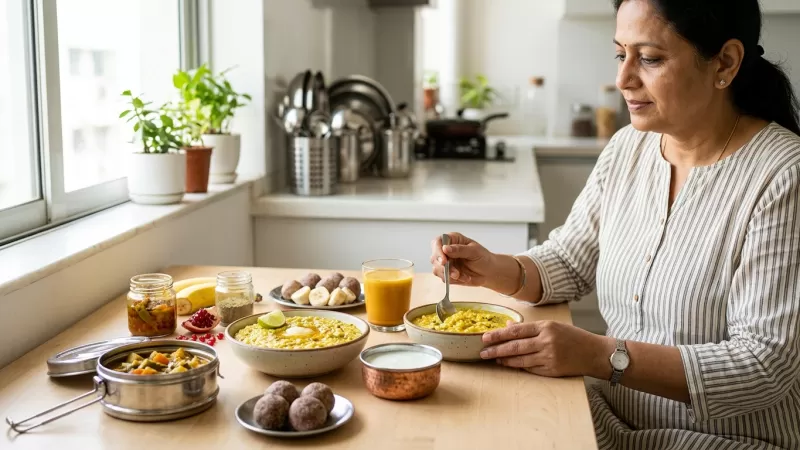
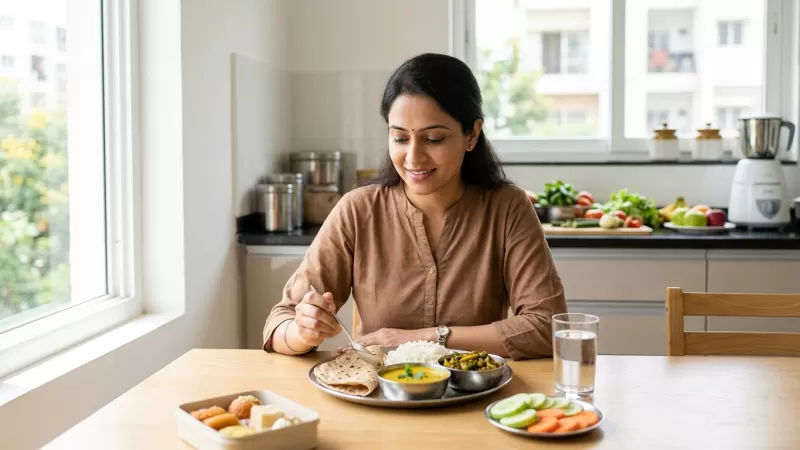
- Choose lighter dals and sabzi: Moong dal, lauki, tinda, or palak sabzi are usually easier to digest than heavier gravies or fried items. Many families in Indian cities have quietly discovered that a bowl of dahi with khichdi or simple sabzi can make sleep much more comfortable.
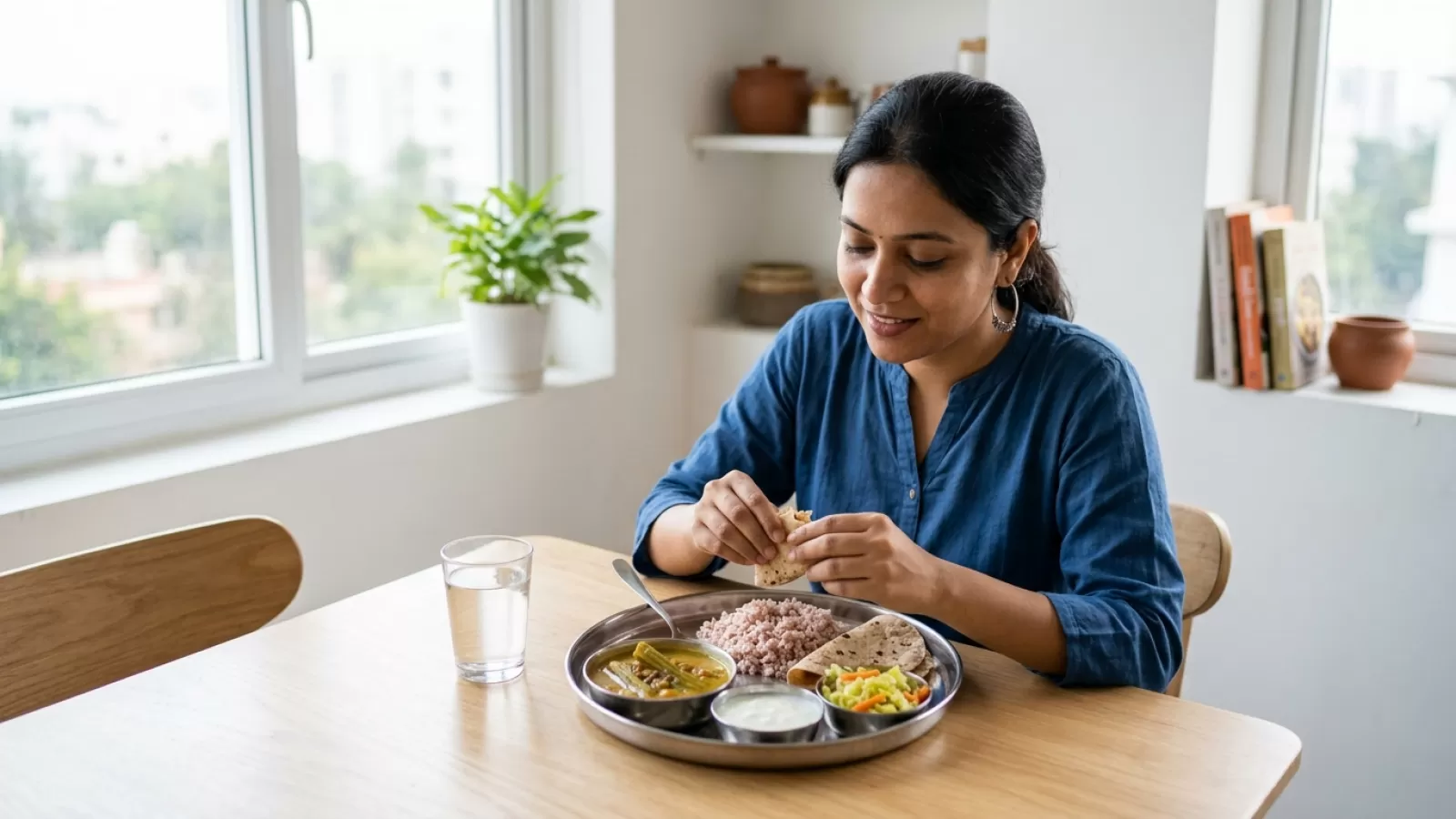
- Keep rotis and rice portions moderate: A small bowl of rice or one roti is often enough at night, especially if you’ve been less active in the evening.
- Limit heavy tadkas and masalas: The aroma is tempting, but lighter tempering (just jeera or hing) is usually kinder to late night eating habits India sleep patterns.
- Have a 10–15 minute wind-down after dinner: A short walk in the corridor, some gentle stretches, or simply sitting and chatting helps food settle before lying down.
- Swap fried snacks for roasted makhana or fruit: If you must have a snack while waiting for dinner to be ready, roasted chana or makhana are lighter choices than samosas or pakoras.
Where Late Dinner Indian Eating Habits Show Up Most Clearly
On many nights, you’ll find a working professional in Bengaluru returning home at 9:30pm, greeted by the clatter of vessels and the familiar sight of a half-prepared meal. Dinner stretches to 10pm, and sleep doesn’t come easily until well past 11pm. In a family flat in Pune, the grandparents wait for everyone to gather before serving rice and rasam, even if it means eating later than they’d like. During wedding season, late dinners become almost routine, with heavy foods and sweets making their way to the table just before midnight.
These patterns are not rare exceptions. They’re part of the way Indian families function, holding on to shared meals and warm food — even if it means adjusting other habits to support better digestion and sleep.
When It Makes Sense To Ask for a Doctor’s Advice
If you start noticing regular stomach pain, intense acidity, or disturbed sleep most nights — especially if it does not improve after trying lighter meals — it’s wise to check with your doctor. In many homes, these changes come and go, but if you feel discomfort is becoming routine, a quick professional check-in is safest.
Common Questions
Many families have their own ways of managing late night eating habits in India, but some questions come up again and again. Let’s talk through a few of the most common concerns — always with an eye on what actually happens in Indian homes, rather than what experts say should happen.
Does eating dinner late really affect health and digestion for Indian adults significantly?
For most adults in India, the timing of dinner matters less than what and how much is eaten. When dinner is heavy or oily, especially close to bedtime, digestion can slow, leading to morning discomfort. Many working professionals who eat late notice they feel groggy or heavy the next day, but a lighter meal — think dal, dahi, or a small khichdi — tends to be easier on the body. While a late meal isn’t ideal, in many homes it’s the content, not just the clock, that makes the biggest difference.
Which Indian foods are gentlest on the stomach when eaten late at night?
Moong dal, lauki sabzi, khichdi with dahi, and plain rice with a light tadka are usually the easiest on digestion when dinner is late. Many families avoid heavy, spicy curries or fried snacks at night. Even simple vegetable soups (without too much masala) or a bowl of curd rice can be soothing and help prevent that heavy feeling the next morning.
How long should an Indian adult wait between a late dinner and sleep?
Ideally, waiting about 30–45 minutes between finishing dinner and lying down gives your body some time to start digestion. In Indian households, this might look like chatting with family, doing small chores, or taking a short walk on the terrace before heading to bed. Even ten minutes of upright movement can make a noticeable difference in how you feel the next morning, especially when eating late at night India digestion is a concern.
Is it better to eat a small late dinner or skip dinner entirely if it is past 10pm?
In most Indian homes, skipping dinner is rare and often leads to waking up hungry or irritable. A small, light dinner — such as a bowl of dal, dahi, or vegetable sabzi with a little rice — tends to work better. Many people find that even a modest meal is gentler on sleep and mood than going to bed on an empty stomach, especially if lunch was early or light.
What Indian dinner habits help people sleep better even when the meal happens late in the evening?
Keeping dinner portions smaller, choosing lighter foods, and avoiding rich, spicy items makes a big difference. Many families also make sure to pause for a few minutes after eating — maybe folding laundry, cleaning up, or chatting — before heading to bed. Drinking a small glass of warm water (not cold) after dinner helps some people feel settled. Over time, these small habits can help late night eating habits India sleep patterns feel less disrupted, even when dinner runs late.