In many Indian homes, as soon as the festival season draws near, rhythms begin to shift. The kitchen fills with the aroma of ghee and cardamom, and neighbours exchange boxes of mithai, each sweet carrying a memory or a family recipe. Indian eating habits during festival weeks often adapt in joyful ways. Schedules change, routines loosen, and the usual rules make space for celebration and togetherness — all without turning food into something to stress over.
That said, the question of how to eat well during Indian festival weeks comes up in almost every household. The tricky part is, this isn't just about nutrition or counting calories. It's about longstanding traditions, relationships, and a certain warmth that comes only from sharing festival foods — often made just once a year. The balance many Indian adults find is not in strict rules, but in the gentle return to regular eating patterns once the lights dim and the festival winds down.
Festival Foods: Why They Matter So Much in Indian Homes
Anyone who has grown up with Diwali, Eid, Pongal, or Christmas in India knows that festival week food balance isn't just about what's on the plate. It's about the way a plate of gujiya or a bowl of kheer is offered — sometimes with the proud hands of an elderly aunt, or the shy excitement of a neighbour trying a new recipe. In many households, refusing a lovingly prepared mithai can feel like turning away a piece of someone's heart.
During festival weeks, Indian eating habits are shaped as much by emotion as by appetite. There’s a sense of occasion in every bite, and often, people eat more than they usually would — not because of hunger, but because of the celebration. This is the time when even the most health-conscious family members let go a little, enjoying fried snacks and sweets without keeping mental tallies.
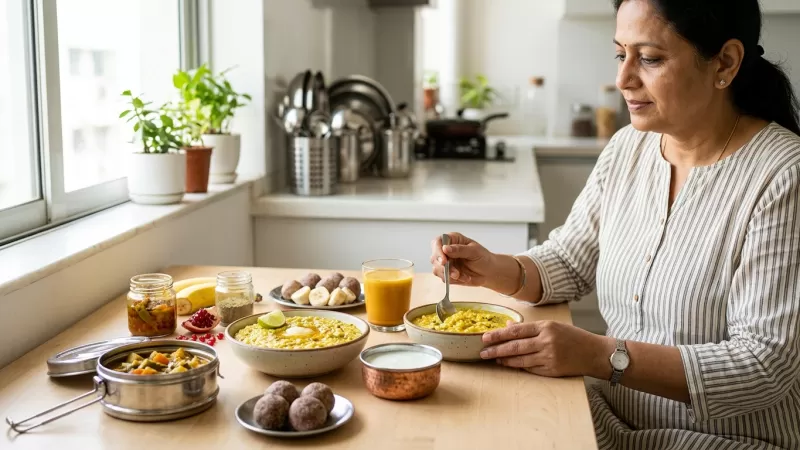
What’s interesting is how quickly things return to normal. The morning after Diwali, many homes quietly move back to lighter meals — poha, dahi, dal-rice — without any grand declarations. This pattern is so common that it rarely gets discussed, yet it’s one of the reasons healthy eating during Indian festivals feels natural rather than forced.
Why Festival Weeks Lead to Freer Eating
There are a few reasons Indian eating habits during festival weeks tend to change so noticeably. For starters, food is a central part of every Indian festival. Families plan menus for days, sometimes weeks, and certain dishes appear only once a year. Refusing these treats can feel like skipping out on the festival itself.
Another reason is the social expectation to share and accept food. In many cities and towns, every house you visit will have its own signature mithai or snack. Taking just a small piece — even if you’re full — is often the easiest way to honour the host and avoid hurt feelings.
Nutritionists who work with Indian families often find that adults are generally able to enjoy festival foods without major guilt, as long as the rest of their year follows more regular, balanced eating patterns. The tricky part comes when there’s a buildup of anxiety — restricting too much before the festival, then swinging to the other extreme once the celebration starts.
It’s also worth noting that children learn these patterns early. Watching adults enjoy festive food with genuine pleasure (and without too much fuss) teaches them that food is meant to be celebrated, not feared.
Everyday Signs of Festival Week Eating Patterns
- Extra snacks appear on every table: Bowls of namkeen and laddoos are set out, even at breakfast, and chai comes with a side of mithai.
- Regular meals become lighter or skipped: Lunch might be just dahi-chawal, or people might skip dinner after a heavy afternoon of visiting relatives.
- Fridge filled with leftovers: Small steel boxes of barfi and fried snacks crowd the shelves — a sign of both abundance and the need to share.
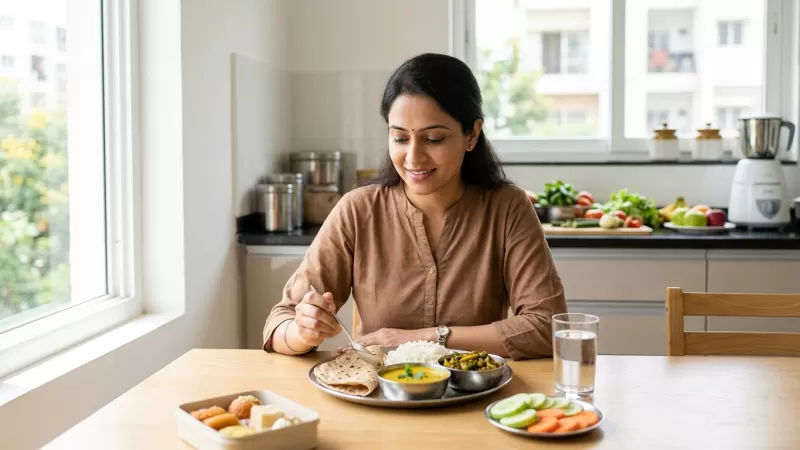
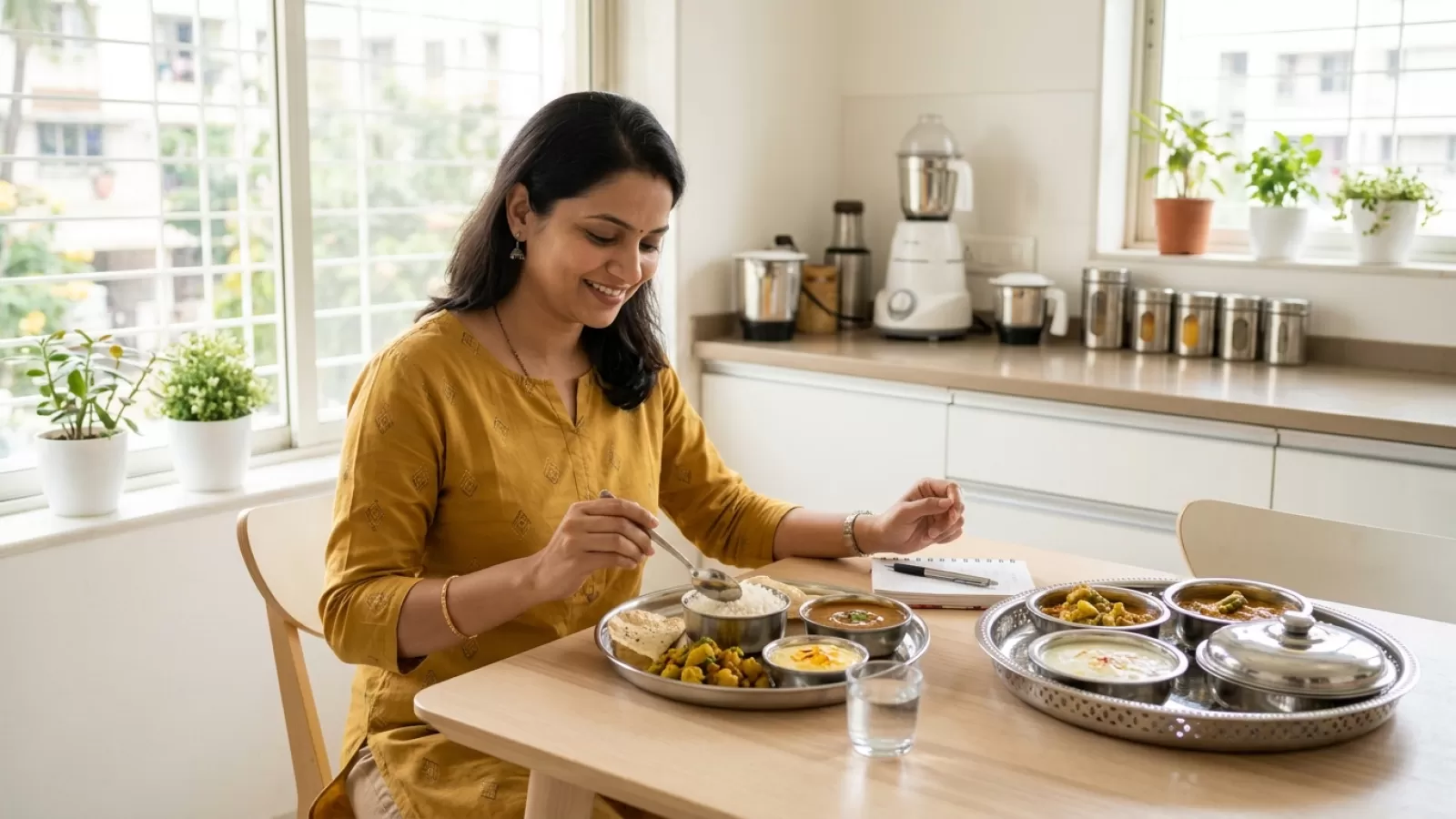
- Return to regular eating without drama: The day after the festival, kitchens quietly shift back to dal, roti, and sabzi, with less oil and spice.
- Conversations about "feeling full" or "digesting": Many adults mention feeling heavy, but rarely with guilt — more as a passing observation.
Gentle Steps for Enjoying Festivals Without Guilt or Excess
- Eat freely during the festival itself: Allow yourself to enjoy the special foods. They come once a year. In most homes, eating together is part of the celebration, not something to be managed tightly.
- Let the next day be lighter, naturally: After a festival feast, listen to your body. Many families go for simple khichdi or plain curd rice the next day — not as a punishment or "detox", but because the appetite asks for it. Let the shift happen without big declarations.
- Avoid restricting before the festival: Skipping meals or "saving up" calories beforehand often backfires, leading to overeating when the actual festival arrives. Trust that your body can handle a few days of extra celebration, especially if your usual routine is balanced.
- Share and store leftovers: If you find yourself with too many sweets or fried snacks, share them with neighbours, staff, or those who might not have had as much celebration. In many Indian homes, this is how festival joy is spread, and it helps avoid mindless munching later.
- Model relaxed, positive attitudes for children: Show young ones that festival food is for joy and sharing — not a source of stress or anxiety. Let them see adults enjoying treats without negative self-talk.
What Returning to Normal Feels Like After a Festival Week
In a small flat in Mumbai, the morning after Ganesh Chaturthi, someone might quietly heat leftover rice, add a spoon of dahi, and call it breakfast. There’s a gentle tiredness in the air, mixed with relief that the kitchen no longer needs to run at full festival speed. Lunch that day might be a simple moong dal with steamed lauki — no heavy tadka, just a squeeze of lemon for freshness. Chai time is quieter too, maybe just a handful of makhana instead of sweets.
Across the country, this pattern repeats in different forms. The fridge gets emptier, the spice box returns to its usual place, and the family gradually finds its old rhythm. No guilt, no grand resets — just the body settling back into normal eating because that’s what feels right.
When Festive Eating Might Need a Closer Look
For most Indian adults, festival week food balance is a gentle swing — a few days of celebration, followed by a natural return to normal. But if you notice that festival eating stretches into weeks of overindulgence, or if feelings of guilt and anxiety linger long after the celebration, it might help to pause and reflect. This is especially true if festival eating patterns start interfering with everyday life or cause ongoing discomfort.
If you find yourself unable to return to regular eating, or if festive eating is linked to deeper stress, sadness, or health concerns, it’s wise to speak with a trusted doctor or counsellor. Sometimes, a gentle conversation is all that’s needed to bring things back into balance.
Common Questions
Festival eating in India is both joyful and complicated, and many families have their own unspoken rules about food during these times. If you’ve ever wondered how other Indian homes manage to enjoy festival food without stress or guilt, you’re not alone. Here’s what tends to come up most often, and how it usually plays out in real life.
How do Indian adults genuinely enjoy festivals without either restricting everything beforehand or feeling guilty about everything eaten?
In most Indian homes, adults enjoy festival food by being present in the moment. During the actual festival, the focus is on the celebration and sharing — eating the sweets or snacks offered without overthinking. The day after, many quietly shift back to lighter meals, often because the appetite naturally calls for it. There is rarely any talk of "making up" for eating festival food, so guilt doesn’t have much space to grow. This relaxed approach helps everyone enjoy the celebration without turning food into a source of stress.
Is it actually harmful to eat significantly more fried and sweet food during a festival week in India?
In most healthy adults, a few days of richer eating as part of Indian festival food without guilt is not likely to cause harm if your usual habits are balanced. Festival foods are woven into Indian culture, and most people return to regular eating patterns soon after. That said, if someone has a medical condition, or if festival eating stretches on for weeks, it’s a good idea to check in with a doctor. For most people, the body handles occasional indulgence quite well — especially when followed by a return to lighter, familiar meals.
What does going back to normal eating after a festival week realistically look like in Indian homes?
The morning after a festival, many Indian kitchens quietly shift to lighter, simpler foods. Breakfast might be poha or dahi-chawal, lunch could be plain dal and sabzi, and snacks get swapped for fruit or makhana. There’s usually no fuss or strict rules — just a gentle return to what feels comfortable. Families rarely talk about "detox" or "making up"; instead, they let normal eating fall back into place, often guided by appetite and a desire for comfort after richer foods.
How do Indian children develop a healthy relationship with festive food that is celebratory rather than anxious?
Children watch adults closely. When they see parents and grandparents enjoying healthy eating during Indian festivals — eating sweets with real pleasure and not worrying aloud about calories or weight — they learn that festive food is something to be celebrated, not feared. In many homes, kids are encouraged to try special festival foods, but also to listen to their own hunger. This open, relaxed approach helps children grow up with a positive relationship to food and celebration.
When does festive eating in India cross from celebration into a pattern that deserves more attention?
If you find that festival eating habits — like overindulging in sweets or fried snacks — continue long after the festival ends, or if there’s a constant feeling of guilt or discomfort, it may be time to pause. When festival eating interrupts daily routines, causes health issues, or becomes a way to cope with stress or sadness, it’s a good idea to speak with a doctor or counsellor. Most of the time, though, Indian eating habits during festival weeks naturally settle down once the celebration winds down and regular life resumes.