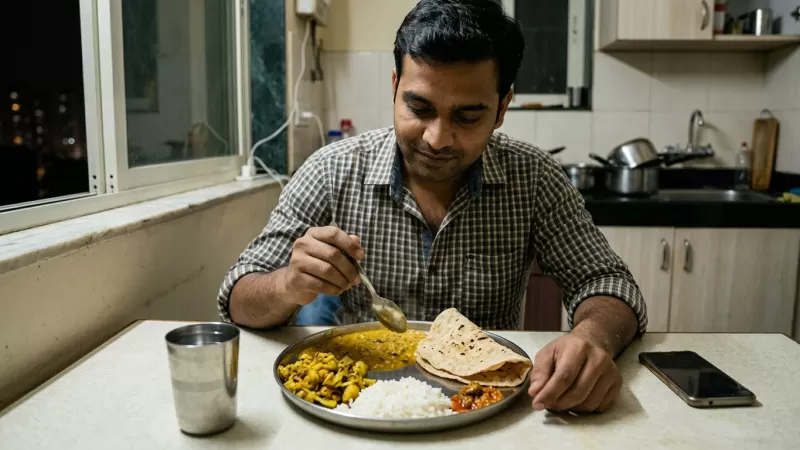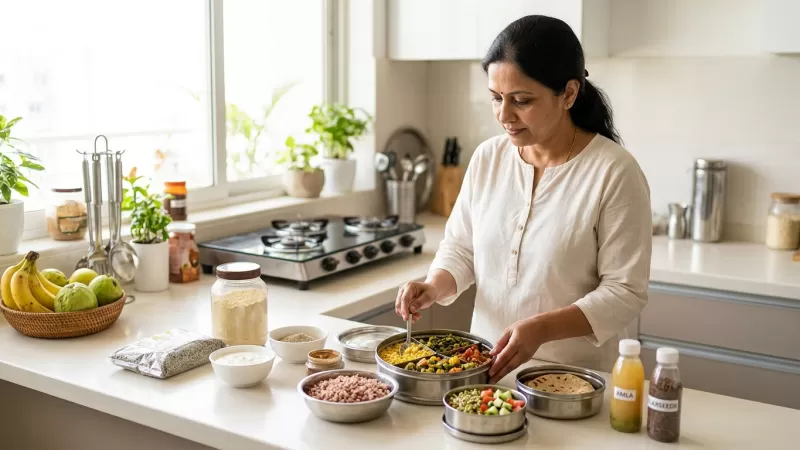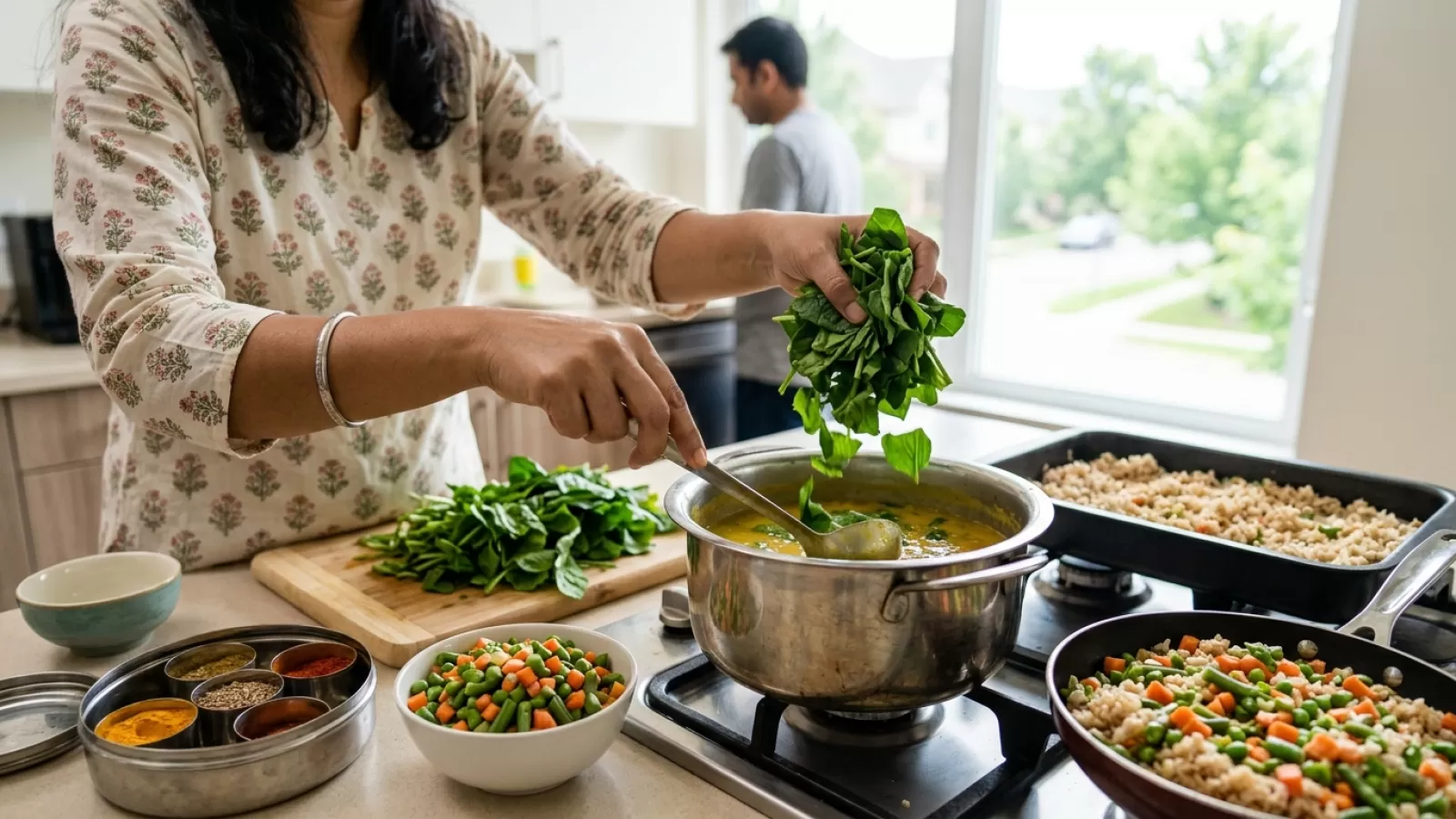
In many Indian homes, dinner time arrives quietly after a long day, with the same familiar plates: dal bubbling on the stove, a simple sabzi, rice or roti, and sometimes a small bowl of dahi. Balanced Indian meals without extra cooking have actually been part of household routines for years, woven right into the rhythms of our kitchens. The trick is, most families aren’t making new dishes—they’re just quietly adding small things to what’s already there, in ways that don’t stretch the cook’s time or energy.
During busy weekdays, you might notice that the most nourishing plates don’t always mean more work. A handful of palak stirred into dal, a wedge of lemon squeezed over sabzi, or a bowl of sliced cucumber on the side—all these are simple Indian cooking nutrition improvements that fit naturally into meal prep. Small changes like these help improve Indian meal nutrition easily, giving you a quick way to feed your family better without feeling like you’re cooking for hours.
Why Balanced Additions Work in Indian Households
Balanced Indian meals without extra cooking happen partly because of how Indian kitchens function. Most families in urban and semi-urban areas juggle a lot—school runs, work calls, elders’ needs, and the pressure to manage everything without complaint. There’s rarely time or energy to whip up entirely new dishes on weekdays. Instead, the focus is usually on making the basics—dal, roti, sabzi—more nourishing by sneaking in little extras that don’t feel like a project.
For example, a homemaker in a joint family might toss leftover methi leaves into the dal, or a working father may put out a bowl of peanuts at tea time. These practical solutions mean that nutrition doesn’t have to be one more thing on your to-do list. It’s just folded into what already happens every day. Balanced Indian meals without extra cooking tend to suit the unpredictable nature of Indian homes, where the inverter might give out in the middle of making dinner, or where someone’s late return from work means reheating is part of the meal plan.
The Real Reasons Behind Simple Indian Cooking Nutrition Improvements
It’s not just about health. In many homes, these small changes happen because of taste, availability, or habit. Sometimes, a bunch of spinach is lying in the fridge and needs to be used up, so it goes into the dal. Or, in the summer, a bowl of chilled dahi is added to lunch not because someone read about probiotics, but because it cools everyone down. These are quick nutritious Indian meals tips that have always been around, even if no one calls them that.
Nutritionists often find that most Indian families rely on their regular dal-sabzi-roti-dahi routine, making minor tweaks rather than major overhauls. The main reason? Time is precious, especially for working parents or seniors managing meals alone. When you can improve Indian meal nutrition easily by swapping out white rice for a portion of brown rice once a week, or by grating a carrot into your paratha dough, it feels doable. It doesn’t require anyone to change the entire menu, just to tweak what’s already there.
How You Can Tell Your Meal Could Use a Small Nutrition Boost
- Dal and sabzi look pale or same every day: If the dal is always yellow and the sabzi always potato, chances are you’re missing out on variety. Adding a handful of greens or a spoon of seeds can help.
- No raw or fresh element on the plate: Many homes skip salads because they feel like extra work. But if no one touches anything raw, it’s a sign your meal could use a fresh crunch, like sliced cucumber or tomato.
- Lunches or dinners feel heavy but not filling: When a meal leaves you sluggish or hungry again by 4pm, it usually means something’s missing—often fiber or a little protein. A small bowl of dal or chana on the side can help.
- Children or elders pick at the same items and leave the rest: If some family members avoid sabzi or skip dal, try mixing in grated vegetables or serving a spoon of dahi to make the meal more appealing and balanced.
- Repetitive weekly menus: If you can predict every meal for the week, it may be time to swap in a different grain, like poha instead of rice, or add sprouts to the salad bowl for a change.
Everyday Ways to Improve Indian Meal Nutrition Easily
- Add greens to dal or sabzi: Stirring in spinach, methi, or even finely chopped lauki into dal doesn’t take extra time. It blends in, barely noticed, but adds more nutrients.
- Keep raw sides ready: Many families have started keeping a box of sliced cucumber, carrot, or tomato in the fridge. A spoonful on the plate at lunch or dinner adds color, crunch, and vitamins—no extra cooking required.
- Switch up the grains once a week: Replacing half the rice with millet, poha, or brown rice is a simple Indian cooking nutrition improvement. Most families find that once a week is enough to get variety without resistance.
- Include dahi or chhaas with meals: Especially in summer, a bowl of dahi or a glass of chhaas cools the body and brings in probiotics. It’s an easy, no-cook way to balance a spicy or heavy meal.
- Sprinkle seeds or nuts: Roasted peanuts, sesame, or flaxseeds take seconds to add to sabzi or salad. Some homes keep roasted makhana handy for a quick nutritious Indian meal tip that even children enjoy.
The beauty of these steps is their simplicity. You don’t need to announce changes—just blend them in. Over time, even fussy eaters adjust, and everyone benefits from improved nutrition without more kitchen time.
How These Small Changes Fit Into Everyday Family Routines
On mornings when the school bus is honking and someone is still ironing their shirt, there’s usually no time for elaborate breakfast spreads. Yet, a mother might quickly mix grated carrot into the poha, or a father might pack a small dabba of sprouts with lunch. These things don’t feel like “nutrition upgrades”—they’re just ways to use up what’s on hand or to keep everyone fed until dinner.
In many homes, the evening tea ritual includes roasted chana or a handful of makhana, not as a health fad, but because they’re easy to serve and fill hungry tummies. During summer, families automatically put out dahi and sliced cucumber, while in winter, a spoon of ghee on fresh rotis is the norm. These habits are quick nutritious Indian meals tips passed down quietly, not as part of a plan, but because they work.
A Kitchen in Nagpur at 6am: The Real Morning Scene
It’s just before sunrise. In a small kitchen in Nagpur, the gas flame is low. The air smells of roasting jeera and fresh coriander. Someone is stirring palak into the dal, not for nutrition, but because it’s left over from yesterday’s sabzi and needs to be used up. The roti dough gets a pinch of ajwain, and a small bowl of curd sits ready, cool from the clay pot. There’s no big nutrition plan—just these little habits, repeated quietly, that together make a balanced Indian meal without extra cooking.
Even the packed lunch for school or work follows the same pattern: a chapati rolled with yesterday’s bhaji, a few slices of carrot, and a steel dabba of dahi or fruit. Nothing fancy, nothing new, just what’s already there, made a little more varied and nourishing.
When It’s Time to Get More Help With Family Meals
Most of the time, simple Indian cooking nutrition improvements are enough. But if someone in the family has special health needs, is recovering from illness, or shows signs of constant tiredness despite balanced Indian meals without extra cooking, it might be time to check with a doctor or nutritionist. They can suggest tweaks or tests that fit your specific situation. Otherwise, for day-to-day family life, these small changes often make a big difference.
Common Questions
Everyone’s kitchen runs on its own rhythm, and small tweaks can fit into almost any routine. Here are some of the most common questions families ask about making everyday Indian meals more nutritious—without adding new dishes or spending extra hours in the kitchen. Let’s look at practical ideas that really work in Indian homes.
How do you make a normal Indian lunch more nutritious without cooking anything extra?
One of the easiest ways is to add a raw element. Many families simply keep a box of sliced cucumber, carrots, or tomatoes in the fridge. At lunchtime, just put a handful on each plate. A bowl of dahi or a spoon of roasted seeds—like til or sunflower—can also instantly improve Indian meal nutrition easily. These additions take less than a minute to serve and make regular dal-sabzi-roti meals more balanced without any extra cooking.
Which one addition to a regular Indian dal-sabzi-roti lunch makes the biggest nutritional difference?
A small bowl of dahi with lunch is often the simplest change with the biggest impact. It brings in protein, calcium, and good bacteria, especially valuable during hot Indian summers. Even in homes where dahi is already common, making it a regular part of lunch (not just dinner) supports digestion and helps balance out spicy or heavy foods. If dahi isn’t an option, a handful of raw salad on the side is another easy win.
Is it possible to improve Indian family nutrition simply by changing the balance of what is already being cooked?
Absolutely. Most Indian kitchens already make dal, sabzi, and some grain every day. By adding a handful of greens to dal, swapping a portion of rice for brown rice or millet once a week, or sprinkling seeds on sabzi, you get a more varied plate with almost no extra effort. Families who try these quick nutritious Indian meals tips often find everyone adjusts quickly, and nutrition improves without new recipes or more time in the kitchen.
Do Indian adults need more protein at lunch or is standard dal-rice already adequate?
For most healthy adults, a standard dal-rice meal does provide some protein, especially if dal portions are generous. However, if you want a slight boost, use more lentils, add sprouts, or include dahi or a small bowl of roasted chana on the side. These simple Indian cooking nutrition improvements fit easily into most routines and help meet daily needs—without needing to cook extra non-veg or specialty dishes. If you have health concerns, it’s best to check with a doctor for personalised advice.
What are the simplest 2-minute nutritional improvements to everyday Indian lunch?
Keep roasted peanuts or makhana handy for a crunchy side. Slice cucumber, tomato, or carrot and serve on the plate. Add a bowl of dahi, or sprinkle flaxseed or til on sabzi. Even squeezing a little lemon over dal or sabzi is a quick nutritious Indian meals tip that boosts vitamin C. These actions take less than two minutes and add both nutrition and variety, making balanced Indian meals without extra cooking feel genuinely effortless.