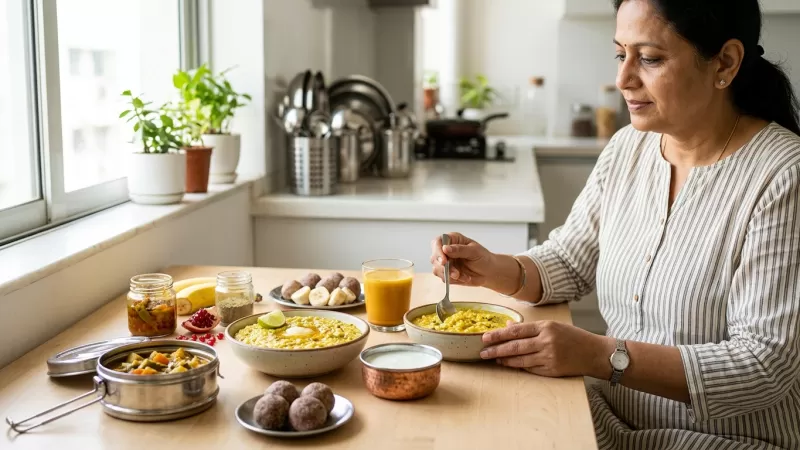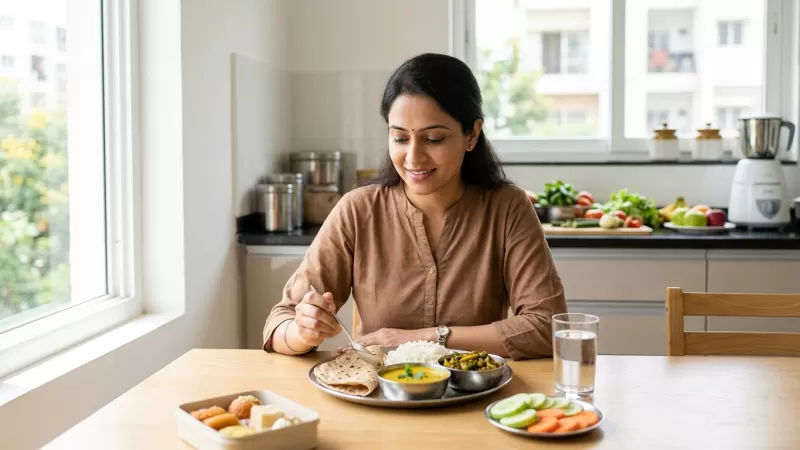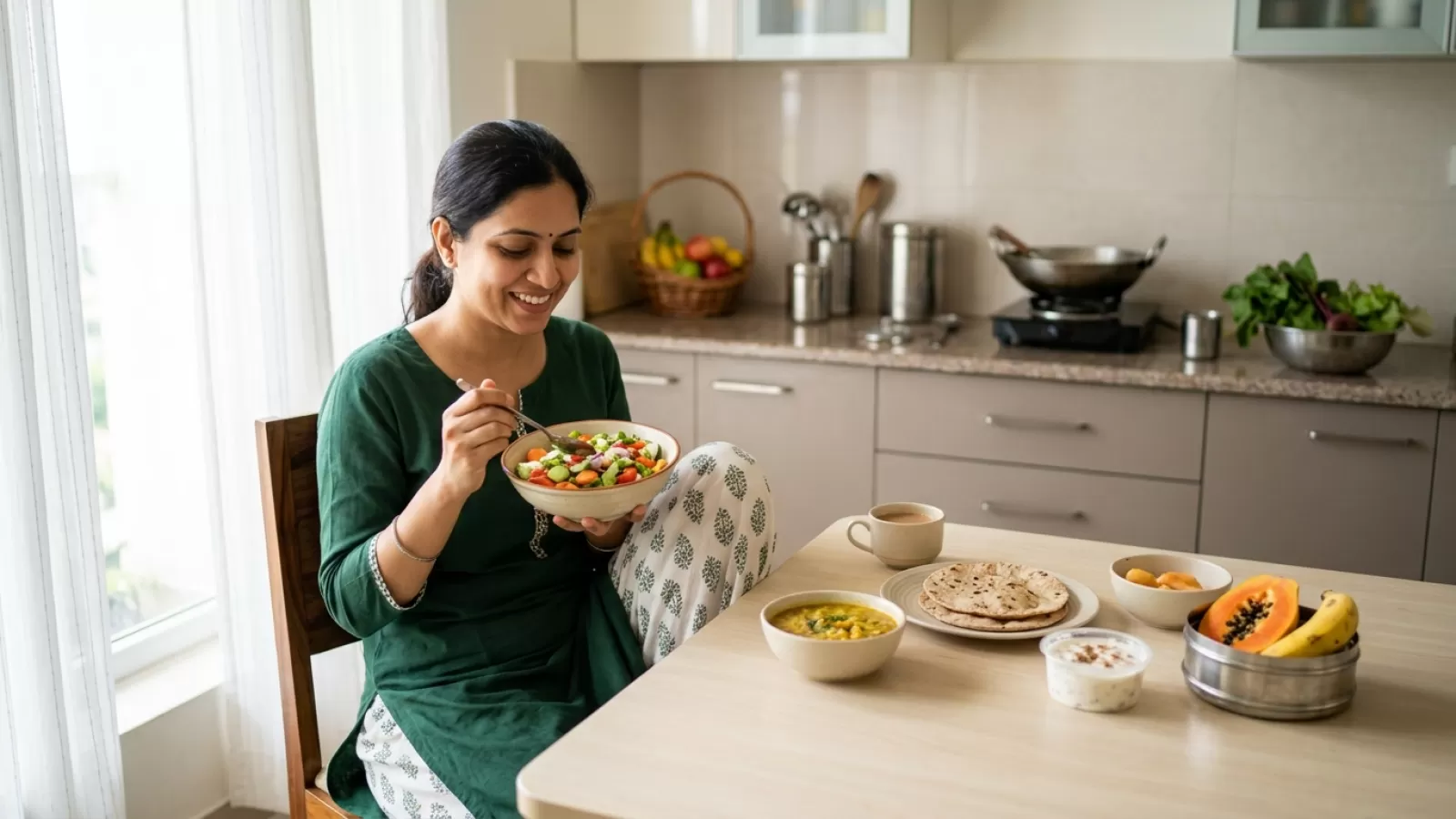
It’s late evening in a flat in Pune. Dinner is happening at nine again — later than anyone planned. There’s dal, rice, some sabzi with potatoes, and a bowl of curd. One person eats standing over the kitchen counter, another on the sofa, and the phone buzzes through it all. Nobody is measuring portions or worrying about the exact hour. Yet, in many homes like this, people quietly manage eating well without rules India has seen in diet books or on social media.
The funny thing is, for decades, most Indian adults didn’t overthink food. There was always a mix of grains, dal, seasonal vegetables, a bit of oil, some pickle or papad for taste, and someone reminding you not to waste. Eating well without rules India grew up on was just normal — modest, flexible, and shaped by what the kitchen produced that day. These days, many people still eat this way but sometimes feel guilty for not following all the new advice.
Indian Kitchens: Where Flexibility Is Ordinary
If you look into the routines of Indian homes, you’ll find that relaxed healthy eating India has always been about fitting food around life, not the other way around. The idea of eating at fixed times, counting everything, or banning certain foods isn’t what most families do. Meals happen when people return from work, after homework is done, or when the power comes back after a summer outage. Lunch might be a rushed poha on busy mornings or a full plate of khichdi on a slow Sunday.
In joint families, food is usually made in one big batch. Whoever is hungry serves themselves; the rest eat when they can. Young professionals living alone often juggle late meetings and odd hours. Some days they eat dinner at 7pm, other days it’s 10:30pm, and they grab a chai and biscuit before bed. Nobody is timing it to the minute.
What you’ll notice is that the pattern tends to be simple, familiar, and not too strict. The food is mostly home-cooked — dal, roti, sabzi, rice, dahi, sometimes leftovers from lunch. Snacks could be makhana, murmura, or a banana. When there’s a birthday, people eat cake. At festivals, the kitchen turns out laddoos or rich curries. It’s always a mix, and rarely the same two days in a row.
Why Strict Food Rules Never Took Over Most Indian Homes
The tricky part is, strict eating rules just don’t match daily life here. Most homes have a shared kitchen, and meals depend on whoever is available to cook. Working adults in Bengaluru or Mumbai often can’t choose their lunch hour — it moves with meetings and traffic jams. Seniors remember a time when nobody even talked about protein counts or calories, just ‘roti-sabzi’ and ‘pet bhar gaya’.
Eating well without rules India has always known is really about trusting the rhythm of family meals and the food traditions passed down. There’s also the simple fact that most Indian dishes already combine grains, pulses, and vegetables — making meals balanced without much effort. Even when someone grabs a samosa or vada pav, there’s usually dal-chawal waiting at home.
Nutritionists who work with Indian families often find that most adults are not eating out of boredom, but because it’s mealtime or there’s fresh food on the table. Guilt tends to come from reading about strict diets online, not from the way families have always eaten.
Clues You’re Eating Well Without Any Food Guilt
- Your meals change with the season or what’s in the market. In mango season, you eat more fruit. During winter, there’s more gajar halwa and methi paratha. The food adapts, and so does your body.
- You don’t measure, but you know when you’re full. Nobody asks you to eat an exact portion. You serve yourself and stop when you’re satisfied — even if there’s food left in the bowl.
- Family meals are a mix of healthy and fun. There’s always a simple sabzi, but also a treat — maybe a fried snack on Sundays or dessert at festivals.
- Eating out or at events doesn’t make you anxious. You enjoy a restaurant meal or wedding buffet, then return to home food the next day without feeling you’ve ‘failed’.
- You rarely talk about food as ‘good’ or ‘bad’. At home, food is food — not a problem to be solved. People discuss taste, not guilt.
Everyday Habits That Make Flexible Eating Work
- Eat what’s cooked, but keep it balanced most days. In many homes, whatever appears on the table becomes the meal. If it’s only aloo sabzi, add some curd or dal if you can. If it’s a rice-heavy lunch, maybe eat more sabzi at dinner. Flexible eating habits Indian adults use are about gentle balance, not perfection.
- Don’t skip meals out of guilt. After a late-night biryani, people often feel like skipping breakfast. But most adults who eat well just return to normal meals the next day. No punishment necessary.
- Trust your own hunger and fullness signals. Some days, you’ll eat more. Some days, less. Listen to your body instead of the clock, especially if your work hours are unpredictable.
- Let treats be part of regular life. A sweet after dinner, a samosa on the way home, or extra puris at a pooja — these are not ‘cheats’. They’re just part of the normal Indian diet without guilt.
- Use leftovers creatively. Many families turn last night’s sabzi into a sandwich or mix rice with curd and pickle for a quick lunch. This reduces waste and keeps meals interesting, especially on busy days.
A Kitchen in Nagpur at 6am: Eating Well Without Overthinking
It’s just past sunrise. There’s the hum of the ceiling fan and the faint clang of a steel dabba. Someone is prepping tiffins for school and office. There’s leftover dal from last night, so it’s mixed with rice and a spoon of ghee. A few pieces of cut cucumber go on the side. Tea is brewing with ginger, and the milk is being boiled for dahi. In this kitchen, nobody is measuring calories or planning a ‘perfect’ breakfast. They’re just making do with what’s there, trusting that a simple meal can carry everyone through till lunchtime.
Later, lunch will be packed chapatis with bhindi and a piece of fruit. Someone else will grab poha from the street vendor on the way to work. Dinner might be eaten together, or alone in front of the TV. This relaxed healthy eating India has done for generations — it fits around real life, not the other way around.
When To Talk To Someone About Food Concerns
Most of the time, eating well without rules India has always known works quietly in the background. If you find yourself constantly anxious about food, skipping meals out of guilt, or unable to enjoy family get-togethers, it can help to talk to a doctor or nutritionist. Sometimes, worries about food come from stress or health issues that need a bit more support. It’s always okay to ask for help if eating starts to feel stressful or confusing.
Common Questions
Most Indian homes have their own ways of eating that don’t fit a fixed plan. You might have wondered if your flexible routine is ‘healthy enough’ or if you need to feel guilty about occasional treats. Here are some warm, practical answers to the everyday questions Indian adults ask about eating well without rules.
How do Indian adults build genuinely healthy eating habits without following rigid meal plans?
In many Indian families, healthy eating habits come from routines that have been passed down for years. Meals tend to include a mix of dal, sabzi, roti or rice, and sometimes dahi or fruit. The habit of eating together, using seasonal vegetables, and keeping food simple usually helps balance nutrition without strict rules. Over time, people learn to trust family food patterns and their own sense of hunger, instead of following external plans.
Is it normal for Indian adults to eat at different times every day and still stay healthy?
A working professional commuting in Bengaluru might eat lunch at 1pm one day and 3pm the next, depending on meetings and traffic. This is completely normal in Indian homes, where life often dictates mealtimes. As long as meals are mostly balanced and you’re not skipping food out of guilt or stress, flexible eating habits Indian adults practice can still be healthy.
How do you stop feeling guilty every time you eat something that an article classified as unhealthy?
Many families in Indian cities have quietly discovered that enjoying the occasional samosa, mithai, or restaurant meal is not a failure. Instead of labeling foods as ‘bad’, they focus on variety and balance over the week. Remember, Indian diet without guilt is about trusting what works for your family and body, not what every article says. If guilt creeps in, remind yourself of all the nourishing meals you regularly eat.
Can Indian adults stay nutritionally healthy while eating at restaurants, festivals, and family events regularly?
During festival season, it’s common for Indian adults to eat richer foods or dine out more often. Most people balance this by returning to regular home-cooked meals afterwards. The relaxed healthy eating India has always practiced is about enjoying special foods when they come, without panic, and then gently bringing back familiar, simple home food the next day. Occasional celebrations do not undo overall good habits.
What does a relaxed but genuinely nutritious Indian eating pattern look like in practice day to day?
On an ordinary day, breakfast might be poha or upma, lunch is dal, rice, a sabzi, and dahi, and dinner could be rotis with a different sabzi and a piece of fruit. Snacks are often chai with murmura or roasted chana. There’s room for sweets, fried treats, or restaurant food, but most meals are balanced, simple, and eaten when convenient. This is what eating well without rules India looks like in daily life — flexible, satisfying, and rooted in tradition.