Most Indian office workers know this feeling: It’s 10:30am, your stomach rumbles just as a colleague asks you a question, and your mind is already drifting to lunch. In many homes, mornings start with chai and maybe a rushed slice of toast, so healthy Indian mid morning snacks become the real lifeline between breakfast and lunch. These quick bites aren’t about willpower—often, it’s just biology and the household rhythm catching up.
That said, a good Indian office snack idea in the morning can make all the difference. On days when you pack roasted chana, poha, or even homemade dhokla for that mid-morning window, you’ll notice the rest of the day tends to feel steadier. Many families are quietly discovering that these small choices can turn the classic 11am slump into a more focused, calm stretch—no more chasing “healthy Indian snacks between breakfast and lunch” just to keep your head clear.
The 10:30am Hunger: Why So Many Indians Feel It
For many Indian families, breakfast is often the most unpredictable meal. On some mornings it’s a full spread—poha, upma, dahi, maybe even leftover sabzi and roti. But on others, especially when the morning rush is in full swing, breakfast can shrink to just chai, a Marie biscuit, or a banana grabbed on the way out. This unpredictability is why the need for healthy Indian mid morning snacks is so common.
In offices across Indian cities, it’s almost a ritual: around 10:30 or 11am, someone pulls out a tiffin of roasted makhana, murmurs about hunger, and soon half the team is reaching for some kind of Indian snack to beat hunger before lunch. In many homes, mid-morning hunger is seen as a normal part of the day, but it’s actually a signal from your body about what happened (or didn’t happen) at breakfast.
The tricky part is, this hunger doesn’t just mean your stomach is empty. It often brings fatigue, irritability, and scattered focus. If you’ve had only chai and nothing solid since the previous night’s dinner, it’s no wonder you start feeling drained by mid-morning. This is especially true if you’re managing a long commute, juggling kids’ school routines, or hopping on early work calls from a WFH setup. The body is simply asking for what it didn’t get earlier—steady energy through a balanced snack.
How Skipped or Rushed Breakfasts Lead to Mid-Morning Hunger
So, why does this happen so often in Indian homes? It usually comes down to three things: the timing of dinner, the quality of breakfast, and the morning rush. Many families eat dinner late, sometimes around 9:30 or 10pm, and then breakfast happens in a hurry, maybe just tea or coffee with a biscuit.
Long gaps between dinner and breakfast mean your body has already gone 9–12 hours without food, so by 10am the next day, you’re running on empty. If breakfast is skipped or is just chai, the body misses out on protein, fibre, and slow-release energy. So when you hit that 10:30am slot, the body naturally craves healthy Indian snacks between breakfast and lunch.
Nutritionists who work with Indian office-goers often find that mid-morning hunger is rarely about "lack of willpower"—it’s usually your body’s way of asking for a real meal after a light or skipped breakfast. The pattern is clear across cities: when breakfast is just chai, bread, or a sugary cereal, hunger hits harder and focus tends to drop before lunch.
There’s another layer too. In joint families or households with kids, mornings are unpredictable. Someone’s running late, the milkman is late, power cuts delay breakfast prep, or a child’s school bus arrives early. These small disruptions mean breakfast often gets squeezed out. The body then waits for a chance to catch up—usually during the mid-morning break at work.
What Tells You Breakfast Wasn’t Enough?
- Hunger pangs before lunch: The most obvious clue. If you’re eyeing the clock for lunchtime before 12pm, your morning meal likely missed something.
- Energy slump during meetings: Many Indian professionals notice that focus drifts or they feel sleepy during the late morning call, especially after a breakfast of just chai and biscuits.
- Irritability or short temper: Snapping at a colleague or feeling unreasonably annoyed? That’s usually low blood sugar talking.
- Craving sweets or fried snacks: If you’re only satisfied by reaching for a cream biscuit or chips, it’s a sign your breakfast didn’t provide lasting energy.
- Digestive discomfort: Some people notice acidity or mild stomach pain—not always hunger, but a sign the stomach is empty and working overtime.
These signs tend to appear around 10:30 or 11am in many Indian offices, especially after light or late breakfasts.
Small Tweaks for Steadier Mid-Morning Energy
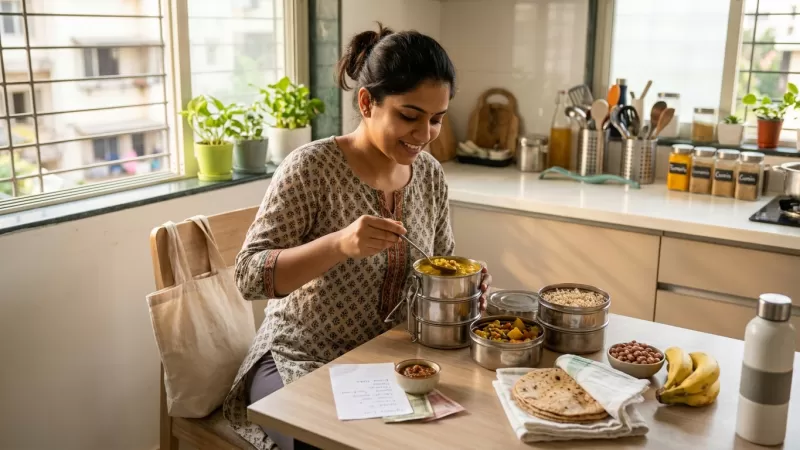
- Prepare snacks the night before: Roasted chana, makhana, or homemade poha chivda keep well in a dabba and travel easily in a work bag. Having them ready means you’re not relying on vending machine chips.
- Pair carbs with protein: If you carry a fruit, try adding a small katori of chana or a piece of homemade besan dhokla. This combination keeps you fuller than just fruit or just carbs.
- Choose Indian snacks to beat hunger before lunch that don’t spike sugar: Instead of sweet biscuits, try murmura mix with peanuts, or leftover idli with podi.
- Eat a little earlier: If breakfast is usually chai and something small, try to fit in something more solid—an egg, a bowl of curd, or even leftover dal—before leaving home. This reduces the intensity of mid-morning hunger.
- Embrace variety: Healthy Indian mid morning snacks can be as simple as roasted peanuts, moong sprouts with lemon, or even a small portion of khakhra. The key is choosing something you actually enjoy eating, so you’ll remember to pack it.
The trick is not to overhaul your routine overnight, but to add one practical step at a time. Some families start by packing extra dry snacks in the car or work bag so there’s always a healthy Indian snack between breakfast and lunch on hand.
The Morning Snack Ritual in Indian Workplaces
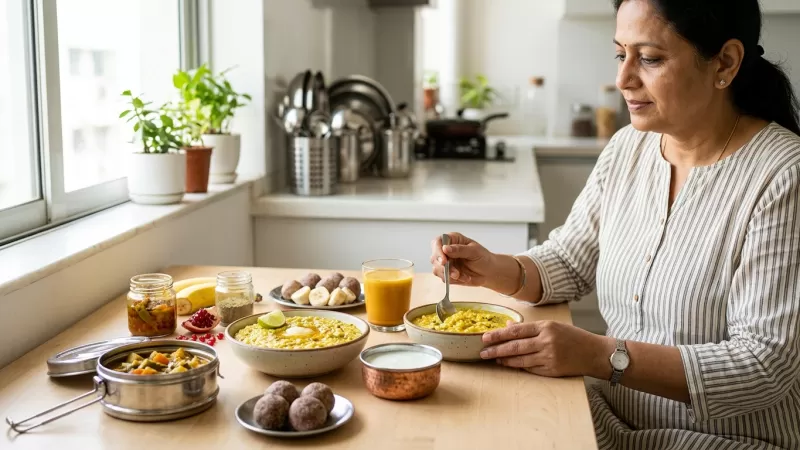
In many Indian offices, mid-morning is a quiet social hour. Someone opens a dabba of makhana, someone else passes around roasted peanuts, and the whole team pauses for a few minutes of chit-chat. This ritual isn’t just about food—it’s a small break from screens and a chance to reset. These days, with so many people working from home, the pattern shifts but the need stays. Home-based workers might step into the kitchen around 11am for a handful of chivda or a bowl of dahi with fruit, just to keep going until lunch.
Even in joint families, you’ll often see the elders settling down with a cup of chai and murmura mix while the younger generation reaches for quick Indian snacks to beat hunger before lunch. The snack changes, but the pattern—body asking for energy around mid-morning—remains the same.
On humid summer days, dahi or cold fruit with a sprinkle of chaat masala can feel especially refreshing, while in winter, roasted peanuts or a small portion of upma might be the go-to. This adaptability is what makes healthy Indian mid morning snacks such a practical part of daily life.
Knowing When to Reach Out for Help
Sometimes, constant mid-morning hunger isn’t just about breakfast or a busy schedule. If you find yourself always hungry, losing or gaining weight unexpectedly, or feeling unusually tired even with good meals, it’s wise to check in with a doctor. In most Indian homes, these situations are rare—but it’s better to listen to your body and get advice than to ignore persistent changes.
For most people, though, healthy Indian mid morning snacks and a little attention to breakfast go a long way.
Common Questions
There’s no one-size-fits-all answer for Indian office snack ideas in the morning—every household has its own rhythm, taste, and morning chaos. But with so many people facing that classic 10:30am hunger, a few practical tips can help. Here are some of the most common questions, answered with the realities of Indian kitchens and workdays in mind.
What are the best Indian snacks to carry in a bag for mid-morning office hunger?
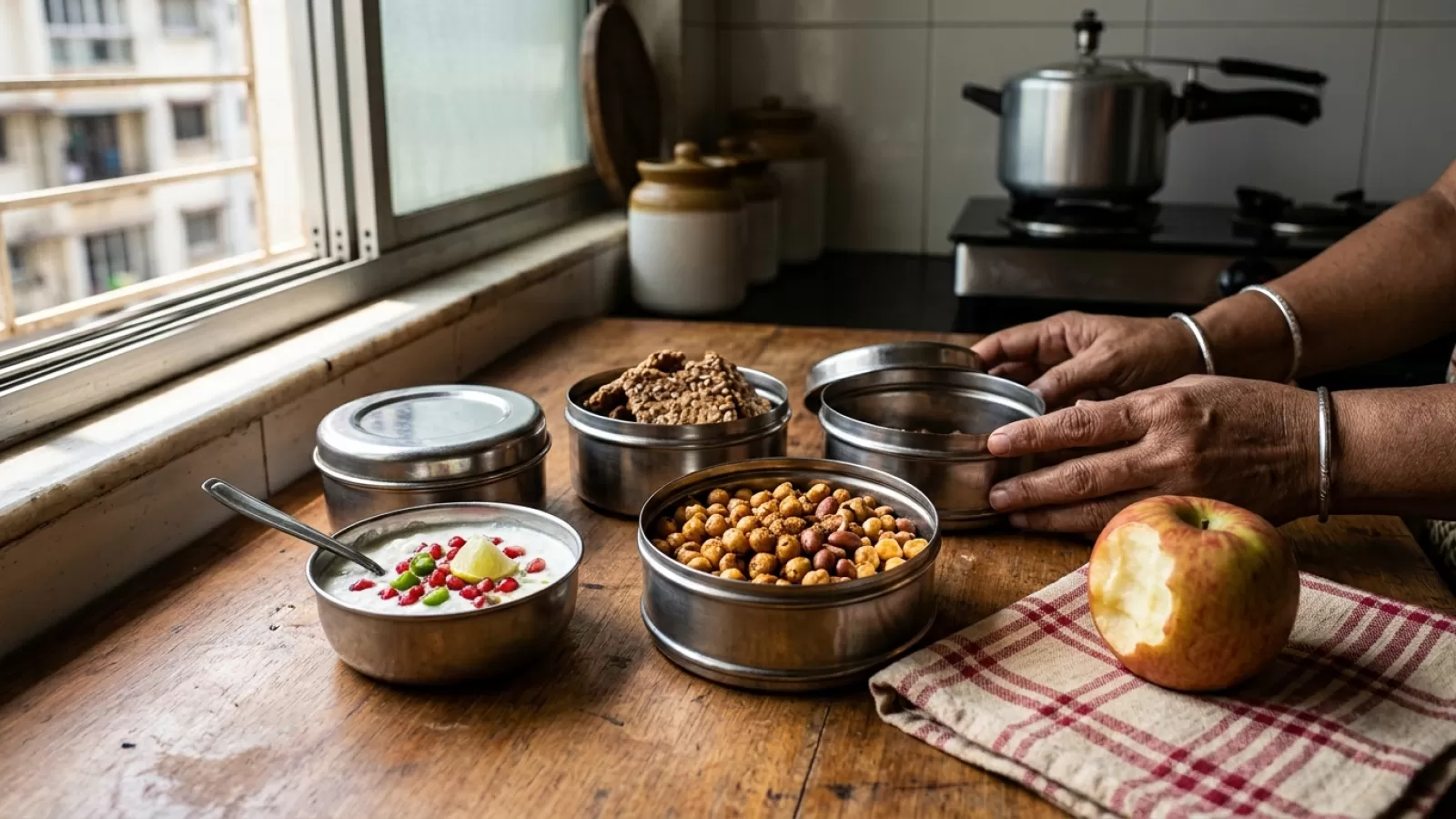
In many Indian homes, the easiest snacks to pack are roasted chana, salted peanuts, homemade poha chivda, khakhra, and dry fruits like almonds or cashews. These don’t spoil quickly, fit easily in a dabba, and survive long commutes (even in summer heat). Some people add a small katori of sprouts or a piece of dhokla if they know they’ll eat it within a few hours. These healthy Indian mid morning snacks are easy to pack and actually hold up through busy work mornings.
Can roasted chana or makhana really keep you full until lunch?
Roasted chana and makhana are surprisingly filling for their size. Many professionals in Indian cities notice that a small handful can curb hunger and keep energy steady, especially when paired with a fruit or a small cup of curd. The protein and fibre in chana, and the light crunch of makhana, help you avoid that crash you get after only eating sweets or biscuits. For most people, these snacks are enough to bridge the gap until lunch—without weighing you down.
How do you avoid the energy crash that follows a mid-morning biscuit and chai combination?
The classic biscuit-and-chai combo gives quick energy but often leaves you even hungrier an hour later. To dodge this, swap biscuits for something with protein or fibre—like roasted peanuts, sprouts, or even a small homemade thepla. Many Indian families have found that pairing a small portion of carbs with protein (like murmura with peanuts) keeps energy steadier and reduces cravings. If you still want chai, try having it with a handful of nuts instead of just biscuits.
Is mid-morning hunger a sign that something is wrong with the breakfast?
Often, yes. In most Indian homes, a breakfast of just chai or a single biscuit isn’t enough for the long gap between meals. If you’re always hungry before lunch, it usually means breakfast missed out on protein, fibre, or healthy fats. Even a small bowl of dal, some dahi with fruit, or leftover sabzi and roti can help. If you’re still hungry every day despite having a balanced breakfast, it’s worth checking with a doctor just to be safe.
What can an Indian professional eat at 10am at the office that does not require refrigeration or reheating?
Great options include roasted chana, makhana, khakhra, sev mamra, dry fruits, and poha chivda. These snacks keep well without a fridge and don’t need to be heated. Some people also pack dry upma or leftover idli with podi, which can be eaten at room temperature. The key is to pick snacks that are easy to eat with your hands and won’t spoil in the summer. Many families keep a dabba of these healthy Indian snacks between breakfast and lunch handy at the office desk for exactly this reason.