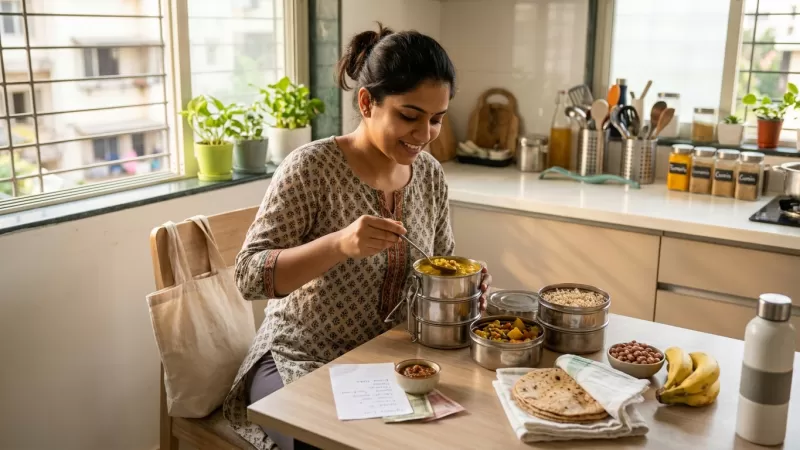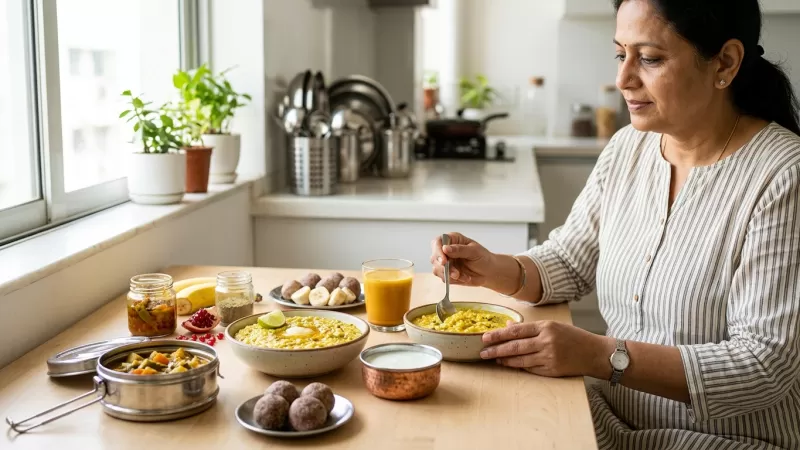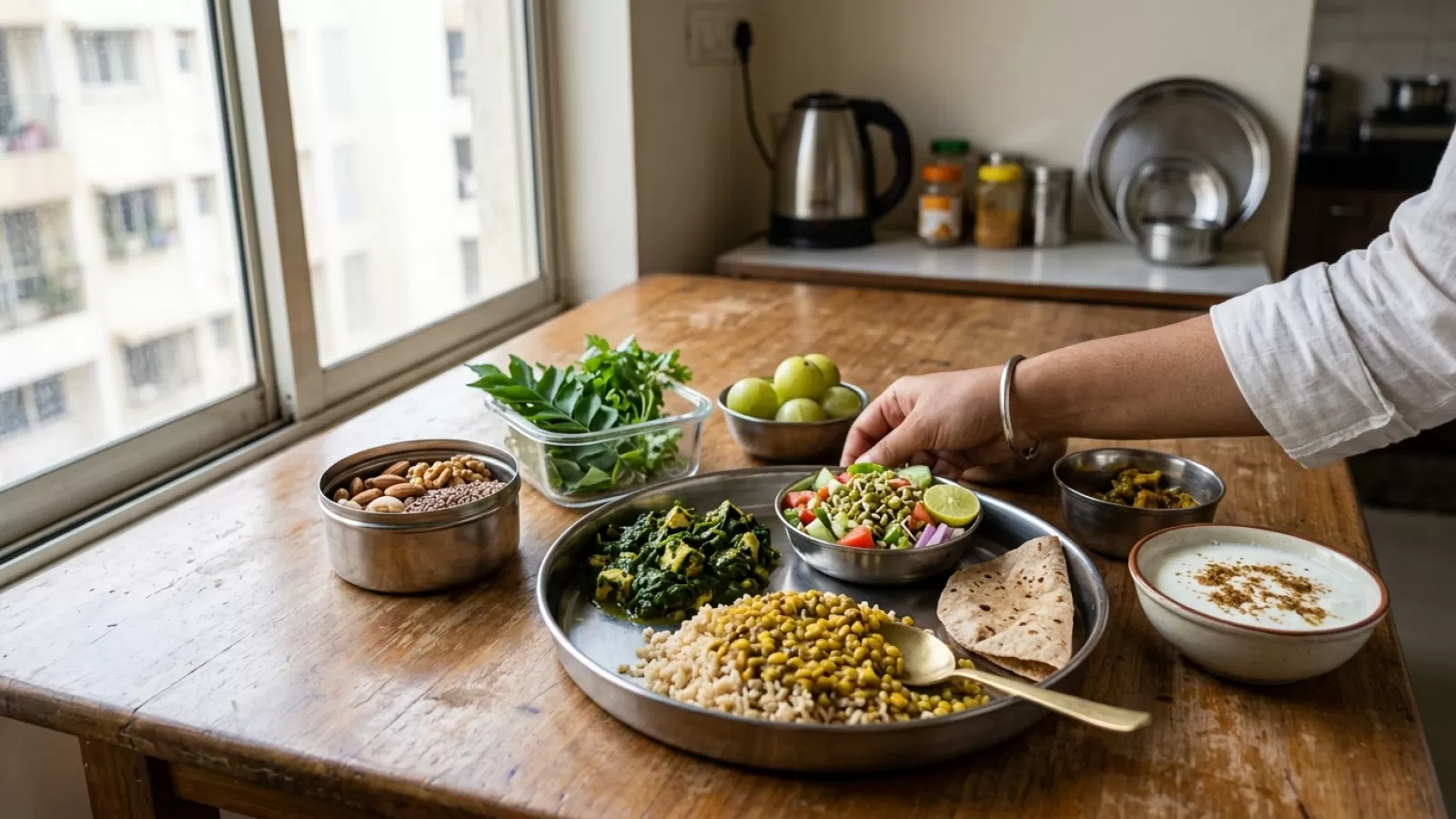
On most weekdays, someone in an Indian family is stirring dal on the stove while the morning news plays softly in the background. The kitchen smells of tadka—cumin, garlic, and a pinch of hing crackling in hot oil. In many homes, this is just a routine. But these healthy Indian foods for daily nutrition quietly power busy mornings, long commutes, and even late-night study sessions, without anyone stopping to label them as “nutritious.”
It’s easy to overlook just how much nourishment comes from the everyday Indian kitchen. That bowl of dal, dahi with roti, or a handful of roasted chana—these are not just traditional; they offer a balance of protein, fiber, and minerals. Most families already cook what nutritionists would call “healthy Indian foods for daily nutrition,” without chasing trends or buying anything extra.
Why Indian Home Cooking Already Covers Most Nutrition Needs
In most Indian homes, everyday meals are built from a basic set of ingredients: dal, rice, roti, sabzi, dahi, and seasonal vegetables. These are not fads—they are what families have turned to for generations. The meals are simple, affordable, and repeatable. Most people do not plan their meals for protein, fiber, or vitamins. Instead, they plan for what’s available, what the family likes, and what can be cooked quickly after a long workday or school rush.
That said, it’s surprising how well these usual combinations line up with what experts call balanced eating. Dal brings plant protein and iron. Rice or roti provides energy-giving carbohydrates. Dahi or homemade buttermilk offers calcium, probiotics, and a cooling touch in summer. Sabzi adds fiber, vitamins, and color. Even a basic masoor dal tadka with steamed rice and a cucumber salad gives more balanced nutrition than most “health drinks” or protein bars.
In urban apartments and semi-urban homes alike, people tend to believe that nutrition requires something extra—supplements, imported grains, or expensive packaged snacks. But the core of healthy Indian foods for daily nutrition is already present in the kitchen. The tricky part is often realising it.
Why Many Indians Underestimate Everyday Kitchen Nutrition
Many families, especially in cities, are exposed to constant advertising about “superfoods” or packaged health foods. There’s pressure to try new trends like quinoa, chia seeds, or protein powders. Social media posts make it look like regular Indian food is not enough for better daily health. Working professionals commuting in Bengaluru might feel their usual breakfast of poha or upma is too plain. Homemakers in Delhi might wonder if plain dal-sabzi is missing something.
Food scientists who study Indian diets often find that regular home-cooked meals already cover most daily nutrition needs, even without supplements. The challenge is that modern marketing makes simple foods seem outdated. Many people quietly replace a glass of chaas with a bottled probiotic drink, or switch from roti to imported wraps, believing it’s healthier.
Joint family living also brings its own pressures—cooking for different age groups or food preferences, balancing taste with nutrition, and managing time during power cuts or busy school mornings. The focus is usually on filling tummies and keeping peace, not on calculating nutrients. Yet, the dal, dahi, and vegetables on the table remain quietly effective for nutrition.
Everyday Clues That Your Indian Kitchen Is Providing Good Nutrition
- Energy Stays Stable: You can get through a workday, school day, or household chores without feeling drained by noon. Meals like dal-chawal or roti-sabzi keep you steady.
- Digestion Is Comfortable: Home-cooked sabzi, dahi, and whole grains tend to avoid the heaviness or bloating that processed foods bring.
- Few Sugar Cravings: A balanced lunch with dal, rice, and sabzi usually keeps you away from snacking on sweets or biscuits every two hours.
- Family Rarely Falls Sick: When most meals come from the kitchen, immunity tends to be a bit stronger. Sore throats and stomach upsets are less common than in families who eat out often.
- Meals Feel Satisfying: You don’t keep looking for food right after eating. A bowl of khichdi with dahi fills you up and brings a sense of comfort.
These small signs often show up in Indian homes, even if no one calculates calories or tracks protein grams.
Simple Habits That Make Everyday Indian Food Even Healthier
- Rotate Your Dal: Don’t stick to just moong or toor every week. Mixing in masoor, chana, or urad dal gives a bigger spread of nutrients without costing more.
- Add Seasonal Sabzi: Whatever the vegetable vendor brings—lauki in summer, methi in winter, bhindi during monsoon—use those. Seasonal vegetables are usually fresher and more nutritious than those kept in cold storage.
- Upgrade the Tadka: A little garlic, curry leaves, or peanuts in the tadka adds not just taste but extra minerals and healthy fats.
- Include Dahi or Chaas Daily: Even half a katori of dahi or a glass of buttermilk after lunch helps digestion and provides calcium. In summer, this habit also keeps the body cool.
- Snack on Roasted Chana or Makhana: These are filling, protein-rich options that many families already use instead of namkeen or chips.
None of these changes require buying expensive “health foods.” They rely on nutritious everyday Indian ingredients already available at the local kirana or sabziwala.
Everyday Indian Food Patterns That Feed Better Nutrition
In Indian kitchens, most healthy eating happens without fanfare. A mother in Pune might pack mixed-vegetable paratha and dahi for her child’s tiffin, while the grandparents eat leftover sabzi with rice. In a Bengaluru flat, working adults might eat poha or upma with peanuts before rushing to catch the metro. A retired couple in Lucknow might start the day with dalia porridge and end it with simple khichdi and papad.
The common pattern is this: meals are built around dal, dahi, sabzi, and whole grains. There’s usually a rotation of vegetables, and dahi or chaas is a quiet but regular presence, especially during summer. Snacks are often roasted chana, murmura, or homemade poha—nutritious everyday Indian ingredients that fill gaps between meals. Even chai time, with a handful of peanuts or a slice of gur, adds to daily nutrition without fuss.
Many families in Indian cities have quietly discovered that sticking to these traditional patterns is less stressful and just as effective as chasing the latest trends.
When Simple Home Cooking Might Need Extra Support
Most adults get what they need from Indian kitchen nutrition without supplements. Still, there are times to check in with a doctor. If you or a family member regularly feels weak, loses weight unexpectedly, or has chronic digestion issues, it’s wise to ask for advice. Pregnant women, seniors, or those with health conditions might need extra care. Usually, though, for most healthy adults, everyday home-cooked food is enough.
Common Questions
Every family has its own set of worries about food—sometimes shaped by what we hear from friends, TV, or WhatsApp groups. Below you’ll find honest answers grounded in real Indian routines, not textbook theory. You might see your own kitchen in some of these examples.
Which Indian foods are genuinely the most nutritious for everyday eating without any extra cost?
Dal, seasonal vegetables, dahi, whole grains (like rice, wheat, or millets), and nuts or roasted pulses are among the most nutritious everyday Indian ingredients. In most homes, a meal with dal-chawal or roti, sabzi, and dahi covers protein, fiber, vitamins, and minerals. Simple snacks like roasted chana, peanuts, or makhana also add protein and iron. These foods are affordable and available at local markets across the country, making them a practical choice for better daily health without extra spending.
Is dal-chawal really enough to meet daily nutritional needs for an Indian adult?
In many Indian households, dal-chawal is the backbone of lunch or dinner. This combination provides protein from dal and energy from rice. If you add a seasonal sabzi and some dahi or a glass of buttermilk, the meal becomes surprisingly balanced. For most healthy adults, this trio supplies enough protein, fiber, and key minerals. Of course, varying the type of dal and vegetables across the week makes it even better. If you're worried about a special health need, it’s best to check with a doctor.
How do Indian vegetarian families get enough iron and protein from normal home cooking?
Indian vegetarian meals often include dals, beans, and green leafy vegetables—these are good sources of both protein and iron. Rotating different kinds of dals, using chana or rajma, and adding leafy greens like palak or methi increases both nutrients. Cooking dal with a squeeze of lemon or serving greens with a little dahi helps the body absorb iron better. Many families find they get enough protein and iron just by mixing up their regular dals and greens through the week.
Are Indian seasonal vegetables more nutritious than the same vegetables available year-round?
Usually, yes. Seasonal vegetables from the local market are fresher and tend to have more nutrients than those kept in cold storage or shipped long distances. For example, lauki and tinda in summer, or carrots and gobhi in winter, often taste sweeter and cook faster. In many homes, using what’s in season means better taste, more nutrition, and lower cost. Choosing vegetables sold by local vendors during their natural season is a simple way to boost nutrition without changing your routine.
What small daily Indian food additions make the biggest long-term nutritional difference?
Adding dahi or buttermilk to lunch, using a variety of dals through the week, including a handful of roasted chana or peanuts for snacks, and eating whatever sabzi is in season—these habits make the biggest impact over time. Even a small katori of sprouts or a squeeze of lemon on dal can quietly improve iron, protein, and vitamin intake. Most families find these steps fit easily into daily routines and support better daily health without extra cost or effort.