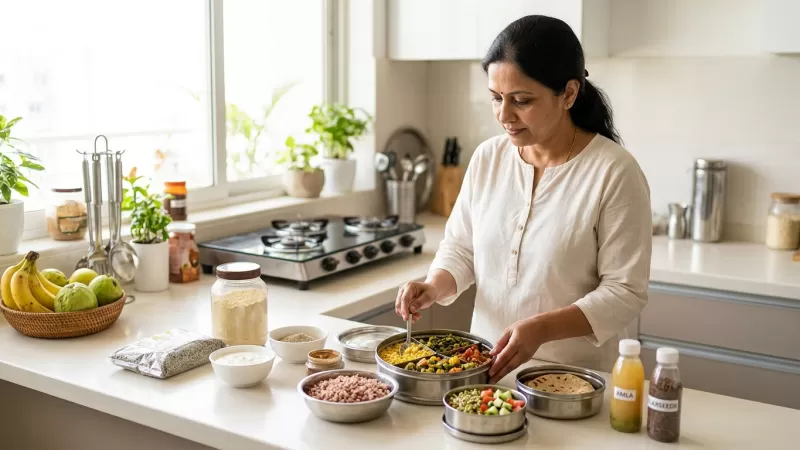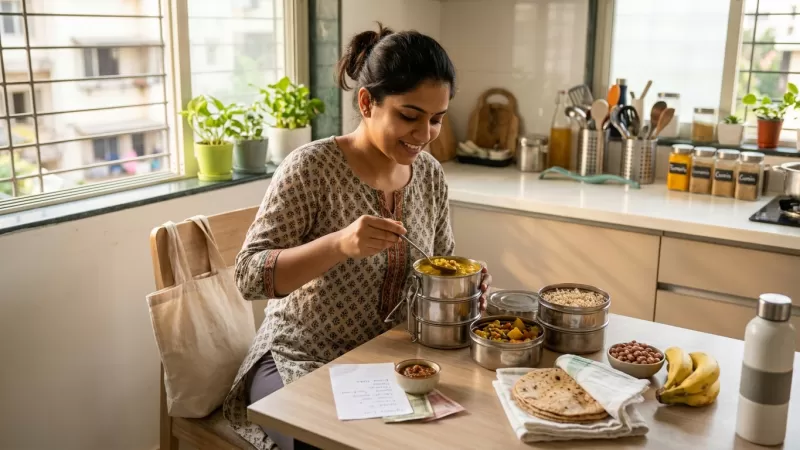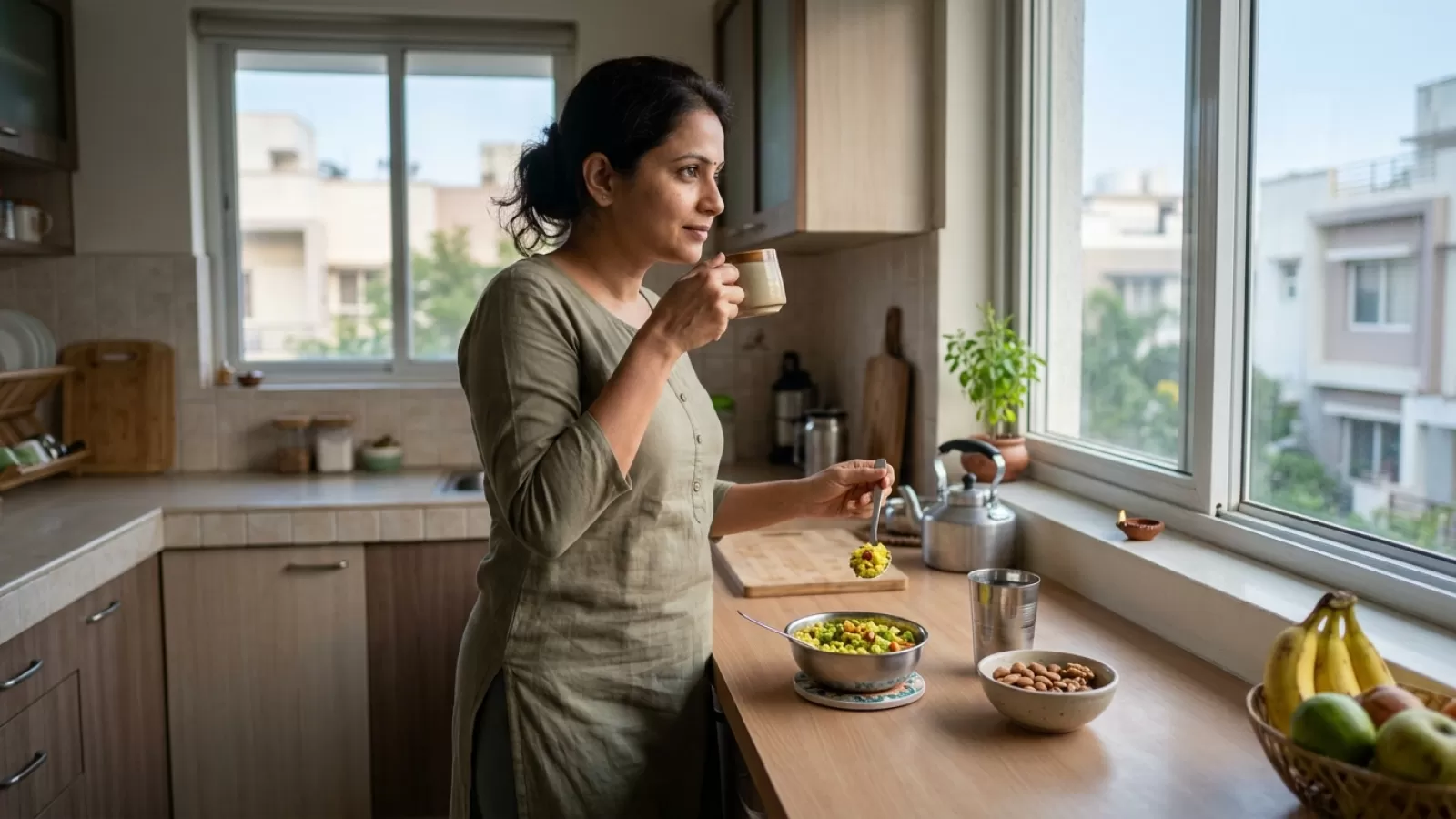
In many Indian homes, the earliest light creeps into the kitchen before anyone else stirs. There’s usually one adult — sometimes a parent, sometimes a working professional — who is up before the rest of the house, moving quietly so as not to wake sleeping family members. For these early risers, the moments before the household comes alive are precious. Early morning Indian eating habits often take shape here: a glass of water, a mug of chai, or a tiny snack savoured in peace, setting the tone for the day’s nutrition and energy.
The reality is, this window — maybe 20 minutes, maybe a full hour — tends to be the only undisturbed time for most adults. What is eaten or sipped in this lull, even something small and gentle, has a surprising effect on hunger and focus hours later. In these quiet kitchens, nutrition for Indian early risers doesn’t look like a big meal. It’s more about small, manageable habits that actually fit into the Indian morning rhythm.
The Unique Quiet of Early Mornings in Indian Homes
Most Indian homes hum with activity from 6:30am onwards — children rushing for school, elders reading newspapers, the pressure cooker whistling for breakfast prep. Before that, there’s an oddly sacred silence. Early morning Indian eating habits often form here, when an adult starts the day before the rest of the household and discovers a different pace. It’s usually not the time for a full meal. Instead, it’s a small ritual: soaking almonds the night before and eating them quietly, sipping on warm water with a slice of lemon, or taking that first cup of chai on the balcony.
For working professionals in cities like Mumbai or Bengaluru, this early hour is sometimes the only chance to eat something before a long commute. In joint families, the first riser often avoids noisy kitchen appliances to keep from waking others, so quick, quiet snacks become the norm. Eating before family wakes in India isn’t about skipping breakfast later — it’s about creating a pocket of comfort and stability before the day’s demands begin.
Why Pre-Dawn Eating Fits Indian Rhythms
In Indian cities, life starts early. Many adults wake up at 5:30am or even earlier to beat traffic or attend to work-from-home calls before the house gets busy. Most find that waiting for everyone else to wake up before eating just isn’t practical. The tricky part is, hunger may not be strong yet — but skipping a small bite can mean feeling drained or irritable by mid-morning, especially when breakfast gets delayed by chores or school drop-offs.
Nutritionists who work with Indian families often find that adults who eat something small in the early morning window, even if it’s just soaked nuts or a little dahi, tend to have steadier energy through the day. This is partly because Indian morning habits pre-breakfast are shaped by unpredictable household schedules: sometimes breakfast is at 7am, other times it’s past 9am. Eating before family wakes in India quietly fills this gap. For those who exercise early, a gentle snack can also prevent dizziness or sluggishness, especially in humid summers when dehydration happens fast.
Clues Your Early Morning Eating Habit Needs Tweaking
- You find yourself ravenous by 10am, even if you had a cup of chai at 6am.
- There’s a regular energy slump around mid-morning, making it hard to focus at work or during chores.
- Your stomach feels unsettled or bloated after eating in the early morning — sometimes chai or milk on an empty stomach can cause this.
- You skip early eating because you’re worried it will ruin your appetite for breakfast, but end up snacking on biscuits or namkeen before lunch.
- Breakfast often gets delayed because you’re waiting for everyone to wake up, leading to headaches or irritability.
These signs usually mean your early morning Indian eating habits could use a gentle adjustment. Often, it’s not about eating more — it’s about choosing what suits your body and routine in those first quiet minutes.
Small, Practical Ways to Nourish Yourself Early
- Soaked Nuts or Seeds: Soaking almonds, walnuts, or even pumpkin seeds the night before makes them easier to digest. Many adults quietly eat these while the house sleeps. It’s quick, silent, and gentle on the stomach.
- Warm Water Rituals: A glass of warm water, plain or with a squeeze of lemon, is a common early morning Indian eating habit. It hydrates and wakes up the system without overwhelming it.
- Light, Comforting Foods: A small bowl of dahi, a few pieces of banana, or makhana roasted in ghee are all easy on the stomach and don’t require much prep. During winter, some people prefer a spoonful of chikki or a piece of soft roti with ghee — simple, warming choices.
- Chai or Black Coffee — In Moderation: Many cannot start their day without chai. Having it with a small bite — like a Marie biscuit, or half a banana — helps avoid acidity. Try not to have strong tea or coffee on a completely empty stomach.
- Prepping the Night Before: Quietly placing a small bowl of nuts, fruit, or makhana where you can reach them in the morning means you don’t have to open noisy cupboards or risk waking anyone.
The catch is, everyone’s body responds differently. Some feel better with just fluids; others need a little solid food. Small experiments, like adjusting the timing or quantity, usually help you settle into a habit that fits your home and routine.
Everyday Moments: When Early Eating Shapes the Whole Day
A kitchen in Nagpur at 6am is cool, silent, and filled with the faint smell of last night’s spices. An adult tiptoes in, careful not to clang the steel utensils, and pours warm water from a flask. They eat three soaked almonds, chew slowly, and look out at the street below. In that moment, nothing rushes them. There’s a quiet satisfaction — a sense that, whatever the day brings, this gentle start will carry them through school runs, traffic jams, or relentless work calls.
Many families in Indian cities have quietly discovered that this simple act — eating gently in the early morning — helps avoid the 10am hunger crash that used to send them reaching for deep-fried snacks. These days, even in busy apartments, a handful of makhana or a spoon of dahi before sunrise is the difference between steady energy and a day that feels off-kilter.
When It’s Time To Seek Guidance
Most adults can tune their early morning Indian eating habits by listening to their body and making small changes. If you notice persistent stomach discomfort, dizziness, or if you have a health condition like diabetes, it’s wise to discuss your early morning nutrition for Indian early risers with your doctor. Sometimes, what works for one person may not suit another — and that’s okay.
Common Questions
Many people find themselves quietly wondering about the little details of early morning eating. These questions come up in Indian homes, especially among adults who are trying to balance tradition, modern routines, and family schedules. Let’s look at some of the most common ones, with real-life Indian scenarios woven in.
What is the best thing for Indian adults to eat or drink in the early morning before anyone else wakes?
For most adults, the best early morning Indian eating habits centre around gentle, light choices. Soaked almonds, a glass of warm water, or a spoonful of dahi are popular because they don’t upset the stomach and are easy to prepare quietly. Some prefer a small banana or a few pieces of makhana. In many homes, these foods are kept ready the night before — reducing morning fuss and noise. The key is to choose something that feels comforting and doesn’t cause digestive trouble, especially on an empty stomach.
Does eating very early in the morning affect how hungry you are for breakfast later in the day?
Usually, a small early snack does not spoil the appetite for breakfast, especially if breakfast is delayed by chores or work. Many adults in Indian homes find that eating before family wakes in India actually prevents the sharp hunger pangs or headaches that hit mid-morning. You might feel a bit less ravenous at breakfast, but you’ll still want your usual dal, poha, or paratha. It’s about smoothing out the hunger curve rather than filling up completely.
Which Indian foods are gentle enough to eat on a quiet empty stomach in the early pre-dawn hours?
Gentle options include soaked nuts (almonds, walnuts), a few pieces of banana, plain dahi, or a handful of makhana. During winter, a soft piece of roti with ghee or a bit of chikki works well for some. These foods are easy on digestion and don’t cause acidity or heaviness. In many Indian homes, adults avoid spicy or oily foods early in the morning to keep things light. The focus is on comfort and ease rather than fullness.
How do Indian early risers build a quiet morning nutrition habit without waking the household?
The trick is to prepare the night before. Many leave soaked nuts, fruit, or biscuits in a small dish on the dining table or counter. Using a flask for warm water avoids noisy kettles. Eating in the balcony or a quiet corner helps too. Often, routines are built over time — adjusting what you eat, how much, and where you sit, so that the rest of the family can keep sleeping peacefully. Over weeks, this becomes a comforting ritual for many early risers.
Is eating before exercise in the early morning better or worse than exercising on an empty stomach in India?
This depends on your body and the kind of exercise. Some people prefer a handful of almonds or half a banana before a walk or yoga, especially if workouts are intense or long. Others feel fine with just water, particularly if the activity is gentle. The humid Indian climate can make you feel light-headed if you haven’t eaten anything, so it’s wise to notice how your body responds. If you often feel dizzy or weak, a small snack may help. For any health concerns, it’s best to check with your doctor.