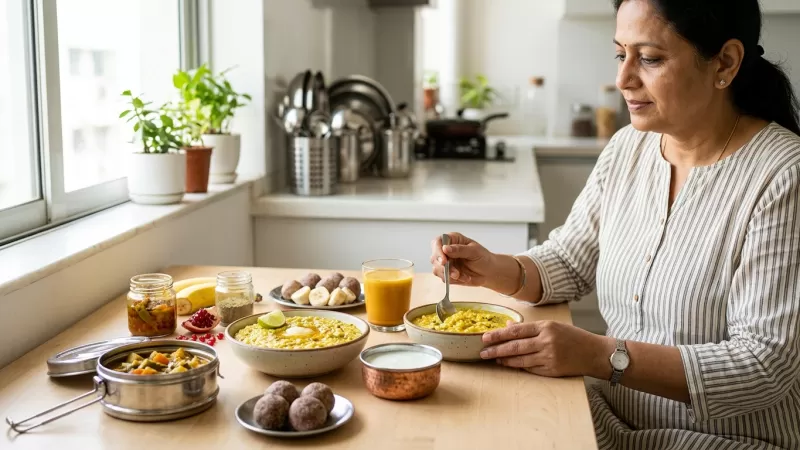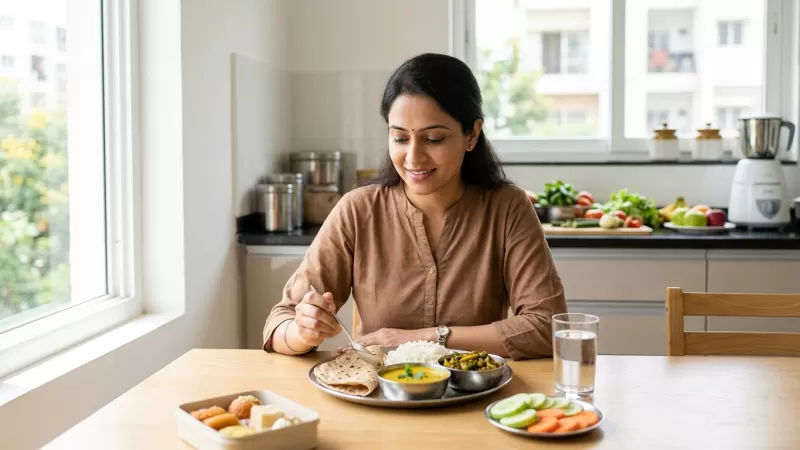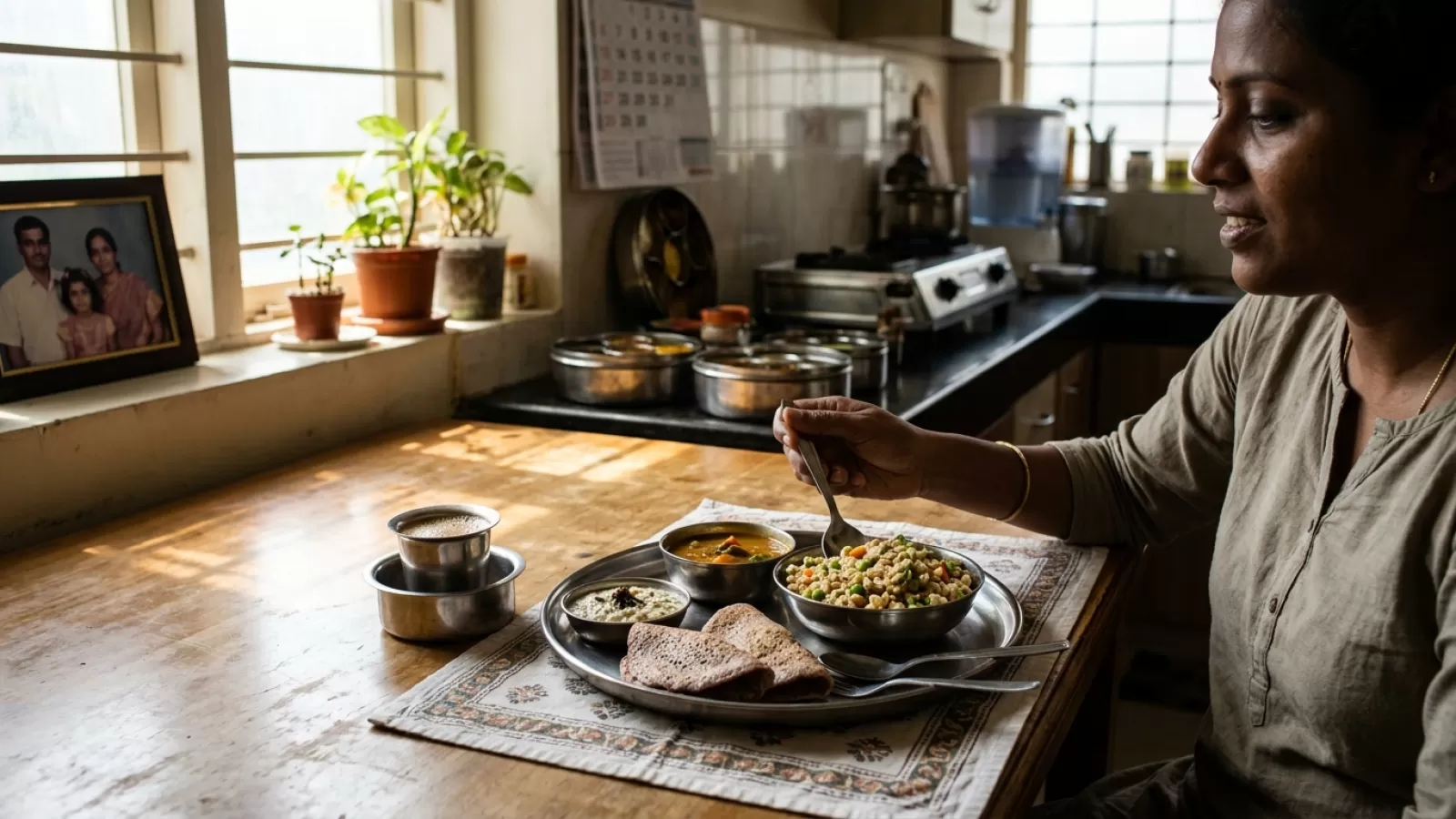
Many Indian homes wake up to the smell of a nourishing Indian morning meal — sometimes it’s a bowl of poha carried to the balcony, sometimes it’s leftover roti with dahi and a dusting of salt. Balanced Indian breakfast ideas are not about fancy ingredients or measuring grams. They are found in the quiet, everyday foods that keep you steady through the mid-morning rush.
On days when breakfast is skipped, you might notice that hollow feeling by 10am — a kind of distracted hunger that makes chai and biscuits feel tempting, but never quite satisfying. In contrast, a warm meal, even if small, tends to keep both adults and kids more focused and less irritable, right up until lunchtime. It’s not about perfection; it’s about what works in real kitchens.
Why Many Indian Families Struggle With Morning Meals
In many Indian homes, mornings are a blur — alarms snoozed, last-minute uniform ironing, tiffins to pack, and everyone trying to squeeze into the bathroom at once. Breakfast, although valued, is often the first thing to be sacrificed. It’s common to hear, "I’ll just have tea now," or "Let’s eat something in the office canteen." The idea of a balanced Indian breakfast feels like a luxury reserved for Sundays, not for busy weekdays.
There’s also the generational belief that breakfast is just optional, especially among adults who grew up eating a late, heavy lunch. Children, however, tend to do better on school days when they eat something filling in the morning — even if it’s just a small bowl of upma or a glass of milk. But when everyone is rushing, the easiest option is to skip or grab a biscuit. Over time, this pattern leaves people feeling tired, distracted, and always a little behind on energy.
Why Skipped or Unbalanced Breakfasts Happen So Often
The tricky part is, most families are not skipping breakfast because they don’t care. It’s usually about time. On mornings when everything runs late — the geyser isn’t working, the maid is absent, or there’s a school project due — breakfast becomes an afterthought. Many people also believe that healthy Indian breakfast foods require elaborate prep, when in reality, simple options like bread with peanut butter, poha, or a banana with nuts already provide a good mix.
Nutritionists who work with Indian families often find that parents are unsure what counts as a nourishing Indian morning meal. There’s a feeling that only something complicated or "high-protein" is worth making, which isn’t true. The reality is, most Indian kitchens already have the ingredients for balanced Indian breakfast ideas — dal, rice, eggs, seasonal fruit, milk, or curd.
Then there’s the pressure of social media, which tends to showcase elaborate smoothie bowls or imported grains. In real life, a simple plate of idli with sambar or paratha with curd is both balanced and sustaining for most people. The challenge is more about recognising this than about changing everything.
Clues Your Morning Meal Isn’t Quite Right
- Mid-morning Cravings: If you find yourself reaching for chai and biscuits at 11am, it usually means breakfast was skipped or too light. This is especially common for working professionals in WFH setups, where the kitchen is always within reach.
- Children Get Irritable or Sleepy at School: Many teachers notice that kids who eat a proper Indian breakfast for sustained energy participate more in class and have fewer complaints of headaches or stomach aches before lunch.
- Feeling Tired Before Lunch: Adults may notice a dip in focus, especially after long meetings or household chores. This is often a sign that the morning meal didn’t have enough substance — maybe just black tea or a couple of biscuits.
- Eating Too Much at Lunch: When breakfast is skipped or unbalanced, lunch tends to become heavier and rushed, leading to afternoon sluggishness.
- Getting Easily Distracted: Especially on busy days, skipping a nourishing Indian morning meal can make it harder to concentrate, whether you’re managing the home, working, or helping kids with their homework.
Small Changes That Make Breakfast Work
- Prep the Night Before: Soaking poha, chopping onions, or mixing dosa batter saves precious minutes. Many families in Indian cities have quietly discovered that even a few minutes of prep at night can mean the difference between a rushed tea and a proper breakfast.
- Lean on Simple Combinations: Balanced Indian breakfast ideas do not need to be complicated. A bowl of dahi with chopped banana and a sprinkle of peanuts, or a quick egg bhurji with roti, usually does the job well. These meals bring in protein, carbs, and some fat, helping you feel full until lunch.
- Use Leftovers: Last night’s sabzi with a fresh roti and some curd can be a perfectly healthy Indian breakfast food. Some families make extra paratha at dinner just for this reason.
- Choose Local, Seasonal Foods: In summer, a glass of chaas and a small plate of poha is light but filling. During winter, a bowl of hot dalia or upma with a little ghee can feel more comforting.
- Keep Quick Add-ons Ready: Roasted makhana, chana, or even a handful of nuts and raisins can turn a light breakfast into a more nourishing Indian morning meal. These are easy to keep in a dabba and grab when needed.
How Balanced Breakfasts Appear in Real Indian Routines
In most Indian households, breakfast is woven into the rhythm of the morning. On weekdays, you’ll often see someone quickly rolling out rotis while the pressure cooker whistles for dal. A working professional commuting in Bengaluru might grab a bowl of poha or some idli wrapped in banana leaf from a roadside vendor. Seniors often stick to age-old habits — one cup of chai with a homemade thepla or ragi porridge.
Children tend to eat best when breakfast is part of the routine and not rushed — even just a glass of milk with a small portion of upma or bread and peanut butter. The best balanced Indian breakfast ideas are the ones that fit into your family’s pace. On weekends, there’s usually more time for aloo paratha or dosa with chutney, but on busy days, even a banana with a handful of roasted chana counts. The trick is not to overthink, but to find what your home’s rhythm allows most mornings.
When To Consider Outside Help
If someone in your home regularly skips breakfast and often feels tired, struggles with mood, or faces health concerns, it might help to talk to a doctor or a dietitian. This is especially true for kids who refuse breakfast for days at a stretch or for seniors with changing appetites. Sometimes, underlying health issues can make eating in the morning difficult, and a professional can guide you in a way that fits your family’s needs.
Common Questions
There’s always a bit of confusion about what "balanced" really means for breakfast in Indian homes. Let’s look at some of the most common questions families ask — the kind that come up while packing tiffins or hurrying to catch a bus. These answers are shaped by the way real kitchens work, not by strict rules.
What does a balanced Indian breakfast actually look like without any special ingredients?
In most homes, a balanced Indian breakfast is simply a mix of what’s already in the kitchen. Think of a plate with poha (rice flakes) cooked with peanuts and veggies, a small bowl of curd, or two chapatis with egg bhurji. Even leftover sabzi with roti and a cup of milk works. The idea is to include some cereal (like poha, roti, or upma), something with protein (dahi, milk, eggs, chana), and a bit of fruit or veggie. No need for imported oats or protein powders — just regular household food, made fresh.
Can idli or poha be a complete and nutritious breakfast on its own?
Yes, idli or poha can be a complete meal, especially when paired with something extra. For idli, adding sambar or chutney with peanuts or dal brings in more protein and fiber. Poha made with peanuts, vegetables, and a squeeze of lemon is already quite balanced. Many families add a glass of milk or some fruit on the side for children. The idea is to round out the meal with a bit of variety, but even on its own, these are healthy Indian breakfast foods for most people.
How do you eat a proper breakfast when the morning is already running 20 minutes late?
On rushed mornings, keep it very simple. A banana with a glass of milk, a slice of bread with peanut butter, or leftover sabzi rolled in a roti can be eaten in five minutes. Some families keep roasted chana or makhana ready to add to light breakfasts. The key is not to skip entirely — anything is better than nothing, and even a small nourishing Indian morning meal helps you avoid cravings and low energy later.
Is skipping breakfast really worse than eating something small and unsatisfying?
Skipping breakfast tends to cause more problems than eating a small, simple meal. Those who skip often feel tired, distracted, or overly hungry by lunchtime, leading to overeating. Even a light meal, like a cup of dahi with fruit or a small bowl of poha, helps keep your energy steady. Many Indian households find that children and adults alike manage better through the day if they eat something — even if it’s not a full platter — rather than nothing at all.
What are the quickest balanced Indian breakfast options for adults with almost no morning time?
Some of the quickest balanced Indian breakfast ideas are already popular: a bowl of upma with peanuts, bread with boiled eggs, dahi with banana and a handful of nuts, or leftover dal and rice from last night. Roasted makhana or channa can be added for crunch and protein. These require little prep and can even be packed to eat at the desk. The goal is to combine some cereal, protein, and a little fruit or veggie, using what’s on hand.