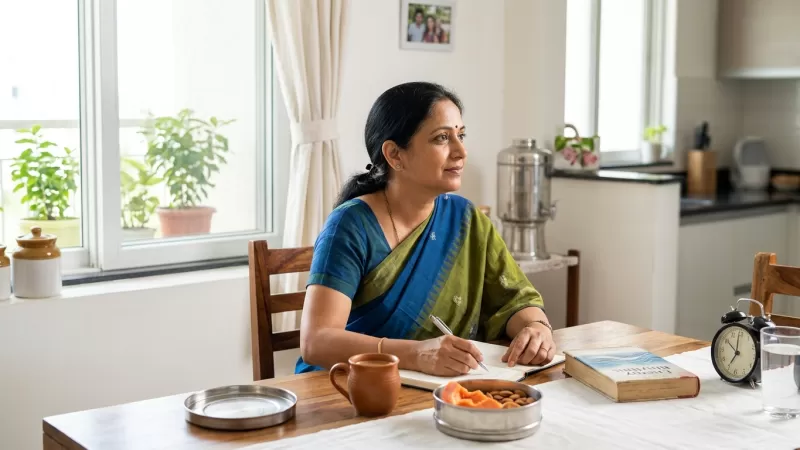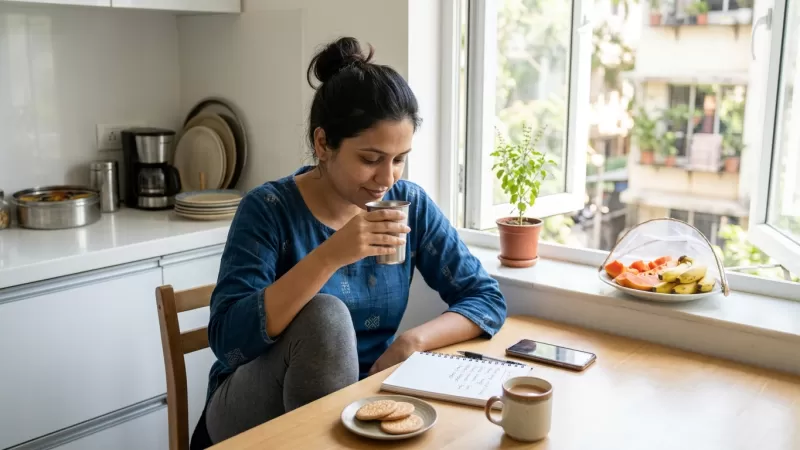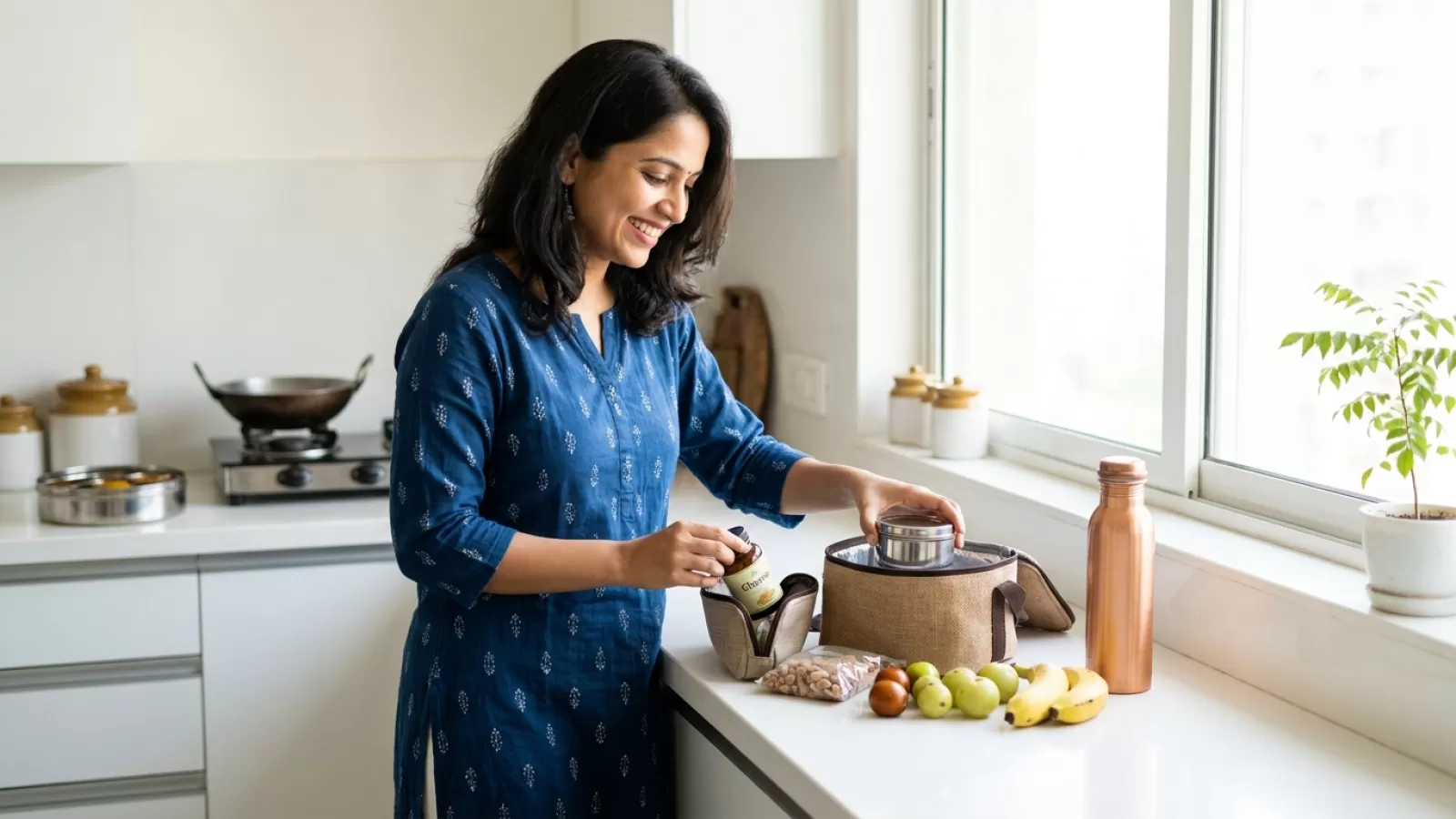
Most Indian adults these days don’t have the luxury of a fixed routine. Whether you’re a field engineer whose workday can start at sunrise or after lunch, or a freelancer whose projects come in bursts, wellness habits no routine India is a phrase that feels familiar and exhausting. The truth is, many have given up on strict schedules for health and instead look for habits that survive the chaos—like drinking water when you see the steel bottle on the table, or stretching while waiting for chai to boil, regardless of what time it is.
In many homes, health without fixed schedule India is the real experience. Meal times shift, sleep happens when the house quiets down, and movement is whatever fits between responsibilities. For those who live this way, wellness for schedule-changing Indian adults is not about chasing a perfect routine but about holding on to small, flexible rituals that travel with you through the messiness of daily life.
Why Indian Schedules Change So Often
Many Indian families know this rhythm: dinner at 11pm one night after a late office call, breakfast at 7am the next day to catch a train, or a quick lunch at 3pm because a power cut threw off the entire morning. In joint families, routines can change because of children’s school timings, elders’ appointments, or festivals that rearrange the whole week. Even single adults working from home find their schedule shifting with client calls in different time zones, traffic delays, or last-minute family responsibilities.
Weekend shifts, sudden sick days, or a neighbour dropping in just as you were about to exercise—these are the realities that disrupt planned routines. Unlike the advice you read in magazines, real Indian homes don’t always run on predictable clocks. Instead, what survives are the habits that fit anywhere: sipping dahi as a snack no matter what time it is, or fitting in a walk while chatting with a friend on the phone, even if it’s at 8pm or 10am.
The Hidden Reasons Routines Rarely Stick
Underneath all this, there’s a lot going on. Household roles are often shared between adults, but not always equally. When you’re the one everyone expects to manage groceries, kids, calls from relatives, and your own work, wellness habits no routine India become a survival skill. The tricky part is, in many Indian families, flexibility is not a choice but a necessity. Schedules bend for power cuts, water supply timings, and those WhatsApp calls that never come at a convenient hour.
Nutritionists who work with Indian adults often find that meal timings shift far more than what most health guidelines assume—sometimes breakfast is skipped because the gas cylinder ran out, sometimes dinner moves late because of a festival or cricket match. In these situations, wellness for schedule-changing Indian adults becomes all about what you can do regardless of when you do it.
Everyday Signs Your Health Is Not Tied To A Schedule
- You snack on fruits or makhana when you remember, not at a set time.
Plenty of adults munch on roasted chana or a banana just because it’s handy, not because the clock says it’s snack time. - Your hydration depends on visible cues.
That water bottle on the dining table is your reminder, not a 9am alarm. - Body movement sneaks into chores.
For many, their only ‘exercise’ is sweeping, climbing stairs, or stretching while folding laundry. - Meal choices adjust to the day’s chaos.
You might have poha at 11am or khichdi for dinner at midnight, depending on how the day went. - Sleep comes when things finally quiet down.
Many fall asleep after the last family member switches off the TV, not at a set bedtime.
Practical Habits That Survive Any Schedule
- Attach habits to daily anchors, not the clock.
Drink a glass of water after every meal, not at a set time. Take a few deep breaths the moment you sit down after coming home, whether it’s 5pm or 11pm. - Keep healthy snacks visible and ready.
Chop cucumbers or keep a dabba of roasted peanuts on the table. When schedules are unpredictable, you’ll eat what’s in front of you. - Link movement to unavoidable moments.
Stretch while waiting for the dal to boil. Do some shoulder rolls while the computer restarts. Instead of planning a precise walk, walk during phone calls or while supervising homework. - Make your meals flexible.
Have a couple of go-to dishes like poha or upma that can double as breakfast, lunch, or dinner. This way, you’re less likely to rely on instant noodles when timings go awry. - Choose signals over schedules for self-care.
Instead of a fixed bedtime, notice when your eyes start drooping or you begin yawning. That’s your body’s signal, even if the clock says it’s early or late.
How Schedule-Free Wellness Looks in Real Indian Homes
On mornings when everything runs late—a child’s school bag misplaced, tea spilling on the stove, a WFH call moved up by an hour—you’ll spot adults grabbing a quick spoonful of dahi or a fistful of peanuts as breakfast. In many households, the only consistent movement is the walk to the local sabziwala or the stairs climbed during daily chores. After long workdays, people stretch their legs on the balcony, chat with neighbours, and find their ‘exercise’ in these small, often overlooked moments.
Many families in Indian cities have quietly discovered that wellness for schedule-changing Indian adults is not about perfection. It’s about those little habits that tag along, even when dinner is at midnight or breakfast happens at noon. Over time, these flexible rituals build a foundation for health without fixed schedule India, without adding pressure to an already busy day.
When Flexible Habits Need Extra Help
Sometimes, even the most adaptable wellness habits no routine India style can feel like too much. If you notice you’re feeling unusually tired, losing or gaining weight unexpectedly, or struggling with ongoing health issues, it might be time to check in with a doctor. In many Indian families, health checkups tend to get postponed until something feels urgent. Try not to wait that long; a gentle nudge from a loved one can help you get the support you need.
Common Questions
Every household is unique, but there are some questions that pop up in almost every Indian home. Let’s walk through a few together. If you’ve wondered about these, know that you’re not alone—the answers often come from lived-in wisdom, not just advice.
What wellness habits are genuinely sustainable for Indian adults whose schedule changes so frequently that no routine is possible?
For those living with shifting schedules, the sustainable habits are the ones tied to daily anchors, not to time. For example, drinking water after every meal, stretching during daily chores, or eating fruit when you spot it on the kitchen counter. In many homes, these habits survive because they piggyback on activities that always happen—even if the timing moves around. Keeping a dabba of nuts on the table or setting a reminder on the fridge for a quick walk after dinner helps too.
How do you build health behaviours that do not depend on any specific time of day or day of week?
The trick is to link health actions to events that happen no matter the hour. For instance, you might decide to drink water every time you return home, or to do a few stretches after each work call. In many Indian homes, adults use household tasks as cues—like cleaning up the kitchen as a signal to wind down for bed, or folding laundry as a reminder to take a few deep breaths. Over time, these behaviours become automatic, even with a shifting schedule.
Is consistent routine actually necessary for health or is it possible to be genuinely healthy with a completely variable daily schedule?
While a fixed routine can help some people, it isn’t the only path to health. Many Indian adults manage their wellness through habits that fit into changing days: eating balanced meals when possible, moving during daily activities, and listening to the body’s signals. For example, a working professional commuting in Bengaluru might get their steps in by walking from the metro to the office, even if the timing changes. Health without fixed schedule India is entirely possible when you find habits that adapt with you.
What are the most important health behaviours for Indian adults who need to be independent of schedule to be consistent?
The most important behaviours are usually the simplest and the most portable. Drinking enough water, eating some fruit or vegetables every day, moving your body through daily chores, and paying attention to hunger and tiredness signals matter most. In many families, these habits are built around what’s always present—like the kitchen, the dining table, or the path to the local shop—instead of the clock. These actions can be repeated no matter how the day unfolds.
How do you maintain good nutrition when meal timing is genuinely unpredictable from one day to the next?
When meal times jump around, focus on what you eat, not when you eat. Many Indians keep homemade snacks like roasted chana, fruit, or dahi readily available for uncertain days. Preparing simple meals like khichdi or poha that can be eaten any time helps too. On days when lunch happens at 3pm and dinner at 10pm, just try to include a mix of dal, vegetables, and some roti or rice. If you’re concerned about your nutrition, a doctor or dietitian can help with more personalised tips.