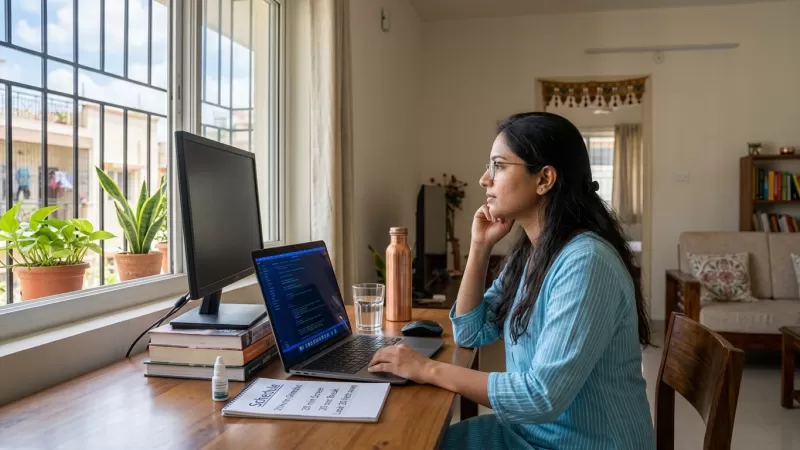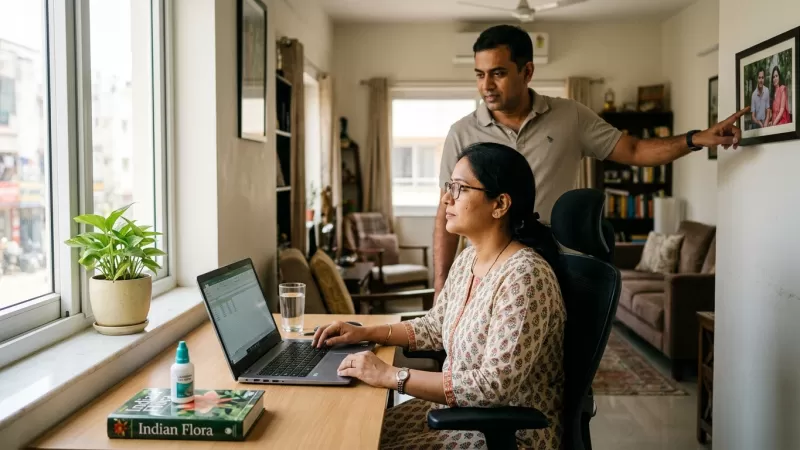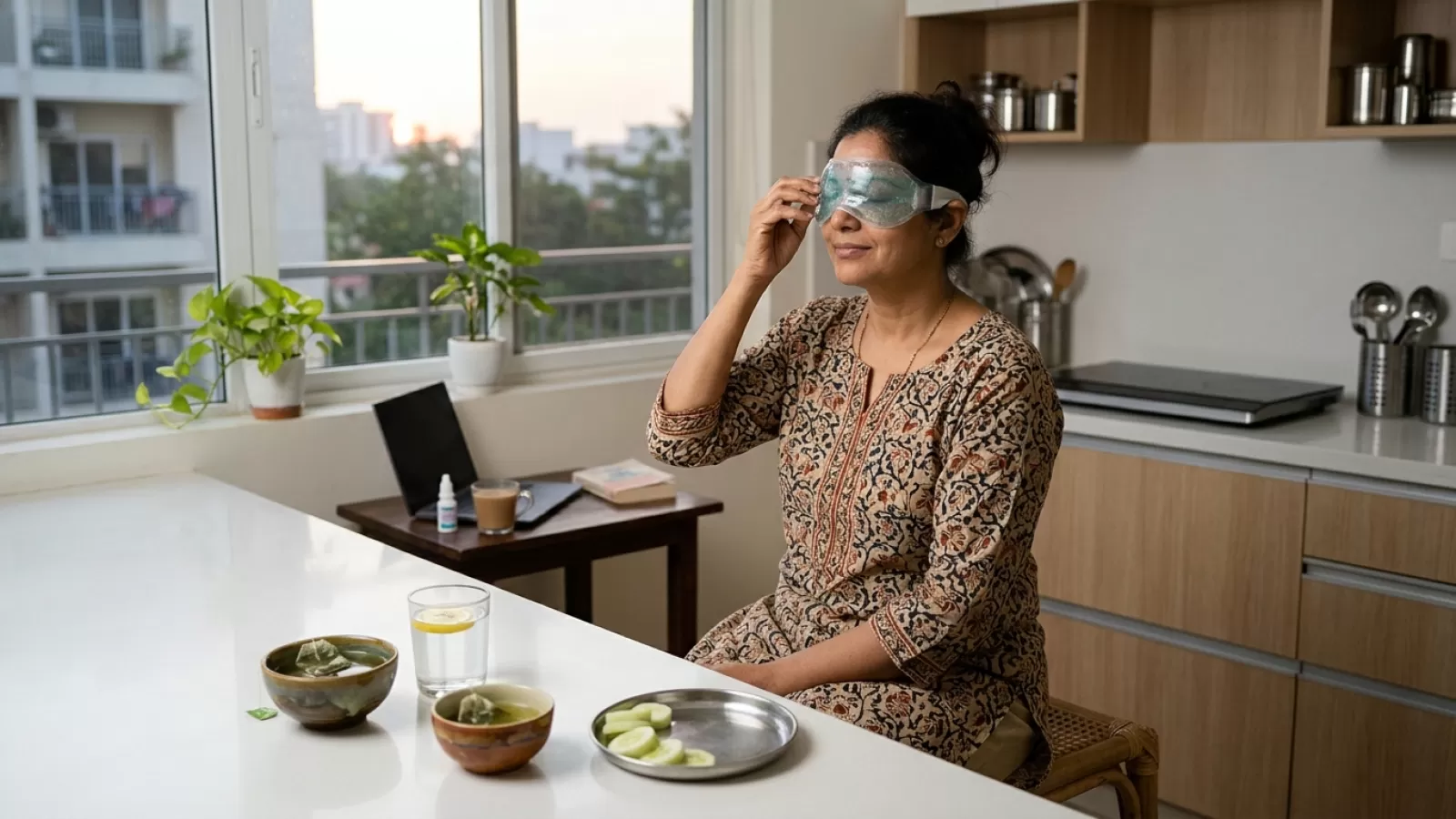
Evenings in many Indian homes often mean a gentle transition from work screens to personal screens — one screen swapped for another. As the sun drops behind crowded buildings and the fan hums in the background, adults who’ve spent all day hunched over laptops or peering at spreadsheets usually reach for the TV remote or scroll through messages on their phones. It’s a familiar comfort, especially after a day of deadlines, but the eyes rarely get the break they truly need.
Simple evening eye care habits for Indian adults aren’t just about stepping away from screens. Many of us hold our eyes in the same close-range focus for hours, whether it’s at a home office desk or the kitchen table squeezed between chores. The real recovery for tired eyes comes from changing what those muscles do — giving them a chance to look far away, blink more often, and experience the natural changes of light and distance that screens can’t offer.
The Cycle of Screen Use in Indian Evenings
For most Indian adults, evening routines don’t actually free their eyes from work. After signing off from office tasks — sometimes with a plate of poha or a cup of chai in hand — it’s common to switch from the work laptop to the living room TV or catch up on WhatsApp messages. This pattern is so common that evenings become another round of sustained, close-up focus. Even when the intention is to relax, the eyes remain locked in the same limited movement, rarely shifting focus or blinking as much as they need.
In homes where relatives share small spaces and power cuts are an occasional nuisance, finding a spot to rest your eyes away from screens isn’t always easy. The expectation to be available, whether for family chats or late-night emails, means that true eye recovery after screen work in India is often skipped — unnoticed by everyone until the discomfort builds up.
Why Evening Eye Strain Persists After Work Hours
Much of the strain comes from how our eyes work during screen time. When you stare at a screen, the tiny muscles in your eyes stay contracted for long periods, focusing on a fixed distance just like holding a heavy bag without putting it down. The tricky part is, swapping to another screen (even if it’s a movie or a video call with friends) keeps those same muscles working in the same way. This pattern doesn’t allow for the kind of movement and relaxation that helps with eye recovery after screen work India experiences daily.
Ophthalmologists often find that Indian adults rarely notice how much their evening habits add to their eye fatigue, especially when entertainment is also screen-based. Instead of rest, the eyes go from one task to another, with little chance to look at distant objects or blink naturally. Busy evenings, shared family spaces, and the lure of digital content all contribute. And so, screen fatigue eye care India evening routines desperately need, tends to get overlooked, even in homes where health is otherwise a priority.
Everyday Clues Your Eyes Need Evening Recovery
- Itchy or gritty sensation: After finishing evening dinner prep or watching television, your eyes feel sandy or uncomfortable. This often happens when you haven’t blinked enough during screen time.
- Blurred distance vision: When you look up from your phone to answer the door or check on a child, the world seems blurry for a few moments. This is a sign your eyes are stuck in close-focus mode.
- Watering or redness: Evening news or shows can leave your eyes red and watery, especially in a humid room or during summer power cuts when fans are off and the air feels heavy.
- Headaches or heaviness: Many adults feel a dull ache around their eyes or forehead after back-to-back screen use, even if they haven’t left the house all day.
- Difficulty adjusting to light changes: Stepping out to the balcony after hours indoors, it feels like your eyes take longer to adjust, especially during sunset or when the lights are switched on suddenly.
Simple Evening Habits That Help Your Eyes Recover
- Take a short outdoor walk: Even a 10-minute stroll under the apartment trees or down your lane, looking at distant signboards or neighbours’ balconies, helps your eye muscles relax in a way that lying down with eyes closed doesn’t. This is one of the most effective evening eye care habits Indian adults can adopt, and it’s surprisingly more refreshing than another episode on the phone.
- Open windows and look far: If stepping out isn’t possible, stand by a window and look at distant objects — maybe a faraway building, the moon, or the local vegetable cart. Change your focus every few seconds. It doesn’t have to be formal — just natural, relaxed gazing.
- Blink consciously for a minute: After finishing up with screens, sit back and simply blink naturally and gently for a minute. It sounds odd, but your blink rate drops drastically during screen work, leaving eyes dry and tired.
- Pause entertainment screens: On some evenings, consider listening to music, chatting with family over dinner, or stepping into the kitchen to prep makhana or boil milk. These activities give your eyes a break from close-up work without sacrificing relaxation or togetherness.
- Use gentle lighting: Dim, indirect light in the evening is easier on the eyes than bright, overhead tubes. A lamp, diya, or even the gentle glow from the corridor can be soothing and helps with eye rest habits Indian screen workers evening routines often miss.
Where Evening Eye Care Fits Into Indian Home Rhythms
In many Indian families, the evening is a busy mix of winding down work, helping children with homework, and preparing dinner. Often, the only time adults have to themselves is in front of a screen. Many families in Indian cities have quietly discovered that a simple after-dinner walk, even if it’s just to the local kirana for dahi or to drop off kitchen waste, makes a noticeable difference. During festival seasons or power cuts, when screens are less accessible, people often report less eye strain the next morning — not because they rested, but because their eyes got a real break from close-range focus.
A working professional commuting in Bengaluru might find that the 10 minutes spent waiting for an auto and watching the evening traffic actually refresh their eyes more than an hour of phone scrolling at home. These ordinary moments, when the eyes naturally shift between different distances and lighting, are what support real eye recovery after screen work India-wide.
How To Know When You Need Professional Eye Advice
Most evening eye discomfort goes away with rest and simple changes in routine. But if you notice persistent symptoms — like blurry vision that doesn’t clear up, severe pain, sudden flashes of light, or vision loss — it’s time to speak to an eye doctor. Occasional redness or dryness is common, especially during allergy season or after a long day, but anything that lingers more than a day or two deserves attention. Many Indian adults put off eye check-ups, assuming it’s just tiredness — but it’s always better to get things checked if you’re unsure.
Common Questions
It’s natural to wonder what really works for evening eye care habits Indian adults can fit into packed schedules. Many homes balance work, family, and screen-based entertainment, so fitting in small, effective habits can make a difference. Let’s look at some everyday questions that come up once you start thinking about evening eye care for real.
What are the most effective evening habits for supporting eye recovery after a day of heavy screen work for Indian adults?
The most helpful habits usually include a mix of movement and varied focus. For example, stepping out to the local market or terrace after dinner — even for just 10 minutes — helps your eyes shift focus, blink more, and relax. Many families find that chatting face-to-face, playing with pets, or tending to balcony plants provides a natural, screen-free pause. Simple eye rest habits Indian screen workers evening routines can support, like looking at distant objects or enjoying time in natural light, make a real difference over time.
How do you genuinely rest the eyes in the evening when home entertainment is also screen-based?
In many Indian homes, evenings are about catching up on shows or family video calls. The trick is to mix things up: listen to music or a podcast while prepping dinner, play a board game, or fold laundry while chatting with family. Even short screen breaks — like looking outside the window for a few minutes or taking a walk after dinner — give your eyes a needed break from close-up focus. These moments don’t have to be long; it’s the change in activity that helps with eye recovery after screen work India faces daily.
Is there a specific type of visual activity that most actively supports eye muscle recovery after sustained close-distance screen work?
Yes — activities where your eyes naturally move between different distances are best. For example, standing at the balcony and watching the street below, or looking at the sky and then back to your hand. These shifts help your eye muscles relax and recover. Fitness coaches who train working adults often find that most movement in Indian homes comes from daily tasks, not planned exercise. In the same way, daily household activities that involve looking near and far offer great eye recovery without extra effort.
What is the relationship between evening eye care habits and the quality of vision in Indian adults who do screen work for many years?
Regularly practicing evening eye care habits Indian adults can sustain — like outdoor walks, distant viewing, and conscious blinking — can help reduce strain and dryness over time. This does not cure vision problems, but many adults say their eyes feel less tired and focus better the next day. In homes where these habits become routine, adults often notice fewer headaches and less discomfort, especially after years of screen-heavy jobs. For long-term vision, these small steps are helpful, though regular eye checkups matter too.
When do evening eye symptoms after screen work in an Indian adult indicate changes in vision that need professional assessment?
If you notice that blurry vision, redness, or pain lasts more than a couple of days, or if you have sudden changes in vision (like flashes, spots, or loss of sight), it’s time to see an eye doctor. For example, if after a week of late-night screen work you struggle to focus on road signs when out for evening errands, or the discomfort doesn’t ease with rest, get checked. Many Indian adults wait too long, thinking it’s just tired eyes, but longer-lasting symptoms need medical attention.