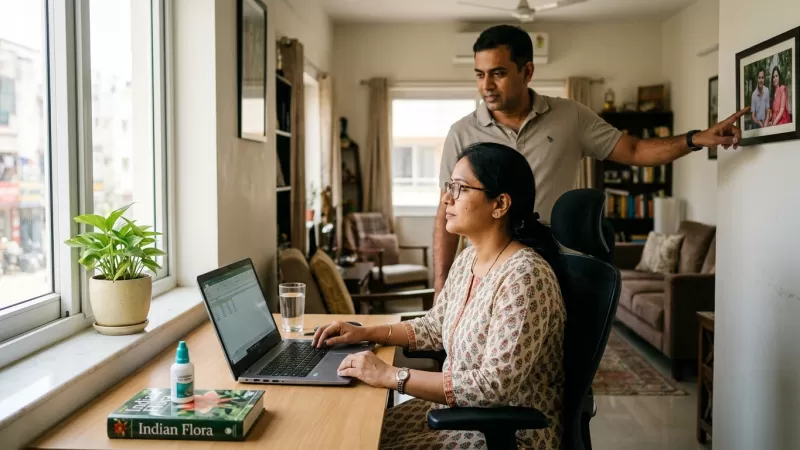
On a sticky summer afternoon, a home in Pune hums with the sound of ceiling fans. A laptop glows on the dining table, and a phone buzzes beside a half-finished glass of chaas. For many Indian adults working from home, this scene is the new normal. WFH eye health in India has quietly become a daily concern, not just because of long work calls, but because every break — chai, lunch, even a quick WhatsApp reply — still happens on a screen.
Unlike office days, where natural interruptions once forced a pause, the WFH rhythm tends to roll on without boundaries. That said, most homes never planned for the extra hours our eyes now spend staring at devices throughout the day.
Why Indian Work From Home Days Strain The Eyes Differently
In many Indian homes, the work from home eye strain Indian adults feel is not just about the long meetings on Zoom or Teams. It's the way the screen use never truly stops — checking the phone during every break, reading news before breakfast, scrolling through family WhatsApp groups after logging out of work. Even the old walk to the canteen or water cooler that gave office eyes a real break is missing.
Here is the catch: at home, there’s no commute or corridor chat to force a genuine pause. The boundaries are blurred. Some WFH adults set up their workspace near a window for better light, only to discover that the brightness outside makes their eyes ache by afternoon. Others shift to the sofa with a phone, thinking it’s a break, but the eyes never get to rest from screens.
All-day screen eye care in India home environments often gets overlooked, especially in busy joint families or apartments where space is shared. Children doing online classes, grandparents watching TV, and someone else taking a phone call in the next room — everyone’s eyes are working overtime. The modern Indian home is full of screens, not only laptops for work.
How Home Routines and Environments Create Unique Eye Fatigue
Work from home eye strain Indian adults experience often comes from routines that look nothing like those of office workers. The morning starts with checking emails on the phone before even getting out of bed. The laptop is set up on the dining table or a corner desk, sometimes facing a bright window. Natural light is good, but if the screen is much dimmer than the background, eyes work harder to adjust.
Lunch breaks at home usually mean scrolling through news, watching YouTube, or replying to family messages, instead of stepping away from devices. That means even the so-called breaks aren’t breaks for your eyes at all. After work hours, the TV or mobile screen comes out for a bit of relaxation. In many homes, this adds up to 12–15 hours of digital exposure in a single day.
Eye protection for Indian WFH workers becomes tricky because our homes are not designed like offices. There is often no adjustable chair, no anti-glare screen, and lighting is rarely even. Power cuts can force you to work in low light or shift to a phone hotspot, adding more stress to the eyes. The expectation to be always available (for family and for work) makes it hard to create real off-screen time.
Ophthalmologists often find that Indian WFH adults report more continuous screen use at home than in traditional offices, since breaks are filled with more digital activities, not less.
Everyday Signs Your Eyes Are Feeling the Strain
- Dryness and Grittiness: By mid-afternoon, many adults notice their eyes feel sandy, especially in air-conditioned rooms or during dry winters. It’s not always severe, but it’s there.
- Frequent Blinking or Rubbing: Eye rubbing after long Teams calls or squinting at WhatsApp messages is common. Sometimes you don’t even notice you’re doing it.
- Headaches That Start Behind The Eyes: A dull ache, especially after a day with lots of spreadsheet work or reading small text, is often the first clue.
- Blurry Vision When Shifting Focus: After staring at a screen, looking up at a distant wall or out the window can leave things fuzzy for a few seconds.
- Needing to Increase Font Size or Brightness: Many WFH adults quietly bump up the size of text or the brightness of their devices by lunchtime. It helps, but it also signals that the eyes are tired.
Practical Eye Care Habits for Indian WFH Adults
- Real Breaks — Not Just Screen Swaps: Instead of scrolling your phone during chai time, try stepping onto the balcony or looking at a far-off tree for a few minutes. The eyes need distance, not just a different screen.
- Match Screen Brightness to Room Lighting: If your workspace faces a bright window, close a curtain or shift so that the screen and the background are more similar in brightness. This reduces eye fatigue considerably.
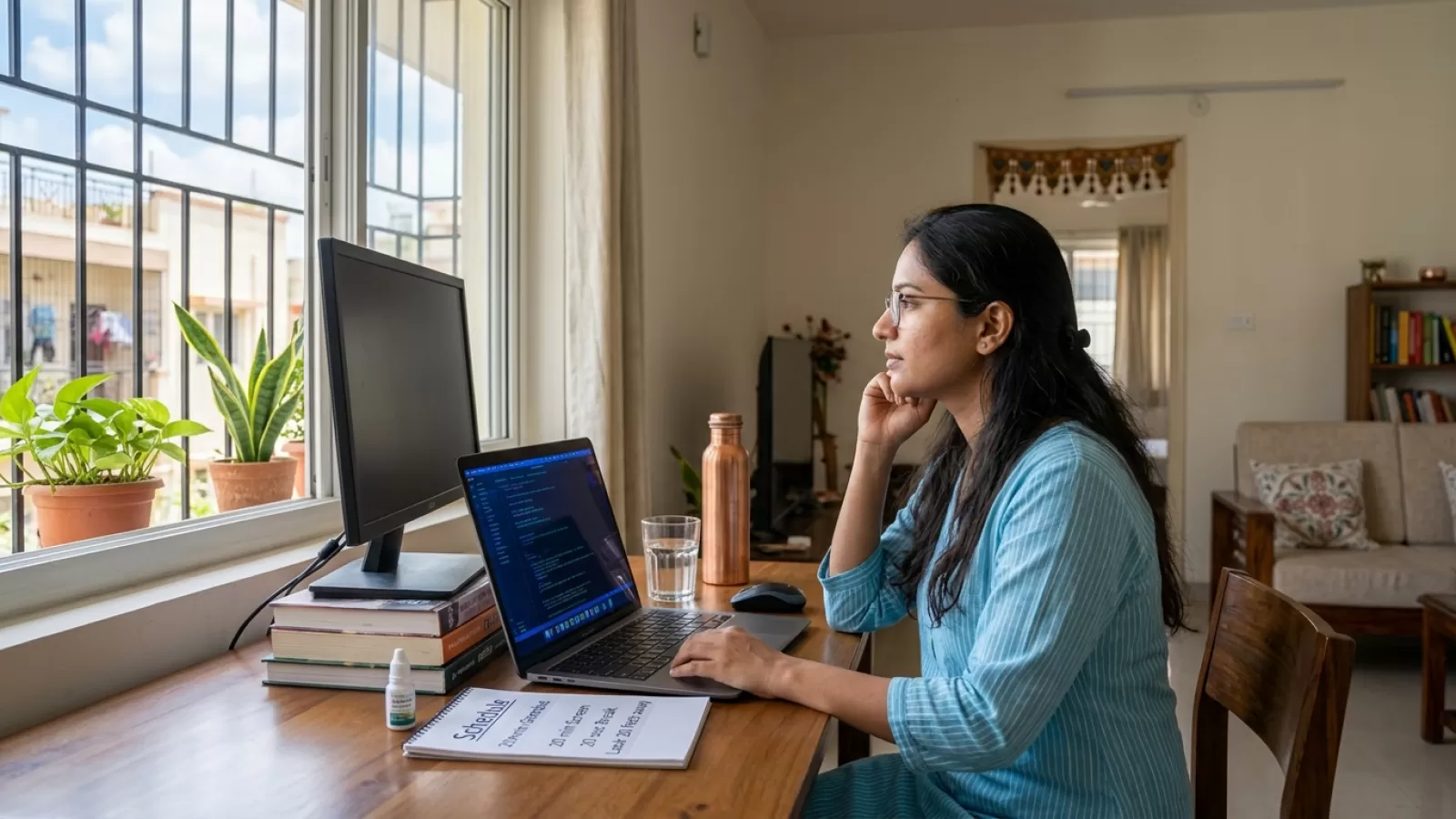
- 20-20-20 Rule (With A Twist): Every 20 minutes, look at something 20 feet away for 20 seconds. In Indian homes, this could be gazing out the window at the neighbour’s mango tree or even just across the room at a family photo.
- Blink Reminders: During concentrated work, blinking rate drops sharply. Try keeping a sticky note near your screen as a gentle reminder to blink, especially during intense focus.
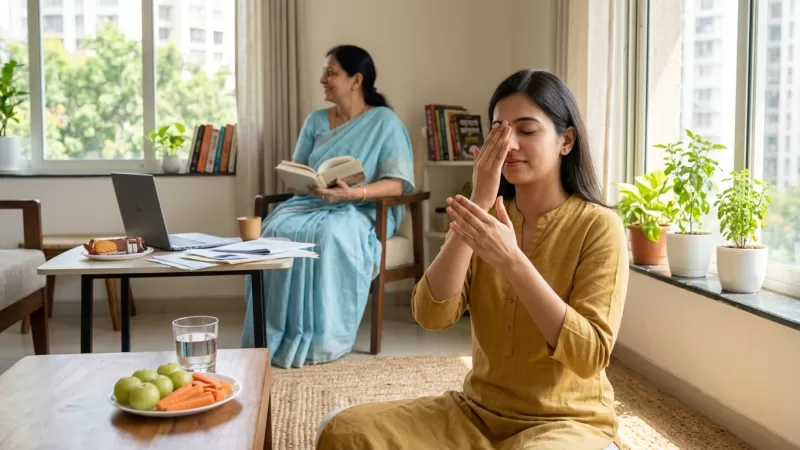
- Evening Eye Rest: After work, resist the urge to immediately turn to TV or YouTube. A simple routine — splashing cool water on your face, sitting with your eyes closed for five minutes, or lying down for a short break — often helps tired eyes recover.
All-day screen eye care in India home setups can also mean adjusting screen text size, increasing contrast, and using larger monitors if possible. In homes where multiple adults work remotely, agree on quiet, device-free times — even 15 minutes after lunch — so everyone’s eyes can rest together.
How Eye Fatigue Shows Up in Indian Home Routines
On many evenings, a working professional commuting in Bengaluru used to catch a nap or simply stare out of the bus window, letting the eyes relax. Now, the pause between work and home is missing. Instead, after logging off, the laptop is closed only to open Netflix or scroll through social media. The same happens in countless Indian cities and towns — the transition from "work screen" to "personal screen" is so smooth that the eyes get no true break.
Many families in Indian apartments have discovered that eye strain builds up gradually. It’s not a sharp pain, but a slow, creeping tiredness that lingers even after a good night’s sleep. During power cuts, some switch to mobile screens with higher brightness, making the strain worse. For parents, keeping an eye on kids’ online classes adds another layer of screen time. The tricky part is, these patterns are so woven into the day that you don’t always notice until the eyes start complaining.
When It’s Time To Consult a Doctor About Eye Strain
Most of the time, WFH eye health India routines can be managed with small adjustments at home. But if you notice persistent pain, red or swollen eyes, double vision, or headaches that don’t improve with rest, it’s wise to consult an eye specialist. Some people discover they need glasses or a change in prescription after several months of working from home. If you ever feel like your vision is worsening, don’t just wait it out — a professional opinion is always the safest route.
Common Questions
Eye health can feel like one more thing to manage in an already full day. Many Indian adults wonder if their routines are making things worse, or if small tweaks are enough. Here’s what often comes up in homes across the country.
What specific eye health protections should Indian WFH adults implement differently from standard office screen workers?
In Indian homes, the biggest difference is that breaks often involve screens too — checking personal messages, reading news, or watching TV. So, WFH eye health India routines should include deliberate off-screen pauses: look out the window, chat with a family member, or simply close your eyes for a minute. Adjusting the work spot to avoid bright sunlight behind your screen and using a larger font can also make a big difference at home, where lighting and furniture are less controlled than in offices.
How does the WFH environment create unique eye strain challenges that the typical office environment does not?
Home offices in India are often set up on dining tables, sofas, or beds, with lighting that’s not always ideal. Power cuts and shared spaces mean screens are sometimes used in dim or uneven light. Plus, the line between work and leisure screens blurs at home — there’s less chance for the eyes to rest. Unlike offices, where communal spaces and natural breaks are built in, home routines can keep the eyes working all day long.
What is the most important single eye health habit for Indian adults whose work involves continuous screen use throughout the home working day?
The one habit that helps most is to schedule genuine off-screen breaks every hour. Step away from all devices, even if it’s just to make chai or water the tulsi plant on your balcony. Let your eyes focus on something far away, not another screen. This small change often brings more relief than adjusting screen settings alone.
How do breaks from the laptop screen need to be structured for Indian WFH adults to actually provide eye rest rather than simply switching screens?
A true break means putting away all screens, even your phone. In many homes, it helps to set a five-minute timer every hour — walk to another room, wash your face, or look at the sky. Try using chai or snack times as real off-screen pauses, sitting with family or just enjoying a quiet moment. The key is distance and rest for the eyes, not just a change in device.
When does the eye strain from Indian WFH screen use indicate a vision change that needs professional assessment?
If you notice your vision is blurry even after a night’s rest, or you start getting headaches, pain, or red eyes that last for days, it’s time to check with an eye doctor. In some Indian homes, people discover they need new glasses or have underlying eye issues only after months of WFH screen use. Don’t wait for severe discomfort — if simple changes aren’t enough, getting professional advice is always best.