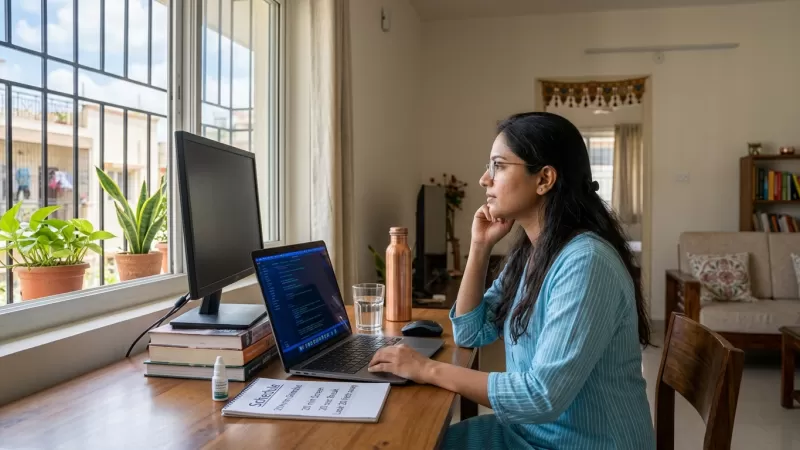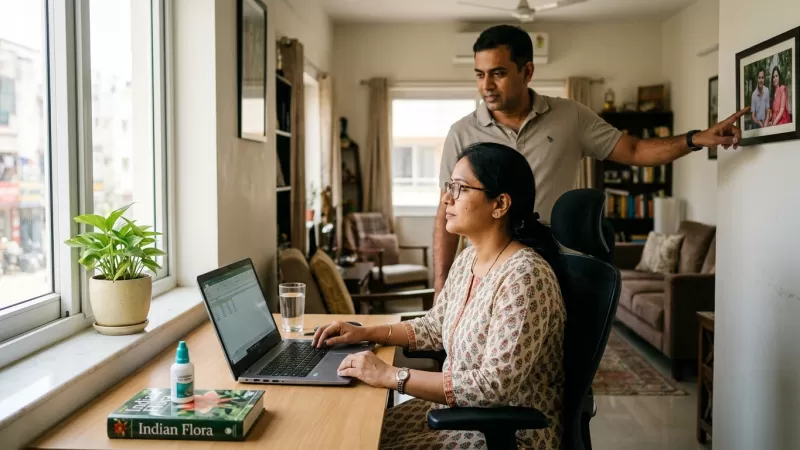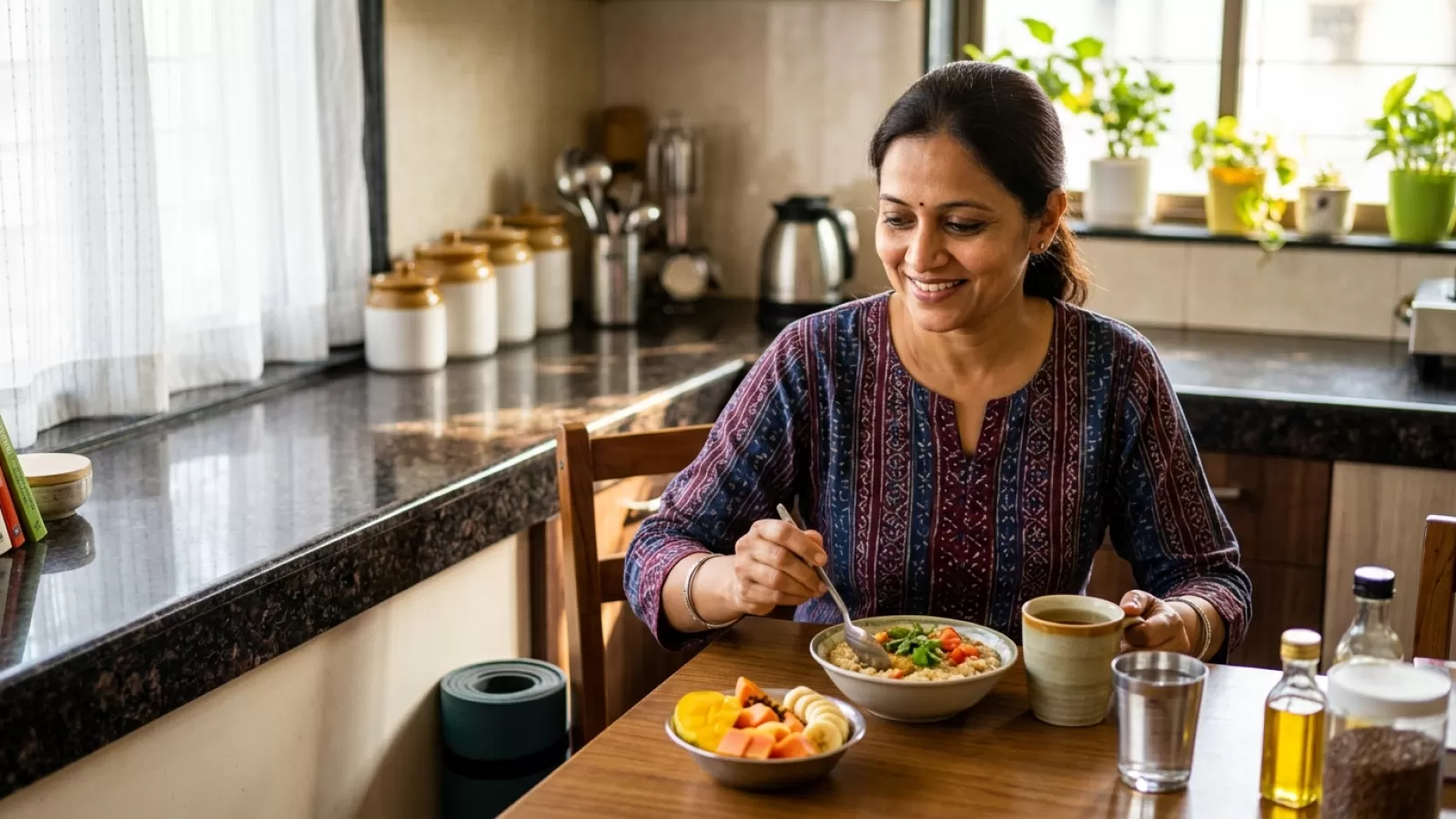
In many Indian homes, health is shaped by the quiet decisions that happen when nobody is watching. Small daily health practices in India — like filling a steel glass with warm water before chai, or choosing roti-sabzi over leftover fried snacks late at night — tend to last much longer than any New Year's resolution. These choices often look ordinary, but their steady rhythm shapes long term wellbeing habits in India far more than any dramatic overhaul.
It's the simple act of climbing two flights of stairs in a Mumbai apartment block, taking a 10-minute walk after lunch in a Bengaluru office park, or stretching arms overhead during a power cut in the evening. Each of these Indian adult health habits that last rarely feels remarkable. But when you look back over years, these tiny rituals quietly build better health that survives busy seasons, family pressures, and changing trends.
Why Quiet Routines Are Common in Indian Adult Life
Many Indian adults rarely announce their wellness habits — they simply do them, day after day. You might see a grandmother in Punjab rolling out chappatis at 6am, her joints still nimble at 70, or a software professional in Pune making time for a brisk evening walk after dinner, rain or shine. These routines often emerge not from health fads, but from what fits smoothly into daily life.
In joint families, routines are shaped by shared meals, school runs, and household chores. The morning chaos of getting children ready, managing tiffins, or packing work bags often squeezes out time for big changes. But small daily health practices in India — like sitting cross-legged on the floor for a meal, or using stairs instead of the lift — survive because they don’t disrupt the flow of family life. They blend in.
Busy mornings, late dinners, power cuts, and humid summers all nudge adults towards routines that work in real homes. That’s why the healthiest habits in Indian households are often the ones that feel least dramatic and most repeatable.
Why Small Consistent Habits Stick While Dramatic Changes Fade
Everyone has seen friends or family jump into intense fitness programs, sugar fasts, or ambitious wellness routines — only to quietly drop them a month or two later. The tricky part is, dramatic changes rarely survive exam seasons, festival travel, or a run of late work nights. In contrast, small daily health practices in India stick around because they ask less, fit better, and don’t require special equipment or time slots.
Nutritionists who work with Indian families often find that meal consistency — like including dal, sabzi, and dahi in most dinners — delivers more lasting health than restrictive diets. There’s a reason the older uncle who walks to the temple every morning has better stamina than cousins who tried a gym membership for a few months. Consistency, even in small doses, is what makes a habit last.
Long term wellbeing habits in India usually emerge from observing elders, adjusting for local weather, and choosing what feels sustainable. Changes that blend into the family’s daily rhythm — like a nightly stroll, or a small bowl of makhana instead of chips — tend to stick, even when life gets hectic.
Signs That Small Daily Practices Are Working (Or Missing)
- Steady energy through the day: You notice fewer afternoon crashes or cravings for chai-biscuits when regular movement and wholesome meals are part of the day.
- Good mobility and flexibility: Elders who sit on the floor, squat for chores, or walk daily usually maintain joint comfort longer than peers who avoid these small movements.
- Sleeping well most nights: Gentle routines — like climbing stairs, winding down with family after dinner — support more restful sleep, even in noisy neighbourhoods.
- Digestive comfort: Regular meal times, home-cooked khichdi or dal-chawal, and a habit of sipping warm water often mean less bloating or acidity, even during festival seasons.
- Resilience during busy or stressful periods: Adults with ingrained small daily health practices in India bounce back faster after late nights, travel, or family disruptions.
Practical Small Health Habits That Fit Indian Adult Life
- Start each day with a glass of warm water: In many households, elders swear by this. It’s gentle on the stomach and easy to maintain, even during power cuts or busy mornings.
- Short walks after meals: Ten minutes around the block, or even pacing the terrace during monsoon, helps digestion and supports long term wellbeing habits in India. It doesn’t have to be a formal exercise session.
- Choosing dal, sabzi, and dahi over processed snacks: On evenings when energy is low, falling back on simple Indian staples instead of instant noodles or takeout builds better health over years.
- Using stairs when possible: Climbing up to the third floor, even if slowly, keeps leg strength and balance intact — especially noticeable in adults above 50.
- Sitting on the floor (and standing back up): This habit, still common in many Indian homes, quietly maintains core strength, mobility, and balance. Even a few times a day, it makes a difference over decades.
How Small Health Practices Appear In Everyday Indian Routines
A kitchen in Nagpur at 6am. Steam rises from a pot of boiling dal as the radio plays quietly in the background. The family’s eldest member sits cross-legged on a woven mat, sorting leafy greens, while a younger adult refills the water bottles for school and work. There’s not much talk of diets or fitness goals — just the quiet repetition of habits that have lasted for years.
Outside, you might spot a group of seniors walking briskly around the local park, chatting about last night’s cricket scores. Someone pauses to stretch their calves by the gate. A homemaker heads to the market, carrying vegetables in a cloth bag, counting that walk as her movement for the day. Later, after dinner, a parent and child step out for a gentle stroll, waving to neighbours. These moments don’t stand out, but together, they are the fabric of Indian adult health habits that last.
When A Doctor’s Input Is Needed
If you notice persistent pain, sudden changes in weight or appetite, or ongoing fatigue that doesn’t improve with rest and simple routines, it’s wise to check with a doctor. Many small daily health practices in India are safe for most adults, but any new or unexplained symptoms deserve a professional opinion. Simple habits are helpful — but don’t ignore signs that need attention.
Common Questions
Every family has its own rhythm, so what works in one home may look different in another. The beauty of small daily health practices in India is that they can be adapted for your own routine, space, and season of life. Here are answers to some of the most common questions adults ask about building long term wellbeing habits in India.
What are the smallest daily health practices that have the greatest long-term impact for Indian adults?
Simple habits like drinking a glass of warm water in the morning, taking short post-meal walks, including dal and sabzi in most meals, and choosing to use stairs when possible have a surprisingly big impact over years. In many Indian homes, just sitting on the floor while reading the newspaper or sorting vegetables, and getting up without support, quietly maintains joint strength. These small practices, repeated over decades, add up to better mobility, digestion, and energy in older age.
Why do small consistent health habits often produce better long-term results than intensive wellness programs?
In most Indian households, life is unpredictable — school exams, family functions, power cuts, and work deadlines can disrupt big plans. Small daily health practices in India survive these ups and downs because they are easy to repeat and don’t require special effort. For example, a short evening walk or preparing simple home-cooked food is manageable even during busy weeks, unlike strict diet or exercise programs that often fall apart when routines are disrupted.
How do you build a long-term health practice into Indian adult life that survives everything — busy seasons, illness, family disruptions?
The secret is choosing habits that blend into your daily routine, not ones that demand extra time or money. Many families replace tea-time snacks with roasted chana or makhana, or squeeze in a five-minute stretch while waiting for milk to boil. When you link a health habit to something you already do (like walking after dinner), it’s more likely to last through busy, stressful, or unpredictable times.
What is the most important long-term health habit for different age groups of Indian adults?
Younger adults benefit most from movement — regular walks, stretches, or even household chores. Middle-aged adults often find meal consistency (dal, sabzi, dahi) and sleep routines matter most. For seniors, mobility habits like sitting on the floor and joint-friendly exercises are key. In every age group, small daily health practices in India, like using stairs or walking to the market, remain valuable for building long term wellness India-wide.
How do you stay motivated to continue small daily health practices when the results are not immediately visible?
Motivation tends to fade when results are slow, but in many Indian families, these habits are simply part of the daily routine — not something you have to think about. Watching elders who move with ease in their seventies or seeing your own stamina improve over years (not days) can remind you why it’s worth keeping up. Sometimes, just knowing these small actions are what your body will thank you for later is enough to keep going, even when progress feels invisible.