In many Indian homes, wellness habits don’t come from grand declarations. They show up in smaller, almost invisible decisions: filling a copper lota with water and leaving it by the bedside, doing five spinal twists while waiting for the cooker’s third whistle. Building wellness habits in India often means weaving them into the chaos of shared bathrooms, morning chai, and the sound of slippers on mosaic floors.
These days, the pressure to be healthy is everywhere, but the reality is that the habits that last are the ones that feel like part of the family’s rhythm. Building wellness habits India-style isn’t about signing up for something new every January. It’s about noticing which moments are already yours, and quietly anchoring something good right there.
Why So Many Promising Wellness Habits Fade In Indian Households
There’s a pattern that repeats itself in Indian homes: a new healthy habit starts with excitement, rides high for a few weeks, and then quietly disappears. Maybe it’s a post-dinner walk around the colony, or swapping evening chai for green tea. Everything feels possible until a wedding, a string of late nights, or a festival weekend arrives. Suddenly, routines shift, someone else needs the bathroom first, or relatives fill the guest room. The habit breaks—sometimes for just a day, sometimes forever.
It’s not because you lack willpower. In most families, daily life is unpredictable. One day you’re eating poha at 8am, the next you’re handing out tiffins at 7:10am while the milkman rings the bell. Even in smaller families, a single power cut or a child’s fever can throw the whole morning off. The tricky part is, most wellness advice expects a level of control that simply doesn’t exist in Indian adult life.
Building wellness habits India-style, then, has to work with these realities. If you try to force a habit that depends on everything being perfect, it will buckle under the first real disruption. The habits that stick are the ones that fit around the noise, the mess, and the endless small changes that come with living here.
Why Disruptions Break Good Habits—And What Indian Adults Experience
Most adults in India know what it feels like to start the same healthy habit over and over. The morning yoga that lasts three weeks, the after-dinner fruit that gets replaced by leftover barfi during Diwali, the evening walk that stops during monsoon. What happens is simple: the habit was never truly anchored where it couldn’t be shaken loose.
Nutritionists who visit Indian homes often find that lasting wellness habits Indian adults keep are ones that piggyback on existing routines—like drinking water after brushing, or doing shoulder rolls while waiting for dal to boil. If the habit needs a clean, quiet space or a strict time slot, it usually collapses the first time something interrupts.
Another thing: in joint families or even nuclear ones, routines are rarely about just one person. If Dadi wants her chai at 6am, or the kids need the bathroom first, your plan gets bumped. Even small festivals—Raksha Bandhan, Ganesh Chaturthi—bring guests, sweets, and late nights, testing every new routine. The catch is, life here is designed to keep you flexible. So, the only habits that survive are the ones that flex with you.
Clues That Your Wellness Habit Isn’t Truly Embedded Yet
- You start over—again and again. If every Monday you’re re-committing to that same walk or lemon water, it’s a sign the habit isn’t fitting into your real routine.
- One disruption, and it’s gone. The minute there’s a guest, a late night, or a school holiday, the habit disappears—and doesn’t return easily.
- You need reminders or apps. If you have to set five alarms or stick post-its everywhere, the habit hasn’t become part of your normal day.
- It feels like work, not a natural pause. When you dread the effort or keep postponing, your habit isn’t yet stitched into your everyday rhythm.
- Family life makes it impossible. If your habit needs everyone else to cooperate (empty kitchen, silent house, no visitors), it’s not built for Indian adult life.
Ways To Build Lasting Wellness Habits That Survive Busy Indian Life
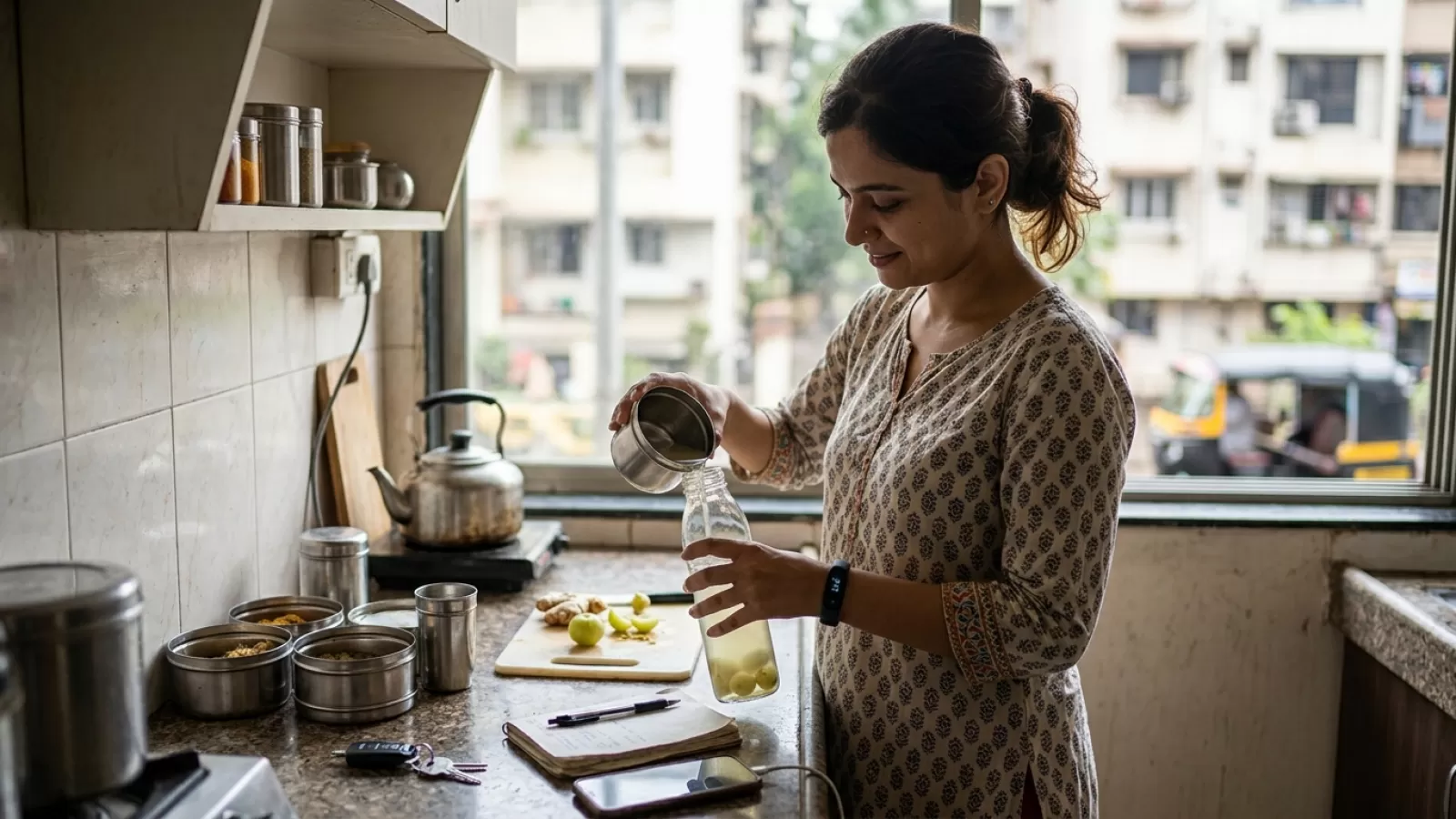
- Link habits to existing routines, not fixed times. For example, do five stretches while the cooker hisses or sip warm water right after brushing, not at 6:00am sharp. This works because these moments happen even when the day is topsy-turvy.
- Start with the smallest possible version. Instead of a 30-minute walk, try three laps around your building after dinner. If you can stick to this during the busiest week—festival season, guests at home—it’s the right size.
- Use visible cues in shared spaces. Place a glass of water on your bedside table, keep roasted makhana in a jar on the dining table, or set out your walking shoes near the door. These reminders blend into family life without needing apps or alarms.
- Let habits be imperfect. Some days, you might only manage two out of five stretches or take your walk while talking to a relative on the phone. That’s still a win. If the habit can survive a messy day, it’s likely to last.
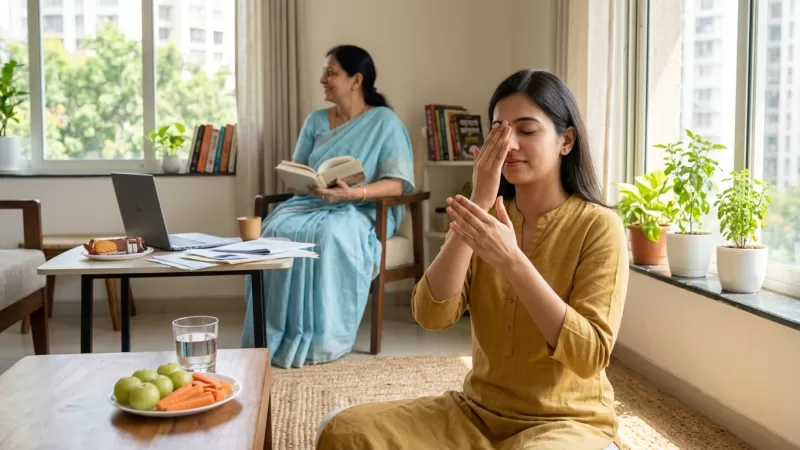
- Share or adapt habits with family. Invite your partner to join you for a two-minute breathing pause after chai, or play soft bhajans for morning stretches so Dadi feels included. The more the habit fits the household mood, the less likely it is to be bumped off the schedule.
That said, the most lasting wellness habits Indian adults create are the ones that feel almost invisible—woven so gently into the day that they’re hard to forget, even when life gets hectic.
How Building Wellness Habits India-Style Shows Up In Real Routines
Many families in Indian cities have quietly discovered small habits that last, even when life is unpredictable. There’s the couple who keep a small stainless steel bowl of dry fruits on the breakfast table so grabbing a handful becomes part of the morning rush, or the senior who does ankle circles sitting on the bed before standing up, every single morning.
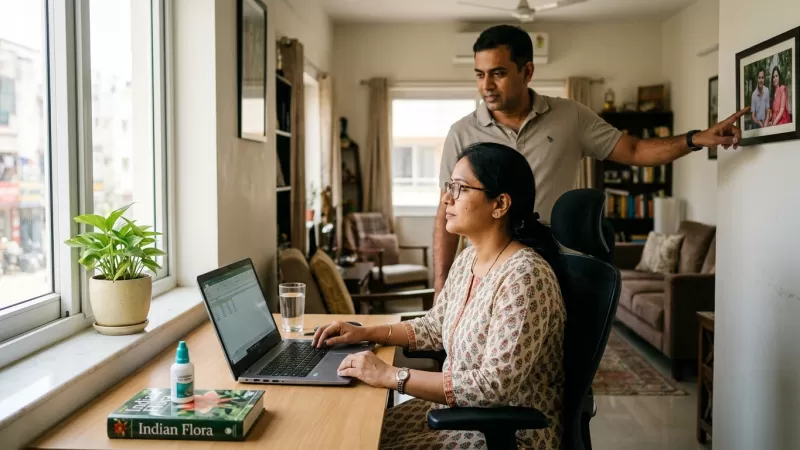
In working-from-home setups, you might see someone standing and stretching during every power cut, instead of scrolling through messages. Or a homemaker who uses the time waiting for the milk to boil to do slow neck rolls, because that minute is always available, even on the busiest mornings.
The point is, wellness habits that survive busy Indian life are almost always attached to something that already happens—a meal, a prayer, a daily task, or even a shared moment with family. The more a habit fits into the flow of Indian adult routines, the more likely it is to survive, even through festivals, late nights, or unexpected guests.
When To Ask For Support Around Wellness Habits
If you find yourself stuck—unable to restart a habit after several tries, or if your routine feels impossible because of pain, anxiety, or overwhelming fatigue—it’s wise to speak with a doctor, a physiotherapist, or even a trusted elder. Sometimes, what feels like a habit problem is really about not having the right support or information. And in many Indian families, getting a little practical help or advice can make all the difference.
Common Questions
It’s normal to feel like you’re the only one struggling to keep up with healthy routines, but these challenges are everywhere—especially in Indian homes where life rarely stays predictable for long. Below you’ll find answers that come straight from the rhythms of Indian households, not from perfect schedules.
Why do wellness habits collapse so consistently for Indian adults who are genuinely motivated?
In most Indian homes, daily life is full of small, unpredictable changes: power cuts, festivals, guests, or a family member falling ill. Even the most motivated adults find that their routines get disrupted by things outside their control. The problem isn’t a lack of motivation—it’s that many wellness habits are built on the idea that every day will be the same. In reality, Indian life is full of exceptions. Habits that aren’t flexible enough to handle these shifts tend to collapse, no matter how much you want them to last.
What is the difference between a habit that survives disruption and one that collapses at the first exception?
A habit that survives disruption is usually attached to something that always happens—like brushing teeth, boiling water, or waiting for the lift—instead of a strict time or a perfect condition. If your habit can shrink, adapt, or piggyback on another routine, it’s likely to return even after a disruption. On the other hand, if your habit needs everything to be perfect (quiet, free time, empty kitchen), a single unexpected event can break the chain, making it hard to start again.
How do you build a wellness habit small enough that it keeps going even during the hardest weeks in Indian adult life?
Start with the tiniest version—less than five minutes, or just one simple action that fits into the busiest day. For example, drink a glass of water after brushing, or do three stretches while waiting for the pressure cooker. If your habit feels easy on the worst day (wedding, illness, guests at home), it’s the right size. Many families have found that these tiny habits are the ones that stick, because they never feel overwhelming, even in the toughest weeks.
Is the idea of a fixed habit formation period realistic for the level of unpredictability in Indian daily life?
For most Indian adults, the idea that a habit will “stick” after 21 or 30 days doesn’t match the unpredictability of daily life. One festival, school break, or family emergency can reset everything. It’s more realistic to focus on habits that can survive breaks—ones that are easy to restart and don’t require perfect conditions. In Indian households, it’s the habits that can pause and resume without stress that truly last.
What is the single most important principle for building lasting wellness habits as an Indian adult?
The most important principle is to anchor your wellness habit to something that already happens in your day, no matter what. Whether it’s a prayer, a meal, or a daily household task, if your new habit becomes part of that routine, it’s more likely to survive everything Indian adult life throws your way. Even when life gets messy, these anchored habits tend to come back—again and again.