In many Indian homes, the first glass of water often arrives much later than it should. Between the morning chai, rushing to send children to school, and a quick poha or toast, hydration habits for Indian adults easily slip to the bottom of the list. Sometimes, it’s not until a dull headache sets in during a sticky summer afternoon that anyone realises they haven’t had plain water since waking up.
This pattern is so familiar that it hardly feels strange. The truth is, most adults aren’t ignoring their daily water intake habits in India on purpose—they’re just busy, distracted, or too used to reaching for another cup of chai instead. Remembering to drink water Indian adults often gets lost in everyday life, but there are ways to make hydration easier without adding yet another thing to remember.
Why Indian Adults Often Go Hours Without Drinking Water
Daily routines in Indian families tend to be packed. For many, the day starts before sunrise, especially in the summer. There’s chai to make, tiffins to pack, and sometimes washing to finish before anyone even thinks about breakfast. The first liquids consumed are usually chai or coffee, not water. After that, it’s a blur of work, errands, commuting (or logging into Zoom calls), and household chores.
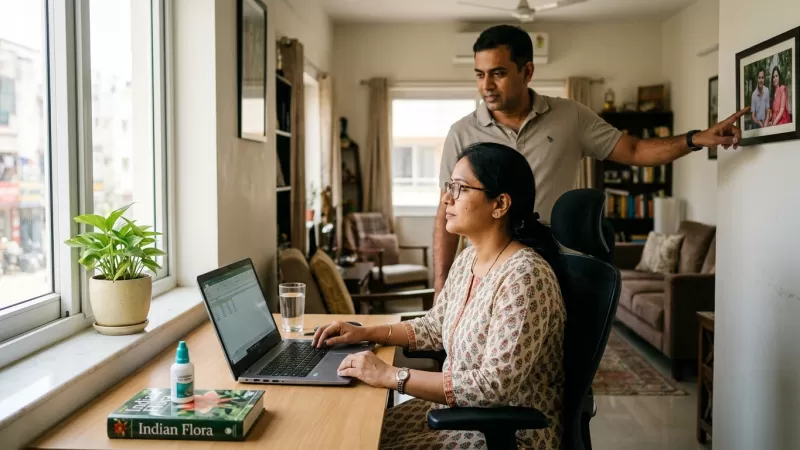
Most people don’t intentionally skip water. They simply don’t notice their thirst. In Indian offices, it’s common for professionals to realise at 3pm that the only drinks they’ve had all day were two cups of tea. For those working from home, the pattern isn’t much different. Shared spaces, frequent interruptions, and the pressure to multitask mean that reaching for water rarely comes naturally.
During peak summer, when the power goes out and the fan stops, thirst sometimes arrives as a headache or tiredness, not a dry mouth. Many families treat these signals with another cup of chai, thinking it will restore energy, but the real issue is missed hydration. Daily water intake habits in India often depend on cues like meal times, but these are easy to miss on busy or irregular days.
Why Busyness and Habit Make Water Easy to Forget
Several patterns make it difficult to remember drinking water Indian adults need. In Indian workplaces, long meetings, back-to-back calls, and commutes in traffic leave no time for mindful sipping. Home routines are just as demanding. Seniors supervising homework, homemakers juggling multiple meals, or professionals trying to finish tasks before a deadline—all are at risk.
Nutritionists who counsel urban families often find that hydration habits for Indian adults are disrupted because water simply isn’t present in their visual field. Noticing a bottle on the table, or a glass next to the stove, is what prompts many people to actually drink. If the water isn’t visible, it’s forgotten. Also, in many homes, there’s a belief that thirst will always make itself known, but this is not always true—especially as people age or during humid days when sweat doesn’t evaporate quickly.
Another factor is the cultural association of drinking with meals. Many adults, especially seniors, only drink water with lunch or dinner, rarely in between. Many Indian homes also prefer warm drinks—tea, coffee, or sometimes buttermilk—over plain water, further reducing water intake. In winters, the urge to drink water drops even more, since the body doesn’t signal thirst as obviously.
Everyday Signs You’re Not Hydrated Enough
- Persistent Headaches: The kind that creeps in behind the eyes by late afternoon, especially in summer. Many treat it with chai or paracetamol, not realising it’s often dehydration.
- Sluggish Focus: A foggy feeling during work calls or while helping kids with homework. This is a classic sign your daily water intake habits in India are not working for you.
- Dry Mouth or Cracked Lips: Many adults notice this only after speaking for a long stretch, especially teachers or those on calls.
- Low Urine Output or Dark Colour: In families where bathroom habits are discussed, this is a reliable cue, though it’s not always checked.
- Feeling Tired for No Reason: A drop in energy that leads to reaching for a snack or another cup of chai, when water would actually help more.
The tricky part is that these signs often blend into daily tiredness or the effects of skipping a meal, so they’re missed or misattributed in busy Indian homes.
Habits That Make Hydration Easier Without Needing to Remember
- Pair Water With Fixed Routines: Many families have found that tying a glass of water to existing habits—such as drinking water before morning chai or after coming back from the market—works better than reminders. You don’t have to remember, you just do it as part of a sequence.
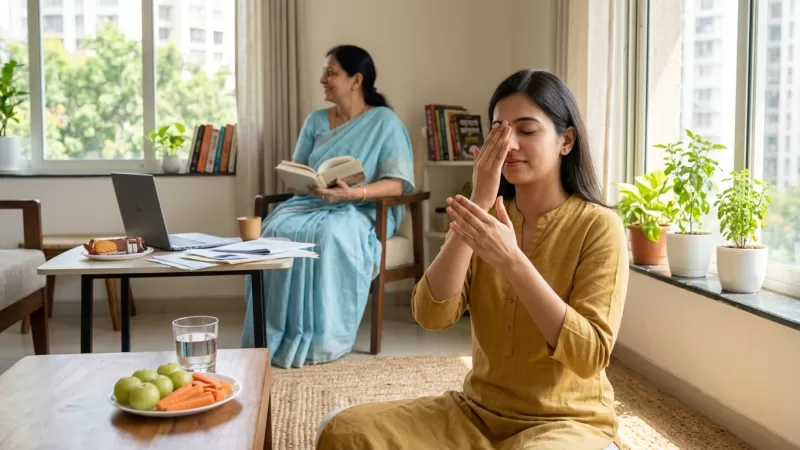
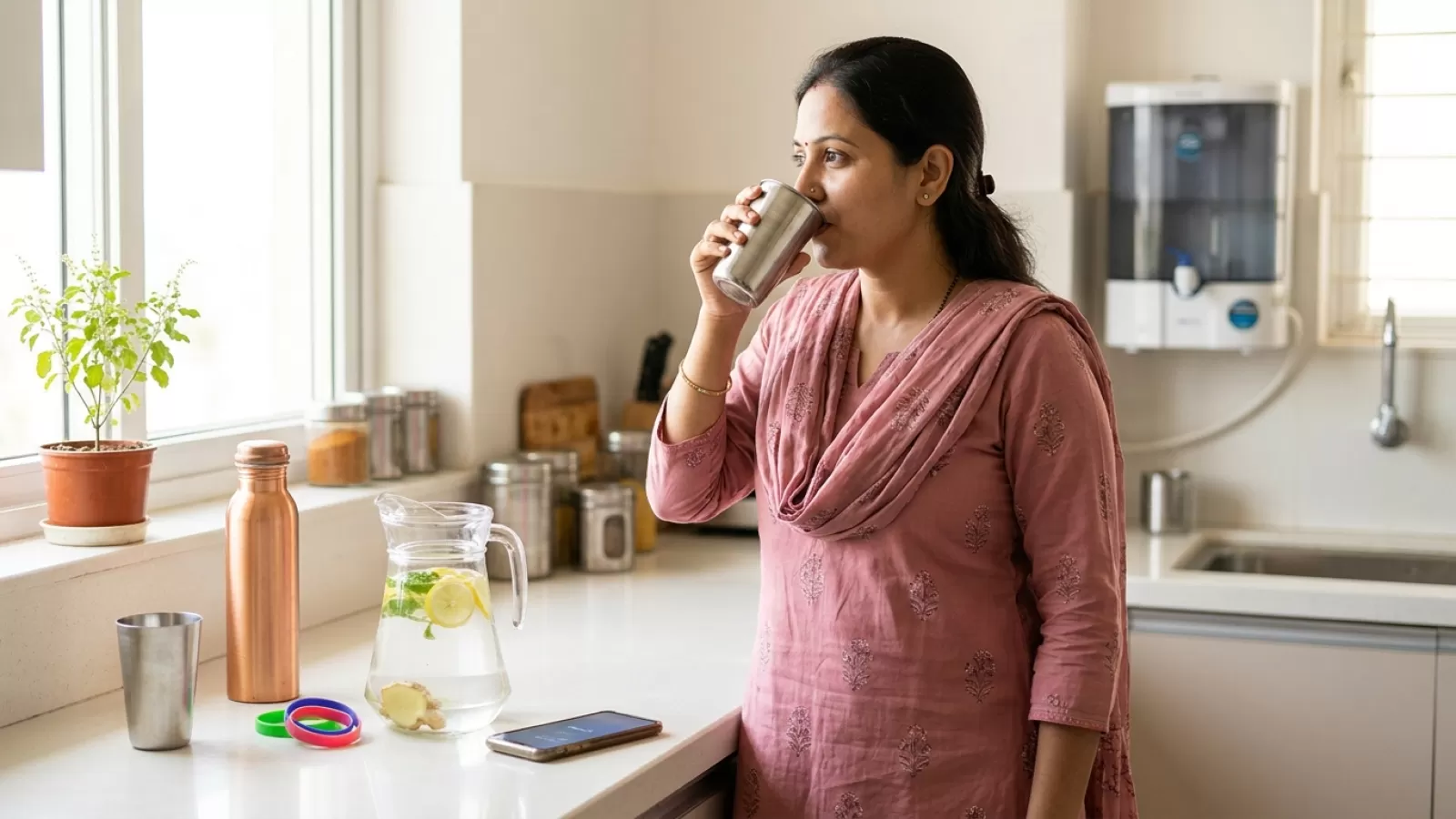
- Place Water Strategically: Keep a jug or bottle on the dining table, in the kitchen, or near your work desk. If it’s within sight, you’ll sip more often. It sounds simple, but in daily Indian life, out of sight is truly out of mind.
- Use Traditional Water Vessels: Many Indian homes still use steel glasses or copper lotas for drinking water. These tend to be filled more frequently and are a visual cue. No need for imported bottles.
- Serve Water With Meals and Snacks: In joint families, serving water to everyone at the start of a meal creates a shared cue. Even during chai time, offering water alongside helps balance out the dehydrating effects of tea or coffee.
- Flavour Water Naturally: For those who find plain water unappealing, adding a slice of nimbu, a few tulsi leaves, or a pinch of jeera can make it tastier. Many families already do this in summer to encourage children to drink more; adults benefit too.
Making these steps part of the household rhythm is more effective than relying on willpower or alarms.
A Summer Afternoon in an Indian Kitchen: Hydration in Action
A kitchen in Nagpur at 6am holds the promise of another scorching day. The air is already thick, and the first task is boiling water for chai. Someone fills a steel lota with water to wash vegetables, but barely sips from it. By midday, the fridge hums with bottles of cooled water, but adults are too busy flipping rotis and stirring dal to pause and drink. The first hint comes as a heaviness behind the eyes, quickly attributed to the heat. Instead of water, a second cup of chai is brewed. Only when setting the table for lunch does someone finally pour a glass of water and finish it in two gulps. It’s a pattern repeated quietly in countless homes—hydration happens when routines allow, not when the body first needs it.
When It’s Time to Check With a Doctor
If you notice that headaches, dizziness, or tiredness don’t improve after drinking water, or if someone in the family is unwell or elderly, it’s wise to talk to a doctor. This is especially true during extreme heat or if there are other health conditions. Most of the time, small changes in hydration habits for Indian adults can make a big difference, but sometimes professional advice is the safest step.
Common Questions
Let’s address a few of the most frequent doubts about daily water intake habits in India. Each answer draws from everyday situations you might recognise at home, at work, or in your neighbourhood. If you’ve ever wondered why remembering to drink water is so hard, or what really counts as hydration in an Indian setting, you’re not alone.
Why do so many Indian adults consistently forget to drink water despite knowing they should?
Many Indian adults are simply swept away by the demands of daily life. Mornings are spent rushing through chores, commutes are exhausting, and workdays often run long. Hydration just doesn’t feel urgent until physical discomfort appears. In homes where tea, coffee, or buttermilk are the default drinks, plain water is easily forgotten. It’s rarely about ignorance—just the realities of busy routines and distractions.
What are the most effective habit cues for Indian adults to remember hydration throughout the day?
Pairing water with fixed routines works best. For example, drinking a glass before or after chai, with every meal, or after coming indoors from outside. In joint families, serving water to everyone at snack or meal times helps. Keeping water visible—on the dining table, kitchen counter, or next to your workstation—serves as a gentle reminder. These cues are easier to follow than trying to rely on memory or alarms.
Which Indian drinks count toward daily hydration and which ones actually reduce it?
Plain water, nimbu pani, coconut water, and chaas (buttermilk) all help with hydration. Tea and coffee, while liquid, contain caffeine that can cause the body to lose water, especially if consumed in large amounts. Sugary drinks or very salty nimbu sodas don’t hydrate as well. Many families think chai counts, but it’s better to have water alongside it. Dahi and watery sabzi also add some fluids, but they can’t replace regular water intake, especially in summer.
How much water do Indian adults actually need daily and does the famous eight glasses rule apply in Indian conditions?
The eight-glasses rule is a rough guide, but Indian climates and diets vary a lot. People in hot, humid places (like Chennai or Nagpur in May) need more water, while those in cooler areas might need less. Eating a lot of watery foods—dal, sabzi, dahi, fruits—adds to your intake. Most adults feel best when they have enough water to rarely feel thirsty and their urine stays pale. Listen to your body, and adjust for the season and your activity level.
How does living in different Indian climates affect daily water requirements and what adjustments are needed?
Hot and dry regions like Rajasthan or Delhi in May will cause your body to lose more water through sweat, so you’ll need to drink more. Humid areas like Mumbai make it harder to notice sweat, but fluid loss is still high. In winter or cooler hill stations, thirst signals can fade, so it’s still important to sip regularly. Adjust your hydration habits for Indian adults by watching for signs like tiredness or dry mouth, and drink more on days when you’re physically active or sweating.