Sometimes you don’t even notice that another day has slipped by without a single quiet moment for yourself. In Indian homes, self care habits India are rarely about lighting a scented candle or setting aside an hour for yoga. Instead, they’re about trying to find five minutes to finish your chai before it goes cold, or sneaking in a few deep breaths when everyone else is busy with their own routines. The reality? Those who always put others first—homemakers, working parents, adults in joint families—often live in a constant state of waiting for their own turn, which may never quite come.
That said, the idea of self-care is quietly shifting in many Indian households. It’s becoming less about grand gestures and more about carving out small, honest moments for yourself: a few slow sips of dahi with sugar after lunch, standing by the window for a minute, or washing your face after a sweaty round of afternoon chores. These tiny acts, tucked into familiar rhythms, are the real building blocks for lasting self care habits India.
Why Indian Adults Often Put Their Own Needs Last
It’s a pattern you’ll spot in every city and town: adults, especially women, eating at the kitchen counter after feeding everyone else, or professionals logging back into work after midnight once the household is quiet. Prioritising yourself India without guilt feels nearly impossible for many. There’s an unspoken expectation—sometimes from family, sometimes from within—that your needs can come later, after the children, elders, and work are taken care of. In many homes, the very idea of an Indian adult self care routine sounds like a luxury or even a selfish act.
Social norms often reinforce this. Elders may gently (or pointedly) remind you not to waste time on yourself. There’s pride in sacrifice. The homemaker who hasn’t bought herself new chappals in years, or the working adult who skips lunch to manage both office calls and school WhatsApp groups, are seen as strong and capable. But here’s the catch: over time, this constant self-neglect becomes the norm, not the exception. It’s so woven into daily life that you may not even notice when you last sat down just to rest, not to be productive.
What’s more, the rhythm of Indian homes—shared spaces, power cuts, noisy afternoons, the needs of extended family—means that finding a quiet block of time feels nearly impossible. Instead, you learn to squeeze yourself out of the picture, promising yourself you’ll find time later. That later rarely arrives.
Why Guilt and Habit Make Self-Care Difficult
Why does this pattern continue, even when you’re tired to the bone? For many, guilt is a major barrier. The idea of learning how to care for yourself as Indian adult sounds indulgent when compared to the endless list of things that need doing. There’s also the habit of busyness—if you’re not ticking something off a list, it can feel like you’re wasting time. Parents, especially mothers, are quietly praised for putting their own needs last. It’s seen as love, not neglect.
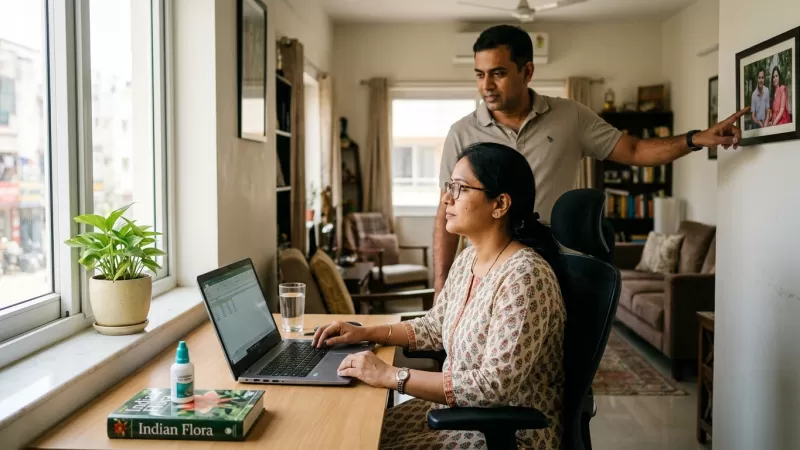
Work from home has mixed things up even more. Now, there’s no clear start or end to the day. The laptop sits on the dining table, and you’re answering emails while stirring dal. The habit of doing two or three things at once is hard to break. Even when you get five minutes, you may end up scrolling through your phone or planning dinner instead of resting.
Health coaches who work with Indian families often find that guilt, family expectations, and the sheer unpredictability of Indian household routines keep adults from even attempting small acts of self-care. The pattern is so familiar that it barely feels like a problem—until exhaustion or frustration starts to show up in daily life.
Subtle Signs You’re Always Putting Yourself Last
- Standing meals become the norm. If you’re regularly eating at the counter, finishing leftovers, or skipping meals entirely, it’s usually a sign that you’re not prioritising yourself India without guilt.
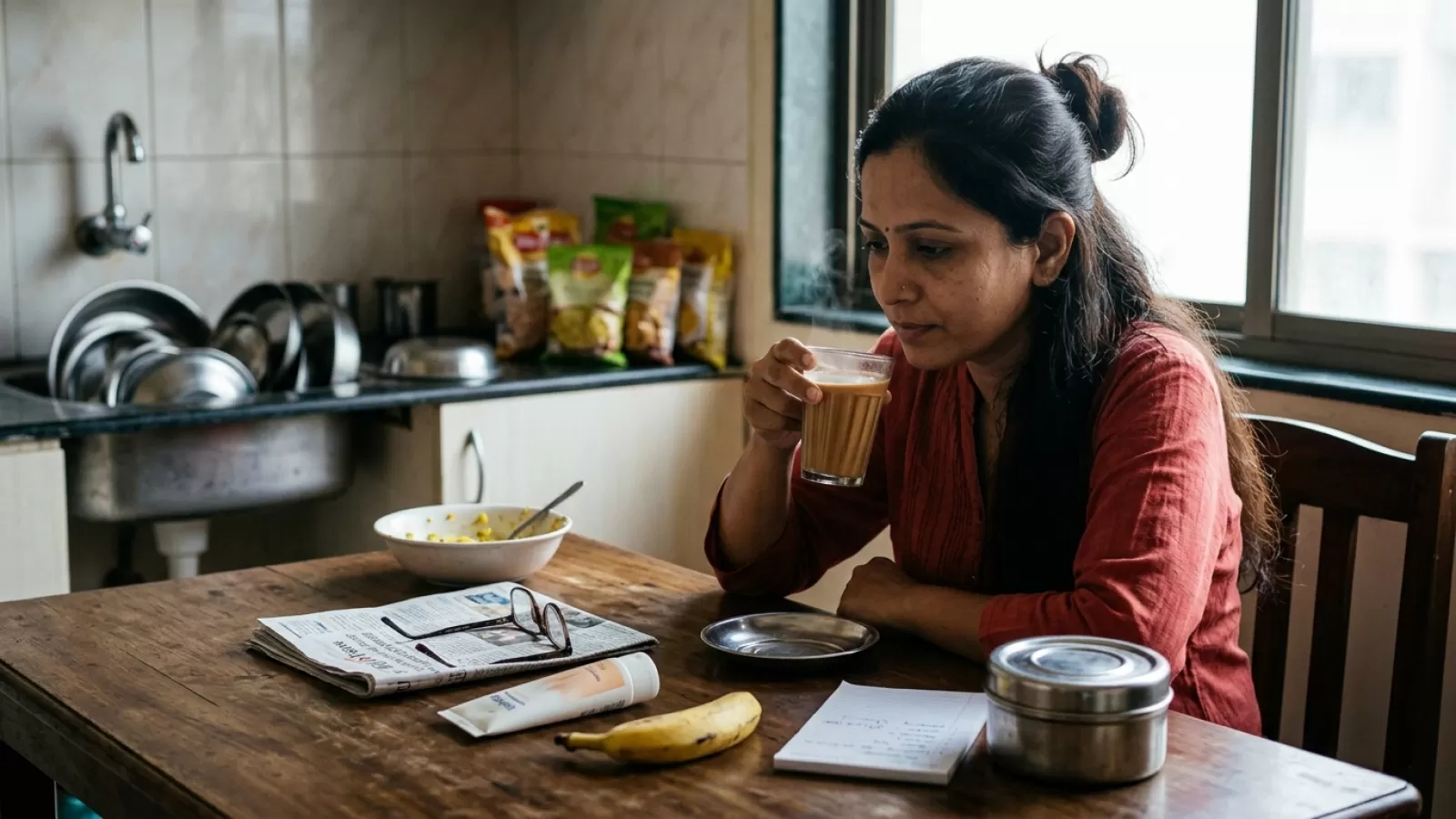
- Unfinished chai, cold rotis. You pour yourself tea but never finish it hot. Your own meal is whatever is left after everyone else is done.
- Feeling restless or resentful. There’s a low, constant irritation—not at anyone in particular, but at always being last on your own list. You might notice it as snapping at small things or feeling underappreciated.
- No memory of your last real break. If someone asks, “When did you last sit quietly for ten minutes?” and you genuinely can’t remember, that’s a sign.
- Physical tiredness that lingers. You wake up feeling as exhausted as you felt when you went to bed. Even weekends don’t bring real rest.
In many homes, these signs are brushed aside as “just how life is.” But they do matter.
Everyday Self-Care Steps That Actually Fit Indian Lives
- Claim a five-minute window. Instead of waiting for an hour that never comes, look for five minutes—after everyone’s breakfast, before picking up kids, or even during a slow cooker dal. This is your window. Stand by the window, drink your tea, or put your feet up and breathe.
- Eat one meal seated, on your own terms. If you can’t manage all three meals, start with one. Plate your food, sit down, and eat without rushing. Even if it’s just poha or leftover sabzi, this is your time. Small, steady changes like this often lead to bigger shifts in your Indian adult self care routine.
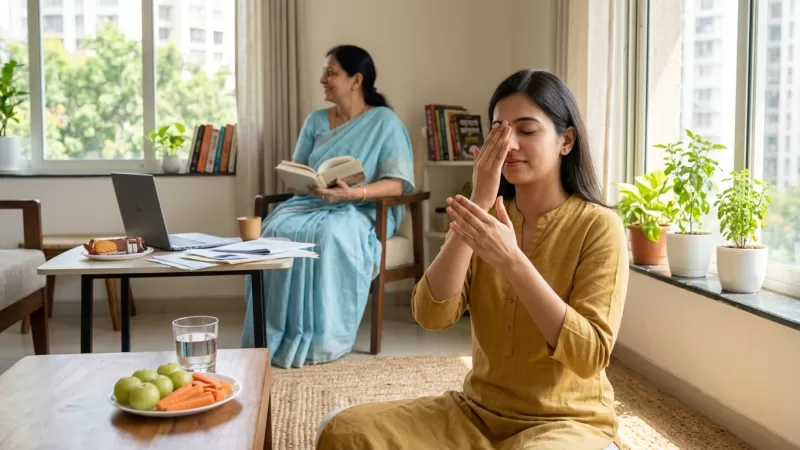
- Use transition moments for yourself. When you finish a chore—like hanging laundry or finishing office work—pause for a minute. Close your eyes, take a few deep breaths, or splash water on your face. These mini-pauses add up, especially when the rest of your day feels packed.
- Have a quick bedtime ritual. Many working adults find that a simple routine—washing your face, stretching for two minutes, or just switching off your phone ten minutes before sleep—helps signal to your body that this is your time. Even if you’re bone-tired, this ritual creates a sense of closure to the day.
- Say yes to small joys, without apology. If you like a particular snack (makhana, a piece of chocolate) or want to listen to a song, do it without waiting for permission. The more you practice putting yourself into your own day, the less guilty it feels over time.
None of these steps require a block of time or expensive tools. They fit into the cracks of a typical Indian household routine—during morning chai, after dinner, or while the pressure cooker whistles. It’s not about being perfect; it’s about showing up for yourself, in small ways, every single day.
How Self-Neglect Shows Up During Ordinary Indian Days
Let’s take a common pattern: On mornings when everything runs late, the homemaker is still in the kitchen long after everyone else has eaten. She stands by the sink, eating what’s left, her tea gone cold. Or think of the working professional in Hyderabad, logging into meetings before sunrise, barely pausing to eat, and then handling household chores in the evening. These routines become automatic. The quiet urge to rest or do something just for yourself fades behind the louder needs of others.
During festival seasons, the pressure can be even higher. Preparing sweets, managing guests, and keeping up with work means your own needs barely make it onto the list. The expectation is always to keep going, to manage everything. But small acts—like taking five minutes to breathe at the window, or enjoying a bowl of dahi quietly after lunch—break the pattern, even if only for a moment. These tiny habits are often the only way many adults begin to insert self-care into their Indian adult self care routine.
When Is It Time to Reach Out for Help?
There are times when tiredness and stress move beyond the usual. If you notice that your exhaustion is constant, you’re snapping at family regularly, or you feel low for days at a stretch, it’s worth speaking to someone you trust. If these feelings affect your sleep, appetite, or ability to function, a chat with a doctor or counselor can help. There’s no shame in asking for support. Sometimes, just sharing what you’re feeling with a friend or spouse is the first step toward prioritising yourself India without guilt.
Common Questions
Self care habits India can feel out of reach when daily life leaves little time or energy for yourself. The questions below come up often in Indian homes—especially among those who are used to putting their own needs last. Here are some real-life ways to start making small but meaningful changes, even in busy households.
How do Indian adults who consistently put others first begin building genuine self-care habits without guilt?
Start by noticing the small windows in your day—like after everyone’s breakfast or before shutting down your laptop. In many Indian homes, guilt fades when you see self-care as a way to recharge, not as neglecting others. For instance, a homemaker in a joint family might start by sitting down for her chai before clearing plates, or a working dad may listen to his favourite song during his commute. The key is to begin with tiny acts you can repeat, so they become part of your routine without feeling like a big, selfish gesture.
What are the most sustainable self-care practices for Indian adults who have very little time and energy left for themselves?
The most sustainable self-care habits India are usually the simplest: eating at least one meal sitting down, taking a two-minute pause after each chore, or stretching before bed. In many urban families, adults find these practices easier to stick with than elaborate routines. Even pausing to enjoy your evening chai on the balcony, or calling a friend for five minutes, can recharge you. The trick is to choose habits that fit into your existing day, instead of waiting for free time that never comes.
Why does taking care of oneself feel selfish to many Indian adults and how do you change that?
In Indian families, caring for others is often seen as a duty, while caring for yourself can be mistaken for being self-centered. This is deeply rooted in how many of us are raised. To shift this, start seeing self-care as something that helps you show up better for your family. For example, a mother who allows herself ten minutes to rest may find more patience with her children. Over time, as you repeat small self-care acts, guilt tends to fade and is replaced with a quiet sense of balance.
What is the minimum daily self-care that genuinely improves how an Indian adult feels over time?
Even five minutes makes a difference. Many adults in Indian families have quietly discovered that sitting down to eat one meal, taking a slow walk after dinner, or spending five minutes in silence can gradually lift their mood and energy. These aren’t dramatic changes, but over weeks, they add up. The minimum is simply inserting yourself somewhere in your own day—without apology and without waiting for permission.
When does consistent self-neglect in Indian adults become a health concern that needs attention?
If you find yourself feeling persistently exhausted, low, or irritable, or if your sleep and appetite are affected for weeks, it may be time to reach out. For example, if a homemaker in Pune notices she’s skipped meals for days and feels too tired to get out of bed, talking to a doctor is a good idea. Early help can prevent bigger problems down the road. Listening to your body and mood is the first step—don’t wait until things reach a breaking point.