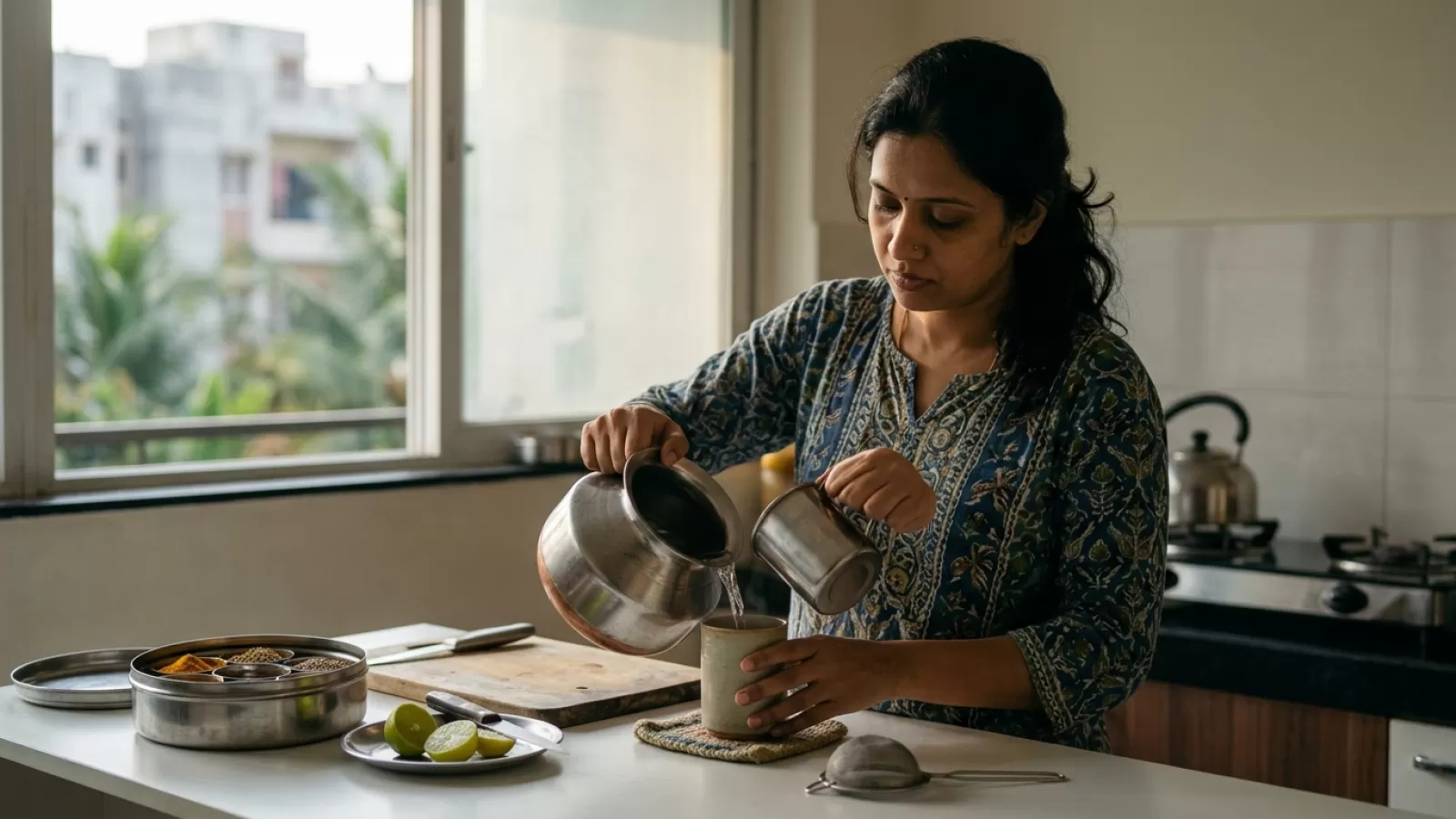
Some mornings in Indian homes begin in a thick, unshakable fog. The alarm rings, but even after eight hours in bed, your limbs feel heavy, your mind drifts, and the familiar sounds of the day—pressure cooker whistles, distant temple bells—do little to lift the weight. For many adults, sluggishness at sunrise has quietly become normal, not because sleep was short, but because the previous day left the body and mind unfinished.
In these homes, morning wellness habits India families try often come from a place of fatigue instead of energy. The struggle is less about the hour of waking and more about what happens before sleep, how the body is cared for during busy days, and whether genuine rest has had a chance to settle in. Waking up less tired in India isn't always about sleeping longer—sometimes, it's about what yesterday didn't provide.
Why Waking Up Sluggish Feels So Common in Indian Households
Across Indian cities and towns, there’s a familiar morning choreography. Someone in the family snoozes their alarm three times while another shuffles to put the milk on the boil. There’s a sense of moving, but not quite being awake. Morning sluggishness habits India families experience are shaped by more than just sleep—humidity, late-night WhatsApp scrolling, and heavy dinners all play their part.
In many Indian homes, adults carry the weight of multiple roles—caregiver, worker, cook, planner. The day rarely ends early. Dinner might happen close to 10pm, followed by late news or catching up on social media. Many people try to squeeze in quiet time only after everyone else is asleep. The tricky part is, these patterns don’t allow the body or mind to fully settle before bed. Over time, sluggish mornings turn into a routine, not an exception.
On monsoon days, especially, the thick, grey air seems to press down on everyone, making it harder to get moving. Even in summer, when fans and coolers hum all night, the restless heat can keep the mind half-awake. For those living in joint families, shared spaces mean bedtime is often set by the household rhythm, not personal need. Busy professionals in cities like Hyderabad or Gurugram might spend hours in traffic or glued to screens, leaving little room for wind-down rituals.
Underlying Reasons for Morning Sluggishness in India
It’s easy to blame poor sleep, but the roots of morning sluggishness habits India adults face reach deeper. Nutritionists who work with Indian families often find that late, heavy dinners—rich gravies, fried snacks, or second helpings of rice—tend to make sleep less restful, no matter how many hours you spend in bed. Hydration is another quiet culprit. Many people drink chai or coffee late into the evening, but forget plain water, leaving the body slightly dehydrated by morning.
Screen time is a growing reason. After a long day, the last hour before sleep often goes to TV, scrolling, or replying to emails. The blue light from screens can keep your mind wired, even when your body is tired. In homes where everyone shares bedrooms or living rooms, personal routines get squeezed—one person’s late-night phone call can keep the whole room on edge.
Another factor is movement. On busy days, most activity is just chores—folding laundry, picking up groceries, or getting the kids ready. Many adults sit for hours at their desks or in traffic, with little genuine movement. This lack of physical activity means the body isn’t physically tired enough at night, while the mind remains overstimulated.
Finally, emotional load matters more than we often admit. Worries about parents’ health, children’s studies, or work deadlines can keep you awake long after the lights are off. The mind keeps solving yesterday’s problems, not letting rest truly sink in.
Everyday Signs Your Body Is Crying Out for a Different Morning Start
- Dragging yourself out of bed—even after 7-8 hours of sleep. You feel like you could easily sleep another hour, but responsibilities pull you up.
- Heavy eyelids and foggy mind. You need strong tea or coffee just to open your eyes fully, and even then, focus is slow to arrive.
- Body aches or stiffness. Your back or neck feels tight, sometimes from sleeping in one position, sometimes from yesterday’s tension.
- Low appetite for breakfast. You skip poha or parathas because your stomach still feels full from last night’s dinner.
- Moodiness or irritability. The smallest thing—a spilled cup of chai, a power cut—feels like a huge setback, especially during the first hour.
Practical Morning Wellness Habits for Indian Adults
- Start with gentle movement. Instead of rushing to chores, try a few minutes of stretching near a window or balcony. A slow walk on the terrace or even mindful sweeping can gently wake the body. This is often more helpful than a cold shower or a forced workout.
- Drink water before chai or coffee. Keep a glass by your bedside and sip before you reach for your morning tea. Many Indians wake up slightly dehydrated, especially after humid nights. It’s a small shift, but it can make you feel noticeably fresher.
- Let natural light in early. Open curtains as soon as you wake up—even on a grey winter or monsoon day. Light tells your brain it’s morning, which helps with alertness. On dark days, switching on a warm light in the kitchen or living room can help.
- Keep breakfast light but real. If your stomach feels heavy, go for a small bowl of dahi, a handful of soaked makhana, or a banana. Skipping breakfast entirely makes sluggishness linger, but so does eating something rich too soon.
- Give your mind a moment to settle. Instead of jumping to news or WhatsApp, try 2–3 minutes of quiet breathing or looking out at the street below. In many homes, this is the only chance for quiet before the day sweeps you up. You don’t have to meditate—just pause.
How Morning Sluggishness Plays Out in Real Indian Routines
On a weekday in Pune, the alarm rings at 6:30am. The air is already warm and sticky, and before long, the kitchen is alive with the sound of boiling milk and the sizzle of tadka for dal. But the adults move slowly—stretching sore backs, sipping chai with half-shut eyes. Children are nudged awake, but everyone looks for a few extra minutes under the fan. The previous night’s dinner was heavy, and the last hour before bed was spent catching up on a TV drama. There’s a sense of starting the day slightly behind, and it takes until mid-morning, maybe after the first cup of coffee at work, to feel truly alert.
In a joint family home in Chennai, elders wake early, but some younger adults struggle to match the household’s pace. Shared spaces mean sleep is often broken. The morning wellness habits India families try—like quick stretching or quiet time—sometimes get pushed aside by the rush to get tiffin boxes ready and send children off to school. Over time, everyone adapts, but the heaviness at sunrise never fully disappears.
When Morning Sluggishness Needs a Little More Attention
Most days, waking up tired is just a sign that yesterday’s demands were high or routines need adjusting. But if you notice that nothing helps, and the sluggishness is constant—no matter the season, your meals, or how early you sleep—it might be time to talk to a doctor. Sometimes, issues like thyroid problems or sleep disorders need medical attention. If you’re feeling dizzy, breathless, or unable to get through daily tasks, don’t wait—reach out for professional help.
Common Questions
Many Indian adults wonder why sluggish mornings keep repeating, even with reasonable sleep hours and familiar routines. You're not alone in this experience—these patterns show up in countless homes, across all ages and cities. Let’s walk through some of the most common questions and see how small changes can make a difference in your Indian morning routine for energy and ease.
Why do some Indian adults feel sluggish every morning regardless of how many hours they sleep?
In many Indian households, late dinners, heavy foods like paneer or fried snacks, and long evenings spent on screens leave the body and mind unsettled. Even if you spend eight hours in bed, true rest is hard to achieve when digestion is still working and the mind is busy. Add humid weather or broken sleep from power cuts or family noise, and mornings start off heavy. It’s not always about sleep duration—restful sleep needs the right conditions.
What are the simplest morning habits that shift the day from heavy to lighter within 15 minutes of waking?
Many families in Indian cities have quietly discovered that drinking a glass of water before chai, opening the curtains to let in natural light, and standing up for gentle stretches (even while waiting for the milk to boil) can make a surprising difference. Starting with a light breakfast—like dahi or a banana—rather than skipping food or reaching for fried items, often helps your body shift into gear. A few moments of quiet, without screens, helps too.
Does the last hour before sleep affect how rested Indian adults feel the next morning?
The last hour before sleep is usually spent watching TV, scrolling on the phone, or finishing household chores. In Indian homes, this can mean that the mind never truly winds down, especially if the news is stressful or WhatsApp groups are busy. A calmer, quieter end to the day—perhaps a cup of warm milk or reading a book—gives your body a better chance at real rest. This, in turn, makes waking up less tired in India more likely.
Is morning sluggishness connected to what was eaten the previous evening?
Absolutely. Heavy, late dinners—think rich gravies or large quantities of rice—make digestion work overtime at night. Many Indian adults notice that when dinner is lighter (like khichdi or roti-sabzi) and finished earlier, sleep feels deeper and mornings are less groggy. Spicy or oily foods can add to discomfort and disrupt sleep. What you eat and when you eat it influences your morning energy far more than most people expect.
What is the single most effective morning practice for Indian adults who consistently feel unready to start the day?
In many homes, the simplest practice with the biggest impact is drinking a large glass of water right after waking—before chai or coffee. This rehydrates the body, helps wake up the digestive system, and gives a gentle signal to start the day. Pausing for a few minutes of quiet breathing or gentle movement also helps set a better tone, especially when paired with a light breakfast. These habits often fit into even the busiest Indian morning routine for energy.