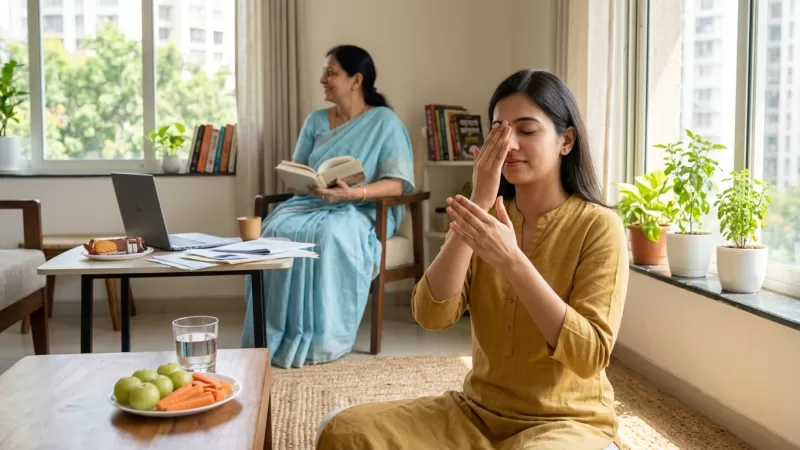
After weeks of late nights and constant demands, many adults in Indian homes find themselves going through daily routines in a sort of quiet haze. The familiar comfort of chai, the rhythm of making dal and sabzi, or even the chatter at the dining table can feel strangely distant. Grounding habits emotional numbness India is not a rare concern anymore—these days, feeling emotionally flat or disconnected is something many adults quietly notice but rarely discuss, even with close family.
Sometimes, you might catch yourself barely reacting to news—good or bad—or realise that you haven’t genuinely laughed or cried in ages. It’s not sadness or anger, but a kind of blankness that creeps in when life has been running on autopilot for too long. This isn’t about lacking gratitude or being unfeeling; it’s often the mind’s way of protecting itself when everything feels too much, for too long.
Emotional Numbness in Indian Homes: A Quiet Survival Mode
In the thick of household responsibilities—paying bills, managing groceries, juggling children’s schoolwork, fielding work calls, and dealing with relatives—emotional numbness Indian adults feel is more common than many admit. In many Indian families, being stoic is quietly encouraged. There’s a subtle message: handle what comes, don’t let feelings get in the way, and always keep moving. Over time, this pressure to maintain composure can turn genuine emotions into a distant memory, leaving a sense of flatness instead of the peace you hoped for.
It’s not just the working adults. Homemakers, seniors, and even young adults living at home may find themselves feeling disconnected India adult style—doing what has to be done, but not really feeling present. Sometimes, this disconnection appears after an especially stressful period, but often, it creeps in with no warning. The rituals of life—folding laundry, making rotis, sipping chai—continue, but the warmth behind them is missing. You might notice you’re not as moved by a favourite song or a family joke as before. In joint families, the need to ‘not make a fuss’ can make it even harder to acknowledge this numbness out loud.
Why Emotional Flatness Develops in Overloaded Indian Adults
When you grow up in a culture that values resilience and self-sacrifice, it’s easy to slip into emotional numbness without realising it. Most Indian adults have been exposed to the idea that expressing too much emotion—especially sadness or anger—is inconvenient or even selfish. So, when life gets overwhelming, your mind sometimes responds by turning down the volume on all feelings, not just the difficult ones.
Family therapists who work with Indian clients often find that emotional numbness in Indian adults is not always about depression; it is usually a kind of quiet self-protection. After months (or years) of stretching yourself thin—balancing work, family, household tasks, and social obligations—the system that manages emotions becomes overloaded. To keep going, your mind gradually reduces its responsiveness. The result isn’t dramatic sadness or panic, but a strange emotional quietness.
The tricky part is, many adults only notice this when they cannot cry at something genuinely sad, or when even the happiest moments feel muted. Some begin to worry that they’re becoming cold or that something is seriously wrong. In reality, it’s often a sign that your inner resources need gentle replenishment, not another push to ‘snap out of it’ or perform gratitude.
Everyday Signs You Might Be Disconnected From Your Emotions
- Lack of emotional reaction to news or events: A family member shares difficult news, and you nod politely but feel almost nothing. You’re aware you should feel something, but the emotion just isn’t there.
- Going through routines without engagement: You make breakfast, tidy up, bathe, and even have conversations, but it feels like watching yourself from a distance. There’s no real sense of satisfaction or frustration—just movement.
- Difficulty connecting with things you used to enjoy: Your favourite TV serial, a phone call with a friend, or your evening chai ritual doesn’t bring the same comfort or joy. It’s not boring, just oddly flat.
- Feeling disturbed by your own lack of emotion: Sometimes, the absence of reaction is itself upsetting. You may notice, “I usually cry at this movie, why can’t I feel anything?”
- Low energy and motivation: Even small tasks—watering plants, replying to messages, folding clothes—feel like chores, and you can’t muster up the usual energy or care.
Grounding Habits Emotional Numbness India: Small Steps for Gentle Reconnection
The good news is, most people don’t need to force big changes. Small, regular grounding habits often help Indian adults start feeling connected again, especially when they fit naturally into daily life. Here are a few that tend to work in busy Indian households:
- Daily sensory check-ins: Pause for a moment during your morning chai or evening poha. Notice the taste, the warmth of the cup, the smell of cardamom, the way the light falls in the kitchen. These small moments bring you back to your body, offering a gentle anchor to the present.
- Reconnecting with a familiar rhythm: Many families in Indian cities have quietly discovered that cooking—chopping vegetables, kneading atta, stirring dal—can be soothing if you focus on the sensations instead of rushing through. Let yourself feel the dough or listen to the sizzle of tadka, even for a minute or two.
- Short pauses in routine: Instead of trying to meditate for half an hour, take a few slow breaths while waiting for the pressure cooker’s whistle or during a power cut. These micro-breaks, scattered through the day, often help more than a single long session.
- Physical touch: In many homes, a brief hand massage with coconut oil, hugging a child, or running your fingers through your hair can help ground you. The sense of touch often reconnects you with your body when your mind feels far away.
- Bringing back small joys: Play an old song, water your balcony tulsi, or sit outside for five minutes during the evening. The goal isn’t to feel instantly happy, but to gently invite small, pleasant sensations back into your routine.
These grounding habits emotional numbness India may not bring immediate change, but over time, they tend to soften the flatness and help you feel a little more present. If emotions don’t return right away, that’s okay. The aim is gentle reconnection, not forcing yourself to feel.
When Emotional Numbness Blends Into Everyday Indian Life
Emotional numbness in Indian adults doesn’t always show up as dramatic withdrawal. More often, it blends into daily routines so quietly that others may not notice. For example, a working professional commuting in Bengaluru might find herself lost in thought on the metro, unable to recall if she felt anything during the entire day at work. Or a homemaker in a small town might move efficiently from task to task—making rotis, checking on elders, helping with homework—without any real sense of pride or frustration.
During humid summers, when tempers run short and patience is thin, families may snap at each other but later realise the reactions felt mechanical, not genuine. In joint families, emotional numbness often hides behind busyness. There’s always something practical to do, so the absence of feeling gets masked by constant activity—until a quiet moment brings it into focus.
What’s common in all these scenarios is the sense of going through the motions. The tricky part is, it’s possible to be highly functional—managing everything on the surface—while feeling completely disconnected inside.
Knowing When Gentle Steps Are Enough, and When It’s Time To Seek Help
For many Indian adults, emotional numbness passes on its own with rest, a few grounding habits, and gentle self-compassion. When daily life starts to feel less mechanical—when you notice a small smile or a genuine sigh of relief—these are good signs.
That said, if the feeling of numbness drags on for several weeks, or if you start noticing changes in sleep, appetite, or a sense of hopelessness, it’s wise to reach out for support. Speaking to a trusted family member, close friend, or even a professional can help. Emotional numbness is not a moral failing or a weakness, and it doesn’t always mean something is “wrong”—but sometimes, an outside perspective is exactly what’s needed to gently break the cycle.
Common Questions
A lot of Indian adults find themselves quietly wondering if their emotional numbness is a problem or just part of life. You’re not alone if routines feel flat, or if you have questions about how to reconnect emotionally India style. Let’s look at some common concerns, using examples you might recognise from daily Indian life.
Why do Indian adults sometimes experience periods of emotional numbness even when nothing dramatic has happened?
In Indian households, emotional numbness Indian adults feel often builds up from slow, steady overload rather than a single dramatic event. For example, after weeks of handling work deadlines, children’s studies, and family obligations without a break, your mind can start protecting itself by turning down the volume on emotions. This isn’t a sign of being uncaring—it’s a quiet coping strategy that helps you keep functioning when you’re stretched too thin. In many homes, no one notices until the absence of feeling itself becomes unsettling.
What are the most effective daily grounding practices for Indian adults who feel disconnected from their emotions?
Simple actions woven into daily life work best. A homemaker might pause to feel the cool water while rinsing rice, or a working adult might focus on the warmth of evening chai in their palms. Some find comfort in the familiar rhythm of making rotis or listening to old Hindi songs. The key is to gently notice your senses—taste, touch, smell, sound—in regular moments, not just during special rituals. Over time, these grounding habits emotional numbness India style can soften the sense of disconnection and help emotions return naturally.
Is emotional numbness in Indian adults a warning sign that needs immediate attention or a phase that passes with gentleness?
For many, emotional numbness is a passing phase—especially after periods of high stress or constant busyness. For example, after a busy wedding season or exam rush in the family, you might notice a few weeks where everything feels flat. Most people find that gentle grounding habits, rest, and routine help feelings return. However, if numbness lasts for weeks or starts affecting sleep, appetite, or hope, it’s wise to consider speaking with a doctor or counselor for extra support.
How do you gently reconnect with emotional experience when numbness has been present for a while?
Small, sensory actions often work best. In many homes, a person might water their balcony plants, feel the cool floor under their feet, or sit with a pet for a few minutes. Sometimes, going outside for a walk or calling a close friend—without the pressure to “feel better”—can help. The goal is not to force emotion but to gently invite it back. Over time, these tiny steps tend to help you feel more present and less disconnected India adult style.
When does emotional numbness in an Indian adult indicate something beyond lifestyle that benefits from professional support?
If emotional numbness continues for several weeks and starts to affect your basic functioning—like sleeping, eating, or caring for yourself or family—it might be a sign to seek help. For example, if you notice you cannot get out of bed, have stopped enjoying everything, or feel hopeless, it’s a good idea to consult a mental health professional. Most communities now have access to counselors or helplines. Reaching out is a sign of self-respect, not weakness.