When the first heavy clouds roll in and the power flickers, there’s a quiet shift in many Indian homes. Fans slow, the air feels thick, and someone in the house is already sneezing. These days, the Indian monsoon brings not just relief from heat but also an unspoken expectation: the coughs, colds, and upset stomachs that seem to visit every household. Year after year, families talk about “monsoon illnesses,” yet the small, steady Indian monsoon immunity habits that could make a difference often get lost in the rush of daily life.
In a typical home—maybe yours too—there’s a sense that falling sick during rainy season is almost a tradition. The old routines continue: wet shoes by the door, chai brewing stronger, a pile of umbrellas near the gate, and often, familiar faces coughing around the dinner table. Still, some families manage to pass through these months with fewer sick days, thanks to quiet, consistent choices made in kitchens and routines. Let’s look more closely at why this happens so predictably, and which habits really help with staying healthy during monsoon India.
Why Illness Feels Inevitable During Monsoon Months
In many Indian homes, the monsoon brings a familiar mix of relief and worry. The heat breaks, but so does the regular order of things. Clothes take longer to dry, everything smells a bit musty, and the house feels damp even with all the windows open. Food spoils faster. Water sometimes changes taste after heavy rain. Most families find at least one or two members struggling with viral infections, coughs, or stomach bugs before the festival season even begins.
The tricky part is, the monsoon creates conditions almost tailor-made for illness. Warmth and humidity help germs grow. Sudden temperature drops—fans off, then on, then off again—make bodies work harder to adjust. Waterborne pathogens become more common as roads flood and water quality dips. Even home-cooked food sometimes picks up a sourness or goes off before you notice. For adults juggling work, travel, and family, these changes stack up. The rhythm of daily chores and shared spaces means one person’s cold often becomes everyone’s problem.
Why Monsoon Weakens Everyday Immunity in India
It’s not just about catching a chill. During monsoon, your body faces a perfect storm: high humidity slows down sweat evaporation, so you feel sticky and tired. Sudden rain can soak you on the way to work, then you shiver in an air-conditioned office. Many people switch between hot and cold environments all day. Vegetables and fruits spoil quickly, and even milk seems to curdle faster.
Nutritionists working with Indian families often find that immunity dips during monsoon because meals become less reliable. People skip salads, avoid raw foods, and sometimes eat less fresh fruit, worried about contamination. More frying happens—bhajiyas, pakoras—while regular dal and sabzi get prepared in a hurry between power cuts. Water safety is another big concern. Stomach upsets from contaminated water or food are practically a monsoon ritual in Indian cities.
Then there are the family habits that make a difference. Some grandmothers swear by ajwain and ginger in sabzi or insist on warm jeera water in the evenings. Others keep the same patterns year-round, hoping for the best. Sometimes, the smallest habits—like changing out of damp clothes right away or boiling water for tea—are what quietly protect a household.
Household Clues That Monsoon Immunity Is Slipping
- Frequent sniffles and coughs: Two or three people in the family seem to start coughing every other week, especially after coming in from the rain. The cough lingers, sometimes for weeks.
- Upset stomachs become common: Someone complains of loose motions or bloating almost every week during rainy season. Street food, leftover rice, or even homemade chutney can set it off.
- More tiredness, less energy: The house feels sluggish. Kids and adults alike wake up groggy, nap more, and complain of feeling run-down—even after a full night’s sleep.
- Food spoils faster than usual: Dahi turns sour in a day, leftover dal smells strange, and rotis go moldy. This forces more last-minute cooking or skipping meals.
- More doctor visits for minor infections: Sore throats, mild fevers, or skin rashes send people to the clinic more often between June and September than any other time.
Simple, Consistent Habits That Help During Monsoon
- Sticking to warm, freshly-cooked meals: Many families find that making dal, sabzi, and roti fresh—even if it means simpler meals—reduces stomach upsets. Avoid keeping cooked food out for long, especially during humid evenings.
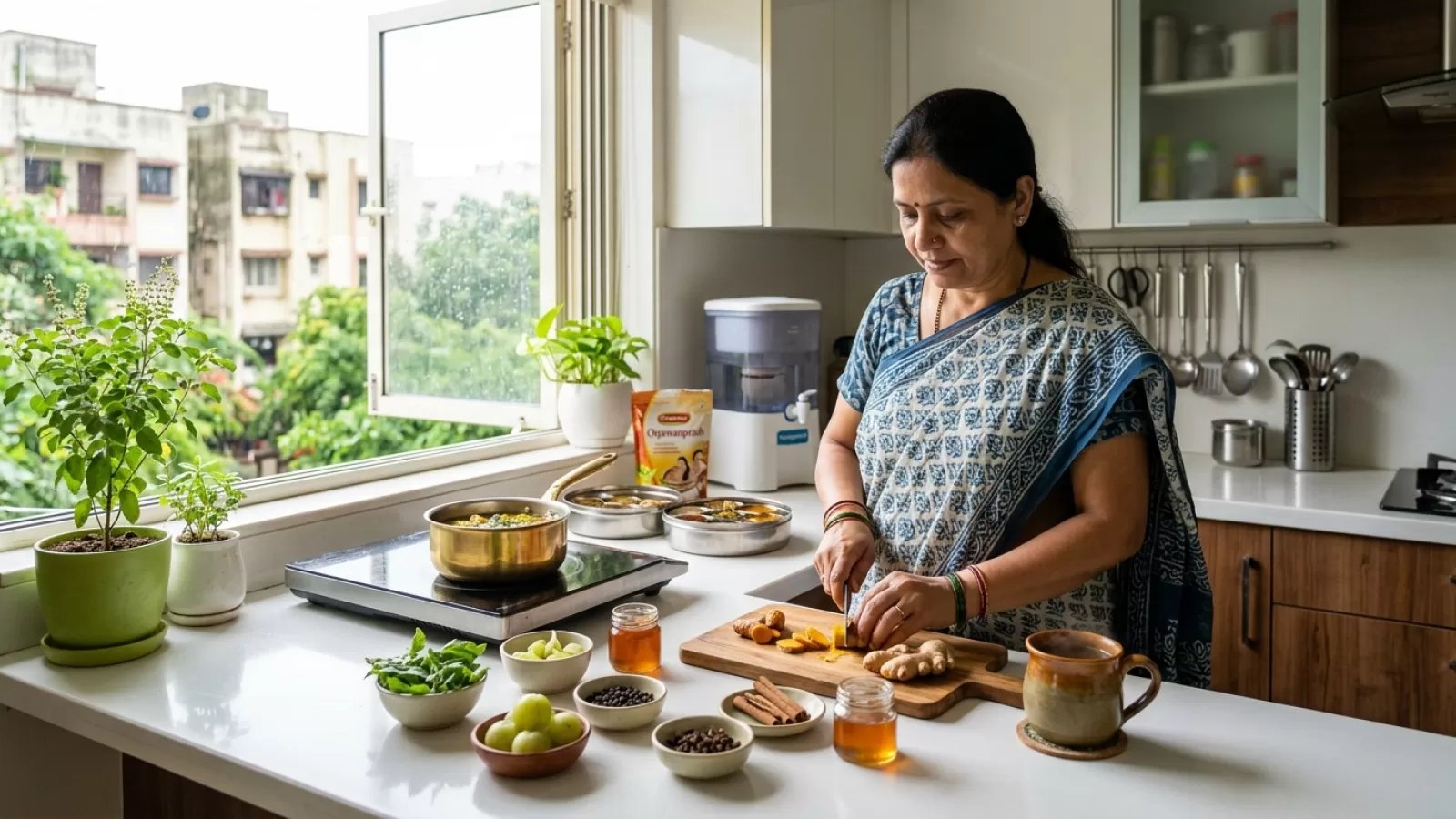
- Using spices with immune-supporting properties: Adding ginger, garlic, turmeric, and black pepper to everyday cooking is a quiet tradition in several homes. These spices lend warmth and may help the body handle dampness. A pinch of hing in tadka or a ginger-garlic paste in sabzi can make a difference.
- Handling water with extra care: During rainy season, many households switch to filtered or boiled water for drinking and cooking. Even chai water gets boiled longer. Reusing bottles or jugs is done more cautiously. In homes where water quality drops, some families rely on old-school copper pots or earthen matkas for an extra layer of safety.
- Changing out of wet clothes quickly: This sounds simple, but many adults tend to stay in damp socks or trousers after a commute or errand. Keeping a set of dry home clothes near the door or bathroom makes it easier to change right away.
- Managing indoor dampness: Keeping windows open during dry spells, wiping down kitchen counters, and airing out bedding can help. Some families place neem leaves between clothes or in storage to counter mold. Even a short burst of sunlight on pillows or mattresses can make a difference.
These habits are rarely dramatic. But when done every day, they create a home atmosphere that quietly supports staying healthy during monsoon India.
Everyday Monsoon Immunity in Indian Households
In a kitchen in Nagpur at 6am, the sound of pressure cooker whistles blends with distant thunder. The floor is cool underfoot, and the air smells faintly of wet earth and ginger. Someone stirs haldi and black pepper into hot milk, while the day’s vegetables soak in a basin of water, ready to be scrubbed and cooked fresh. The old fridge hums louder than usual, fighting off the humid air.
These small routines—the way tea is boiled a little longer, the habit of checking the dahi before serving, the careful drying of towels on a window grill—are the backbone of rainy season health habits Indian adults practice, even when they don’t talk about it. In many homes, it’s not big changes but these everyday details that keep the family going when the weather turns tricky.
When It’s Time To Reach Out For Extra Support
Most monsoon illnesses in Indian homes pass with rest and home care. But if someone develops a high fever, persistent vomiting, breathing trouble, or signs of dehydration, it’s wise to check with a doctor. The same goes for elderly family members or young children who are more vulnerable during this season. When in doubt, it’s better to ask for advice than wait it out, especially if symptoms linger or worsen.
Common Questions
Monsoon brings out all sorts of questions about how to keep your family well. Every household has its own mix of old habits, new worries, and little tricks passed down through generations. Let’s look at what usually works in real homes.
What are the most effective immunity habits for Indian adults to maintain through the monsoon season?
In most Indian homes, the habits that really help are the ones that fit easily into daily life. Eating freshly cooked meals, drinking only filtered or boiled water, and making small changes like swapping wet clothes quickly are practical steps. Using spices like ginger, turmeric, and black pepper in everyday cooking is a quiet tradition with some real benefits. Even wiping down damp surfaces and letting bedding catch some sun helps. These Indian monsoon immunity habits don’t require major effort but need to be done consistently to work well.
Which specific changes to daily Indian eating habits most support immunity during the rainy season?
During monsoon, many families adjust by cooking smaller, fresher meals and avoiding raw salads or cut fruits unless freshly prepared at home. Favoring warm foods—dal, khichdi, upma, or simple sabzi—over cold items like curd rice can help. Some add more ginger, garlic, or hing to their tadka. A common pattern is shifting evening snacks from street food to homemade options like roasted makhana or poha. These small tweaks add up, making rainy season health habits Indian adults can stick to.
How does the monsoon affect Indian adult immunity through mechanisms beyond just the cold and wet weather?
The effect goes deeper than just getting drenched. High humidity lets germs spread easily and food spoil faster. Power cuts can interrupt refrigeration, making milk or leftovers go bad. Water sources may get contaminated, increasing stomach infections. Many people sleep less soundly on sticky, muggy nights, which also affects immunity. In homes where everyone shares close quarters, germs pass quickly from one person to another, especially without daily precautions.
What traditional Indian monsoon health practices have genuine biological support versus those that are purely cultural?
Some old habits—like boiling water, using spices (ginger, turmeric, ajwain), and eating warm, freshly-cooked food—do have scientific backing for supporting immunity or reducing infection risk. Others, like avoiding certain fruits or never eating curd at night, are more cultural than evidence-based. That said, many traditional Indian monsoon immunity habits are built on generations of trial and error. If a practice feels right for your family and doesn’t cause harm, it’s usually fine to continue—just check with a doctor if unsure.
How do Indian families protect elderly and young household members who are most vulnerable during the monsoon season?
Many families quietly adjust routines for elders and children. This might mean serving smaller, frequent meals; making sure water is always boiled or filtered; and drying clothes and bedding more often. Some keep elders indoors during heavy rain but encourage gentle movement or stretches at home. For kids, warm baths and dry clothes after rain play are common. The real work is in everyday vigilance—checking for fevers, keeping homes clean, and responding quickly if anyone seems unwell.