In many Indian homes, the school year arrives with a certain rhythm: uniforms drying on the line, lunchboxes packed the night before, and kitchens busy with the familiar clatter of pressure cookers and the aroma of tadka. What most families don’t say out loud—yet quietly depend on—is how much these Indian kitchen habits support children's immunity through every sniffle, test, and monsoon.
It’s not the fancy immunity boosters or new-age supplements that keep most kids going. It’s the daily dal, steaming rice, simple rotis, warm milk, and seasonal twists in the sabzi that create a baseline of health. These everyday kitchen routines, passed from one generation to the next, are the real foundation for supporting kids immunity in India during the long and busy school year.
Why the School Calendar Challenges Family Food Routines
There’s a reason you find yourself adjusting mealtimes and menus when school starts. In many homes, mornings become a race against the clock—children barely manage a few mouthfuls of poha or upma before rushing to catch the bus. Tiffins are packed with whatever will survive the commute and, more importantly, whatever a child will actually eat between classes. Evenings sometimes stretch late with homework, tuition, and family routines, pushing dinner time further and further.
This schedule means that immunity habits for Indian children—like regular, balanced meals, enough hydration, and a good night’s sleep—often get squeezed. Snacks become hurried affairs. Fresh fruit may be forgotten in the fridge, while dahi or roti is eaten on the run. In many Indian families, the daily rituals that used to support Indian food for children's health during the school year now struggle to keep up with modern demands.
What Lowers the Immunity Baseline for Indian Schoolchildren
It’s not just exposure to other kids or city pollution. In reality, the biggest shifts happen quietly at home. Nutritionists who work with Indian families often find that the biggest dip in immunity comes from irregular eating, skipped breakfasts, and late-night dinners. When dal isn’t made daily, or when the sabzi is replaced by quick processed snacks, small gaps open up in children’s nutrient intake.
Sleep is another silent culprit. Late-night screen time or unfinished homework means less rest, and the body has less time to recover and fight off infections. Hydration also tends to drop, especially in humid summers or winter months when kids may drink less water. Simple practices—like a glass of warm haldi doodh before bed or drinking water first thing in the morning—often fade away with busier routines. All these changes together quietly lower the baseline of immunity, making children more likely to catch colds, coughs, and fevers during the school year.
Signs Your Kitchen Routines Aren’t Supporting Your Child’s Immunity
- Frequent minor illnesses: If your child seems to catch every cold going around the classroom, it’s worth looking at daily food and sleep patterns.
- Skipping breakfast or eating too little: On mornings when everything runs late, a hurried or missed breakfast is common—and children often feel low energy or cranky by midday.
- Tiffin returns mostly uneaten: Many families in Indian cities have quietly discovered half-eaten rotis or untouched sabzi in the lunchbox, especially if the food is unfamiliar or not to the child’s taste.
- Preference for packaged snacks over home-cooked food: Kids who regularly reach for biscuits, chips, or instant noodles instead of dal chawal or poha may be missing key nutrients that support immunity.
- Fatigue, poor concentration, or trouble sleeping: When the body doesn’t get consistent nourishment, these signs often show up before obvious illness.
Daily Kitchen Habits That Quietly Build Immunity
- Consistent, warm, freshly cooked meals: Even a simple bowl of dal rice or khichdi goes a long way in supporting kids immunity in India school year after school year. Warm food is easier to digest and tends to be more nourishing, especially for growing children.
- Soaking dal and grains overnight: This old habit makes nutrients easier to absorb and improves digestion. In many homes, soaking chana or moong dal is a quiet ritual every evening.
- Adding seasonal vegetables and fruits: Adjusting sabzi and chutney to what’s fresh in the market keeps meals interesting and adds variety to the nutrients children get. For example, adding lauki in summer or carrots in winter.
- Hydration through the day: Packing a water bottle for school is a start, but reminding children to drink between classes is just as important, especially in hot or humid weather.
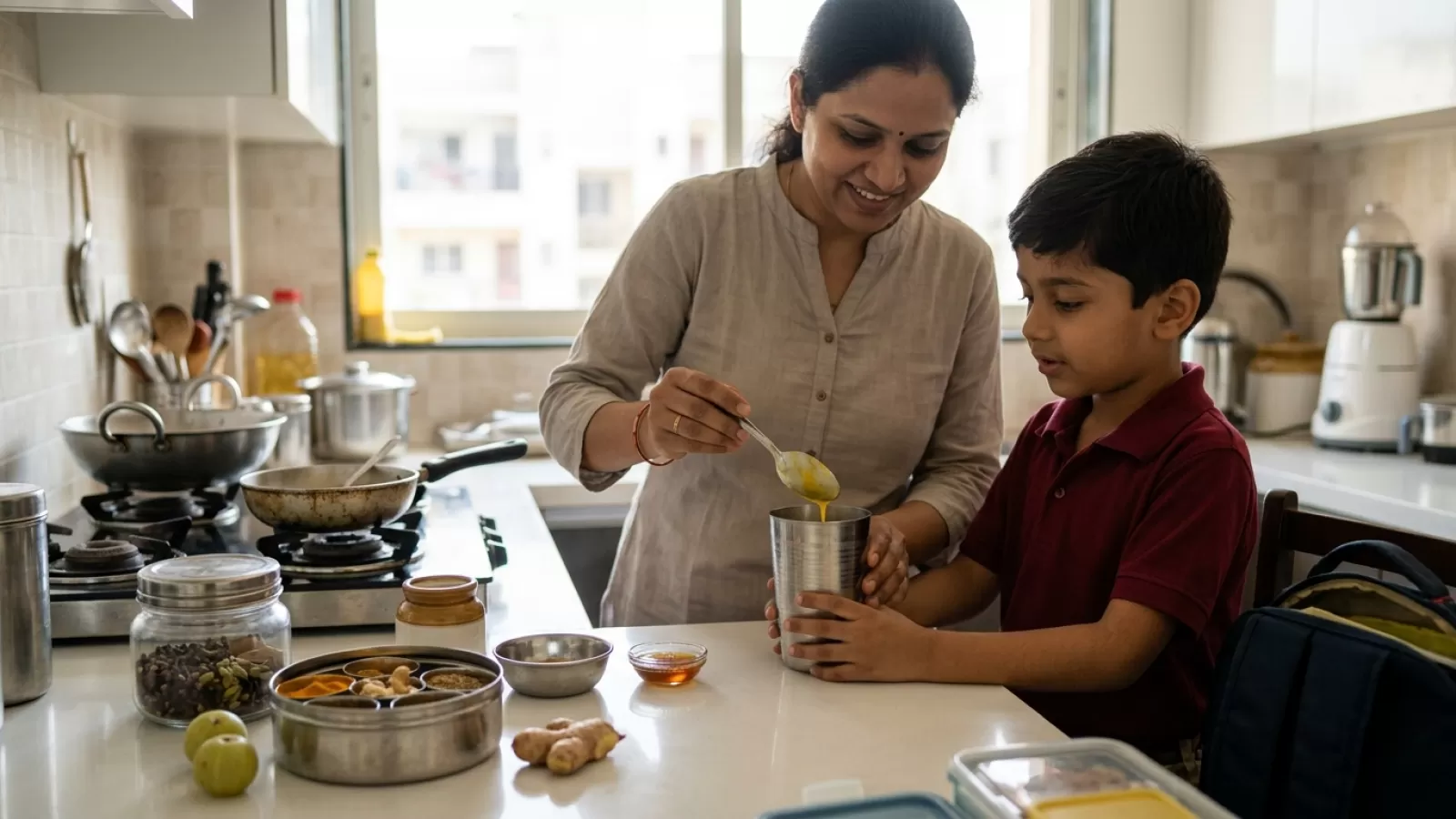
- Simple immunity-supporting kitchen traditions: A glass of warm haldi doodh (turmeric milk) before bed, a spoon of homemade chyawanprash in winter, or adding jeera and ajwain to dal—all are quiet ways Indian families support children’s health without fanfare.
That said, sometimes it takes a few tries to get children to accept new or traditional foods. Involving them in cooking or letting them choose between two sabzis can help.
How These Habits Fit Into Real Indian Routines
In a kitchen in Nagpur at 6am, you might find a mother rolling parathas while her son rubs sleep from his eyes. The pressure cooker hisses with tuvar dal, and the faint smell of ginger rises from the chai simmering on the stove. There’s a small plate of cut guava for tiffin, and a steel bottle of water is filled fresh for the day. This isn’t a special immunity routine; it’s just the daily rhythm of the house. But over months, this consistency helps the child face the school year with more energy and fewer sick days.
In many families, the kitchen becomes a quiet anchor. Even when mornings are rushed, the habit of serving dahi with lunch or offering warm milk in the evening works quietly in the background, supporting children’s immunity through exams, changing weather, and busy schedules.
When It’s Time to Seek Help Beyond Kitchen Habits
Most children will catch a few colds or fevers during the school year—it’s part of growing up and building natural immunity. But if your child is falling sick every few weeks, missing school repeatedly, or not bouncing back after illness, it may be time to check in with a doctor. Sometimes, underlying issues need more than kitchen solutions. Trust your instincts; if something feels off, professional guidance is always a good next step.
Common Questions
Every Indian home has its own style, and what works for one family may not fit another. But some kitchen habits genuinely support children's health across households and seasons. Here’s a closer look at the most common questions parents ask about supporting kids immunity in India during the school year.
What are the most effective Indian kitchen habits for supporting school-going children's immunity throughout the year?
Serving warm, freshly cooked meals—dal, sabzi, roti, and rice—on a regular basis is a reliable immunity habit for Indian children. Adding seasonal vegetables, encouraging children to drink water through the day, and including dahi or buttermilk with meals support gut health. In some homes, giving haldi doodh before bedtime or a spoonful of chyawanprash in winter is part of the routine. These small, everyday habits build resilience over time, especially when combined with enough rest and limited processed foods.
How do Indian parents balance children's food preferences with the immunity-supporting foods that children often resist?
Most parents find that children resist certain sabzis or homemade drinks at first. In many Indian homes, the trick is to make small adjustments—like grating vegetables into parathas, adding a dash of jaggery to turmeric milk, or involving kids in the kitchen. Sometimes, giving a choice between two healthy options works. Over time, repeated gentle exposure and seeing parents eat the same foods tend to help children accept them.
Which traditional Indian foods most specifically support children's immunity and how do you make them acceptable to children?
Dal (especially moong or masoor), homemade dahi, seasonal fruits, khichdi, and simple sabzis like lauki or tori are classic Indian foods for children's health at school. Many parents add immunity-boosting spices like haldi, jeera, or ajwain. To make these more appealing, try serving with a small side of papad, rolling sabzi into a paratha, or turning dahi into a raita with cucumber or boondi. These tweaks often make traditional foods more welcome at the table.
How does the school schedule in India affect children's immunity through its impact on eating, sleeping, and stress?
Early school timings, long commutes, and packed after-school schedules often mean children eat breakfast too quickly or skip it entirely. Lunch may be eaten late or in a rush, and dinner gets delayed due to homework or activities. This irregular rhythm affects digestion, reduces nutrient absorption, and can lower immunity over time. Stress from exams or peer pressure adds to the problem. Families that stick to simple meal routines, encourage early dinners, and build in downtime help children recover from daily stress.
When does a child's repeated illness during the school year indicate that immunity needs professional attention beyond kitchen habits?
If a child is missing school frequently, has ongoing fatigue, or seems unable to recover from minor illnesses, it’s wise to check with a doctor. While Indian kitchen habits children's immunity well in most cases, some symptoms may signal allergies, deficiencies, or other issues that need medical support. Trust your gut—if home routines aren’t helping and illness persists, professional advice is always a safe next step.