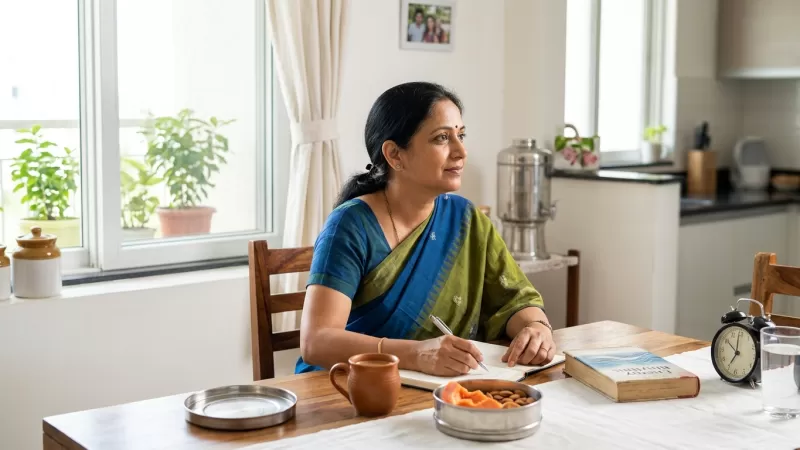
In many Indian homes, the period after sunset is a slow drift into tiredness. The last pressure-cooked whistle fades, children’s notebooks are scattered on the table, and the kitchen is still bustling. These days, managing evening energy decline in India is something most adults face—whether you’re a homemaker waiting for the last family member to eat, or a professional handling late calls before dinner.
Evening tiredness in Indian adults without caffeine is not a failure or a flaw. It is simply the body’s way of moving from the activity of the day to the rest of the night. The families who seem to manage best with this dip in energy are those who don’t fight it, but rather, adjust their rhythms and tasks to flow with it.
Why Evening Energy Slows Down in Indian Homes
In Indian society, the day often begins early—sometimes as soon as 5am, especially in joint families or for those managing school routines. By 7 or 8pm, the body’s natural energy curve is heading downward. Many adults, after a full day of work, chores, and navigating traffic or video calls, notice that their energy in evenings in India dips almost like clockwork.
Household rhythms play a big role. Dinner is usually eaten late, sometimes after 9pm, especially in metro cities like Mumbai or Delhi where commutes drag out the evening. Before dinner, there’s a flurry of activity: helping with homework, prepping rotis, folding laundry. Many families also use this time for small talk, TV, or checking in with relatives. But the body is already winding down, making high-focus tasks feel heavier than they did in the morning.
The tricky part is, our culture sometimes expects adults to keep going full speed until bedtime. This expectation can push people to reach for chai or coffee, hoping for a second wind. But natural evening energy management in India works better when we match our activities to the energy that’s actually available.
The Science and Traditions Behind Evening Tiredness
There’s more going on than just a long workday. The body’s internal clock, or circadian rhythm, naturally lowers alertness after sunset. The hormone melatonin starts to rise, signaling that rest is ahead. In Indian homes, the evening meal is often the heaviest, and digestion draws even more energy away from the brain and muscles. Evening tiredness in Indian adults without caffeine is, in many ways, a healthy response to these changes.
Nutritionists who work with Indian families often find that large, late dinners (dal, sabzi, rice, and sometimes fried snacks) can deepen the evening slump. Add in the summer heat or the humidity of coastal cities, and even simple tasks can feel draining. Stress from the day’s social and work demands tends to pile up by this time too.
Another quiet factor is shared space. In joint families or apartments with thin walls, the need to coordinate with others can lead to waiting for bathrooms, delayed meals, or negotiating chores. All of this means that by the time adults sit down at 8:30pm, their minds and bodies are not at peak performance.
What Evening Energy Decline Looks Like in Real Life
- Tasks feel heavier: Even folding washing or packing tiffins for the next day feels like a mountain.
- Short tempers: Little things—spilled milk, slow Wi-Fi—cause bigger reactions than usual.
- Forgetfulness: You might forget to switch off the gas or miss a detail in your child’s homework diary.
- Decision fatigue: Deciding what to cook, or how to respond to a message, takes much longer.
- Social withdrawal: Some adults prefer quiet or even want to be left alone for a while after 7pm.
These signs are not failures—they’re signals from your body that it’s time to shift gears.
Practical Ways To Work With, Not Against, Evening Energy Decline
- Schedule high-focus tasks earlier: If possible, finish bill payments, work emails, or homework help before 7pm. Many families in Indian cities have quietly discovered that moving these to the afternoon, or just after returning home, makes evenings smoother.
- Batch low-energy chores: Use the evening dip for folding clothes, prepping veggies for the next day, or even gentle tidying. These activities match the slow pace of the hour.
- Keep conversations light: Avoid major family discussions or decision-making after dinner. Save those for breakfast or the weekend.
- Gentle movement: Some find that a slow walk after dinner or simple stretching helps refresh the mind without fighting natural tiredness.
- Rethink caffeine: Instead of reaching for late chai or coffee, try warm water, a light glass of buttermilk, or herbal teas. This supports natural evening energy management in India, especially for those who struggle to sleep after caffeine.
The main idea is to adjust the rhythm of your evening, rather than trying to power through it with willpower or stimulants.
Everyday Patterns: Evening Energy in Indian Homes
A kitchen in Nagpur at 6am smells of fresh methi paratha and chai. But if you step into that same kitchen at 8:30pm, the mood is very different. The tawa is still warm, but the voices are quieter, and even the family cat moves more slowly. In many homes, the TV is on, but the volume is low—news headlines drift in and out. Someone sits scrolling through their phone, while another family member is picking coriander leaves for tomorrow’s sabzi.
Evening tiredness in Indian adults without caffeine often shows up as this gentle slowing. Children finish their homework with less fuss if an adult sits nearby, working on a light chore. Many find that when they stop pushing themselves to keep up the morning’s pace, evenings feel less like a hurdle and more like a welcome pause before sleep.
How to Recognise When You Need Help
Most evening tiredness is natural. But if you notice that your evening energy decline is severe—so much that you can’t finish basic household tasks, or you feel unusually down—there may be more than just the usual dip at play. This is especially important if you are also having trouble sleeping, or if your tiredness is new and unexplained. It may help to talk to a doctor, especially if other family members are concerned or you notice changes in appetite, mood, or daily function. Sometimes, low iron, thyroid issues, or stress can show up as unusual tiredness in the evening.
Common Questions
Many Indian adults wonder about the evening dip in energy—why it comes, how to work around it, and whether it can be handled gently without caffeine. Here are some common questions, answered with the rhythms of Indian homes in mind.
Why does evening energy decline arrive at such a consistent time for Indian adults and what is driving it?
In Indian homes, routines often start early and stretch late, so by 7 or 8pm, most adults have already spent their peak energy. The body’s internal clock also naturally lowers alertness after sunset, making evening tiredness in Indian adults without caffeine a predictable pattern. Add in heavy dinners and the mental load of multitasking all day, and the timing of this dip becomes very regular—almost like the body’s own alarm clock for slowing down.
What evening activities are most compatible with the natural lower-energy state of the Indian evening?
Activities that don’t require intense focus tend to work best. Many families prep veggies for the next day, fold clothes, or tidy up together. Some use this time for gentle conversations, watching TV, or even slow walks around the colony after dinner. Children often do better with homework if it’s split into light revision or reading, rather than new learning, during these hours. The idea is to match the activity to the mood of the hour.
How do you complete necessary evening household tasks during a genuine energy decline without caffeine?
Breaking tasks into smaller steps helps—chop a little, rest a little, and don’t aim for perfection. Many Indian adults set up routines to share chores, so the work feels lighter. Sometimes, playing music or listening to a radio show while working in the kitchen can make routine tasks less tiring. If a power cut strikes, families often use this time for quiet talk or light candle-lit chores. Working with the energy you have, rather than pushing against it, makes these tasks feel less overwhelming.
Is there a way to gently extend useful evening energy for Indian adults who have unavoidable late-evening responsibilities?
Sometimes, late meetings or family needs mean you must be awake and alert even during an energy dip. In these situations, a light, early dinner and a short, brisk walk can help reset the mind. Dim lights and cool air (even if it’s just a fan during a humid summer) can help you stay awake without needing caffeine. Taking a 10-minute pause to rest your eyes or stretch can also help you return to your tasks with a bit more clarity, without forcing a full second wind.
What does a healthy response to evening energy decline look like in an Indian household compared to the usual pattern of fighting it?
A healthy response is one where the family accepts the natural slowdown—choosing lighter tasks, leaving big decisions for the next day, and winding down together. In contrast, fighting the decline with caffeine or willpower often leads to irritability, poor sleep, or more stress. Many Indian households that work with, not against, their evening rhythms find that evenings become a time of gentle connection, small chores, and quiet comfort—rather than a daily struggle to keep up the morning’s pace.