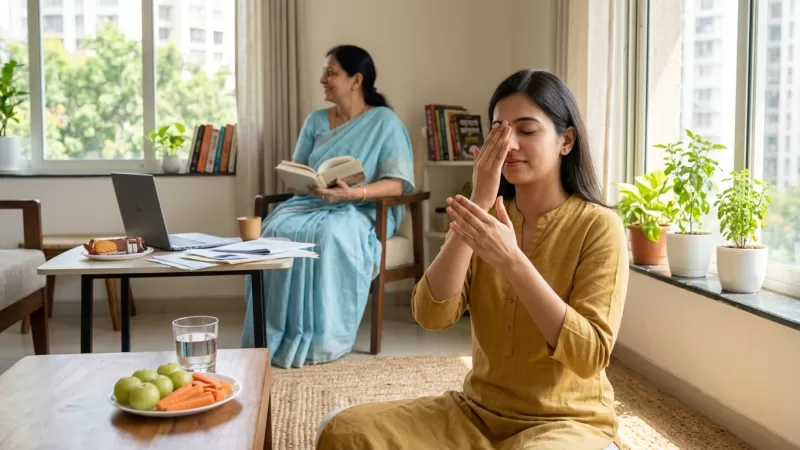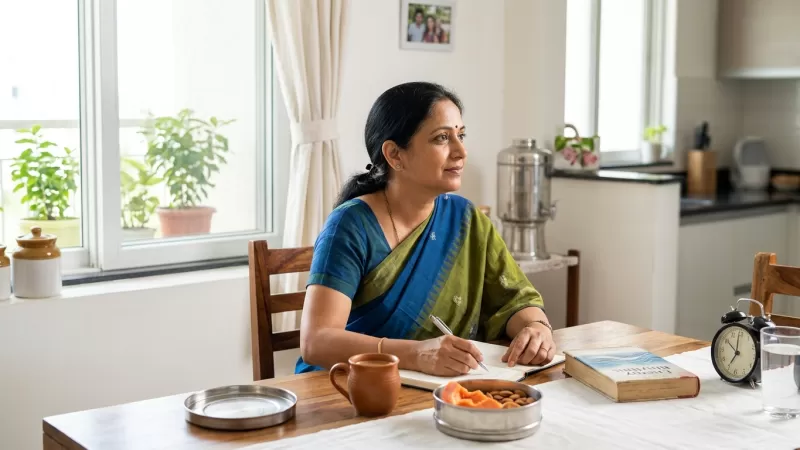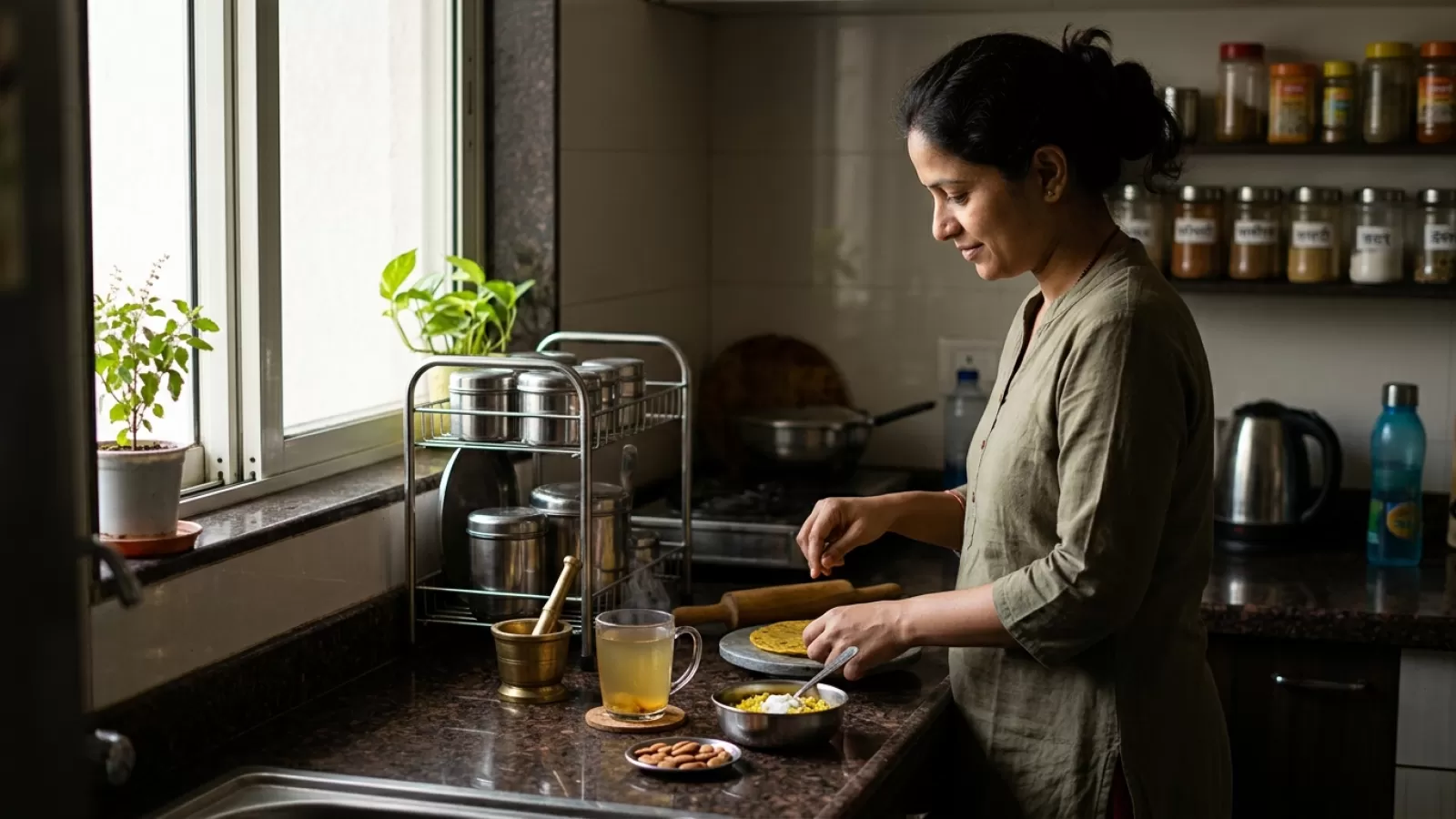
Before the sun is up, many Indian homes are already stirring. Someone is boiling water for chai, another is looking for a missing sock, and the kitchen is filling with the soft sounds of pressure cooker whistles and utensils. For most families, a morning wellness routine in Indian homes is less about following a perfect schedule and more about finding moments of calm and care woven into the rush — like sipping warm jeera water before the first cup of tea, or rolling out a yoga mat in the tiny patch of free floor space near the sofa.
These days, with packed schedules and constant demands, healthy morning habits in India often have to fit around shared bathrooms, packed tiffins, and the needs of children and elders. The truth is, a daily wellness routine in India rarely looks like a glossy magazine spread. It usually looks like you — standing in your kitchen, taking a breath, and choosing one small thing that feels doable before the day begins.
Why Morning Routines Feel So Rushed in Indian Households
In many Indian homes, mornings are anything but peaceful. The alarm rings, but before you can even open your eyes fully, there's already a to-do list running in the back of your mind. For many, a morning wellness routine in Indian homes is squeezed between getting children ready for school, prepping breakfast (think poha or upma), and packing tiffins for work. Elders may need help with their routine, and sometimes, there’s a line for the bathroom or a sudden power cut throwing off the sequence of tasks.
The tricky part is, most Indian families don’t have the luxury of time or space for elaborate self-care. The pace is set by school buses, office log-ins, and the expectations of whoever needs something next. Even the healthiest morning habits in India have to make space for these realities. That said, many families have found their own rhythms — small, repeatable actions that bring a sense of steadiness to the chaos, even if just for a few minutes.
What Makes Mornings in Indian Homes So Demanding?
There are a few reasons mornings seem especially busy in Indian homes. First, the joint family setup is still common, especially in semi-urban areas. With several generations under one roof, mornings come with overlapping routines and needs. Working adults are often up early to squeeze in a few quiet minutes before the house wakes up, but it’s rarely a guarantee.
School-going children have early schedules, and the pressure to prepare fresh, hot meals means many adults are in the kitchen before dawn. Power cuts or water shortages can throw off the best intentions. Fitness coaches who train working adults often find that most movement in Indian homes comes from daily tasks, not planned exercise. The habit of eating a warm breakfast — maybe dahi with parathas or a bowl of khichdi — means extra time at the stove. Even the act of making tea is a ritual in itself, often shared with family members as a quiet check-in before the day takes off.
Then, there’s the mental load: remembering everyone’s preferences, checking on elderly parents, worrying about traffic or late office calls. For many, the idea of a structured Indian morning routine for health feels overwhelming. But small, meaningful actions — a few shoulder rolls while waiting for the milk to boil, or sipping a glass of water before chai — can add up over time.
How You Can Tell Your Morning Routine Isn’t Working for You
- You skip breakfast more than you’d like. Many adults find themselves running out the door with just chai, feeling hungry by mid-morning.
- You feel frazzled or irritable before 8 am. If every small request feels like too much, it’s a sign your morning isn’t giving you any space for yourself.
- Physical stiffness or aches start early. Waking up with a sore back or neck is common, especially for those who sleep on the floor or manage heavy chores in the morning.
- Your first real moment of calm comes after everyone else leaves. If your “me time” is always delayed until after the rush, you’re likely missing out on a gentler start.
- Frequent forgetfulness or losing track of tasks. When small things slip through the cracks, it’s usually a sign that mornings are too packed for you to think clearly.
Everyday Steps for a Gentler, More Doable Morning
- Drink a glass of water before chai or coffee. In many homes, adults are used to reaching for their first cup of tea immediately. Try placing a steel glass of water next to the kettle as a gentle nudge. This simple act often helps you feel more awake and less sluggish.
- Five minutes of stretching wherever you find space. You don’t need a yoga mat or a quiet room. Many people in Indian homes stretch on the bedroom floor, the kitchen, or even while waiting for the cooker. Focus on your neck, shoulders, and back — the areas that tend to feel tight after a night’s sleep.
- Plan one healthy breakfast that is always possible. For busy mornings, something as simple as dahi with fruit, poha, or leftover sabzi rolled in a roti is enough. The key is to pick a breakfast you can repeat without much thought, even during power cuts or when running late.
- Micro-moments of calm: one deep breath before each task. When the morning feels too rushed, pause for a single breath before opening the fridge, picking up your phone, or stepping into the shower. These small pauses add up to a sense of steadiness.
- Involve family in your wellness moment. Many parents have found that doing stretches with their children or taking a family walk (even if just to the corner shop) helps everyone. It doesn’t have to be every day — even once or twice a week is a start.
How Morning Wellness Routines Appear in Real Indian Homes
A kitchen in Nagpur at 6am smells faintly of jeera. The first person awake fills a steel glass with warm water, squeezing in a splash of lemon. There’s a quiet five minutes on the balcony before the news channel is switched on. In another house, a working professional commuting in Bengaluru stands by the window, doing a few shoulder rolls as the city wakes up. Sometimes, the only peaceful moment is sipping chai while watching the sky lighten, a gentle start before the day’s demands begin.
Many families in Indian cities have quietly discovered that small, repeatable healthy morning habits in India — like eating a handful of makhana or doing a short breathing exercise before the house wakes — make the rest of the day feel smoother. Some people keep a notebook in the kitchen to jot down three things they want to focus on that day, while others light a diya and stand quietly for a moment. None of these are grand gestures, but over time, they create a gentle rhythm that shapes how the whole day feels.
When It’s Time to Seek a Little Extra Support
Sometimes, even after trying these simple steps, you might find that mornings still feel too hard. If you notice ongoing tiredness, low mood, or persistent aches every day, it may be time to talk with a doctor or a trusted family elder. Some challenges — like sleep difficulties or mental health struggles — need more than just a new routine. There’s no harm in asking for help, especially when you’re the one holding your family together.
Common Questions
Starting a morning wellness routine in Indian homes can feel like just one more thing on an already full plate. But remember, routines don’t have to be perfect — just possible. Even a few minutes of something good for yourself can make a difference, and over time, the effort feels less like a task and more like a gentle start to your day.
What is the simplest morning wellness habit an Indian adult can start tomorrow without any preparation?
The easiest habit is to drink a full glass of water right after you wake up, before your first chai or coffee. In many Indian homes, water is always available, and this habit doesn’t need any extra planning or special ingredients. It helps you feel refreshed and supports digestion. Over time, this small act can set the tone for other healthy morning habits in India, even on the busiest days.
How do I build a morning routine when every morning is unpredictable and different?
When mornings change daily — due to power cuts, school timings, or unexpected chores — focus on one small action you can do no matter what. For example, you might stretch for two minutes while waiting for the cooker or take three deep breaths before starting breakfast prep. Many Indian families find that anchoring a daily wellness routine in India around flexible habits, rather than fixed schedules, works best when life is unpredictable.
Can I have a wellness routine as a working parent with young children at home?
Yes, though it may look different from what you see online. Many working parents in Indian homes combine their wellness moments with family time — such as doing stretches with their kids, or sharing a quick fruit snack together before heading out. The key is to keep your Indian morning routine for health simple and forgiving, and to involve your children when possible. Even brief moments count, especially on busy days.
Does the order of morning habits — water before chai, stretching before eating — actually matter?
Order can help, but it’s not the most important thing. In many Indian homes, doing healthy habits in any order is better than skipping them altogether. Some people find that having water before chai feels better, while others need to stretch before they feel awake enough to eat. Listen to your body and adjust as needed — the goal is consistency, not perfection.
How long until a new morning routine starts to feel natural rather than like an effort?
Usually, it takes a few weeks of repeating a habit before it feels automatic. Many adults in India notice that after 2–3 weeks, a small change — like drinking water first or stretching in the living room — becomes part of the morning rhythm. Some days will still feel off (especially during school exams or family events), but don’t be hard on yourself. Over time, even the simplest morning wellness routine in Indian homes starts to settle in and feel like yours.