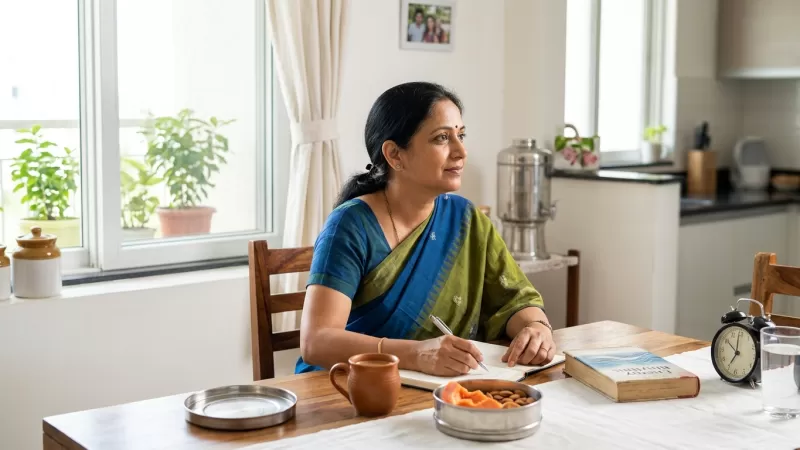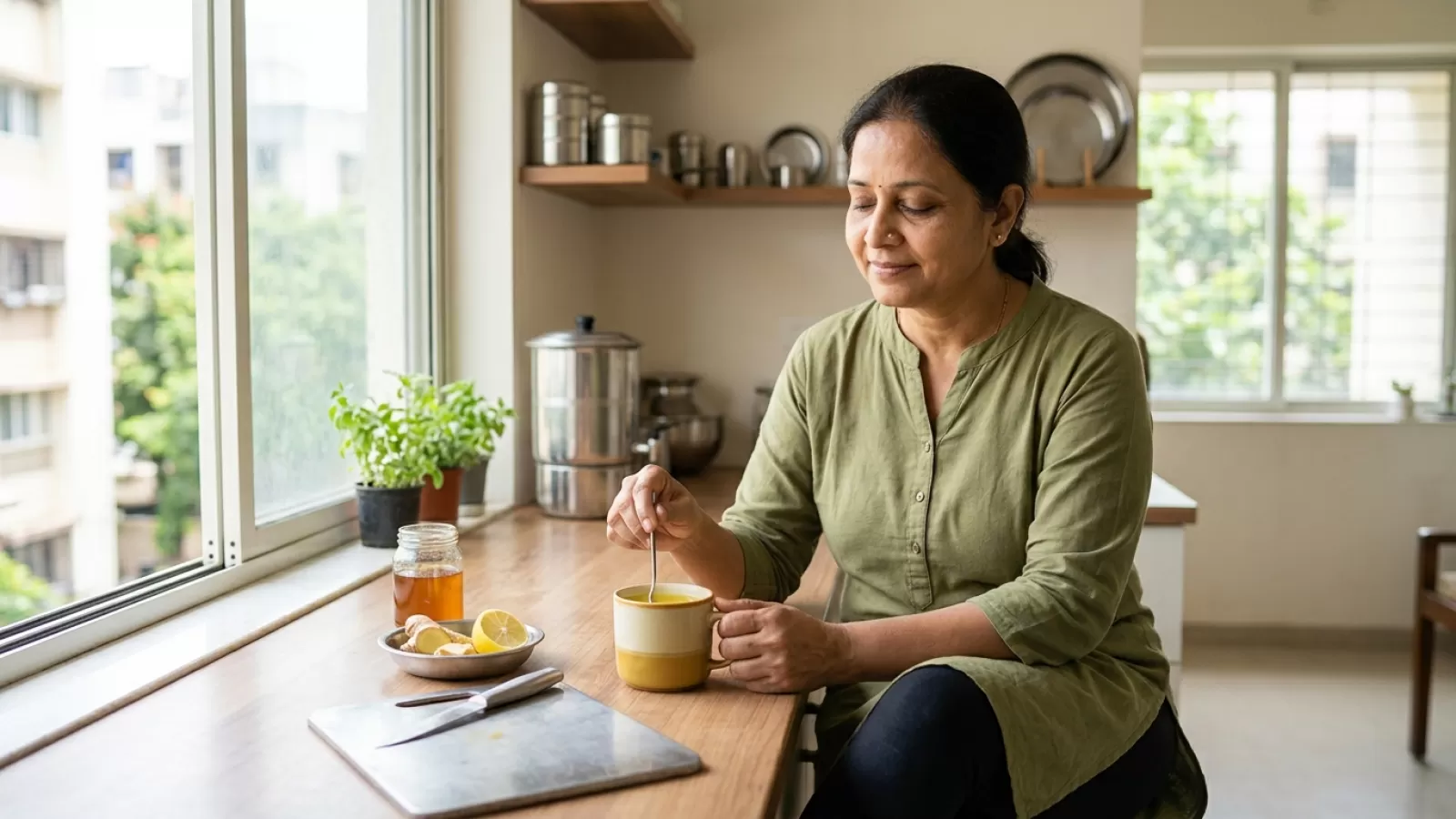
There are evenings in Indian homes when, despite the TV playing in the next room and the pressure cooker hissing, you realise you haven’t truly paused in days. Gentle daily reset habits in India are often missing when life moves from one family commitment to another, leaving adults feeling strangely out of sync with themselves — as if the inside and outside have fallen out of step. Some mornings, you notice it while folding laundry or waiting for your chai to boil: a quiet awareness that the last real moment you had for yourself was weeks ago.
That said, the reset most adults crave isn’t a week-long holiday or a dramatic change. It’s a brief, everyday return — a small daily ritual that creates a sense of stillness, even if only for a few minutes amidst all the bustle. Many Indian adults are quietly searching for these gentle daily reset habits, especially after periods of overextension, like family weddings, festivals, or long stretches of work deadlines.
Why Indian Adults Often Lose Their Sense of Inner Rhythm
In Indian families, the rhythm of life is set by external needs. Mornings begin with alarms, school tiffins, and hurried breakfasts — sometimes just a cup of tea and a Marie biscuit. There is always someone else’s schedule to manage, whether it’s a parent, a spouse, or a child. Even those living alone often find their routines shaped by outside pressures, like neighbours’ doorbells, power cuts, and the noise of city life.
Feeling out of sync is less about personal failure and more about the invisible expectations that shape Indian adulthood. There’s the unspoken rule that you must keep going, no matter how tired or scattered you feel. In many homes, rest is seen as laziness, and taking space for yourself is quietly discouraged. So days pile up, each one blending into the next, until you realise you haven’t had a moment that truly felt your own.
It’s very common after a big family event — say, a wedding or a festival — to feel like you’ve lost your personal rhythm. Routines get suspended for days as everyone pitches in. Once it’s over, returning to yourself feels slow, even awkward. Many families in Indian cities have quietly discovered that gentle daily reset habits make this return softer and more possible, without needing to escape or overhaul your life.
What Makes Indian Adult Life So Prone To Disconnection
The tricky part is, Indian adult life is rarely lived alone. Shared spaces, joint families, and constant social obligations mean that your time is almost never fully yours. Work-from-home setups blend office and home, so the boundaries blur even more. For women, especially homemakers, the demands seem endless — from coordinating meals to managing everyone’s moods, often with little acknowledgment.
There’s also the emotional labour of holding a family together: keeping track of birthdays, groceries, and the unspoken needs of elders and children. On top of this, technology keeps you connected but also distracts you constantly. WhatsApp groups ping at all hours, and social media scrolls can fill any spare moment. Gradually, you stop checking in with yourself. Your internal compass, which once pointed clearly, starts to wobble.
Therapists who work with Indian adults often find that feeling out of sync is rarely about one dramatic incident. It’s usually the slow build-up of days where your needs are put quietly aside. A Bengaluru professional might notice it after a week of long commutes and late-night calls. A homemaker in Indore may find it after back-to-back festivals and guests. The feeling is widespread, and you’re not alone.
Recognisable Clues That You’re Out Of Sync With Yourself
- Every evening feels rushed, even when nothing urgent is left. There’s a sense of always catching up, but never arriving.
- Your meals feel automatic, not enjoyable. You eat dal, rice, and sabzi because you must, but don’t really taste anything.
- Little irritations pile up quickly. The sound of the pressure cooker, a neighbour’s loud call, or a power cut feels like too much, more than usual.
- Sleep is restless, and mornings feel heavier. Even after a full night, you wake up tired and disconnected from your own routine.
- Moments of real stillness are missing. Days pass without a single quiet cup of chai, a slow walk, or even a minute spent looking out the window.
These signs aren’t dramatic, but they quietly shape how you feel about yourself and your day.
Gentle Daily Reset Habits India: Small Actions That Help You Return To Yourself
- Start your day with one small, personal ritual. Many Indian adults find that even a three-minute pause before the day begins makes a difference. This could be sitting with your chai in silence, reading a short prayer, or simply opening a window to feel the morning air. It doesn’t need to be elaborate. The habit is what matters.
- Protect one pocket of time as ‘yours’. In many homes, this is after lunch, when everyone rests. For others, it’s late at night after dinner is done. Use this time for something that feels grounding — listening to old songs, watering a plant, or sitting quietly. Some find that even ten minutes with their evening chai can reset the day.
- Bring awareness to a daily task. The act of making roti, chopping sabzi, or even folding laundry can become a small meditation if you bring your attention to it. Notice the warmth of the dough, the sound of the knife, the feeling of fabric in your hands. This gentle daily reset habit often slips in unnoticed — but it can be quietly powerful in restoring inner alignment in India daily.
- Allow for small pauses between activities. After a work call, before starting dinner prep, or just after returning home, give yourself a short breather. Even standing quietly at the balcony for two minutes can help recalibrating self in India after disruption.
- End your day with a brief check-in. Ask yourself: Did I have even a moment that felt like mine today? If not, how can I create one tomorrow? This reflection, done gently and without blame, is itself a reset.
The key is to keep these habits gentle, not one more thing to achieve or perfect. Over time, these small daily returns help you feel less like life is running away from you, and more like you’re quietly steering your own day.
How Gentle Daily Resets Blend Into Real Indian Routines
In many Indian homes, daily resets don’t look dramatic. They slip in between the ordinary. A grandmother in a joint family might take her tea alone by the window at 5pm, just for a few minutes. A working professional commuting in Bengaluru might listen to their favourite song on the radio while stuck in traffic, letting the music mark the end of work and the start of home time. Sometimes, it’s the ritual of sweeping the floor in the evening, doors open to the breeze — a moment to pause and notice how the day feels inside you.
During summer power cuts, you sometimes see neighbours sitting outside in the dark, talking quietly or just watching the street. These pauses are not planned, but they offer a gentle reset, a space to breathe and return to yourself, even with all the chaos around. In many families, the act of preparing a simple meal — poha for breakfast, khichdi for dinner — becomes a way to return to familiar rhythms after a period of disruption. These small, everyday actions are the backbone of recalibrating self in India after disruption.
What stands out is that these resets often don’t require privacy or silence, just a tiny moment of intention. Most Indian adults won’t announce these habits; they just quietly make space for them, even in shared homes and busy schedules.
When Gentle Habits Aren’t Enough: Knowing When To Reach Out
If your sense of disconnection lingers for weeks, or if daily resets no longer bring even brief relief, it may be time to talk to someone you trust. Sometimes, feeling out of sync can be a sign of deeper stress or sadness. There’s no harm in sharing this with a family member or a doctor, especially if sleep, appetite, or interest in daily life changes noticeably. In many Indian homes, just speaking your feeling aloud can be the first real reset.
Common Questions
There’s no single right way to feel more in sync with yourself, especially in the unique daily rhythm of Indian homes. Many adults wonder what resets actually look like, how to tell if something deeper is going on, and what practical steps help when life feels especially scattered. Let’s look at some of the most frequent questions, grounded in common Indian household moments.
What are the most effective gentle daily reset practices for Indian adults who feel perpetually out of sync?
Some of the most effective gentle daily reset habits India has to offer are short, consistent rituals woven into everyday life. In many families, this means having morning chai in silence before anyone else wakes up, taking a few deep breaths by an open window, or playing with a pet for five minutes. These habits help restore inner alignment India daily without needing privacy or lots of free time. The key is to pick something small that fits your routine and repeat it until it becomes a natural pause, not another task.
How do you return to a sense of personal alignment after an extended period of overextension?
After long stretches — like a family wedding or festival season — most Indian adults benefit from gently reintroducing their pre-event routines, even if only in small ways. For example, after relatives leave, taking time to prepare your favourite simple meal, or going for an evening walk, helps signal a return to normalcy. In many homes, putting away event clothes and cleaning up leftover decorations also helps recalibrating self India after disruption, easing the shift back to your personal rhythm.
Is feeling out of sync in Indian adult life a signal that something needs to change or just a temporary state?
In most cases, feeling out of sync Indian adults experience is a temporary state, especially after periods of extra responsibility or change. However, if it becomes a constant feeling that daily reset habits don’t touch, it might be worth looking at whether certain routines or expectations need adjusting. Many people find that gentle daily resets are enough, but if the feeling persists or deepens, talking with someone you trust can help clarify what’s needed.
What daily practices most quickly restore a sense of internal balance after disruption?
Quick resets often come from returning to small, familiar rituals — like making your own cup of chai, listening to a favourite song, or taking a ten-minute stroll around your building. In Indian homes, even resetting the kitchen after a big meal or taking a short nap can help. These actions are small, but they offer a sense of control and calm, helping restore inner alignment India daily. Over time, these quick practices support a more steady sense of balance.
How do you distinguish between feeling temporarily out of sync and feeling fundamentally unhappy with the direction of your life?
The difference usually lies in how you feel when you return to your daily habits. If gentle daily reset habits India style bring relief, even briefly, you’re likely just out of sync for now. But if the feeling stays, even after making time for yourself, and you find no joy in routines that used to comfort you, it could signal deeper dissatisfaction. In such cases, it often helps to talk things over with a trusted friend or professional, especially if the heaviness lasts for weeks.