In many Indian homes, the link between sleep and immunity is quietly woven into everyday rhythms, even if few talk about it. After a string of late nights—maybe a wedding in the family, project deadlines, or exam season—someone inevitably comes down with a sore throat or fever. It’s easy to blame the weather, outside food, or stress. But often, the real culprit is how sleep and immunity in Indian adults are closely connected, with poor sleep quietly lowering the body’s natural defences.
These days, it’s not uncommon for adults to push through with just five or six hours of broken sleep, believing chai and willpower will get them through. Yet, season after season, the adult who sleeps least is usually the first to catch the latest viral bug. This pattern repeats in countless homes, but rarely do we connect our sleep habits to our immunity.
Why Many Indian Adults Get Sick After a Period of Poor Sleep
For many families, sleep is treated as something flexible—shifted around for guests, festivals, late meetings, or IPL matches. In joint families, the last person to sleep is often the one locking up, checking on children, or finishing up the kitchen. Over time, these small sacrifices chip away at sleep quality and duration.
In cities like Mumbai, Bengaluru, or Delhi, working professionals often commute long hours and return home late. Evenings stretch out with chores, WhatsApp calls, or just a quiet hour of TV. Bedtimes creep later, but morning alarms remain fixed—leaving less and less space for the deep, restful sleep the body craves.
There’s also the cultural expectation not to “waste” time sleeping. Many see sleep as something to be trimmed for productivity, socialising, or family duty. But when sleep and immunity in Indian adults are neglected, the body’s ability to repair and defend itself slides, often without immediate warning.
The Real Reason Sleep Matters for Immunity
When you sleep, your immune system is hard at work—repairing, building, and getting ready for the next day’s challenges. Think of it as the body’s nightly service window. Adults who regularly cut sleep short give the immune system less time to do its work, leaving it underpowered against infections.
Immunologists often find that Indian adults with frequent late nights or inconsistent sleep patterns tend to catch more infections, even if they eat well and exercise. Sleep is not just about rest; it’s about giving the immune system a chance to reboot. In India’s dense households, where bugs pass quickly from one person to the next, this nightly repair time becomes even more crucial.
The tricky part is: you may not notice the effect right away. But after several nights of poor sleep, the body’s first line of defence—white blood cells and immune proteins—start to weaken. This is why, in so many homes, someone falls ill a few days after a period of lost sleep, and it keeps happening year after year.
Clues That Your Sleep Is Hurting Your Immunity
- Frequent Colds and Infections: The adult who always seems to catch the latest bug—even if others in the house recover quickly—may actually be showing a sign of poor sleep quality.
- Longer Recovery Time: If you notice it takes you longer to get over a cough or fever compared to others, your immune system might be struggling due to insufficient sleep.
- Getting Sick After Busy Periods: Many people fall ill right after wedding season, festival rush, or work deadlines—when sleep is disrupted for several days in a row.
- Feeling Run Down Despite Rest: Even on days when you get to sleep in, if you wake up feeling tired and achy, it might be a sign that your sleep quality is poor, not just quantity.
- Constant Sore Throats or Mouth Ulcers: These are common in Indian adults who are chronically sleep deprived, especially when paired with stress and irregular meals.
Everyday Steps to Support Sleep and Immunity
- Set a Realistic Bedtime: In many households, dinner happens late—sometimes after 9pm. Try moving dinner just 15–20 minutes earlier on most nights. Even a small shift can help your body settle into sleep more easily.
- Limit Device Use Before Bed: Many people scroll through phones or watch TV in bed. That makes it harder to fall and stay asleep. Try switching to quiet music, a light conversation, or even folding laundry instead.
- Keep Chai and Coffee for Daytime: People often reach for chai or coffee late at night to finish chores or work. But caffeine can linger in your system. Try to keep your last cup before 6pm.
- Create a Sleep Routine: A simple routine—washing your face, changing into nightclothes, or dimming the lights—signals to your body that it’s time to wind down. In homes with children or elders, try involving everyone in a quiet ritual for a calmer night.
- Address Night Disruptions: Power cuts and noisy neighbours are a reality in many Indian cities. Use earplugs, eye masks, or keep a battery fan handy during summer. The goal is to reduce as many sleep interruptions as possible.
Sleep and Immunity Patterns in Everyday Indian Routines
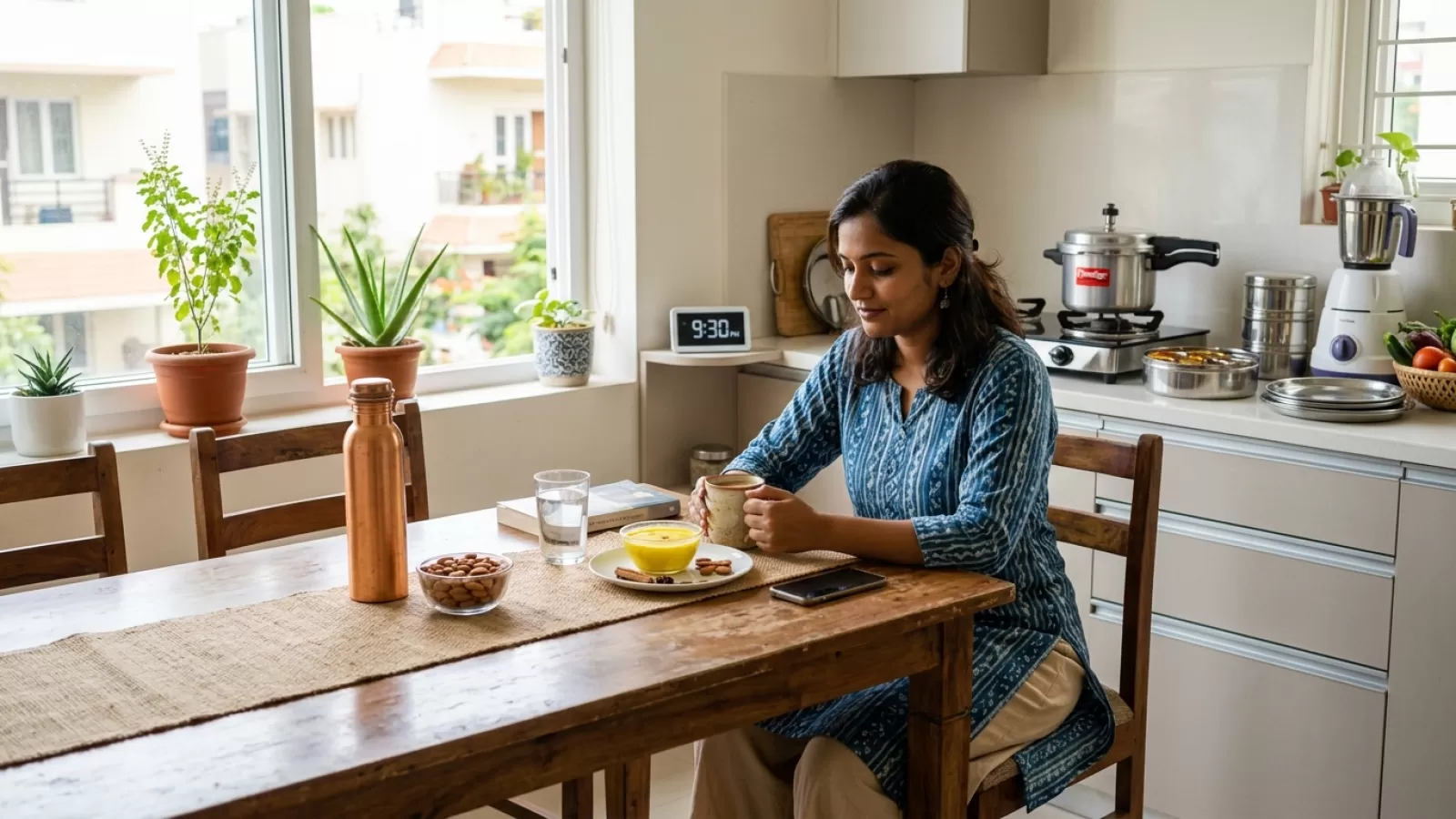
In a kitchen in Nagpur at 6am, the smell of chai and frying poha fills the air. One adult is already sneezing, tissues tucked into a kurta pocket, after a week of late nights spent juggling work deadlines and family WhatsApp groups. The rest of the house notices but shrugs it off—"must be the mangoes," someone says. By the end of the week, two more people have sniffles. This is how sleep and immunity in Indian adults quietly shape the health of whole families—season after season—often without anyone connecting the dots.
Many families in Indian cities have quietly discovered that when everyone goes to bed just a little earlier for a week or two—even if nothing else changes—the cycle of passing colds and coughs slows down. It’s small, but over time, these habits make a difference.
When to Speak With a Doctor About Sleep and Immunity
If you notice that you’re falling ill more often, taking longer to recover, or struggling with sleep for weeks on end, it might be time to speak with a doctor. Sometimes, ongoing sleep trouble can signal a deeper issue or medical condition. Especially if sleeplessness is affecting your work, mood, or daily routines, don’t try to manage it alone for too long. Doctors can help spot patterns and suggest next steps suited for your situation.
Common Questions
Many people wonder about the connection between sleep and immunity in Indian adults, especially when life feels too busy to prioritise rest. These questions come up often in homes across India—during chai breaks, family chats, and even late-night WhatsApp discussions. Let’s look at some of the most common concerns, with examples that might feel familiar in your own home.
How directly does poor sleep affect immune function in Indian adults and how quickly does the impact appear?
Poor sleep lowers immune function more quickly than most people realise. In many Indian homes, an adult who sleeps less than six hours for several nights—due to work, weddings, or exams—often falls sick within five to seven days. The body needs enough sleep to make the protective cells and proteins that fight infection. When sleep is cut short, these defences drop, making it easier to catch colds, coughs, and even stomach bugs. The pattern is especially clear after festivals or busy periods, when illness seems to sweep through the house.
What sleep duration and quality does an Indian adult need for optimal immune function?
Most healthy Indian adults need around seven to eight hours of good-quality sleep each night for strong immunity. This means sleep that’s not just long enough, but also deep and undisturbed. In homes where people wake frequently due to power cuts, noise, or stress, even eight hours in bed might not be enough. If you wake refreshed and stay healthy through seasonal changes, your sleep is likely supporting your immunity well. If not, look for ways to improve both the length and quality of your sleep.
How do Indian adults protect sleep quality when their household responsibilities and work demands consistently push bedtime later?
It’s a challenge in many Indian families, especially where adults juggle office work, kids’ homework, and shared chores. One practical approach is to protect a set wind-down time—maybe 20 minutes before bed—where screens are off, chores pause, and the focus is on calming routines. Some families adjust dinner time slightly earlier or share morning tasks so everyone can turn in a bit sooner. Even small, consistent changes can help protect sleep quality, making it easier for the body to defend against common infections.
What is the relationship between the quality of sleep and immune strength versus the quantity of sleep in Indian adults?
Both matter, but quality often has a bigger impact than people realise. In many Indian homes, someone may spend eight hours in bed but wake often due to noise, mosquitoes, or worry. This broken sleep doesn’t support the immune system as well as deep, uninterrupted rest. On the other hand, six hours of solid, peaceful sleep can sometimes be better than longer but restless sleep. The goal is to combine enough sleep with as much quality as you can manage in your home environment.
When does consistent poor sleep in an Indian adult start producing immune problems significant enough to discuss with a doctor?
If you’ve noticed a pattern of falling ill more often, longer recovery from simple infections, or constant fatigue over several weeks—or if sleep problems last for a month or more—it’s time to check in with a doctor. In Indian families, this often happens after a season of repeated viral infections or when one adult keeps getting sick while others recover quickly. A doctor can help identify whether sleep is the main factor or if something else is at play, and suggest practical steps that fit your lifestyle.