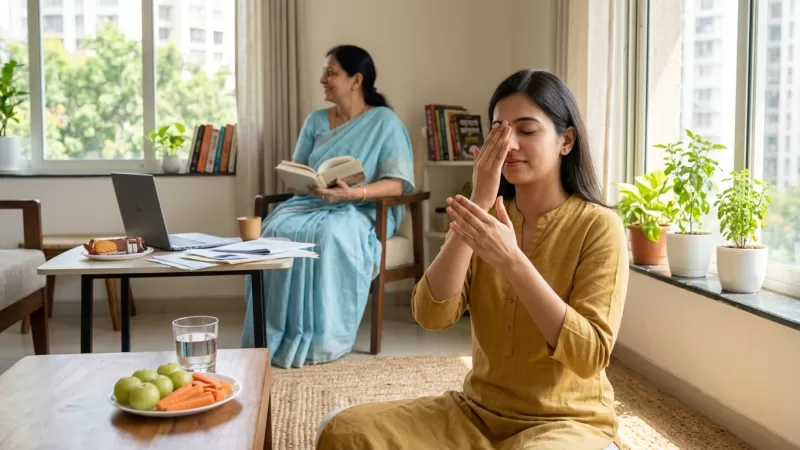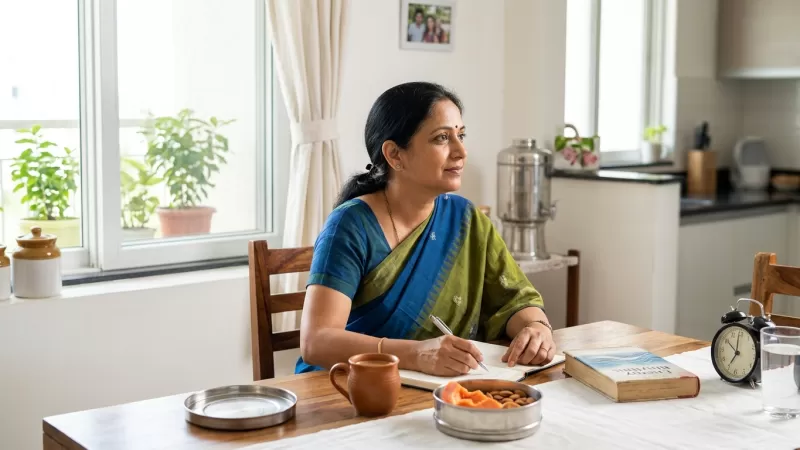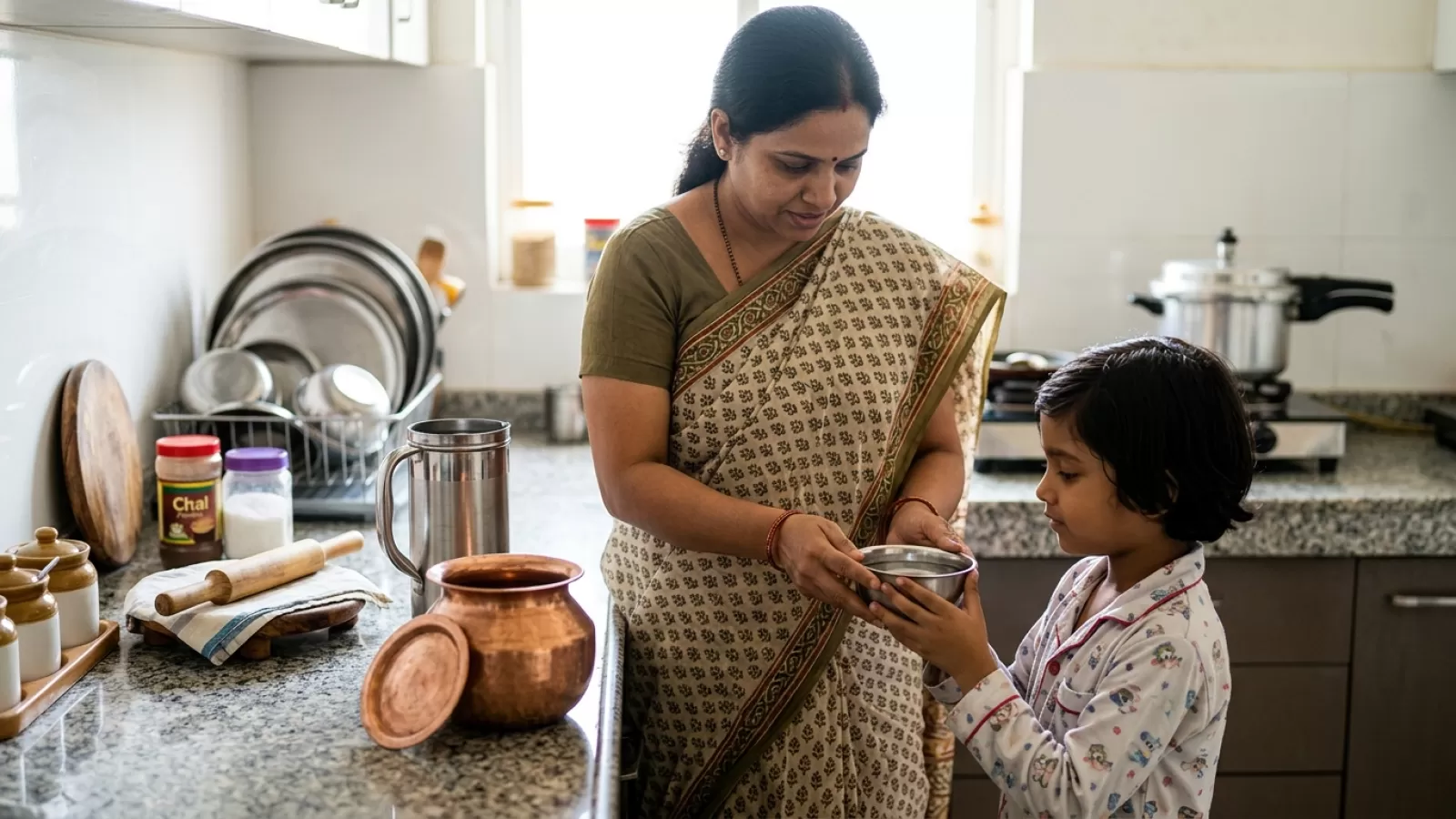
In many Indian homes, wellness isn’t a big declaration but a quiet pattern — like the glass of warm water that gets passed around the kitchen before anyone has their first chai. Family wellness habits in India often slip in softly, woven into the daily motions rather than set apart as grand new routines. This is true whether you live in a bustling Mumbai flat with three generations or a quieter home in Coimbatore where the day begins with the gentle clang of the pressure cooker.
These habits — a shared stroll to the market after dinner, sitting together for a few minutes with dahi and fruit, washing hands before meals — tend to stick because they feel less like a chore and more like the way things are done. In most homes, family wellness grows from what’s already familiar. The art is in noticing what you’re already doing, and then gently strengthening it.
How Wellness Habits Settle Into Indian Family Life
Family wellness habits in India usually emerge from daily household rhythms, not formal health plans. For example, most families have some kind of morning ritual — whether it’s elders reading the paper together, children sipping milk, or everyone waiting for the first batch of poha. These small moments often become anchors for Indian family health habits daily, even if no one names them as such.
There are a few reasons for this. Indian homes often function as shared spaces, where everyone — from toddlers to seniors — must find their own rhythm. Kitchens double as conversation corners. Living rooms turn into yoga mats or homework desks. So any wellness for Indian households must fit into this shared patchwork.
That said, there’s another layer. In many families, change is slow and gentle. A new practice, like taking a short walk after dinner, might begin with just one or two people. Over time, others join — maybe not every day, but often enough that it becomes “what we do.” No lectures, no pressure. Just a gradual shift.
Why Indian Families Tend To Skip Formal Wellness Routines
Ask around, and you’ll find that most Indian households rarely follow a strict healthy family routine India style. The reason is simple: life here is busy and unpredictable. Mornings are packed with tiffin-making, school runs, and the odd power cut. Late evenings see working adults returning home, elders catching up on serials, and children finishing homework.
The tricky part is, everyone’s schedule is a little different. Some family members wake up early for temple visits, others stay up late watching IPL. So it’s hard to get everyone to agree on a fixed exercise slot or a weekly salad night. Instead, Indian family health habits daily tend to sneak in where they fit — five minutes of stretching before the pressure cooker whistles, a glass of water on the dining table, or a group walk to the kirana store for missing dhania.
Nutritionists who work closely with Indian families often find that small shifts in daily routines — like having fruit with breakfast or carrying a bottle of water during summer — make the biggest difference. These habits are more likely to stick because they don’t feel like a burden.
What Tells You Wellness Habits Are Sticking
- Unspoken rituals emerge: You notice that everyone waits for their glass of warm water before starting on chai. No reminders needed, it just happens.
- Movement happens naturally: On most evenings, at least a few family members join the walk to the corner shop or take the stairs instead of the lift, out of habit.
- Food choices shift subtly: Dahi and fruit become the default snack after dinner, instead of biscuits or chips — not because of a rule, but because it feels right.
- Less resistance from family: New wellness habits are met with a shrug or a smile, rather than complaints. Maybe the kids roll their eyes at the evening walk, but they still come along.
- Wellness fits around festivals and busy seasons: Even during Diwali or exam time, some habits — like drinking enough water or stretching after cleaning — continue, just in smaller ways.
Everyday Ways Indian Families Make Wellness Work
- Start with what’s already happening: If everyone sits together for chai, add a glass of warm water beforehand. If the family gathers for TV after dinner, try gentle stretches or floor-sitting together during the show.
- Make wellness social, not solo: An evening walk to buy vegetables or fetch milk is easier when done together. Many families in Indian cities have quietly discovered that small group activities tend to stick better than solo plans.
- Work with seasons and routines: During hot months, place a jug of water in the living room. In winter, keep roasted makhana or peanuts within reach as a healthy snack.
- Let habits grow quietly: Often, the smallest changes — switching to steel tiffins, rinsing fruits before eating, or setting aside five minutes before bed for light stretching — gather strength when no one makes a big fuss about them.
- Don’t force everyone to join at once: It’s common for one or two family members to start a new habit. The rest may follow, or may not. That’s okay. Over time, even partial adoption can shift the mood of the whole house.
What Wellness Looks Like in Real Indian Households
A kitchen in Nagpur at 6am on a humid May morning: The ceiling fan is whirring, the windows are open, and a kettle is simmering on the gas. Before any tea is poured, three glasses are lined up. The first glass — warm water, sometimes with a dash of nimbu — is sipped in silence. No one calls it a wellness habit. But year after year, this is how the day begins. Later, someone will suggest a walk to the sabziwala — not as exercise, just to pick up brinjal and tomatoes, but the walk itself becomes a gentle stretch for the legs after hours of sitting.
Or in a Bengaluru apartment, after long WFH hours, the family’s only shared time is a stroll downstairs to collect parcels or take a quick round of the building compound. Some evenings, it’s just two people; other days, the whole group tags along. There are no rules. Yet, these small actions quietly support wellness for Indian households, fitting into real life without much planning.
When Indian Families Might Need Outside Guidance
Most healthy family routine India style habits can be built at home, slowly and gently. But there are times when it helps to check in with a doctor — for example, if an elder seems unusually tired despite rest, or if a child refuses to eat most foods for days at a stretch. If anyone in the family has a long-term health condition, it’s always wise to speak to a professional before making big changes. Usually though, the gentle, homegrown approach works well for most Indian families.
Common Questions
Every Indian home has its own rhythms and quirks, so it’s natural to have questions about what works best for your family. Sometimes the gentlest changes matter most. Here are a few thoughts on how family wellness habits in India can fit around busy lives, family preferences, and even the occasional stubborn streak.
What are the simplest wellness habits an Indian family can build together without formal planning?
Some of the simplest wellness habits come from what you already do. For example, having a glass of water together before chai, taking a daily stroll to buy milk or vegetables, or sitting together for a quick fruit snack after lunch. Many families find that washing hands before every meal, rinsing vegetables thoroughly, and keeping the dining table clear of gadgets for a few minutes during dinner are easy habits that quietly support wellness for Indian households. These don’t require anyone to follow a formal plan — they just become part of the household rhythm.
How do you introduce health habits into a household where some members are resistant?
In most Indian homes, habits stick best when they start gently and without pressure. For example, if elders don’t like walking, invite them for a slow stroll just to the gate or to sit outside in the evening. Children can be included by making small changes fun — like washing hands together before a meal, or helping to cut fruit. It helps to model the habit yourself instead of insisting others join immediately. Over time, as the habit becomes part of daily life, even the resistant family members often begin to join in.
Can Indian family wellness improve over time without anyone feeling they are following a program?
Absolutely. In many homes, wellness habits grow quietly, without anyone ever calling it a program or plan. When small actions — like drinking water before chai, walking to the local shop, or eating fruit after dinner — become routine, the family’s overall health tends to improve. No one feels like they’re being forced into something special. Over months and years, these gentle patterns can make a real difference in the family’s energy, mood, and health.
What are the most important wellness habits for Indian children that parents can model naturally?
Children tend to copy what they see. When parents make a habit of washing hands before eating, choosing fruit over chips, or getting up to stretch after sitting for a while, kids notice. Many Indian families find that including children in daily kitchen tasks — rinsing dal, helping with sabzi prep, or setting the table — helps them learn healthy habits by doing. Even something as simple as sharing a walk after dinner can show children that movement is a normal, enjoyable part of life.
How do Indian families maintain any shared wellness routine when everyone's schedule is different?
Most Indian families have busy, mismatched schedules. The trick is to keep habits flexible and connected to existing routines. For example, whoever is home can take the evening walk, and others join when possible. Meals might not always be eaten together, but keeping fruit on the table or a jug of water within reach helps everyone stay on track. Wellness for Indian households works best when it fits around life, not the other way around. Even if not everyone joins every time, the habit can still anchor the family’s day.